
Perspective | Helene showed us what students are capable of. Will schools build on it?

North Carolina agrees on what graduates need to thrive. The harder question is whether our schools are designed to develop those abilities.
After 23 years in education, I now lead the WNC Resilience Project through Open Way Learning, working with schools across western North Carolina. I keep coming back to a basic question: Are we willing to give schools the space and resources to make that vision real?
In 2022, more than 1,200 North Carolinians helped define the state’s Portrait of a Graduate, a framework describing the skills students need beyond senior year: adaptability, collaboration, communication, critical thinking, empathy, a learner’s mindset, and personal responsibility.
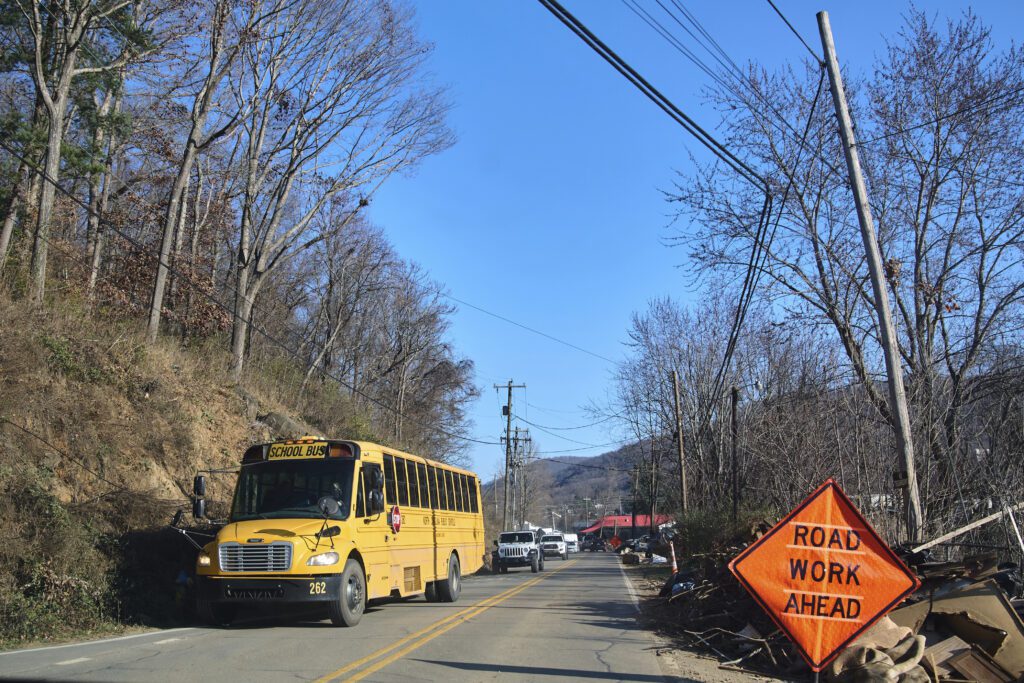
Then Hurricane Helene hit. The FEMA-designated impact area included 46 North Carolina school districts and more than 630,000 public and charter school students.
In the disruption that followed, communities pulled together and something became unexpectedly visible. Young people were demonstrating many of the Portrait of a Graduate competencies in ways no standardized assessment could capture. EdNC published a story about a student in Swannanoa who realized that the distribution center had enough volunteers, so she grabbed sidewalk chalk out of her mother’s car and began leading younger children in an activity to process emotions about the storm.
Before many schools had fully reopened, the education conversation understandably returned to “learning loss.” Missed instructional time mattered. Academic growth mattered.
But focusing only on what students had lost obscured something important: many were also practicing the skills that North Carolina says graduates need. They were adapting, solving problems, contributing to their communities, and taking personal responsibility. Educators, meanwhile, were seeing possibilities for learning that are much harder to recognize when school is operating as usual.
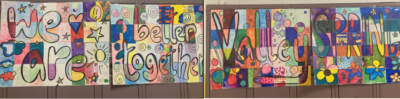
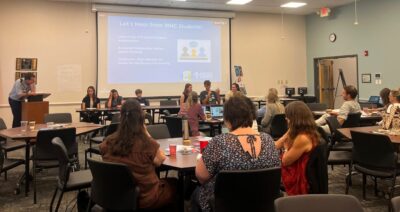
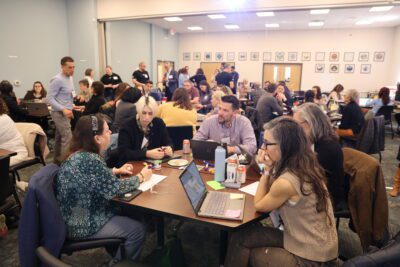
That realization helped shape the WNC Resilience Project, which brought teachers, counselors, district leaders, young people and community partners together around a simple question: Can recovery mean building something better?
Read more
Our challenge isn’t a shortage of educators with good ideas. It’s a system that often isn’t designed to test and develop them. North Carolina’s education strategy includes a commitment to “Lead Transformative Change.” That’s something worth acting on right now.
School leaders remain accountable for academic growth, proficiency, attendance, instructional minutes, and a long list of other conventional measures and requirements. Those things tell an important part of the story. But they also exert enormous gravitational pull unless we give comparable weight to the broader skills named in the N.C. Portrait of a Graduate. Tell a principal to transform learning while judging success primarily through existing measures, and the pressure is to preserve the status quo.
Through the WNC Resilience Project, educators are testing concrete ways to give students more opportunities to develop the skills named in North Carolina’s Portrait of a Graduate.
 Sign up for the EdWeekly, a Friday roundup of the most important education news of the week.
In Henderson County, an art teacher is launching a Folk Art of Appalachia course that connects students with local artists and community partners while asking them to create, collaborate, communicate, and share their learning publicly. At Madison Early College High School, educators are expanding a Global Leaders model that gives students greater responsibility for service, environmental stewardship, and community-connected work.
The point is not that every school should adopt these particular ideas. It is that the skills described in the Portrait of a Graduate are developed by doing meaningful work that requires them.
North Carolina does not have to choose between academic growth and durable skills. But we should be honest that our systems prioritize what gets measured, funded, and protected.
Following the second anniversary of Hurricane Helene, we should ask what recovery has taught us about how students learn. If the Portrait of a Graduate is meant to be more than a poster on the wall, our policies and expectations must give schools room to act on it.