
Student voices help shape post-Helene recovery efforts through the WNC Resilience Project

How can educators reimagine schools in the wake of Hurricane Helene?
This spring, western North Carolina (WNC) schools will complete the first full academic year since the hurricane made landfall in September 2024.
On April 23, Open Way Learning (OWL) hosted a spring convening for the WNC Resilience Project, which was launched to support long-term educational recovery and innovation following the storm.
“While the storm exposed deep systemic challenges, it also revealed schools as powerful hubs of resilience, care, and leadership,” reads the project’s website.
The WNC Resilience Project is led by OWL, a nonprofit that uses design thinking and professional development to help teachers and students across the country design innovative school and community-based projects.
 Sign up for the EdWeekly, a Friday roundup of the most important education news of the week.
EdNC previously covered one of the Resilience Project’s first convenings in January 2025, where over 70 people from 18 school districts — the Innovation Partners participating in the project — came together to brainstorm and ideate ideas for change.
Schools and districts join the project as Innovation Partners and form teams of diverse stakeholders, including teachers, counselors, and administrative leaders, to refine project ideas. Team projects are diverse, ranging from implementing daily check-ins to promote social connection to using partnerships to increase students’ contributions to their community.
At April’s convening, teams in attendance refined and strengthened their unique project ideas.
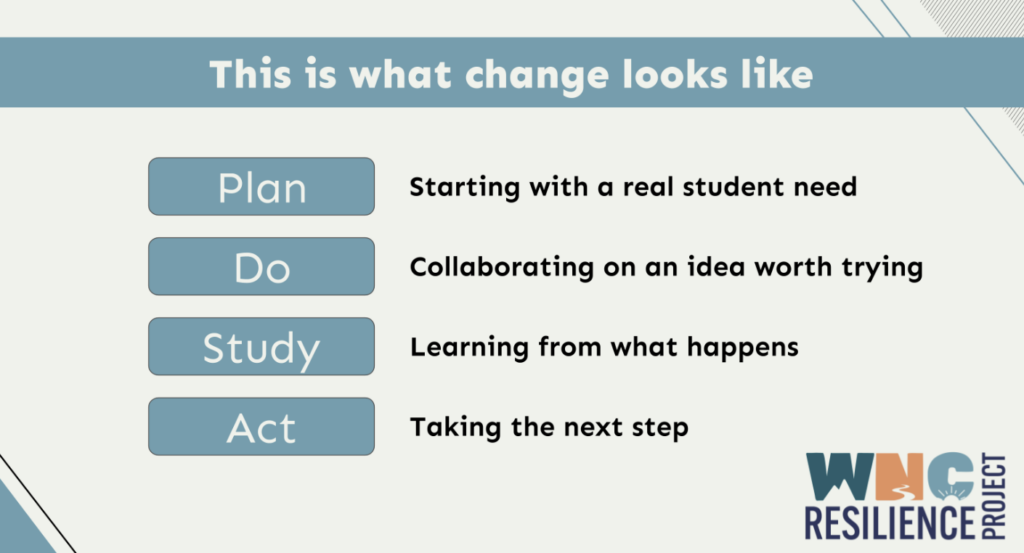
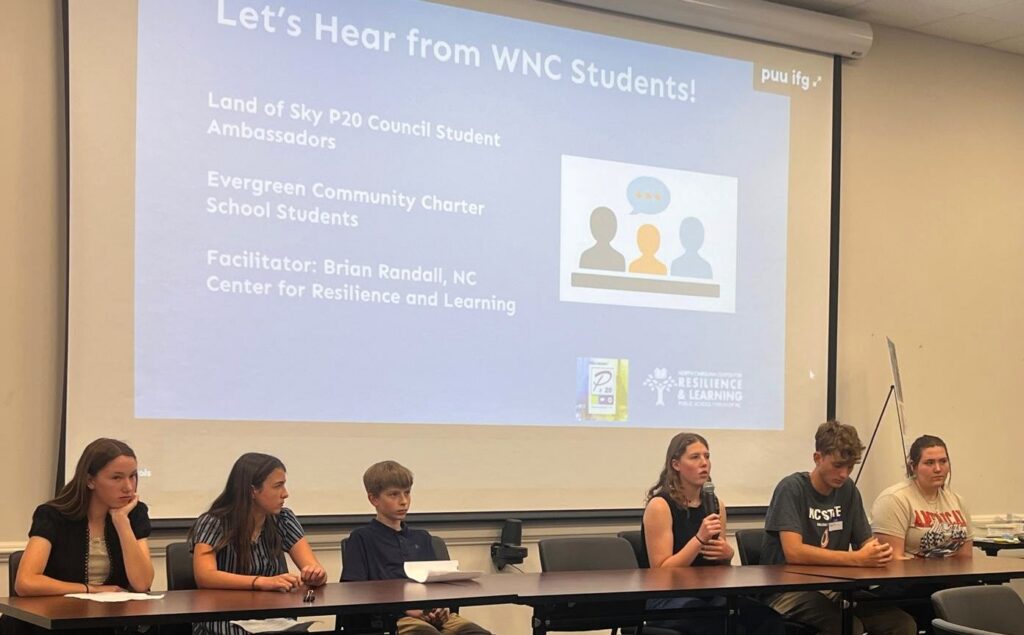
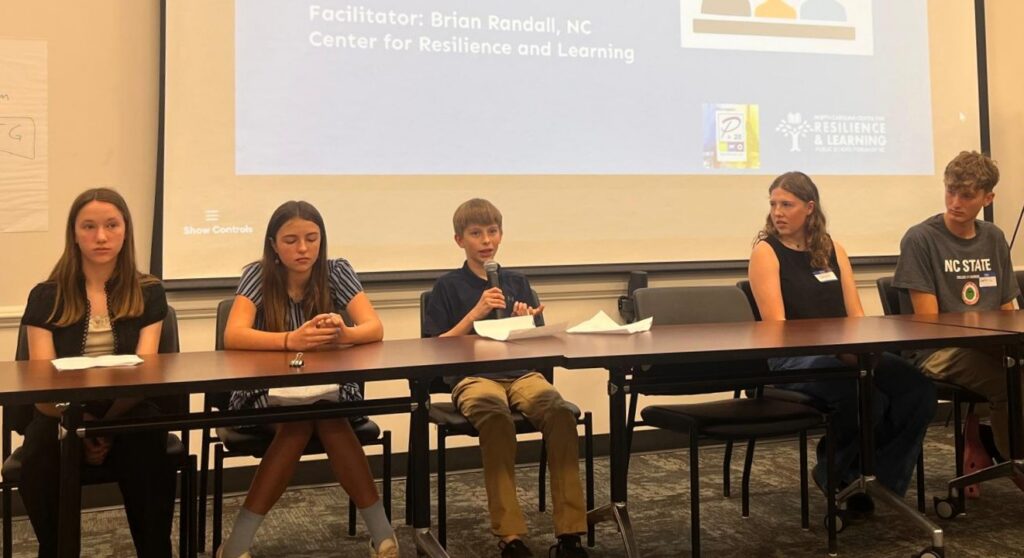
Following the “Plan, Do, Study, Act” design cycle, the convening began with the voices of six WNC students. Wes Davis, director of program impact and visibility at OWL, told attendees that the perspectives and ideas students shared served to ground teams in empathy before they spent the remainder of the convening working on their project.
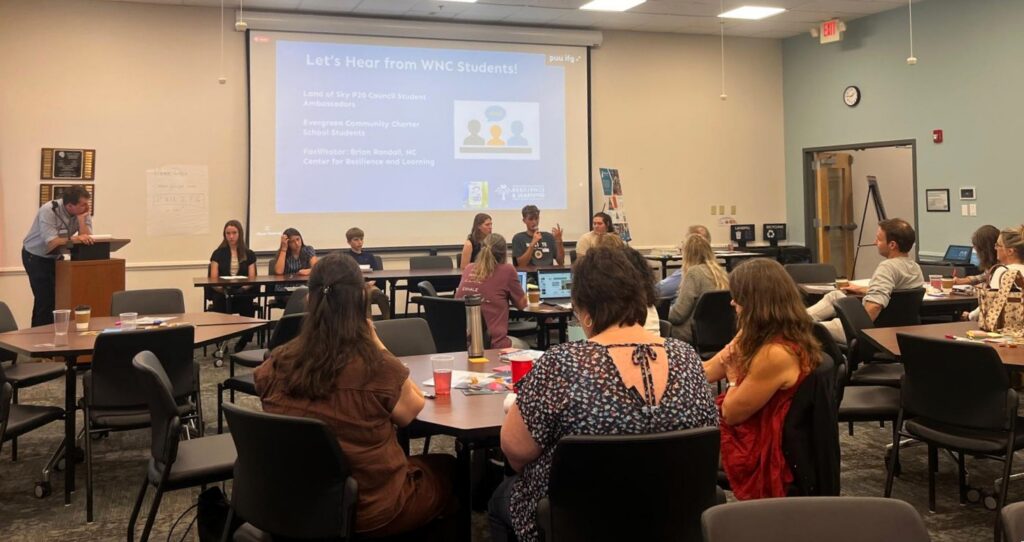
Brian Randall, western regional manager for the North Carolina Center for Resilience and Learning, facilitated the student panel and began by asking students what helped them feel supported throughout the storm’s aftermath.
Reliance on their teachers, families, and friends — and the continued importance of those communities — was a central theme.
“Emotionally and socially, I honestly feel more in tune with my peers and community because I know what we’ve been through and how we’ve been able to bounce back and move forward from that,” said Greysen Motley, a student at Brevard High School and student representative with the Land of Sky P20 Council.
Arabella Cody, a student at Buncombe County Community High School, recalled the support her teachers provided, from making phone calls to account for students and their families directly after the storm to extending flexibility on assignments once students eventually returned to school.
Caetlynn Toothman’s experience reflected Cody’s. A seventh grader at Evergreen Community Charter School (Evergreen) in Buncombe County, Toothman said her teachers’ empathy toward her worries, fears, and hopes after the hurricane made her feel surrounded by an encouraging community.
“When I first got to seventh grade, I was really worried that it would be different because of the hurricane and how it had affected people. But it turned out that it was different in a good way,” she said, saying that she observed her peers demonstrate a new maturity and willingness to help one another.
Students also shared ways they believe schools try to support students that aren’t as effective. For example, Cody said she would like for teachers to encourage and support students in all aspects of their life, rather than focusing only on academic outcomes.
“It is encouraging, but sometimes … it just makes you think too much that you’re only your grades,” she said.
Charlie Bender, a student at Madison Early College High School and a Land of Sky P20 Council student representative, added that being out of school for many weeks after the storm gave him and his WNC peers a new appreciation for their studies.
“Without the hurricane, I think I wouldn’t be as driven as I am,” he said.
That drive, he said, made him realize he appreciates it when educators celebrate students for their understanding of class content rather than the grade they receive.
Read more about Helene recovery
The conversation then turned toward a need for behavioral health resources, as Evergreen students spoke about the support they wish they had consistent access to.
In North Carolina schools, specialized instructional support personnel (SISP) typically provide behavioral health services that directly support student well-being. However, many SISP positions face workforce shortages, and the state’s average ratios of students-to-SISP positions are higher than national recommendations.
“When you are feeling stressed or sad or you’re having problems emotionally, it’s really hard to talk to a counselor that you barely even know,” said Simon Coulson, a seventh grade student at Evergreen. “Or even if you do know them, sometimes you feel like you can just handle it and you don’t need somebody, even if that’s what they’re there for.”
Toothman, Coulson’s peer, added that the biggest thing she believes adults don’t see in a child’s life is the stress, academic exhaustion, and test anxiety they experience, citing data that 60% of students worry about taking a test.
“And unfortunately, most of these students don’t feel supported by adults,” she said. “And if adults don’t notice this, students most likely won’t advocate by themselves.”
Randall concluded by asking panelists how schools can help students become more resilient.
Coulson said he believes a resilient student isn’t someone who ignores their emotions, but rather one who perseveres, relies on others for support, and is able to take things in stride. With a support system in place, he said, challenges can help students develop resilience.
“A good challenge level is always necessary. If it’s easy, then you’re not winning,” Coulson said.
Motley, who will graduate high school this spring, said she would’ve liked to have more opportunities to build the support system Coulson described.
With the student panel’s insights in mind, WNC Resilience Project teams spent the remainder of the convening working on their change ideas.
As one project example, the Buncombe County Center for Career Innovation (BCCTI), a partner school with Buncombe County Early College that provides hands-on learning for students who want to enter the workforce directly after high school, is working to create a sense of belonging for their students.
BCCCI enrolled their first student cohort in fall 2023. At the convening, the BCCCI team surfaced ideas for how to most effectively enroll more students who would benefit from the unique learning environment.
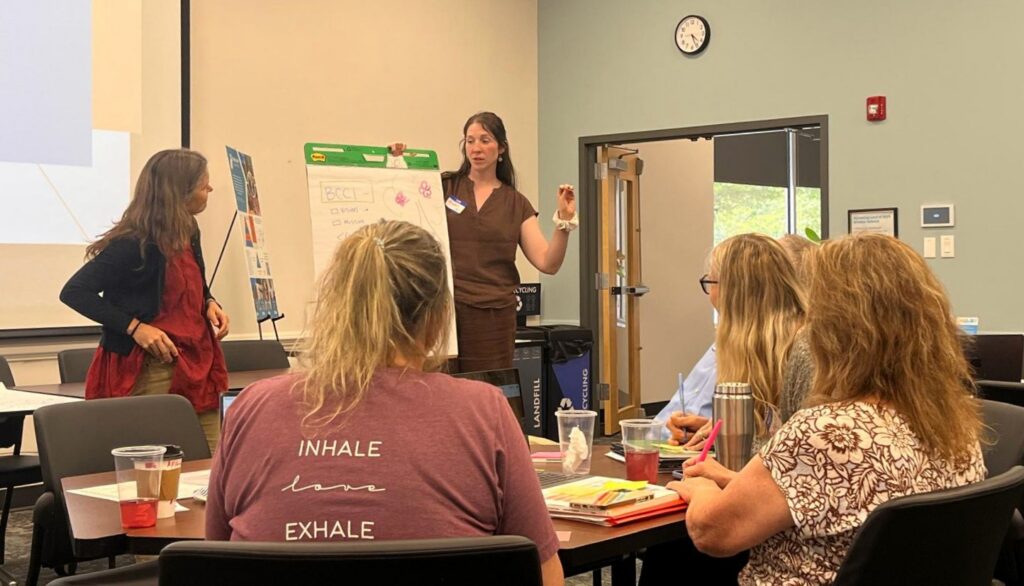
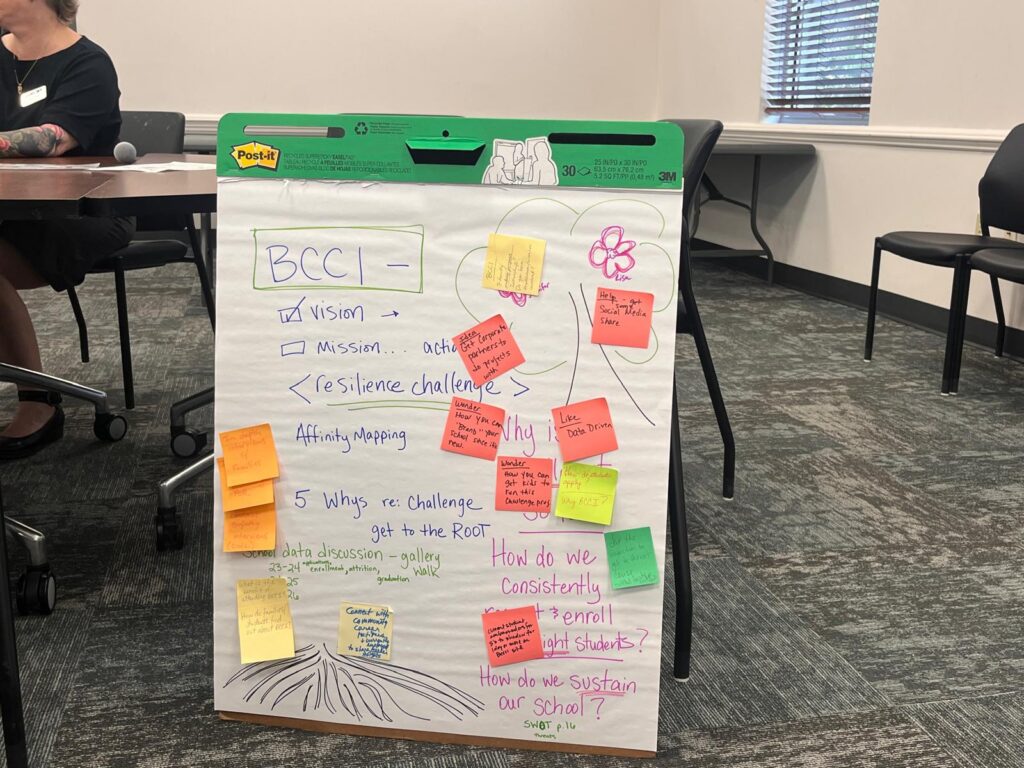
OWL was joined by Theresa Gibson of the NC Rural Education Collaborative and Dr. Jennifer N. Jarrett, an assistant professor at Western Carolina University studying educational leadership, policy, and program evaluation, to support teams as they worked on strengthening their ideas for change.
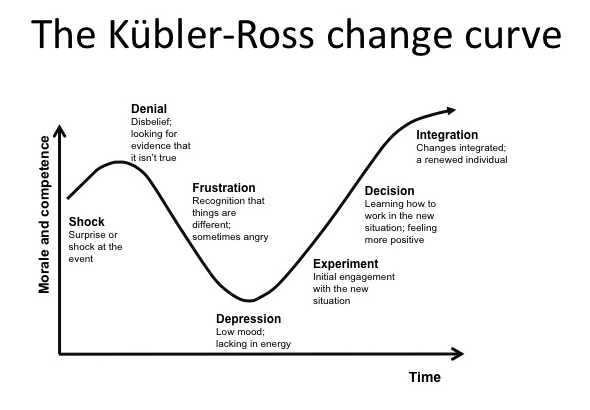
Before breaking into small work groups, Gibson explained the theory behind the Kubler-Ross change curve, shown below, and reminded participants that their work is not expected to follow a linear path.
“It is OK to be in any of these places, and it is to be expected to arrive at each of them and maybe cycle back,” she said.
According to Davis, the WNC Resilience Project has also supported 65 awardees through microgrants and small stipends designed to allow teachers to test solutions to meet students’ needs.
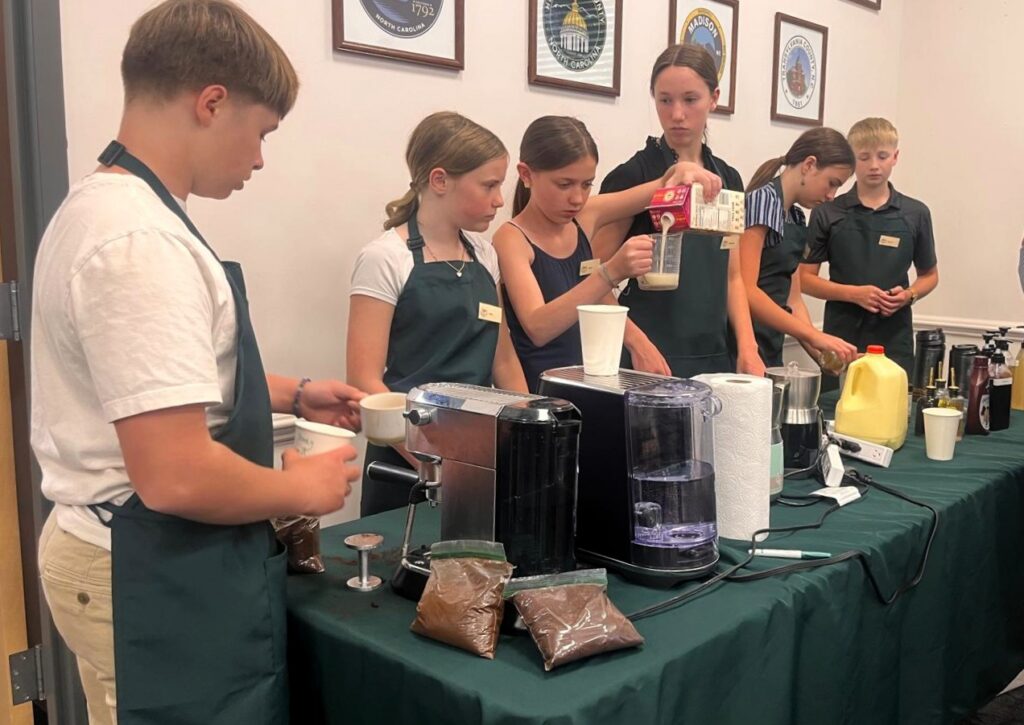
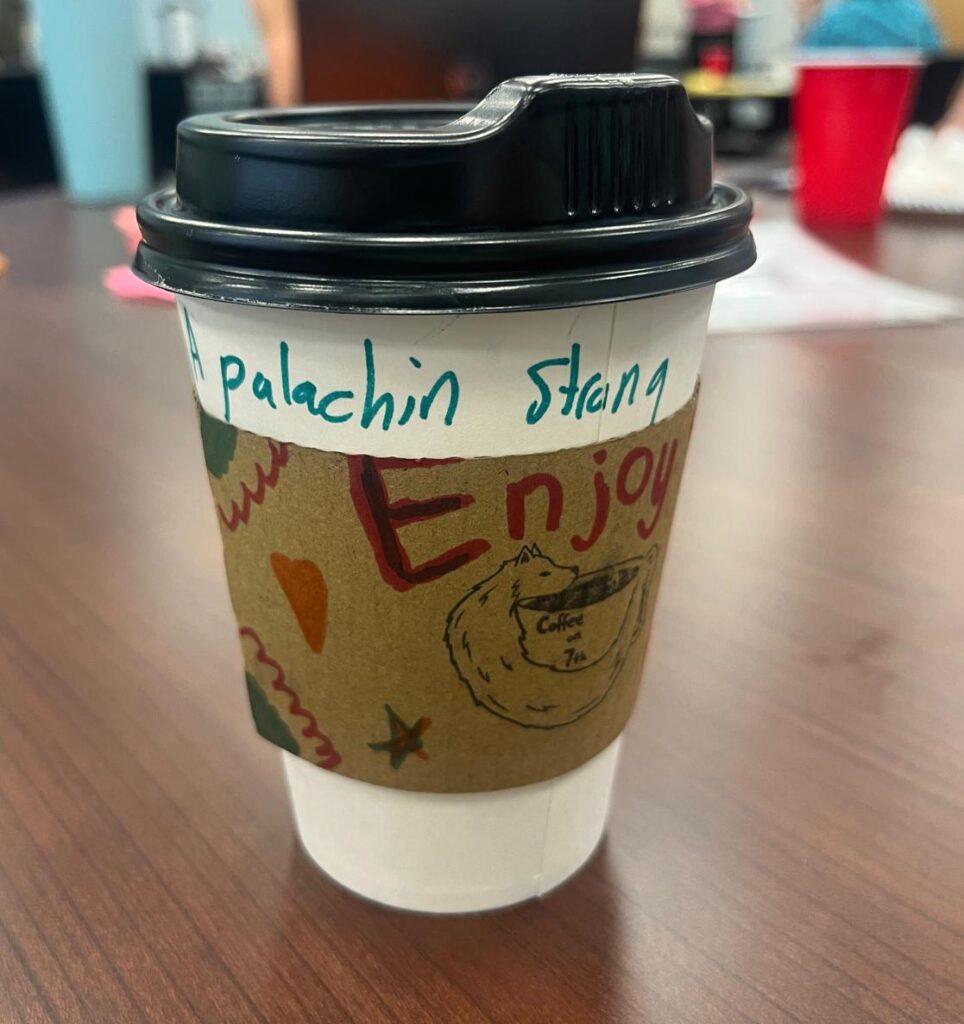
Coffee on 7th, a coffee shop run by Evergreen’s seventh graders, is one of these grant recipients.
Jason Carter, Evergreen’s math teacher, conceived of the idea in an effort to teach his students real-world math applications in an engaging way. Carter was able to raise money to get the project off the ground, and in spring 2026, Coffee on 7th received a $1,000 microgrant through the WNC Resilience Project that allowed the students to double their operating capacity, buying new espresso machines, milk frothers, and a soda machine.
Carter said student decisions drive every part of the business, from organizing themselves into marketing, accounting, and managerial departments to creating their own menu and logo designs.
Coulson, who is also Coffee on 7th’s assistant manager, said being able to help lead the business has played a positive role in his first year of school post-Helene.
“The students got to decide almost everything about it, and that can make us feel big and be more confident,” he said.