
Perspective | What’s working: Early insights from the WNC Resilience Project

We hear a lot about what’s not working in education, including insufficient funding, educator burnout, disengaged learners, and test scores that fail to tell the full story. These challenges are real, and they deserve our attention. And they also sit alongside the fact that every day, educators are doing the hard, hopeful work of making learning better for young people.
Across the country, educator-leaders, often without fanfare and on top of already full plates, are designing approaches that do work. They take many forms, but a pattern is emerging. When educators are trusted to lead and learning is rooted in relationships and relevance, students are more engaged and teachers have more room to do meaningful work.
One effort is the Western North Carolina (WNC) Resilience Project, a region-wide initiative born from hardship, resilience, and rebuilding in the wake of Hurricane Helene, which deeply impacted communities across the Asheville area. In a moment when it would have been understandable to focus solely on recovery, educators and leaders across the region looked at rebuilding as a chance to reimagine learning with student well-being at the center.
Read more
Regional invitation led by educators
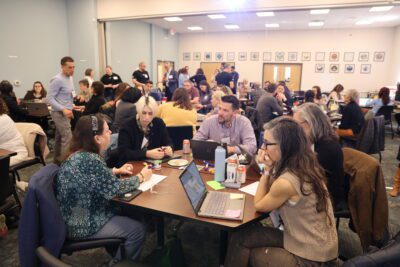
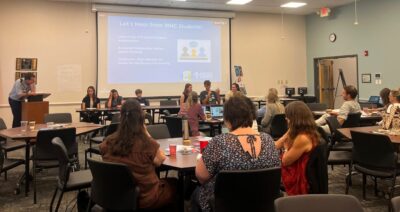
The WNC Resilience Project is helping western North Carolina’s schools transform crisis into opportunity by placing educators in the driver’s seat, alongside learners. Rooted in learner voice, community strength, and educator-led innovation, this three-year initiative brings together educators, district leaders, and mission-aligned partners to co-create learning opportunities where resilience and possibility go hand in hand.
The project is spearheaded by Open Way Learning and powered by a coalition of mission-aligned organizations, including Education Reimagined, NC Center for Resilience and Learning, RootED, Land of Sky P20 Council, SparkNC, MGT, Rural Education Collaborative, and Community Share. These partners offer coaching, facilitation, and behind-the-scenes support so that educators can focus on what they do best: working alongside young people to shape meaningful learning experiences. The initiative is made possible through the generous support of The Leon Levine Foundation and Dogwood Health Trust.
What educator-led innovation looks like in practice
Across participating schools, the work looks different, but a few shared elements emerge. Educators are leading the vision. Learners are trusted as partners. And communities are engaged as collaborators, not afterthoughts.
In Buncombe County, educators at Valley Springs Middle School identified a clear need to strengthen learners’ sense of belonging. They knew from both research and lived experience that when young people feel known, valued, and connected, learning deepens and lasts.
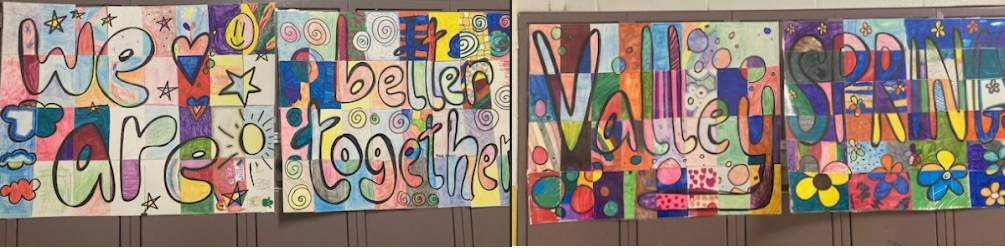
Rather than adopting an external program, Valley Springs educators designed experiences that reflected their community and their students. To kick off the year, learners created individual mystery index cards that, when assembled, revealed a collective message: “We are better together,” alongside the school’s name. Each card was different, but together they formed a tangible reminder that belonging is built one relationship at a time.
 Sign up for the EdWeekly, a Friday roundup of the most important education news of the week.
Educators also launched a “Humans of Valley Springs” storytelling series, inspired by Humans of New York. With guidance and care from staff, learners shared photos and short reflections about their own lives, interests, and experiences. The message was clear that every learner’s story matters, and their voices belong.
And now that spring has arrived, the school is beginning to seed their Resilience Garden. As part of an after-school club, students will meet weekly to determine a garden location, research native plants, start seeds, and begin planting. At a time when division often dominates public discourse, this work offers a powerful reminder that educator-led change, grounded in trust and belonging, can shape schools so everyone has room to grow.
Continued momentum across the region
At Hendersonville Middle School in Buncombe County, educators are working to incorporate GLAD (Guided Language Acquisition Design) strategies into their formal and informal instruction. Their goal is to ensure every learner, especially those developing English proficiency, can access rigorous content while feeling confident and capable in their own voice.
In McDowell County, a cohort of educators led by Morgan Pittman of the North Carolina School of Science and Mathematics is bringing both trauma-informed and resilience-informed practices to their classrooms. While trauma-informed practices center on preventing further hardship from past adversity, resilience-informed practices focus on proactively teaching and building the internal skills students need to successfully adapt to and overcome future challenges. Together, these educators are structuring their teaching to provide what their learners need to reach their fullest potential in our modern world.
Many of these ideas stemmed from needs educators identified in their communities and emerged during empathy-mapping sessions facilitated by the Resilience Project. One of these sessions, Resilience on the River, brought educators outdoors to spend time together floating along the French Broad River to think, dream, and design. Away from meeting rooms and daily pressures, educators had space to reflect on what their learners needed most. That spirit continues to carry forward, as educators test new approaches, learn from one another, and refine their work in real time.
A signal to education leaders
Taken together, this work offers an important signal to education leaders everywhere. When educators are trusted, supported, and invited to lead, they create opportunities where young people can truly thrive.
None of these changes came from a packaged program or a district-wide mandate. They began by listening to learners, educators, and communities. They remind us that transformation begins with creating space for the people closest to students to lead.
What might become possible if more communities embraced this kind of invitation? And how might education shift if rebuilding — whether after a storm or amid everyday challenges — was always seen as a chance to place learners, relationships, and well-being at the center?
In western North Carolina, educators and learners are building the future they desire together, one step at a time.
Editor’s note: Dogwood Health Trust supports the work of EdNC.