
Blue Ribbon Commission | ‘We need to pay our teachers more’

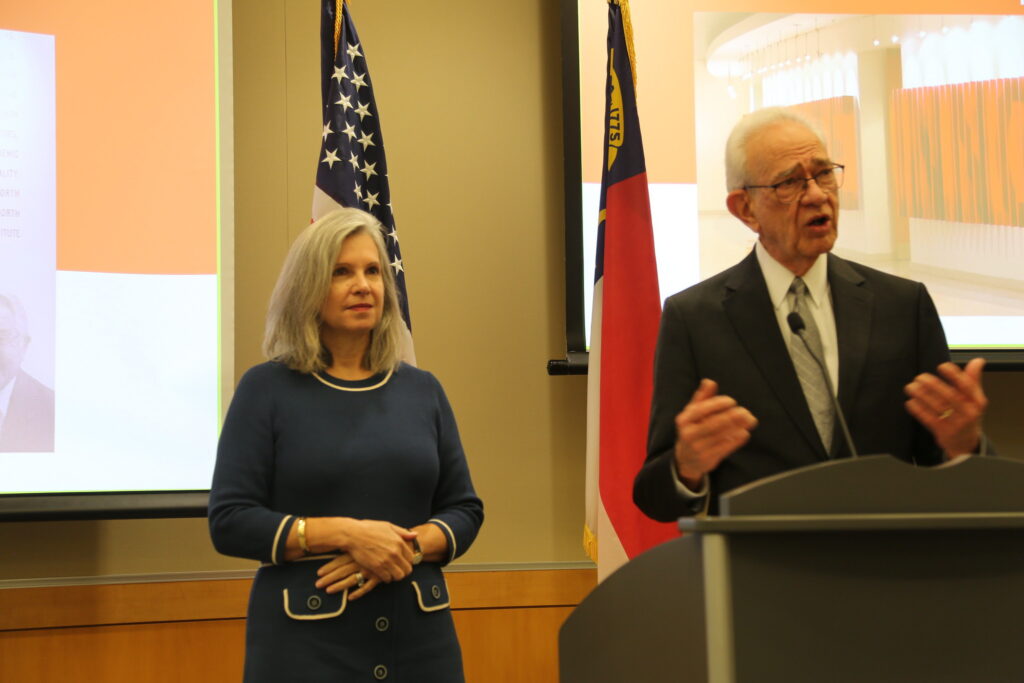
At their fourth monthly session on Monday, members of the Blue Ribbon Commission on Public Education engaged in a spontaneous, unscripted discussion over the pay of North Carolina public school teachers that ranks in the bottom 10 among states.
“There just needs to be an acknowledgement that if we’re going to address teacher compensation that it is going to cost us to fix the problem that has built up over the last several years,” said Robert Taylor, superintendent of Wake County Schools.
The commission is moving toward adopting a set of recommendations on student advancement, early literacy, teacher training, and accountability measures in September. While increasing the supply of high-quality educators has been a focus, the commission has not had teacher pay as an explicit agenda item.
For its July session, the commission met virtually, with discussions taking place in online breakout groups, monitored by staff of the Friday Institute for Educational Innovation at NC State University. Staff reports from the breakouts indicated that commission members had discussed such matters as strengthening kindergarten, adopting a “consistent curriculum,” rehiring retired teachers, and studying the “entire teacher compensation schedule.”
Explore the recent budget and NC teacher pay
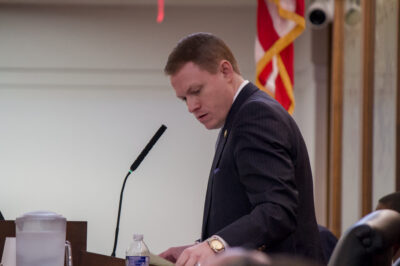
Superintendent of Public Instruction Maurice “Mo” Green ignited the teacher-pay discussion by reacting to the notion of a study. “From at least my vantage point,” he said, “what I thought I was hearing with regards to compensation is very simply that we need to pay our teachers more. So the idea that we’re studying the compensation schedule could be part of that.” Still, Green emphasized that North Carolina should bring teacher pay up to “highest in the Southeast.’’
Allen Gant Jr., chairman of Glen Raven, the Burlington-based global textile company, spoke in favor of examining the state compensation structure. “The total system needs to be looked at, not just more (money),” he said. “We all agree more, but do it the right way so you eliminate the problem areas.”
Lisa Godwin, a beginning-teacher coach in Pender County who was the 2017 state teacher of the year, noted that she is in the 29th year of her career. “I’m one of those who is frozen,” she said, referring to the salary schedule under which teachers from 15 to 24 years of service receive the same state base pay, with a modestly higher pay plateau from 25 years to retirement.
When Godwin began her career in 1997, she said, “there were so many things that made teaching appealing and now those things are slowly going away.” She mentioned in particular regular bonuses and annual “step” pay raises. North Carolina, she said, should “revisit the past,” bringing back “what was good in the heyday of teaching and education.”
 Sign up for the EdDaily to start each weekday with the top education news.
Connie Book, president of Elon University, proposed that the commission frame the issue in terms of affording teachers “a quality of living that mirrors the respect that we hold’’ for the profession.
Matt Bristow-Smith, principal of Edgecombe Early College High School, argued that North Carolina teachers’ finances have eroded in light of inflation. “What we have effectively done,” he said, “is lowered the quality of living for teachers because the earning power of what teachers actually make is less than it was a decade ago.” Perhaps the state could index pay to inflation, he said, while immediately acknowledging that measure would be “controversial.”
Brenda Berg, president of BEST NC, a nonprofit coalition of 100 business leaders, said the current pay structure is “very confusing.’’ There are, she said, “some interesting strategies’’ that should be examined rather than “just piling on the old system.”
Taylor, the Wake County superintendent, had the last word in the impromptu teacher-pay discussion. “We can do all the things that make it (the compensation structure) look pretty,” he said, “but we’re at the bottom both in the region and the nation. The longer we take to fix it, the harder the problem becomes to fix.”