
Perspective | We asked 500 North Carolina parents about books at home. Here’s what they told us.
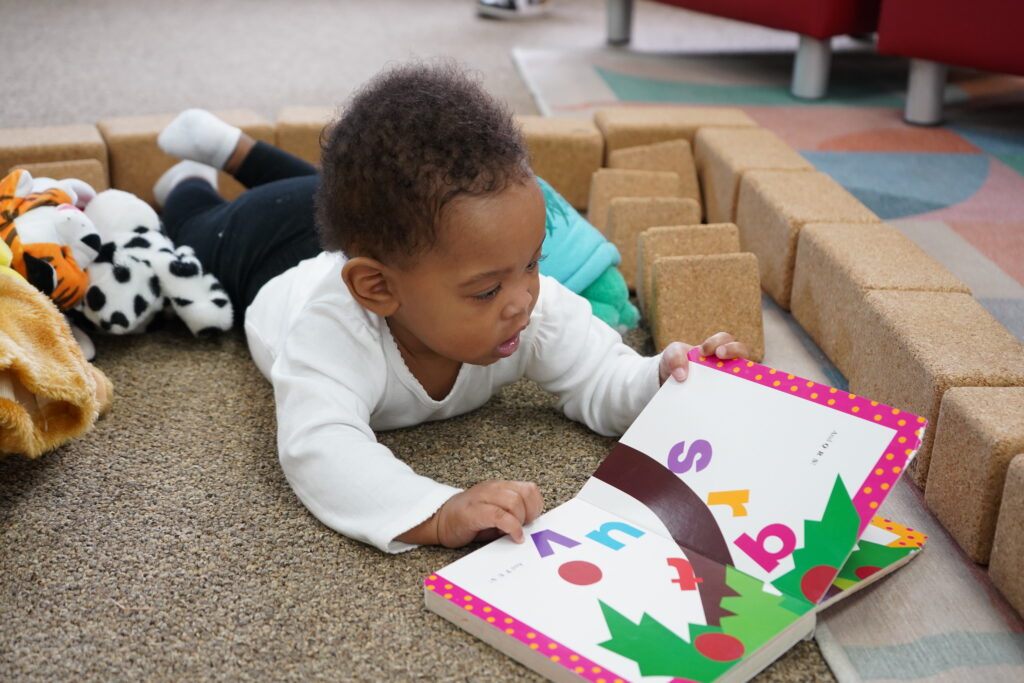
Even if I forget to read, my son will bring me a book and say,
— Durham parent of a toddler
“Mommy, can we read?”
That really warms my heart….
By the time a North Carolina toddler turns 2, there’s a 40% chance they already have their own tablet. A 2025 report from Common Sense Media found that screen time at home for young children now averages about two and a half hours a day, and a growing share of it is spent on short-form video — TikTok, YouTube Shorts, the kind of clips built to be watched once and swiped past. It’s a snapshot of what childhood looks like right now, nationally.
We wanted to know what it looks like here, specifically, in North Carolina homes — and what’s standing between parents and the shared reading they say they want with their babies and children.
We know a little about why that story matters: Children who grow up around books gain real, measurable advantages in school — years’ worth, by some estimates, regardless of their parents’ income or education. So this fall, Book Harvest partnered with the nonprofit think tank Capita to ask 500 North Carolina parents of children 12 and under what their home reading life actually looks like, and what gets in the way.
The first finding was immensely hopeful: 92% of North Carolina parents say reading to their children every day matters to them. Whatever else this survey turned up, it didn’t turn up a motivation problem. Parents want this.
What they don’t always have is the books. Nearly four in 10 North Carolina parents told us cost is what keeps them from building a home library; among parents of color and parents without a high school diploma, it’s closer to one in two. More than four in 10 reported having fewer than 25 children’s books in their home — books that would fit on two small shelves — and 7% reported having fewer than five. Scaled across the state, that’s more than 500,000 North Carolina families with young children who are going without an adequate home library — not because they don’t value reading, but because books cost money.
Cost wasn’t the only barrier parents named. Echoing what’s happening nationally, 43% of North Carolina parents told us that their child’s difficulty sitting still or paying attention gets in the way of reading together. These aren’t separate stories from the Common Sense Media numbers above — they’re the same story, showing up at North Carolina kitchen tables. And 35% of parents named something simpler and just as real: a lack of time. Work, caregiving, and the sheer logistics of family life eat the time and energy that a bedtime story requires.
 Sign up for Early Bird, our newsletter on all things early childhood.
We want to say this again, because it’s the finding that matters most: none of this is a motivation problem. A parent who doesn’t read aloud as often as she’d like isn’t failing her child. She may be exhausted. She has to contend with devices engineered by the most sophisticated behavioral scientists on the planet to capture a child’s attention and hold it. Or she may simply not have enough books in the home to make reading together an easy, obvious thing to do. Or all of the above.
Exhaustion, screens, a lack of books: two of those problems are hard to solve. One of them isn’t — and it’s the one we can do something about today.
And we’re not starting from nothing. North Carolina already has a generous, growing community of people getting books into children’s hands. Reach Out and Read trains the trusted messengers of pediatricians to send families home from well-child visits with a book and encouragement to read. Dolly Parton’s Imagination Library mails a free book every month to enrolled children, starting at birth and continuing until age five. Book Harvest reaches families at birth, at kindergarten, and over the summer — the moments when a child’s relationship to books is most fragile and most formative.
Together, these efforts and others reached 70% of North Carolina parents with free children’s books in the six months prior to our survey. And this year, The Leon Levine Foundation committed $10 million over five years specifically to help this work grow in the North Carolina counties where the need is greatest.
That’s real progress, and it’s worth celebrating. But a survey like this one is also a starting point, not a conclusion. We learned enough from 500 North Carolina parents to know that the barriers here — cost, screens, exhaustion — are not unique to our state, and that the solutions deserve more than a single survey can offer.
So we’re taking this work further: this North Carolina survey is becoming the foundation for a national one, and this fall, Book Harvest will use these findings from parents across 50 states to publish a children’s home library report, an accounting of how close American children are getting to the home libraries they deserve, and what it will take to close the distance. That report is where we’ll lay out, in full, the case for a standard we believe every child in this country should be able to reach — 100 books in their home by age 10.
For now, here in North Carolina, the picture is simple enough to act on. Parents want to read to their children. Many of them don’t have enough books to do it the way they’d like. That is a gap we know how to close — one home library, one shelf, one child at a time.