NC enrolled in federal school choice tax credit following veto override — and other legislative news

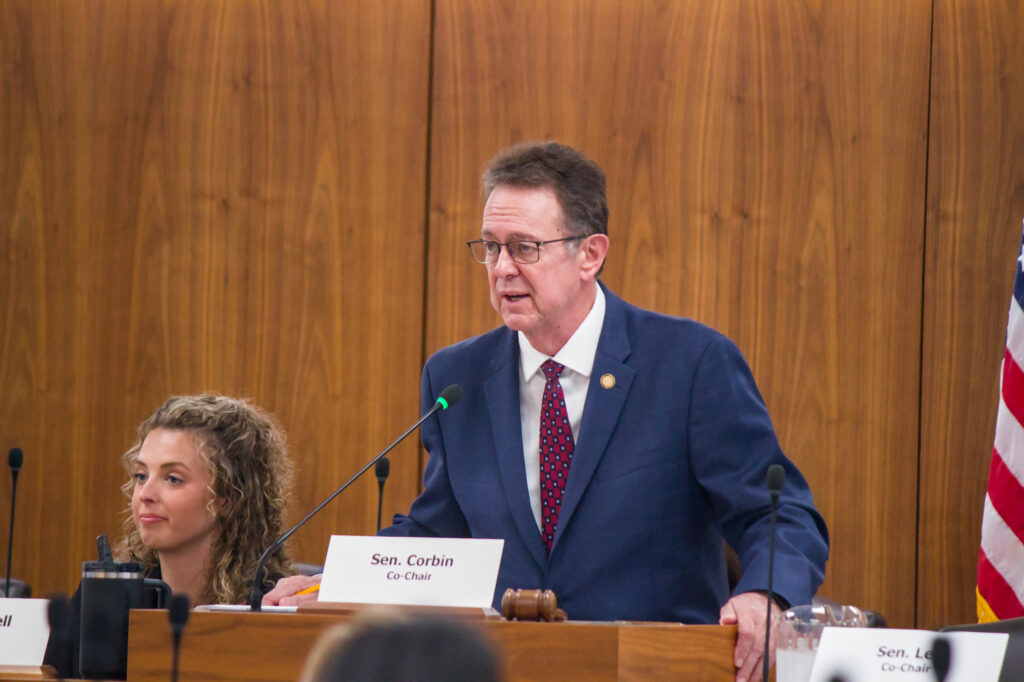
A bill enrolling North Carolina in a new federal school choice tax credit is now law after Senate Republicans voted to override Gov. Josh Stein’s veto on Wednesday. The program will offer people in participating states up to a $1,700 tax credit annually for donations made to qualifying “scholarship granting organizations.”
House Republicans overrode the veto in May with the help of two former Democrats who are now unaffiliated. Wednesday’s Senate vote was 30-19 along party lines, representing the three-fifths supermajority needed to override a veto in North Carolina.
In a statement released after House Bill 87 was overridden, Stein said he vetoed the bill because he was waiting for “sound guidance” from the federal government on how the school choice program would be implemented. Stein previously said he intended to opt North Carolina into the program eventually.
“We need to put more public dollars into our public schools, and I will continue to do everything I can to provide more support for public school kids,” Stein said in the statement.
“I see potential opportunities for public school students to benefit from this program,” he added. “We are working on a solution to make it easy for North Carolinians like me who want to direct their federally reimbursed donations to scholarship-granting organizations that directly benefit public school students, and I look forward to sharing more once the federal guidance has been provided. Together, we can elevate high-impact programs that support public school kids with tutoring, after-school programs, summer learning, workforce development, and more.”
Sen. Jay Chaudhuri, D-Wake, echoed Stein during the floor debate before the vote. Chaudhuri voiced concerns about federal cuts to programs like Medicaid and the Supplemental Nutritional Assistance Program (SNAP) and urged his colleagues to uphold the veto because of the lack of federal guidance.
“Without federal guidance on how to monitor and oversee scholarship granting organizations, and without clarity on whether North Carolina’s own oversight body — the State Education Assistance Authority — can set its own eligibility requirements, we are being asked to opt into a program built on an unfinished foundation,” Chaudhuri said.
Sen. Michael Lee, R-New Hanover, countered that the federal bill has “quite a bit of detail,” that 31 states have already opted into the federal choice program, and that “this doesn’t just help some kids, this helps all kids.”
“Families across the state want to have a choice in where to send their children to school,” Senate President Pro Tempore Phil Berger, R-Rockingham, said in a press release. “In North Carolina, we have great public schools that are supplemented by public charter, private, and home schools. Participating in President Trump’s landmark school choice program gives parents another opportunity to obtain an education that best fits their child’s needs.”
After the vote, reactions to the override were mixed.
A press release from Parents for Educational Freedom in North Carolina (PEFNC) said the override “marks a historic step for North Carolina families.”
“By opting into the federal Education Choice Tax Credit program, our state is embracing a common sense policy that expands opportunity, strengthens parental choice, and aligns North Carolina with a growing national movement to ensure education dollars follow students, not systems,” PEFNC said in the release.
North Carolina Association of Educators President Tamika Walker Kelly denounced the override. “Rather than invest in the students who need it most,” she said, “lawmakers have found another way to provide tax giveaways to the wealthy at the expense of working families who depend on public education.”
 Sign up for the EdWeekly, a Friday roundup of the most important education news of the week.
More on the new federal tax credit
North Carolina is now enrolled in a program that will offer a dollar-for-dollar tax credit of up to $1,700 per year for taxpayers who donate to organizations that grant elementary or secondary education scholarships. Unused credit can be rolled over for up to five years.
Last year, Rep. Julie von Haefen, D-Wake, said “there is literally no other cause existing right now — not children’s hospitals, veterans’ groups, disaster relief organizations — that taxpayers can contribute to and receive the entire cost of their contribution bankrolled by their federal government.”
The provision outlining the program in federal law instructs the relevant representative of each state to sign up for the program by submitting a list to the federal government. That’s what House Bill 87 does for North Carolina.
Some of the requirements to qualify as a scholarship granting organization under the federal program, which is set to launch in 2027, include:
- Be on the list submitted to the federal government;
- Be classified as a tax-exempt 501(c)(3) organization;
- Not be a private foundation;
- Not co-mingle contributions with funds for purposes other than scholarships;
- Provide scholarships to at least 10 students who do not all attend the same school;
- Not earmark funds for specific students;
- Prioritize returning students and siblings of current recipients;
- Spend not less than 90% of the organization’s income on scholarships for eligible students;
- Provide scholarships only for elementary and secondary education expenses; and
- Verify students awarded scholarships come from households that make under 300% of the local area median gross income (equivalent to more than $300,000 in some parts of the country).
Eligible students must live in the same state as the organization, come from households that meet the income requirement, and must qualify to attend a public elementary or secondary school. Scholarships could then go toward tuition, books, and other education expenses, and could be stacked on top of state dollars in states like North Carolina that already have their own voucher programs.
A New York Times report about the program said that “public school students would also likely be eligible, but what they would use the money for and how that would work was not immediately clear.”
The U.S. Secretary of the Treasury is tasked with issuing regulations and other guidance required to carry out the program.
Read the full provision (Section 70411) detailing the tax credit here. Read a federal fact sheet on the program here. Read more about the federal choice program in EdNC’s previous reporting below.
Omnibus bill that would bring ‘transformational shifts in education’ passes Senate committee
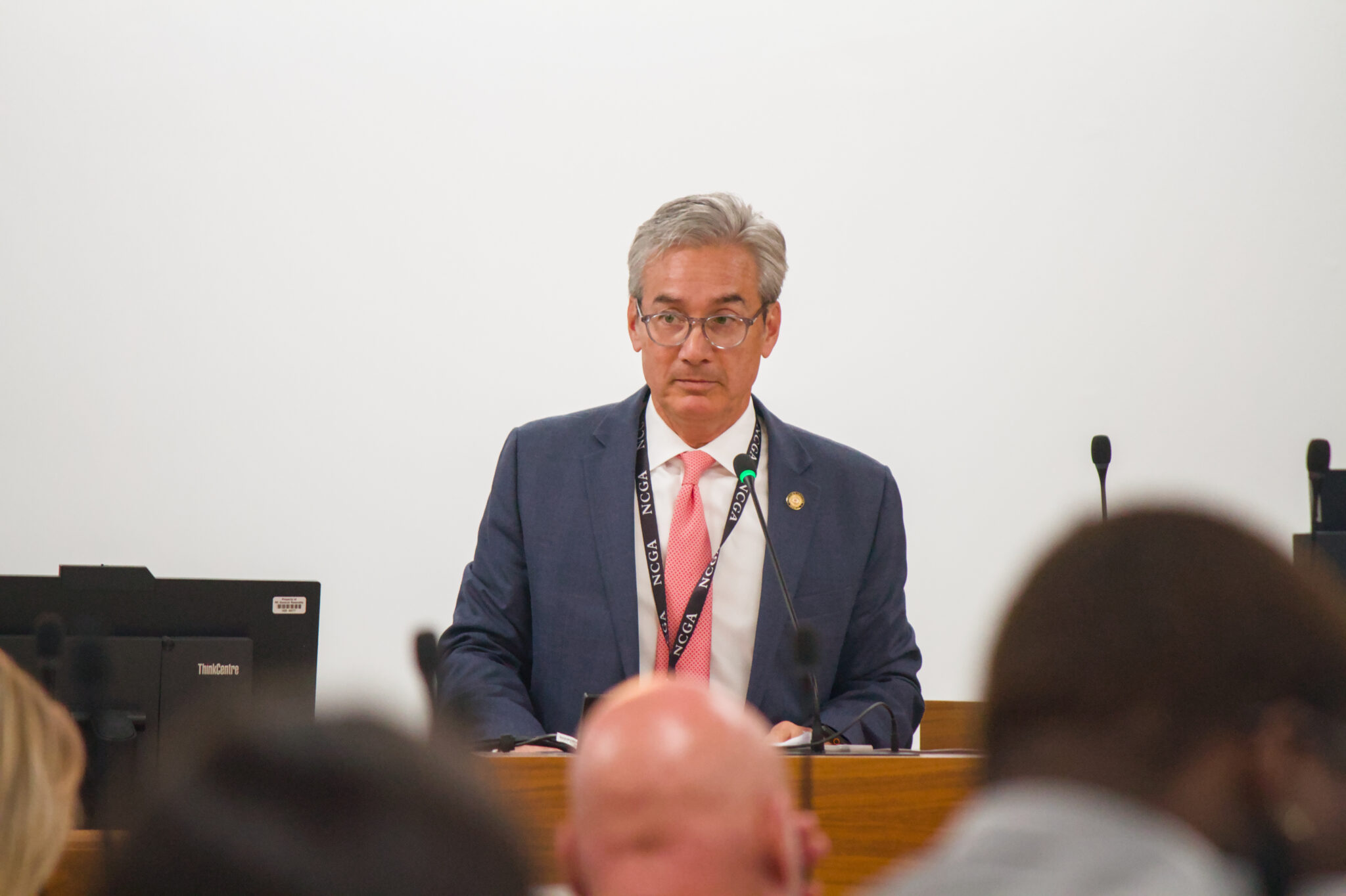
Earlier on Wednesday, Lee introduced Senate Bill 1006 to the Senate Education/Higher Education committee. The bill is titled the “K-12 Innovation and Transformation Act.”
The 33-page bill outlines numerous new programs, pilots, and policy changes that would affect K-12 schools. It includes many budget-related provisions, and comes as a conference committee is negotiating a final state budget.
As for why the contents of this bill were introduced to the Education/Higher Education committee rather than the budget conference committee, Lee said he “wanted to make sure that we had committee time dedicated to some of these really important issues for workforce development and education for our kids in North Carolina.”
Lee explained the sections of the bill to the committee one by one, including some area- and district-specific programs.
“All these things we’re talking about are developed not for these local areas,” Lee said. “They’re developed so that they can be scalable across the state. And I suspect some of these programs, like the one I’m getting ready to talk about, will be scaled across the U.S.”
Sen. Sophia Chitlik, D-Durham, told Lee there is “a lot of great stuff” in the bill and that “I’m a yes to all the big rocks in the bill.” However, she raised a concern about one program that would fund an AI-powered Khan Academy service for academic support in the classroom called Khanmigo.
Below, see explanations of the most notable parts of SB 1006 along with a full list of programs.
An ‘AI academic support program’
Under the bill, Khanmigo, whose website describes it as an AI-powered teaching assistant, would be made available to school districts that elect to use it. Recurring funds totalling over $10 million would be distributed to school districts on the basis of average daily membership (ADM) to pay for the program, with some licenses also going to schools operated by the Division of Juvenile Justice.
Lee said the cost of the service, powered by ChatGPT, is $10 per student. He said the service, for example, will be useful for students who could learn other subjects in their native language while learning English.
Chitlik asked why Khanmigo is singled out in the bill rather than going through a “more standard” procurement process, and whether ChatGPT would be using student data for its own purposes. Lee responded that “a significant amount of due diligence” has been done on Khanmigo.
As for student data, he said data will not be shared and that Khanmigo is not just a conduit for ChatGPT, but sits on top of it and offers specific learning features.
Expansion of Advanced Teaching Roles and TeachReadyNC
SB 1006 would also make changes to the Advanced Teaching Roles (ATR) program and allocate funding to expand it to more districts and schools.
EdNC previously reported on ATR and TeachReadyNC, a proposed apprenticeship program for first-time teachers, when the Joint Legislative Education Oversight Committee heard a presentation in support of the programs in March.
Through ATR, some districts have implemented a model that gives schools a new organizational structure. Lead teachers oversee a team of classrooms and receive higher pay. Some teachers are also designated as “Classroom Excellence” teachers, accepting higher pay in exchange for larger class sizes.
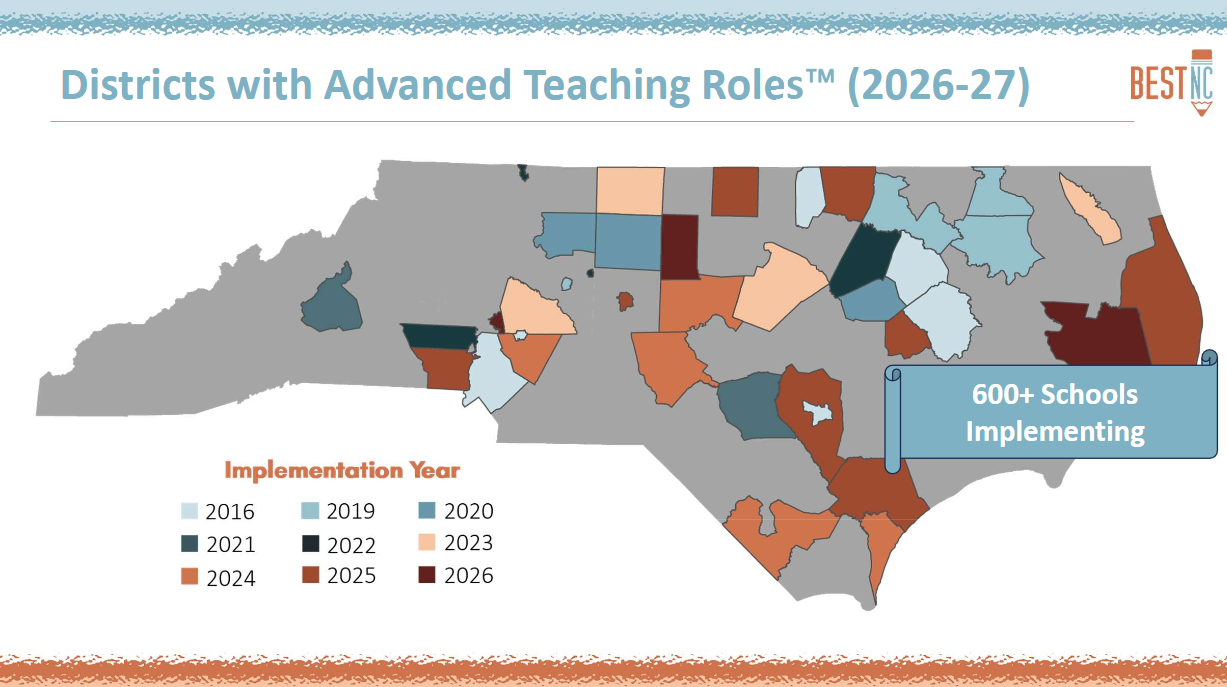
The bill would appropriate an additional $4 million to ATR, bringing the total to $9.5 million. Lee said that amount would clear the backlog of 16 districts who are waiting to implement ATR and fund 16 more, adding 32 districts total.
It would also establish TeachReadyNC as a teacher apprenticeship program to “increase the number of professionally licensed teachers in the State and improve teacher competency, student outcomes, and teacher retention in the State,” according to the bill text.
TeachReadyNC would “link” with ATR districts and seek to be recognized by the U.S. Department of Labor in order to unlock federal funding, Lee said.
Other provisions
- North Carolina High School Redesign Commission. An independent commission would be established to “explore and recommend changes to policies and systems governing high school and higher education that will better prepare North Carolina students for success as they transition to higher education or the workforce,” the bill text says. Members of the commission would be appointed by various offices or would represent certain organizations named in the bill.
- SME Education Foundation Pilot Program. The SME Education Foundation would create a pilot program for the 2026-27 and 2027-28 school years for 10 high schools to receive equipment, curriculum, professional development, scholarships, and STEM-focused extracurricular activities for students and teachers that align with the SME Partnership Response in Manufacturing Education (PRIME) Program.
- Prohibition on Excessive Expenditures. The Department of Public Instruction (DPI) would review monthly expenditures by school districts from specific state-funded allotments beginning with October of each school year, and would remit payment if funds were over-expended. Lee said DPI is “very supportive” of this provision.
- Renewal School System Modifications and Study of Renewal School System. This provision would extend the timeline under which renewal school districts are reviewed by the State Board of Education, from 2022-23 to 2028-29, and would extend the follow-up review obligation from every three years to every five years.
- Expand Automatic Enrollment in Advanced Courses in K-12 Schools to Include English Language Arts Courses. Eligible students would be automatically enrolled in more advanced courses unless parents opt out. Currently, this applies for mathematics courses only.
- SparkNC Expansion. Lee said SparkNC, a nonprofit that works to ensure every North Carolina student has the skills to thrive in a world transformed by technology, would be expanded to every school district. Read more about SparkNC here.
- Extended Learning and Integrated Student Supports (ELLISS) Competitive Grant Program. This provision allows programs for “at-risk” students that “raise standards for student academic outcomes” to be conducted by nonprofits, rather than only schools, Lee said.
- Schools in Commercial Zones. By right or by special use, schools would be able to operate in areas zoned for commercial use.
- Teacher Evaluation Pilot Program. A pilot program for the 2026-27 school year through the 2029-30 school year would seek to establish a “robust set of meaningful teacher professional evaluation tools,” according to the bill text. School districts would be able to apply to participate in the pilot, which would be given $6 million in nonrecurring funds.
- Revision of Healthy Living Standard Course of Study. The State Board of Education would be required to revise the NC Standard Course of Study for Healthful Living. Lee singled out “the neurological basis of addiction,” which is included in the bill text, as a topic to focus on, among others.
- Released Time Religious Instruction. An amendment introduced by Sen. Brad Overcash, R-Gaston, introduced this provision, which “would allow our students in public schools to take a one-hour excused absence to engage in religious instruction given by a private entity off-campus.”
- Local Schools Open Enrollment Study. The North Carolina Collaboratory would study how school districts can allow students to attend any school within the school district in which the student lives, reporting its findings in April 2027.
- Community College Seamless Skills Initiative. An initiative between Fayetteville Technical Community College and Wilkes Community College to “establish high-tech pathways.”
- Competency-Based High School and Healthcare and High-Tech Pathways Program. Mooresville Graded School District and Mitchell Community College would partner and “shall contract with an organization with demonstrated expertise in designing and implementing learner-centered, modular, and competency-based high school programs that align with emerging healthcare and high-tech career pathways,” according to the bill text.
- Lighthouse Math Project. Wake Technical Community College and the Wake County Public School System would partner to increase the amount of students eligible to complete college-level mathematics after high school. This partnership would also use Khanmigo, the AI-powered tool.
- Competency-Based Education and High School Redesign Strategic Network. The districts and community colleges named in the previous three programs would collaborate with SparkNC to share what they learn through the respective programs.
- Competency-Based Innovation Grant Program. Funds totaling over $5 million would be available to districts to “support the transition to competency-based education (CBE) models that focus on mastery of learning rather than instructional time.”
- Office of Learning Research Evaluation. The North Carolina Collaboratory’s Office of Learning Research would be instructed to report on the programs laid out in the bill, including reporting the total number of students engaging with the programs and learning outcomes.
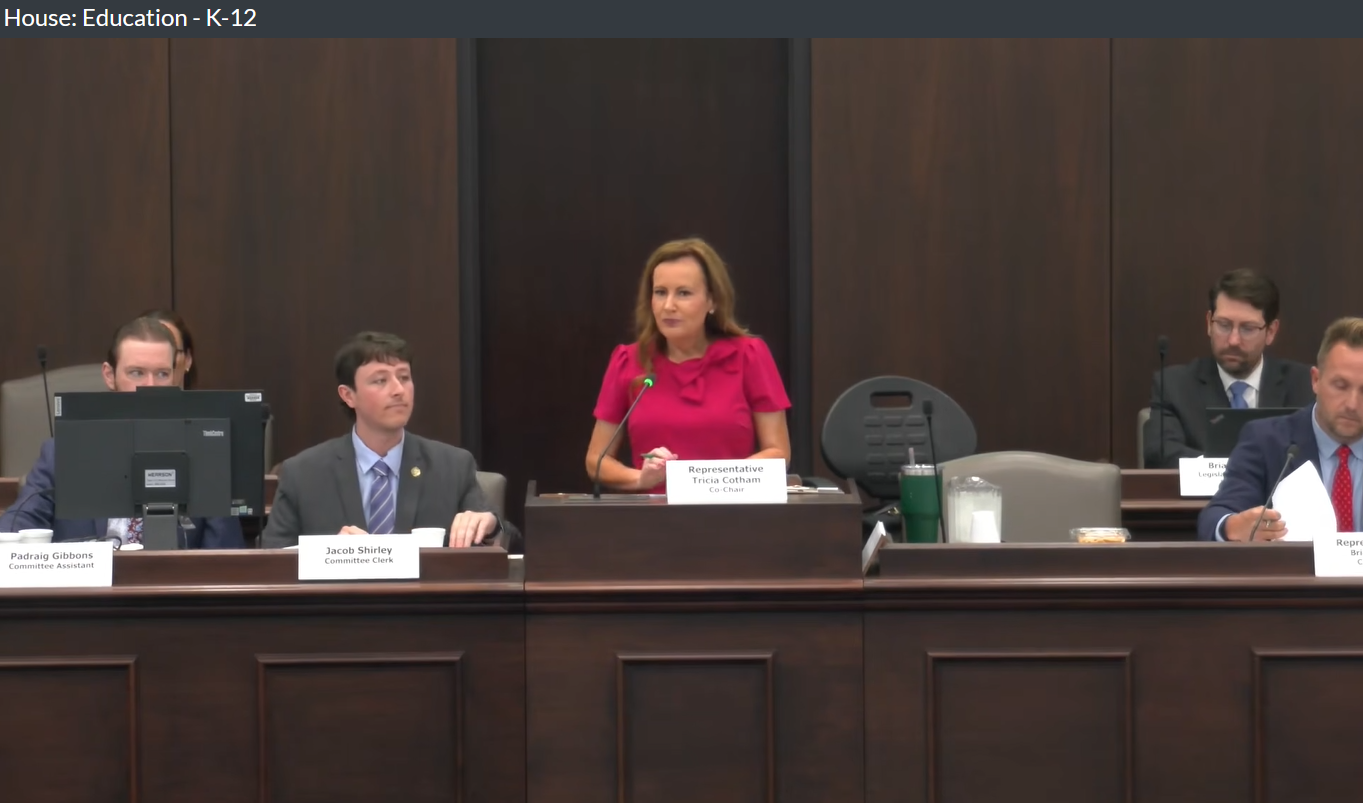
House committee urges Congress to dismantle the Department of Education
In a resolution passed by the House Education K-12 committee on Tuesday, Congress is urged “to support the devolution of power from the U.S. Department of Education to the states.”
The resolution has no effect except expressing support for the federal government’s efforts to eliminate the Department of Education.
An executive order signed by President Donald Trump in 2025 says, in part, “The Secretary of Education shall, to the maximum extent appropriate and permitted by law, take all necessary steps to facilitate the closure of the Department of Education and return authority over education to the States and local communities while ensuring the effective and uninterrupted delivery of services, programs, and benefits on which Americans rely.”
Since then, Secretary of Education Linda McMahon has sought to move responsibilities of the Department of Education to other departments and has fired thousands of workers.
Rep. Brian Biggs, R-Randolph, said no changes will be made to the services the Department of Education provides — they will just be housed in different places, with “unnecessary bureaucracy” stripped away.
“We’re saying that we support returning education authority back to the states. Congress can preserve funding and student protections while eliminating unnecessary bureaucracy,” Biggs said. “Our position is simple: Keep the support students need, move the decision-maker closer to the parents, teachers, local boards, and states. That’s what this bill does.”
Two other bills were passed by the committee on Tuesday: House Bill 1026, which would allow schools to use an additional three days of remote instruction for emergencies, and House Bill 1124, which would appropriate funds for a virtual school psychology training program.