
Amendment to elect State Board of Education members passes House committee, and more from the legislature

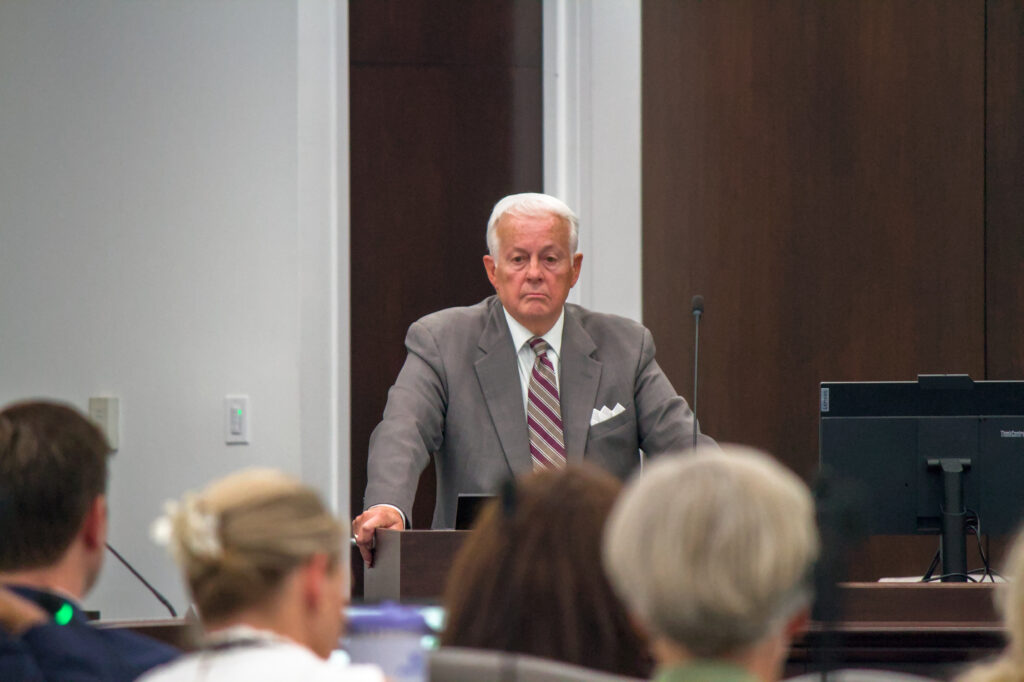
House Bill 144, which aims to amend the North Carolina Constitution to make non-Council of State State Board of Education (SBE) seats elected, four-year term positions, passed the House Education – K-12 Committee on Tuesday. If the bill passes and voters approve the amendment, SBE members would be elected from districts established by the General Assembly.
Currently, the Board is made up of the lieutenant governor, the state treasurer, and 11 members appointed by the governor for eight-year, overlapping terms, subject to confirmation by the General Assembly. They represent eight districts drawn by the General Assembly. The Board is also served by eight non-voting advisers, including a local superintendent, a local board member, two N.C. principals of the year, two N.C. teachers of the year, and two high school students.
The amendment would also make the Superintendent of Public Instruction an ex officio member and the chair of the Board, rather than a secretary to the Board. The current superintendent is Maurice “Mo” Green.
“There’s a cliché that we’ve all heard that goes something to the effect that, ‘If you want to get different results, you don’t continue to do things the same way that you’ve been doing them,’” said Rep. Hugh Blackwell, R-Burke. “You could say this amendment is recognition that maybe we need to look at changing the way we lead education in North Carolina.”
Blackwell said that if the amendment is approved by voters, “enabling legislation” that would specify the details of Board member elections and district maps could be passed after November.
 Sign up for the EdWeekly, a Friday roundup of the most important education news of the week.
That legislation would be necessary because the amendment doesn’t specify a district map or whether State Board member elections would be partisan or nonpartisan. Blackwell indicated he supports the elections being partisan and using existing Congressional district lines.
Blackwell previously introduced a similar constitutional amendment in 2022, but the bill never saw a vote on the House floor.
Other states have varying models for selecting members of their state boards of education. States that elect members on partisan ballots include Alabama, Colorado, Michigan, Texas, and Utah, according to 2024 data from the National Association of State Boards of Education. About 30 states rely on their governor to appoint members that are then confirmed by the state legislature, according to the data.
If passed, HB 144 would continue a pattern of the North Carolina’s Republican-led General Assembly shifting power away from elected Democrats. Last year, a new law further strengthened the authority of the Charter Schools Review Board (CSRB), transferring additional power from the Board and state superintendent.
Democrats on the committee voiced their skepticism of what they said was a policy making the Board more political.
Rep. Marcia Morey, D-Durham, offered an amendment to the bill that would have required an independent redistricting commission to draw the election district map “to try to have as little possible politics involved in it.” That amendment was voted down.
When asked if there was a particular problem targeted by the change to an elected Board, Blackwell said “we are not getting the outcomes across North Carolina for our students that we need.”
“I think that (would be helped by) having a more cohesive State Board that, on the one hand, is headed up by the elected superintendent,” Blackwell said. “And on the other hand, the parents across the state and the voters who are interested in education have an opportunity to put somebody on the State Board of their own choosing that they feel can better meet the needs of our students.”
Morey said she thinks “it makes total sense” to have the state superintendent chair the Board, but that electing Board members will make the Board “much more of a political animal.” She said voter turnout in North Carolina for down-ballot races is “abysmal” and raised a concern about the time and money that would be spent on election campaigns.
“I understand the concern, but I think we are kidding ourselves if we think we can take politics out of education,” Blackwell had said earlier in the meeting.
If SBE seats become partisan positions, it would be a continuation of a statewide trend of local board of education races becoming partisan. More school districts across the state are choosing to put the party of local board of education candidates on the ballot, according to an EdNC analysis ahead of the 2024 election.
Other bills pass the committee
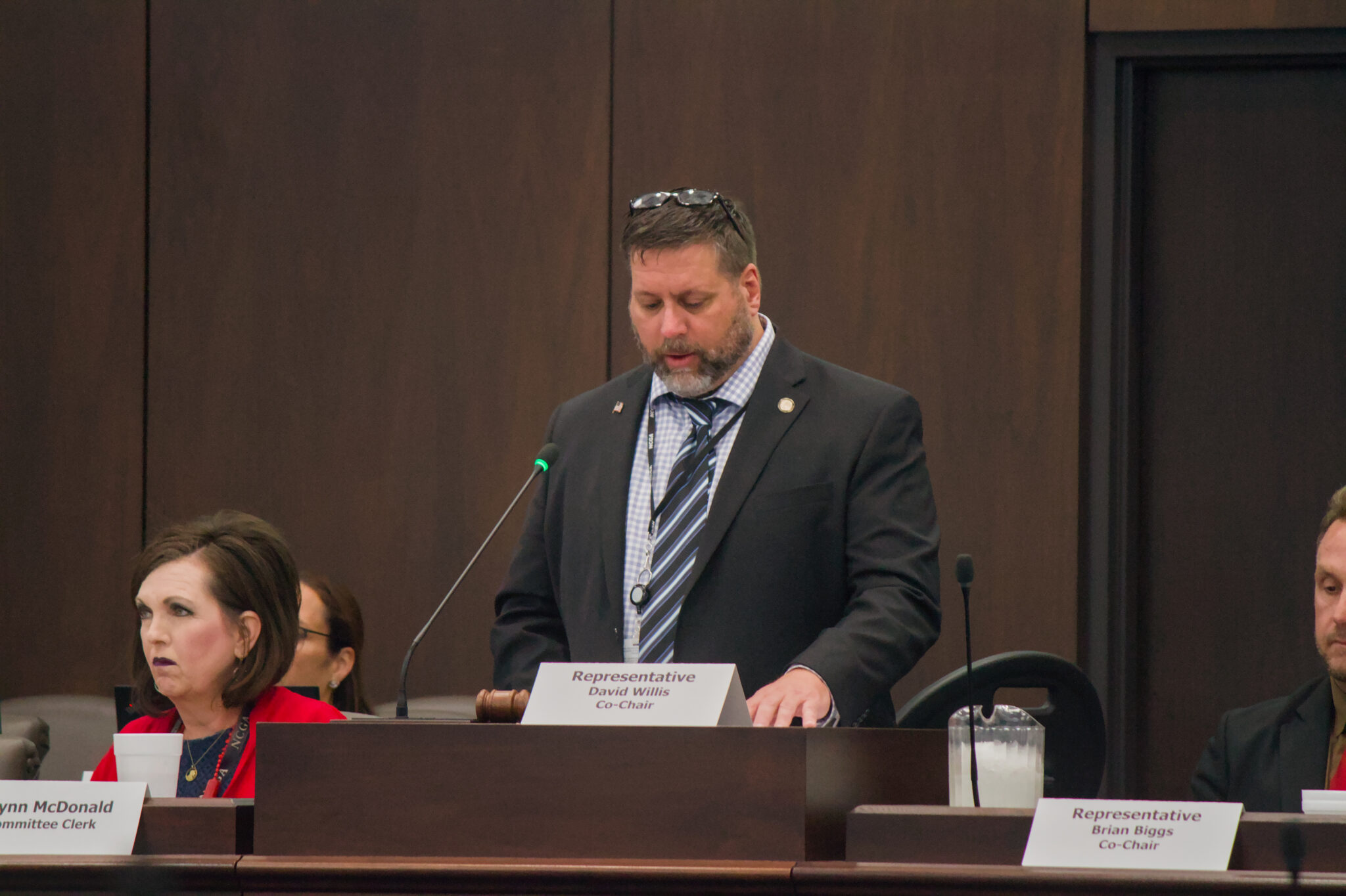
Three other bills were passed by the committee:
- House Bill 1443, “Principal Fellows & MSA Intern Stipends,” which would make various changes to the Principal Fellows program, including an expansion of funding for more students and adding a reporting requirement that Blackwell said would verify the program is working — “that we’re really getting a significant portion of those students who are actually going into school administration.”
- House Bill 1110, “Early Intervention School Attendance Pilot,” which would pilot a program to use “data-driven attendance intervention systems” to reduce chronic absenteeism in schools.
- House Bill 451, “Diabetes Education for Parents,” which would require that “each school provides parents and legal guardians with information about Type 1 and Type 2 diabetes at the beginning of every school year.”
House overrides veto of federal school choice bill
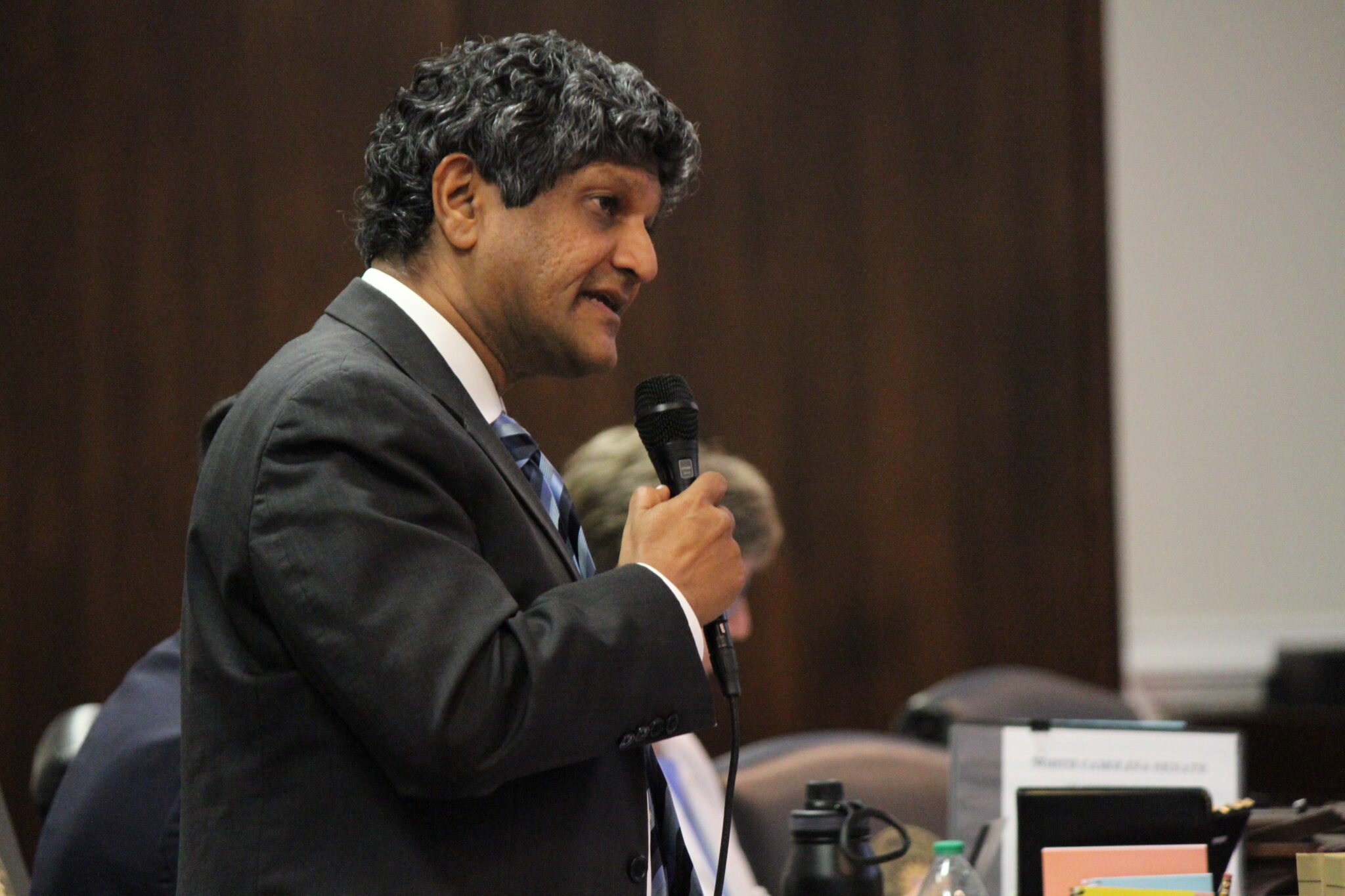
House Bill 87, a bill that would elect North Carolina to participate in a new federal school choice program, was vetoed by Gov. Josh Stein in August of last year. On Wednesday, the House voted to override the governor’s veto.
The vote was 73-46, with two former Democrats — Rep. Carla Cunningham, U-Mecklenburg, and Rep. Nasif Majeed, U-Mecklenburg — joining Republicans to vote in favor of the override.
“Today’s override was another major win for North Carolina students and parents,” said Speaker of the House Destin Hall, R-Caldwell, in a statement. “Gov. Stein and Democrats tried to stand in the way of giving families more control over their children’s education, but Republicans, yet again, stood firmly on the side of educational freedom. This vote was about trusting parents and giving students more choices, because when our kids succeed, North Carolina succeeds.”
Now, the bill must be overridden in the Senate before becoming law. An override vote has not been scheduled.
The federal school choice program, officially called the Educational Choice for Children Act (ECCA), would offer people in participating states up to a $1,700 tax credit annually for donations made to qualifying “scholarship granting organizations.” In states that opt in, taxpayers can begin claiming the credit for contributions made in January 2027.
When Stein vetoed the bill enrolling North Carolina in the ECCA, he said he supports school choice, but does not agree with funding private school choice initiatives while “cutting public education funding by billions of dollars.”
“However, I see opportunities for the federal scholarship donation tax credit program to benefit North Carolina’s public school kids,” Stein said at the time. “Once the federal government issues sound guidance, I intend to opt North Carolina in so we can invest in the public school students most in need of after school programs, tutoring, and other resources.”
Read more about HB 87 in EdNC’s previous coverage.
Advocates support putting more AEDs in schools
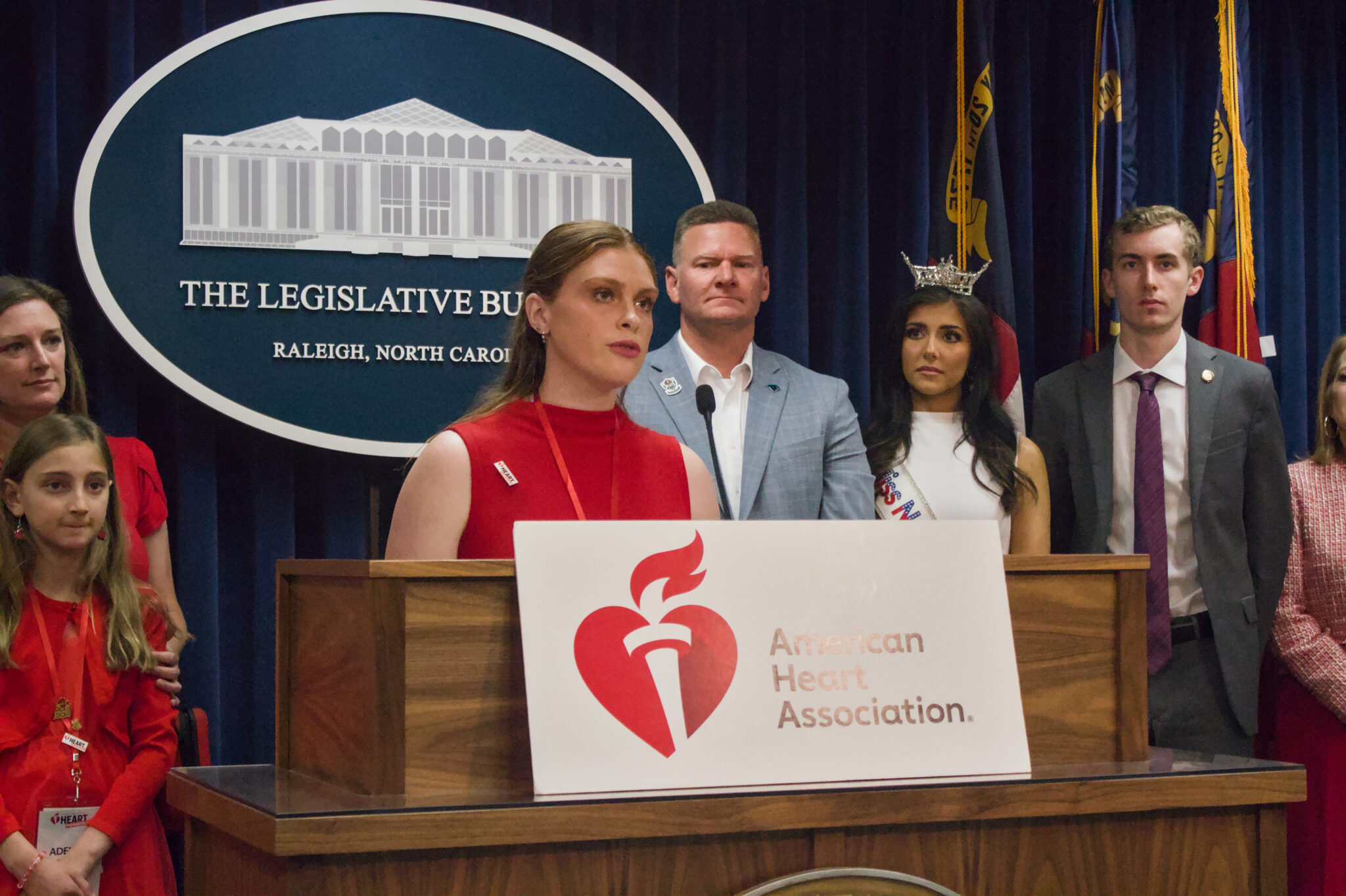
Advocates gathered for a press conference on Wednesday to call for the inclusion of compromise language in the budget that would place more Automated External Defibrillators (AEDs) in schools and require staff training.
Two bills, Senate Bill 276, “The Smart Heart Act,” and House Bill 886, “AEDs and CPR in Public Schools,” include similar language. HB 886 was passed nearly unanimously last year by the House, but the Senate bill hasn’t reached the floor.
At the press conference, Rep. Wyatt Gable, R-Onslow, said 13 people experienced a cardiac emergency at North Carolina schools during the 2023-24 school year, four of which were children.
“It kind of didn’t make sense to me that we didn’t have defibrillators in every public school, and that’s why I wanted to make sure we had this legislation be presented,” Gable said. “I think we have a good, good chance of getting this across the finish line, hopefully.”
SB 276 would appropriate $2 million for purchasing AEDs and developing emergency response plans. HB 886 doesn’t include an appropriation.
Emma Kate Burns of the American Heart Association said the hope is that the state will provide funding for increasing the amount of AEDs in schools, rather than local governments. Gable added he has asked the federal government for financial support.
Burns said that as of the 2023-24 school year, 99% of North Carolina schools have an AED, but five districts — Wake, Martin, Haywood, Hertford, and Gaston — reported at least one school without an AED.
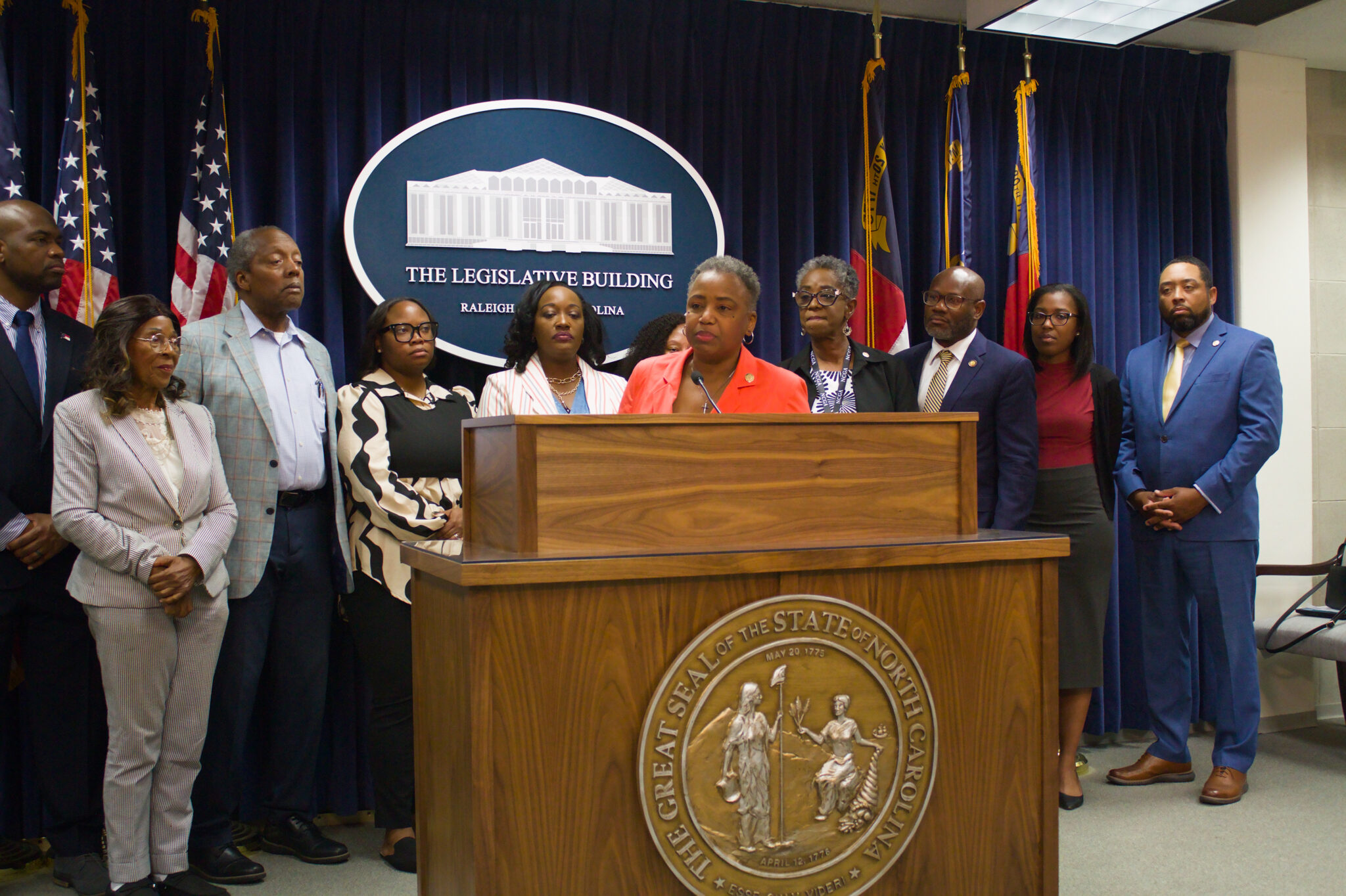
Legislative Black Caucus highlights education, HBCUs
On Tuesday, the Legislative Black Caucus gathered for a press conference to address a range of issues, including education. Legislators also highlighted public school issues such as funding, teacher pay and retention, and school closures.
Rep. Amos Quick, D-Guilford, said Historically Black Colleges and Universities (HBCUs) are not having their funding needs met.
“HBCUs are vital not just for students, but for the state and the nation as a whole,” Quick said. “Limiting the ability of HBCUs to hire, teach, advocate for Black students threatens North Carolina’s future and also threatens the future of our growth.”
An HBCU omnibus bill was filed last month, and is waiting for a hearing in the House Appropriations Committee.
Last week, HBCU advocates, including leaders of nine North Carolina HBCUs, visited the legislature for an advocacy day. Read EdNC’s coverage below.