
SUN Bucks are back — but state funding is needed to ensure the future of this summer food program

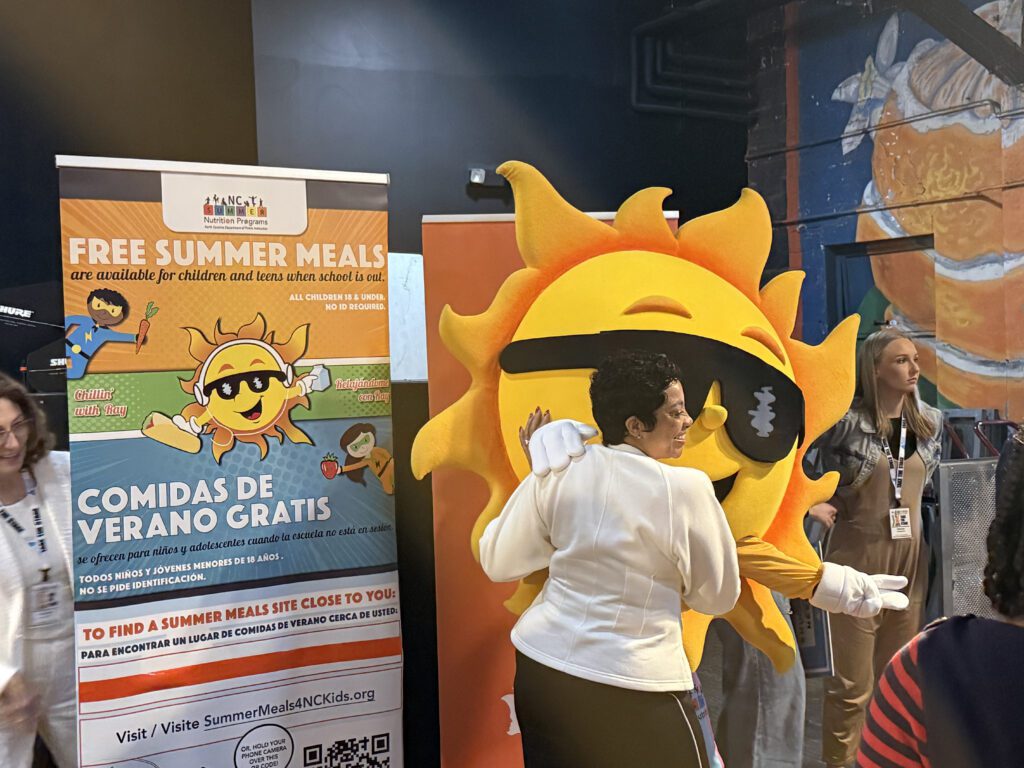
More than 850,000 students across North Carolina rely on school meals and snacks during the school year. When summer break begins, SUN Programs work to fill the gap, providing access to food for children ages 18 and under.
“We’ve seen year after year that a lot of families truly depend on these programs, and we know that will definitely be the case this summer again with the rising cost of gas and food for everyone,” said Thompson Bertschy, program specialist at the Carolina Hunger Initiative, during a recent School Meals for All NC event on summer meals. “These programs are just incredibly critical right now.”
Here’s a look at each of the SUN Programs — including SUN Bucks and SUN Meals — and how to access them.
 Sign up for the EdDaily to start each weekday with the top education news.
SUN Bucks
Started in 2024, SUN Bucks offers families a one-time payment of $120 per eligible child — or $40 per month — to help them buy groceries over the summer. The program is administered by the N.C. Department of Health and Human Services (NCDHHS), and benefits are loaded on a debit-like card that can be used at most major grocery stores, some farmers markets, and some online retailers.
According to a press release, SUN Bucks will reach more than 1 million children across the state this summer, distributing $121 million in the first issuance of benefits alone.
After the absence of a state budget left SUN Bucks at risk of being discontinued for summer 2026, a public-private partnership stepped in to provide funding in January. The state worked with several partners — including the Blue Cross and Blue Shield of North Carolina Foundation, Coca-Cola Consolidated, The Duke Endowment, and Dogwood Health Trust — to secure the $5 million in funding needed to cover the state’s required portion of administrative costs.
Benefits provided through SUN Bucks are fully funded by the federal government, but the U.S. Department of Agriculture requires states to cover 50% of administrative costs. In 2025, the SUN Bucks program brought in more than $125 million in federal funds.
“It’s a 25-to-one federal-to-state match,” said Gov. Josh Stein. “That is an incredible return on state investment.”
Now, the future of the program in summer 2027 and beyond remains unclear. Stein’s proposed budget included recurring funding for the state administrative match funds necessary to operate SUN Bucks, but whether or not the General Assembly will ultimately include that in the state budget remains to be seen.
“I thank the philanthropic partners who helped make another summer of SUN Bucks possible, but it’s time for the legislature to fund this program going forward,” said Stein in a press release.
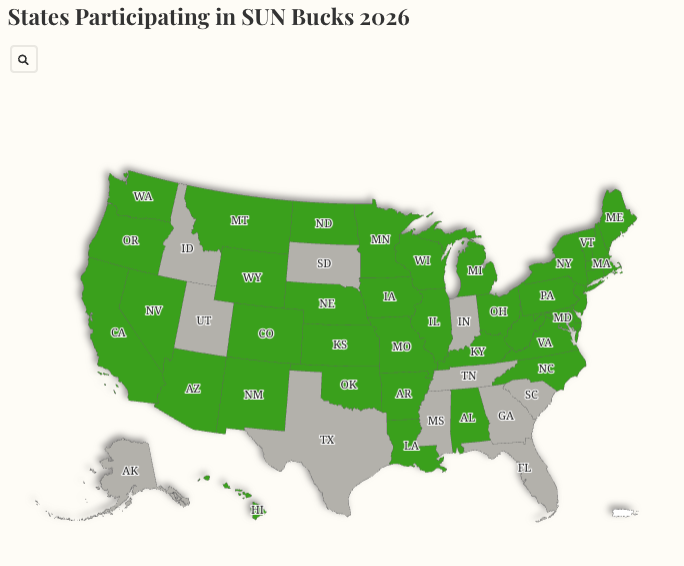
Eleven states — including Tennessee, South Carolina, and Georgia — opted out of participating in SUN Bucks for the summer of 2026.
How to access SUN Bucks
SUN Bucks eligibility is based on household income and can also be determined through participation in certain programs. Many eligible children are automatically enrolled and do not need to apply — for example, if your child is approved for free or reduced-price school meals, they are automatically eligible.
Families who think they may be eligible but were not automatically enrolled, or those who have not yet registered or applied for SUN Bucks, can still do so by visiting the SUN Bucks application page. This eligibility quiz can help determine if your child automatically qualifies or needs to apply. Applications must be submitted by Aug. 15, 2026, to be processed for the 2026 summer period.
As applications are processed, NCDHHS recommends families check their email for decision letters and other notices, including spam and junk folders. New SUN Bucks cards were mailed to families who were automatically eligible in early June, and NCDHHS expects the majority of cards to arrive by June 15. However, delivery of all cards may take up to eight weeks.
To learn more, visit the SUN Bucks website.
Read more
SUN Meals
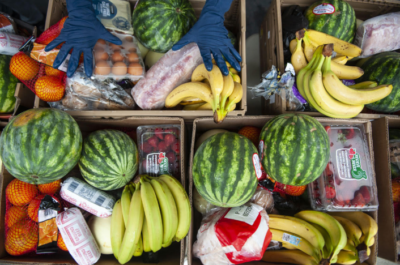
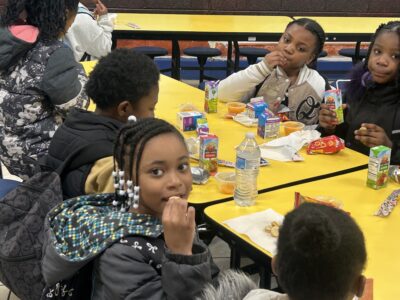
SUN Meals, also called summer meals, are free meals and snacks provided to all children ages 18 and under at schools, parks, and other neighborhood locations.
There are two ways summer meals are provided:
- SUN Meals, also called congregate meals, are eaten onsite at a community location such as a park or library. These sites also often provide learning activities and other enrichment.
- SUN Meals To-Go, also called non-congregate meals, are available in low-income, rural areas and can be eaten off site. Meals can be provided through pick up or delivery, children are not required to be present, and multiple meals can be provided at once, helping address transportation barriers families may face.
These meals are provided by sponsors — nonprofits, school districts, and other agencies — that work with the N.C. Department of Public Instruction (DPI), which approves sponsor participation and monitors compliance.
Participation in summer meals is growing — in 2025, 5.3 million summer meals were served across the state, up from the 4.2 million meals served in summer 2024, according to the Carolina Hunger Initiative (CHI).
That growth has been driven, in part, by the rapid expansion of SUN Meals To-Go. According to the CHI, there were eight SUN Meals To-Go sponsors in summer 2023, 33 sponsors in summer 2024, and 43 sponsors in summer 2025.
How to access SUN Meals
To find a summer meal program near you, you can:
- Use the N.C. Site Finder Map.
- Check your local school district website, social media, or other communications.
- Call the USDA National Hunger Hotline at 1-866-3-HUNGRY (English) or 1-877-8-HAMBRE (Spanish).
- Learn more at go.ncdpi.gov/ncsummermeals.
Note that some summer meal sites require registration to receive meals.
Editor’s note: The Blue Cross and Blue Shield of North Carolina Foundation, The Duke Endowment, and Dogwood Health Trust support the work of EdNC.