NC teachers march for higher pay and increased funding for public schools
Editor’s note: This article was updated throughout the day on Friday, based on reporting from EdNC team members present at the march.
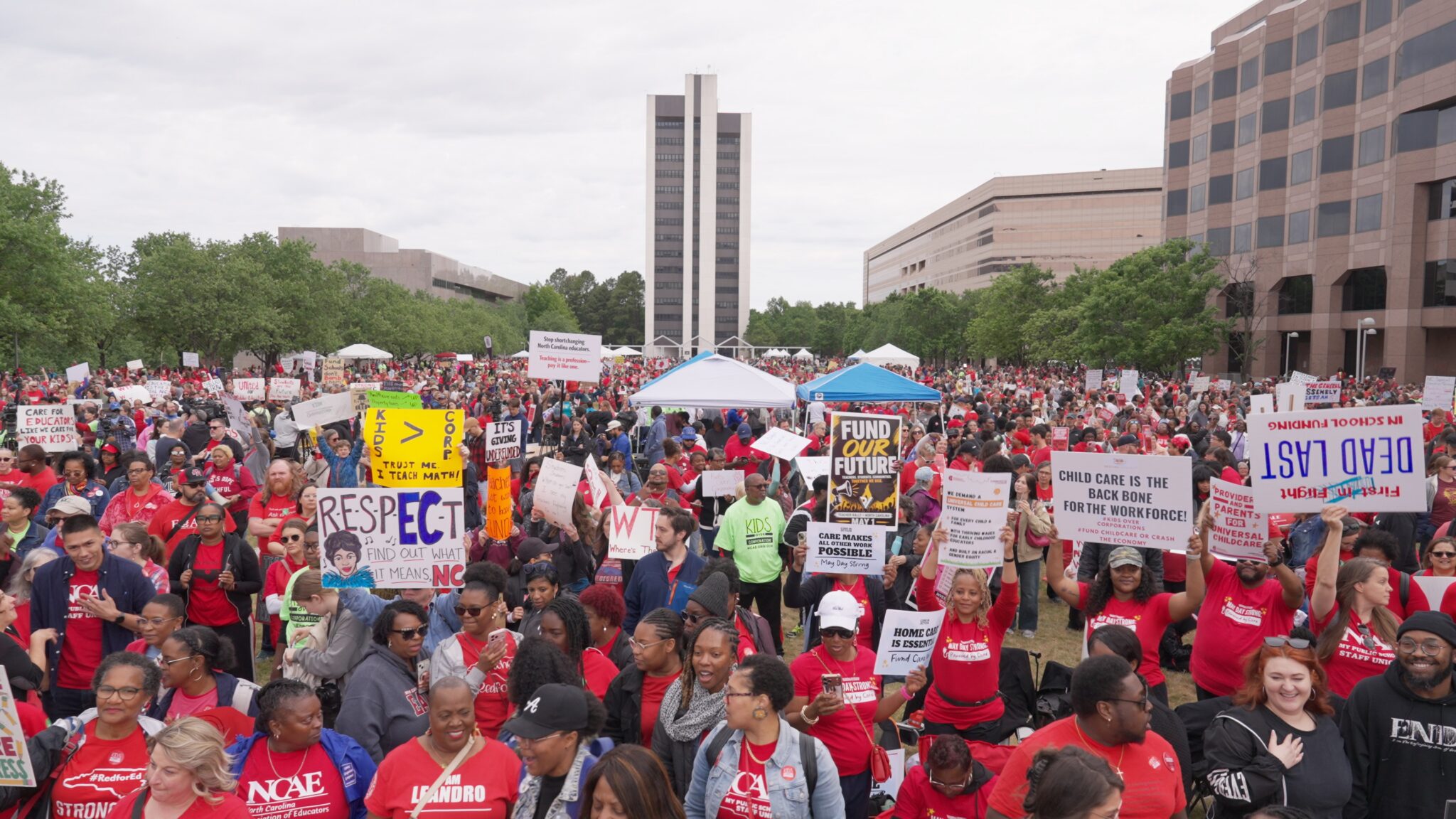
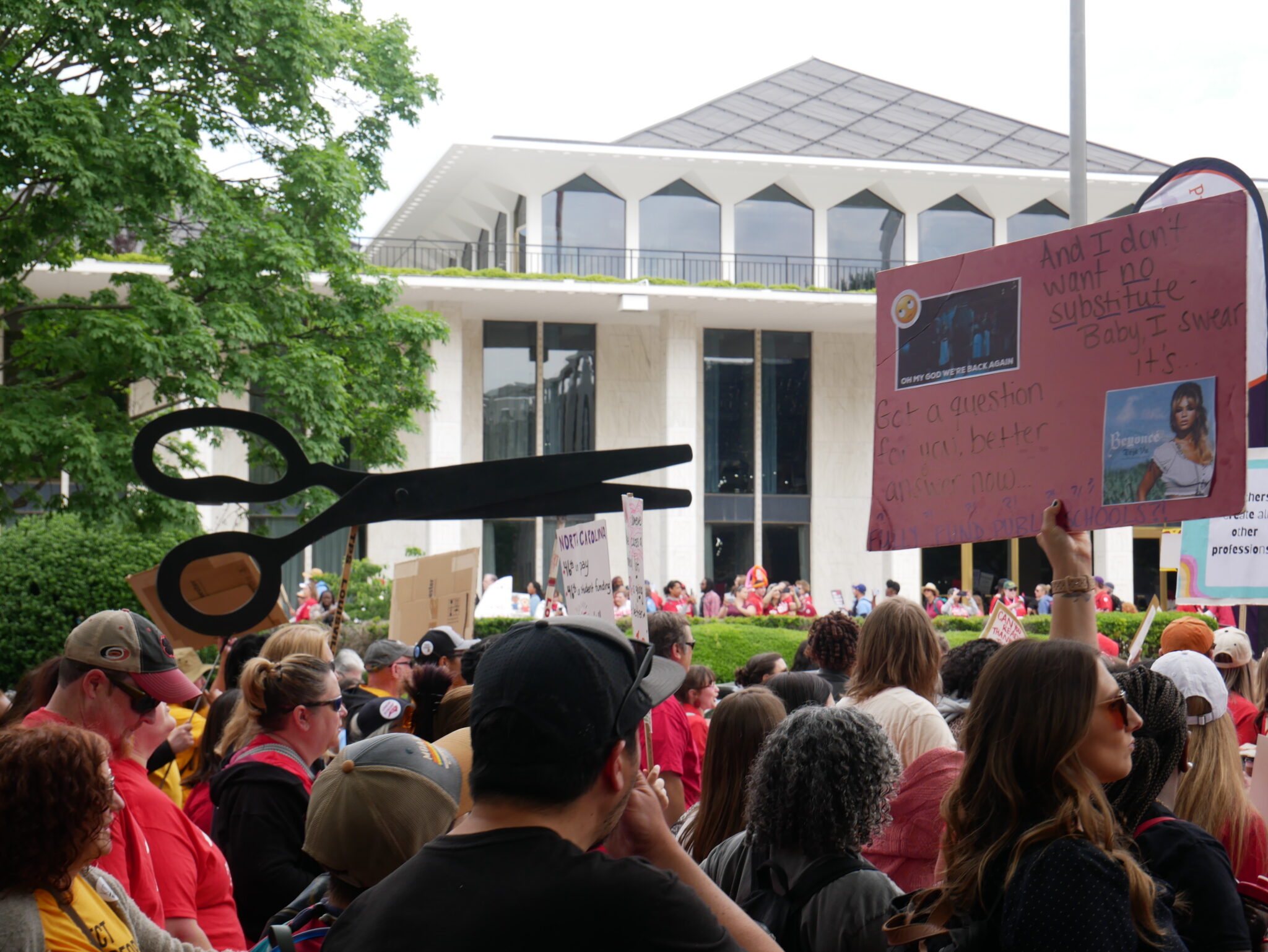
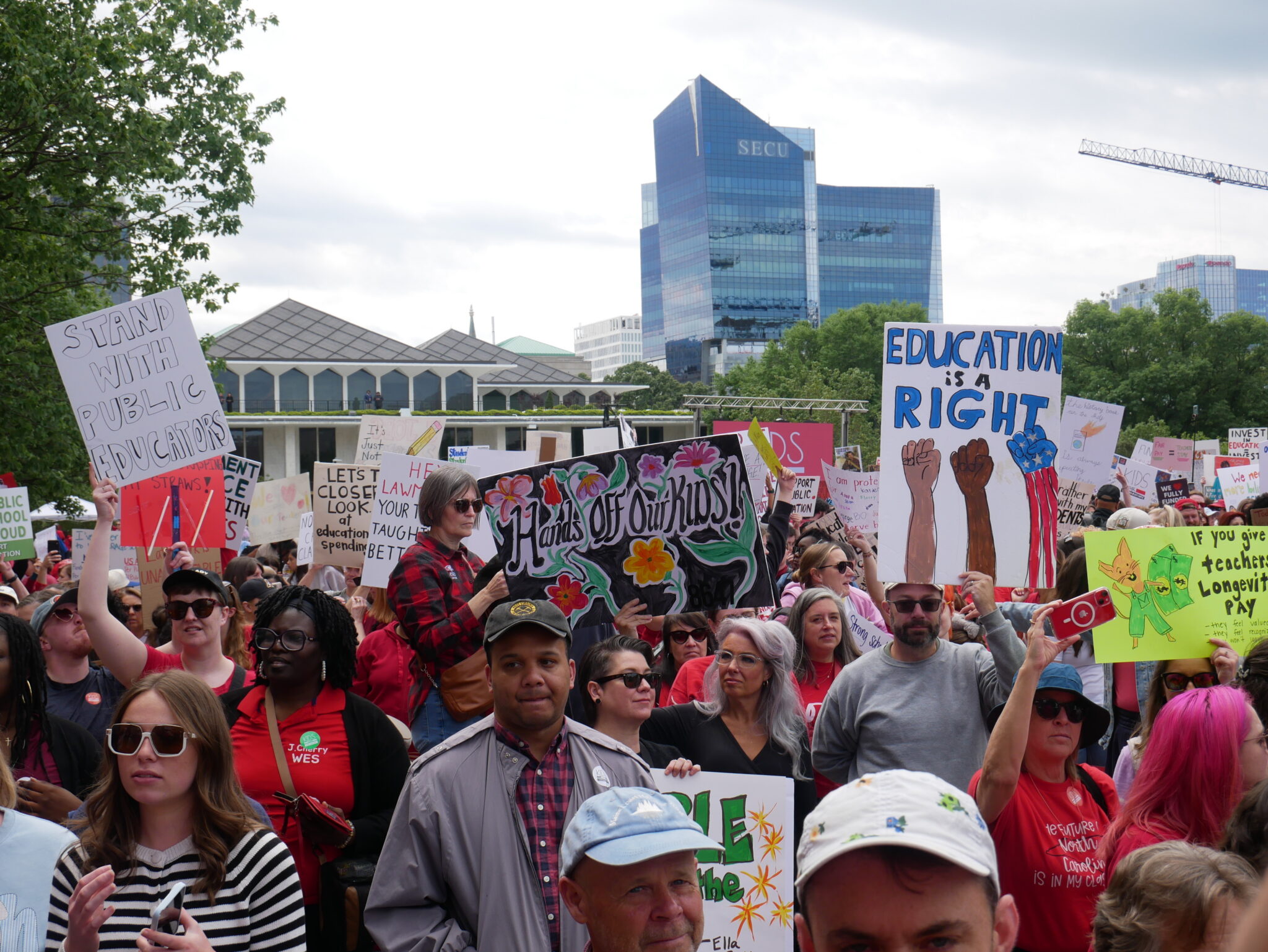
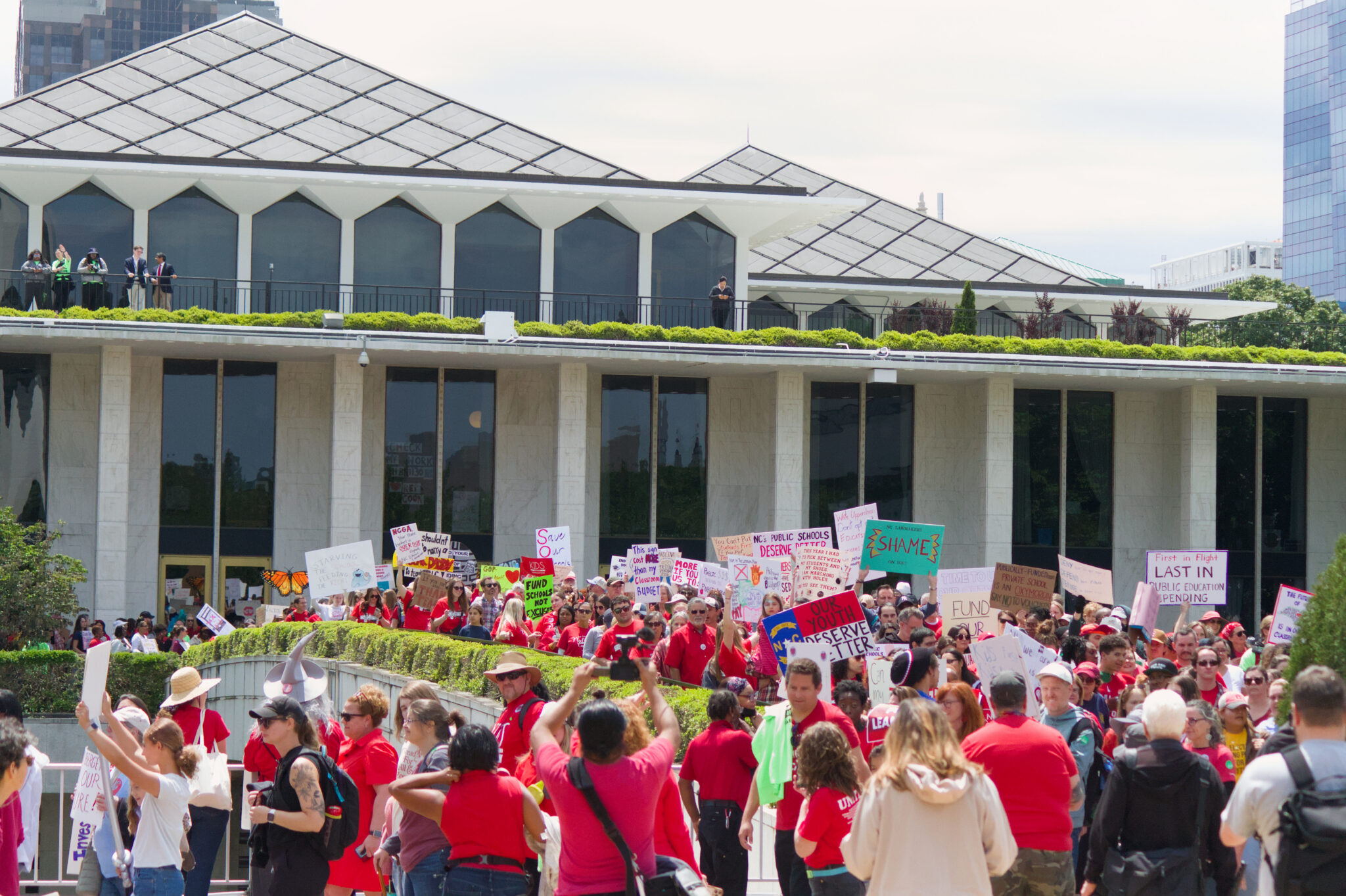
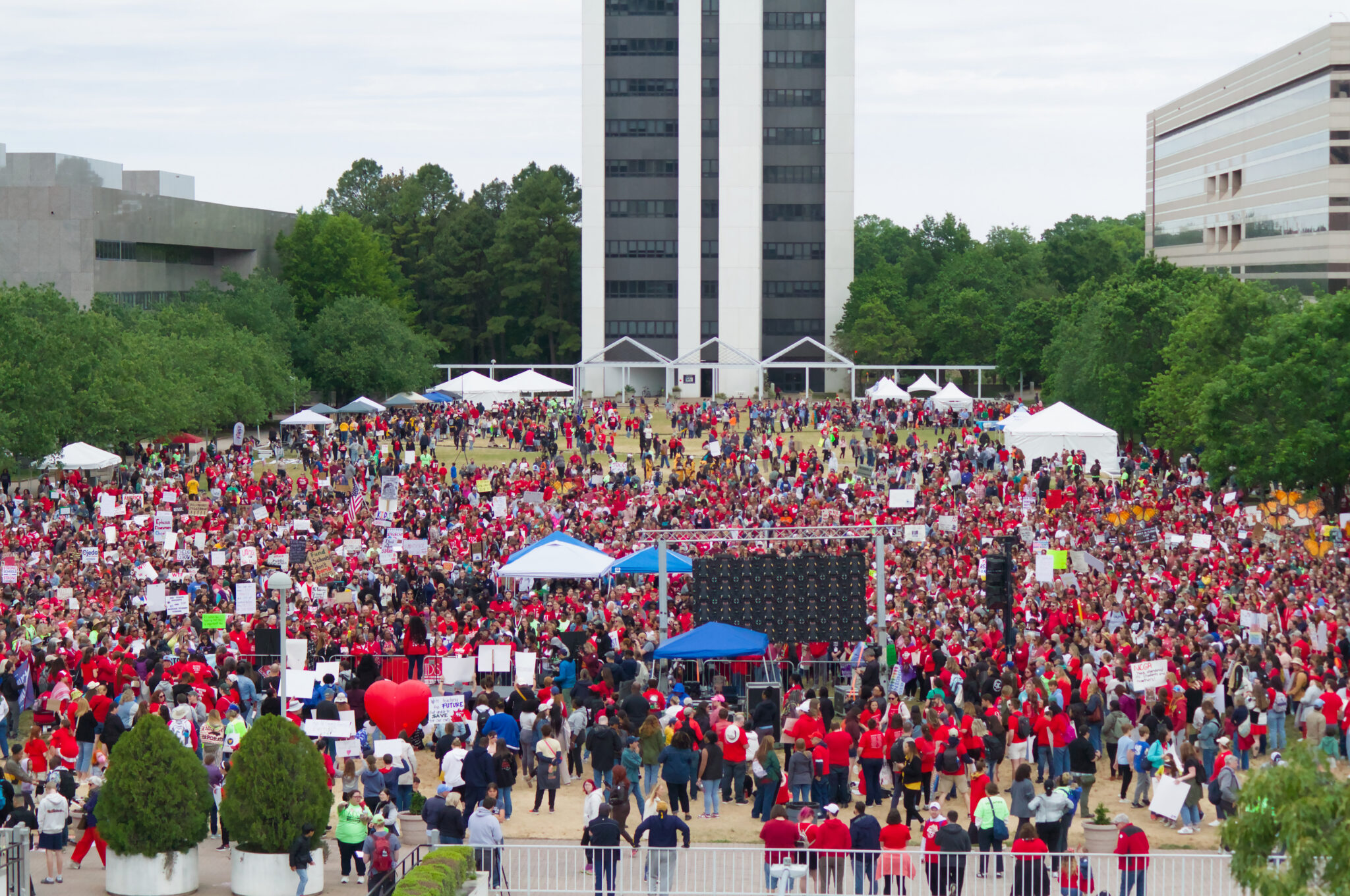
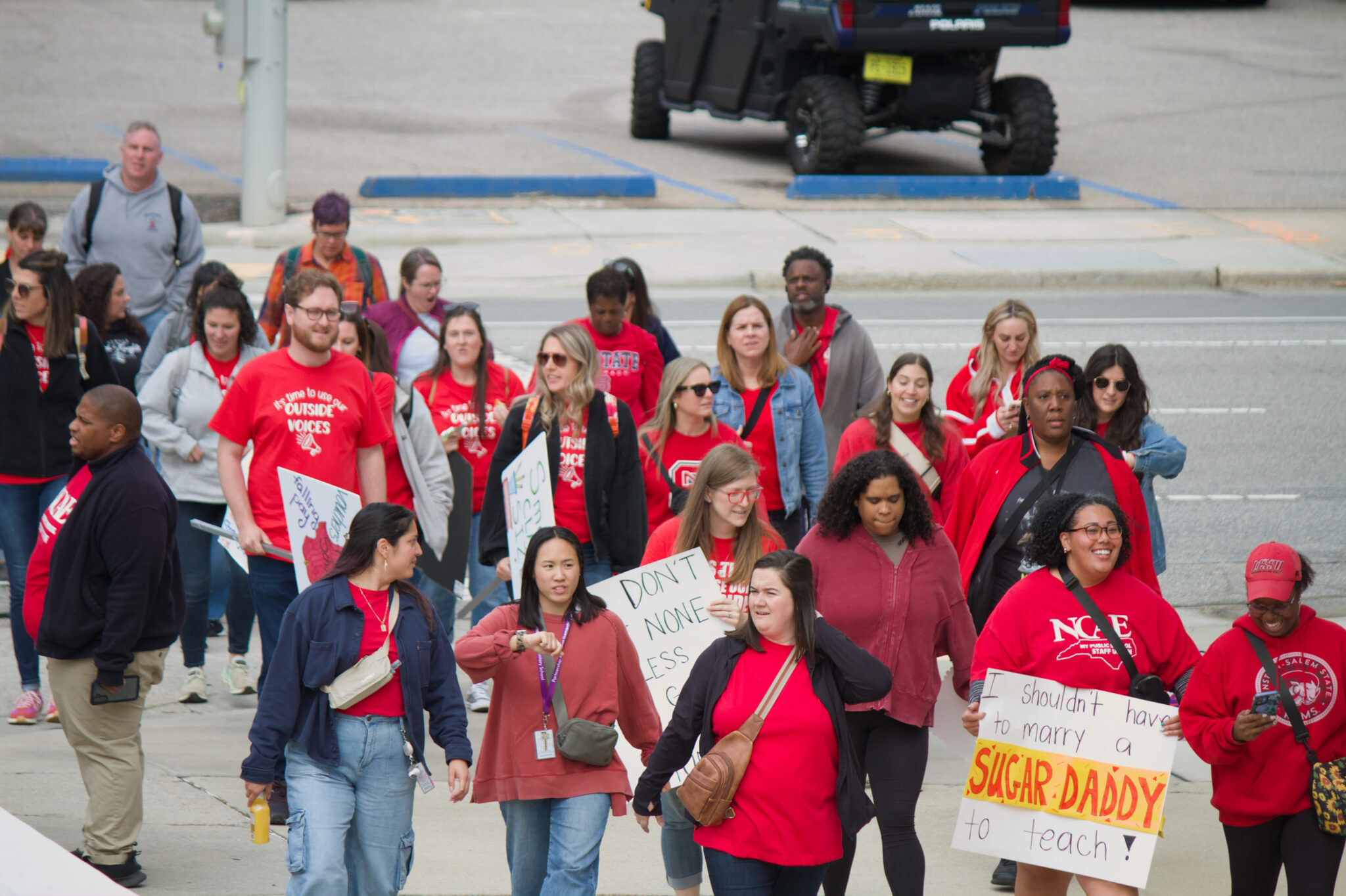
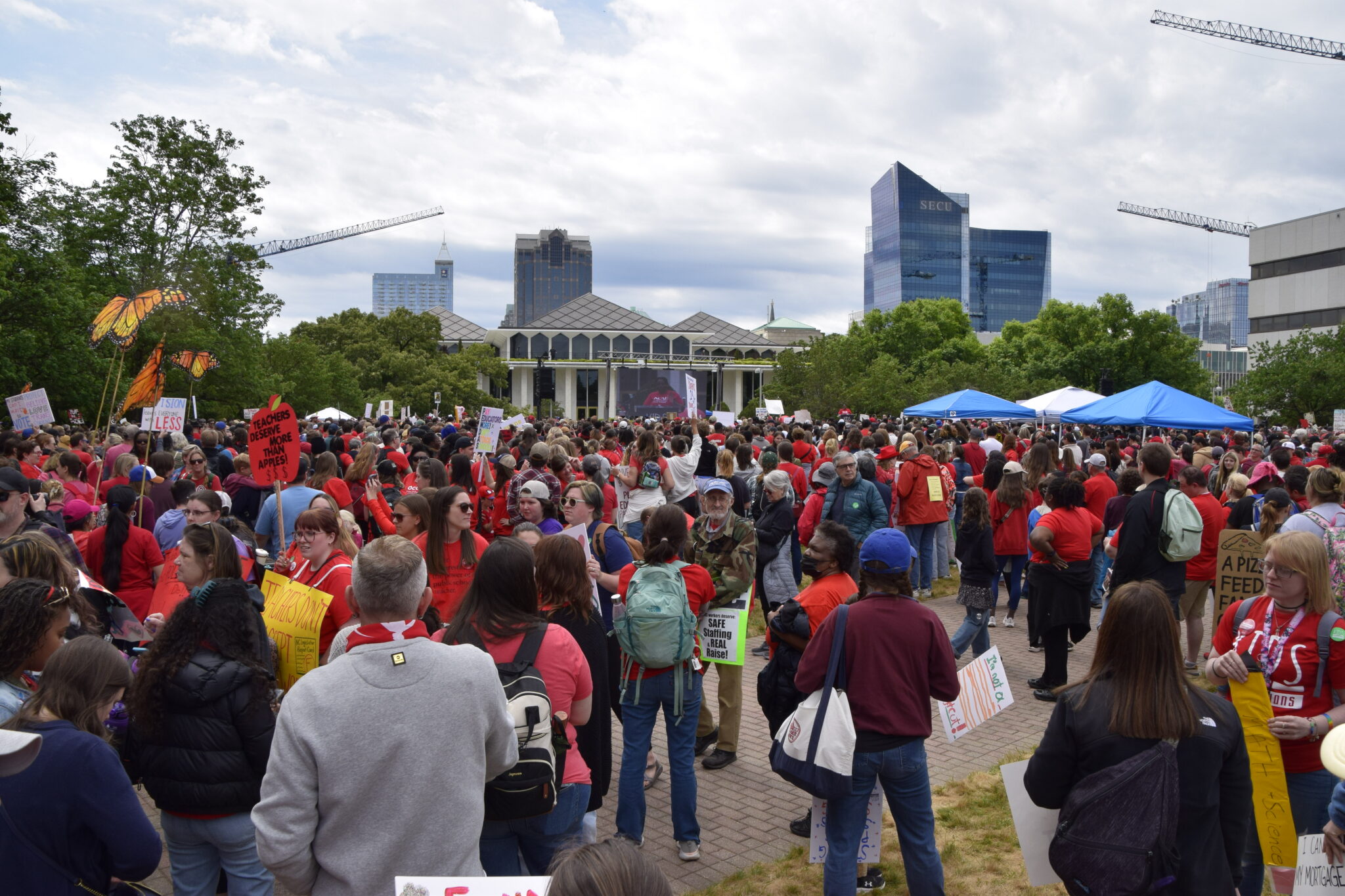
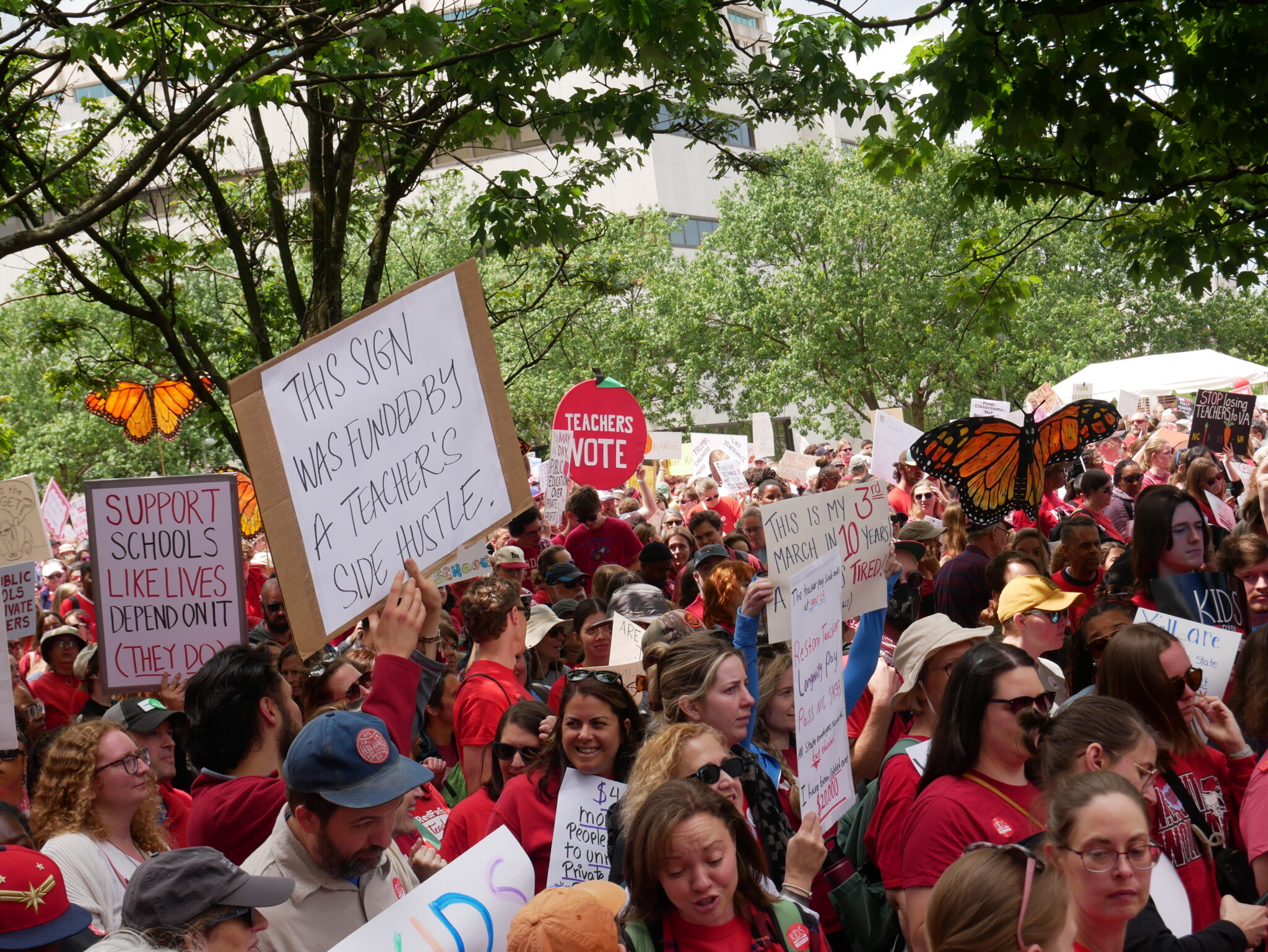
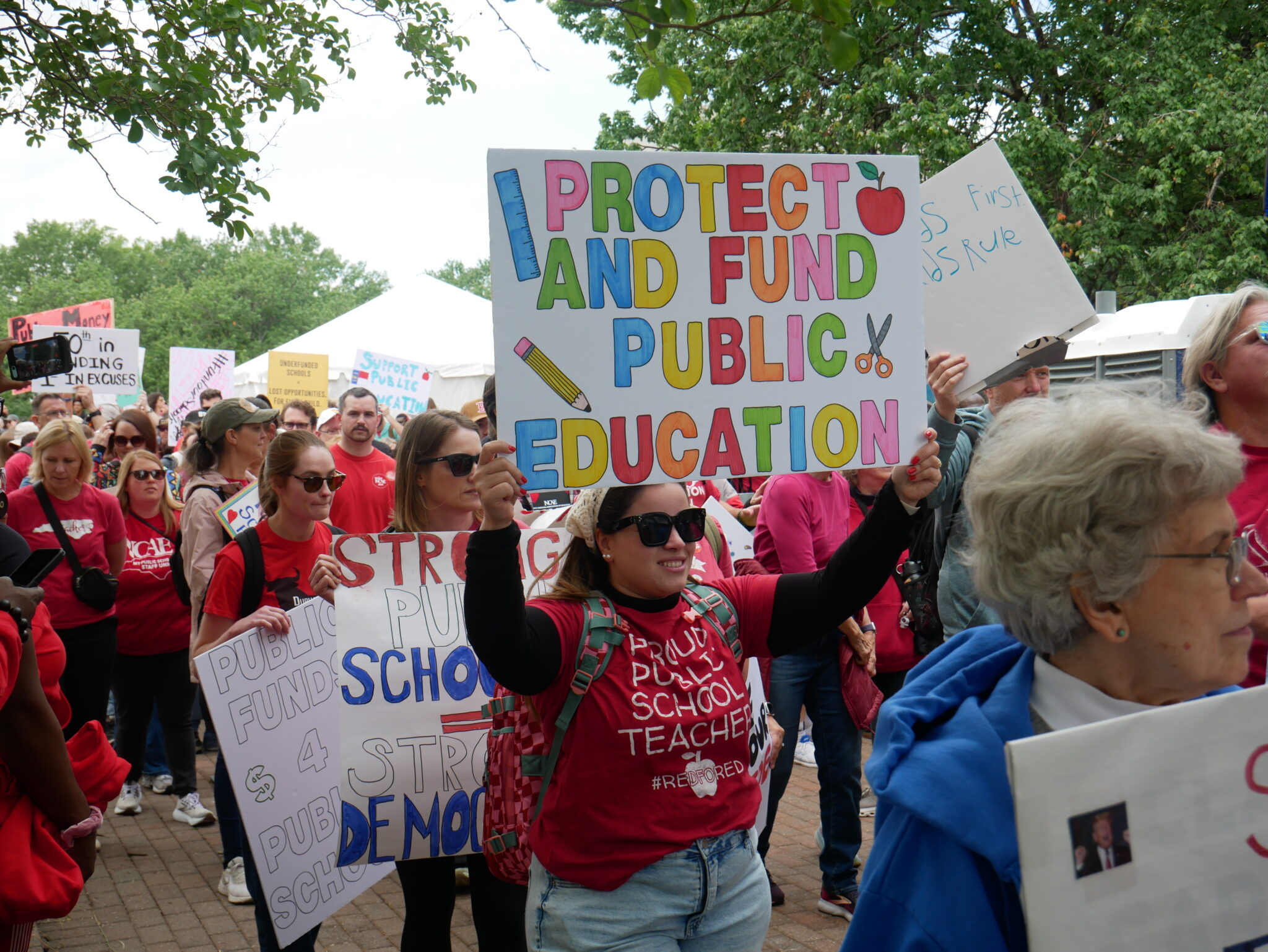
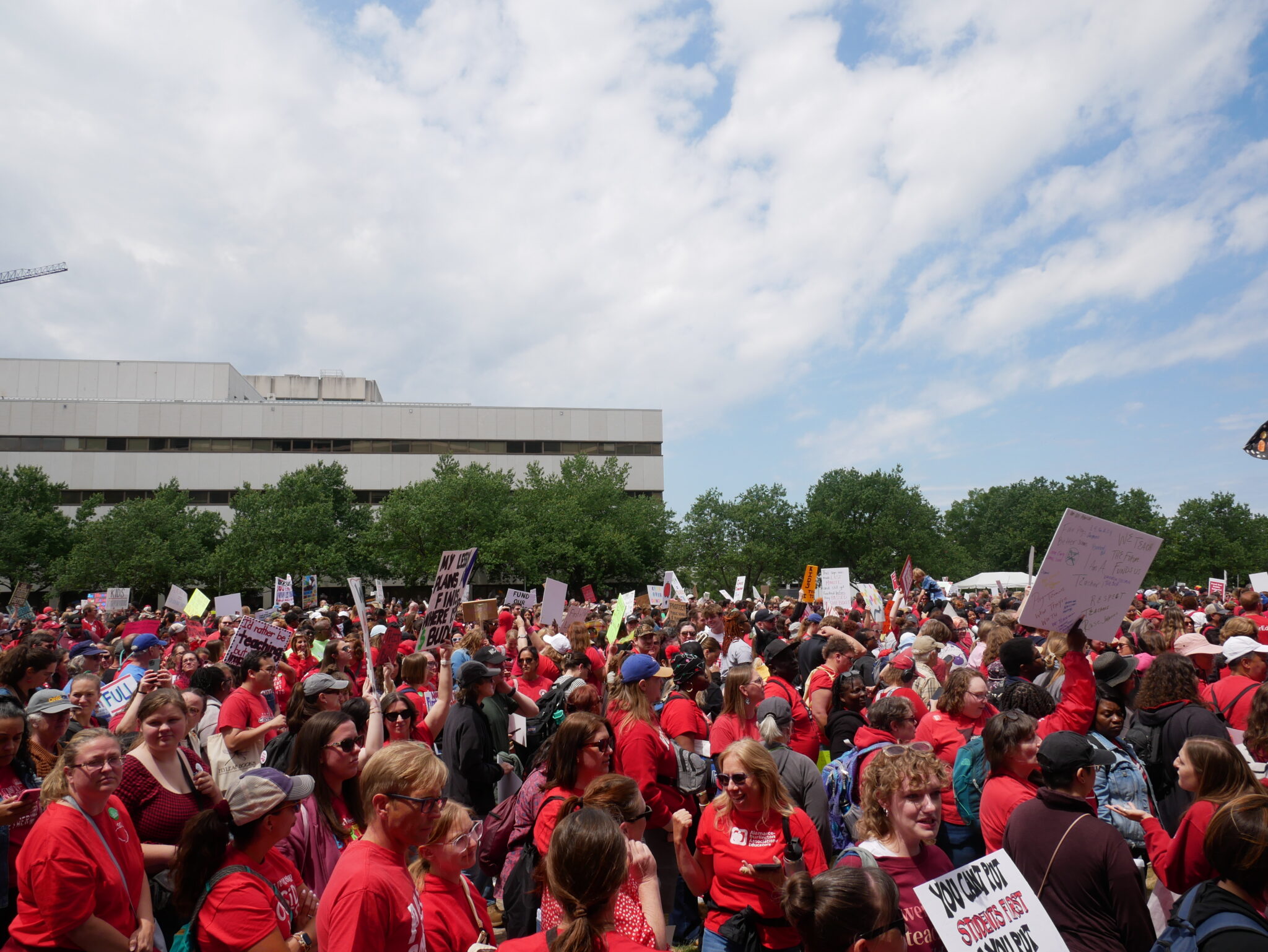
Thousands of educators and advocates across the state gathered in Raleigh at the Halifax Mall on Friday morning for a rally organized by the North Carolina Association of Educators (NCAE) in support of public education.
The short session of the N.C. General Assembly convened on April 21. According to a press release from NCAE, the marchers will be “demanding increased funding for public schools, accountability for voucher spending, and an end to policies prioritizing tax cuts over students.”
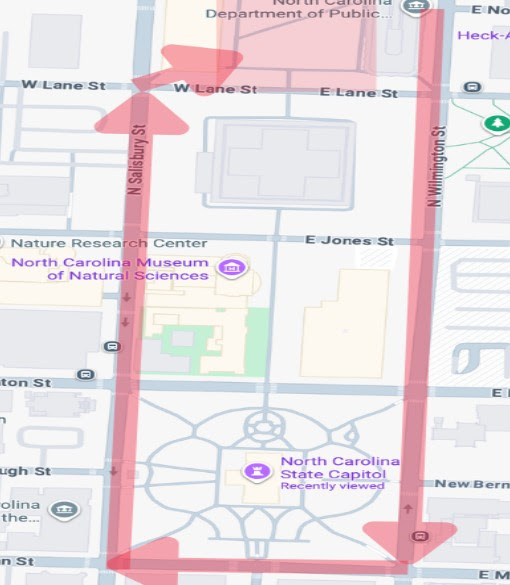
In an email, NCAE said educators and supporters will gather at Halifax Mall starting at 10 a.m. At 11 a.m., educators and community leaders will share remarks, with participants beginning to march down North Wilmington Street to East Morgan Street at noon. From there, participants will begin marching back toward Halifax Mall on North Salisbury Street. You can find a guide on NCAE’s website.
 Sign up for the EdWeekly, a Friday roundup of the most important education news of the week.
Marches in 2018 and 2019 were covered nationally. This year, NCAE has said it is planning “the biggest march for public education North Carolina has ever seen.” As of Thursday night, at least 22 of North Carolina’s 115 school districts closed on Friday due to the protest, according to the News & Observer, including the state’s five largest districts.
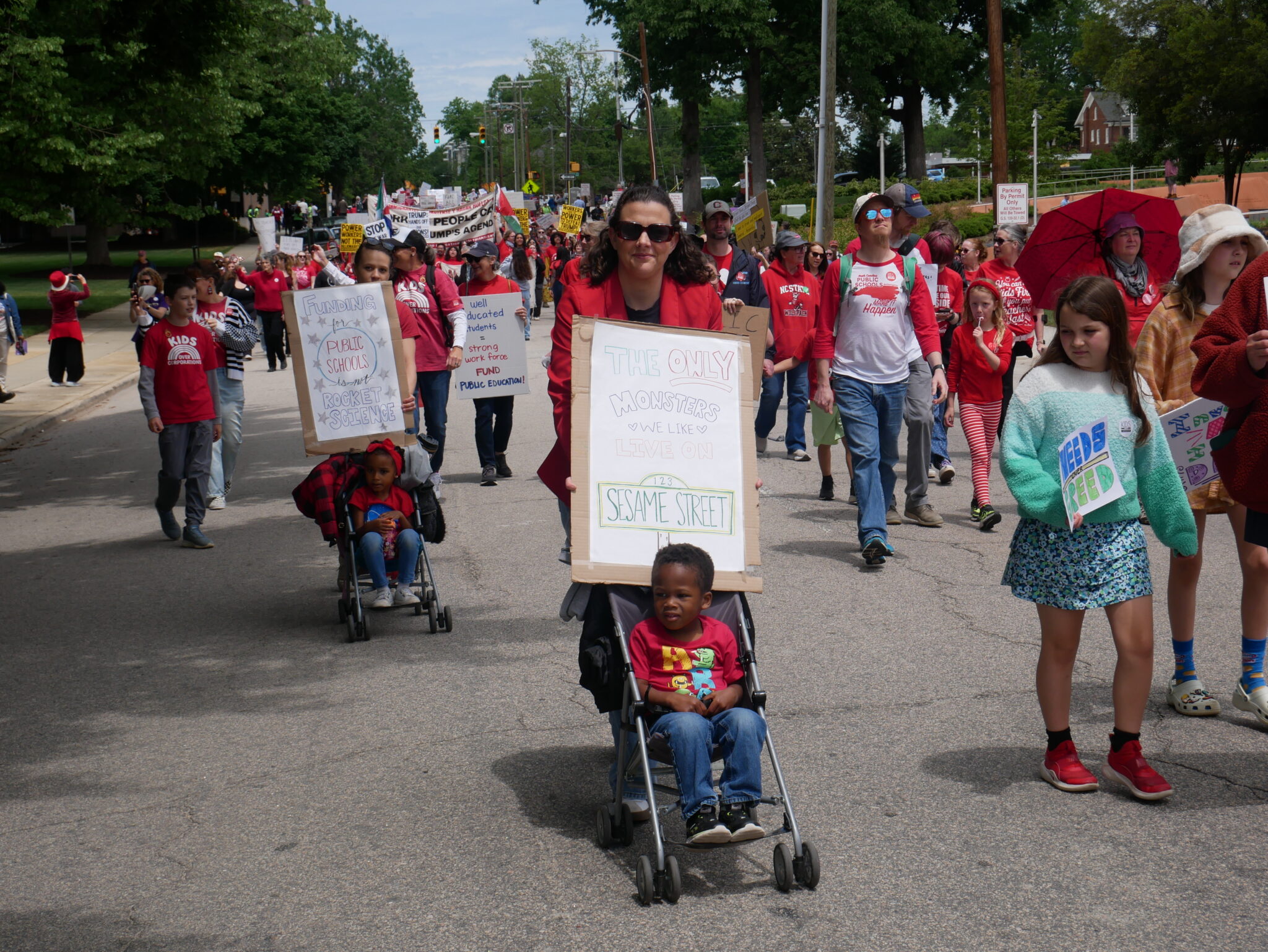
This year, the NCAE asked “every public school supporter” to march, including parents, students, and community members.
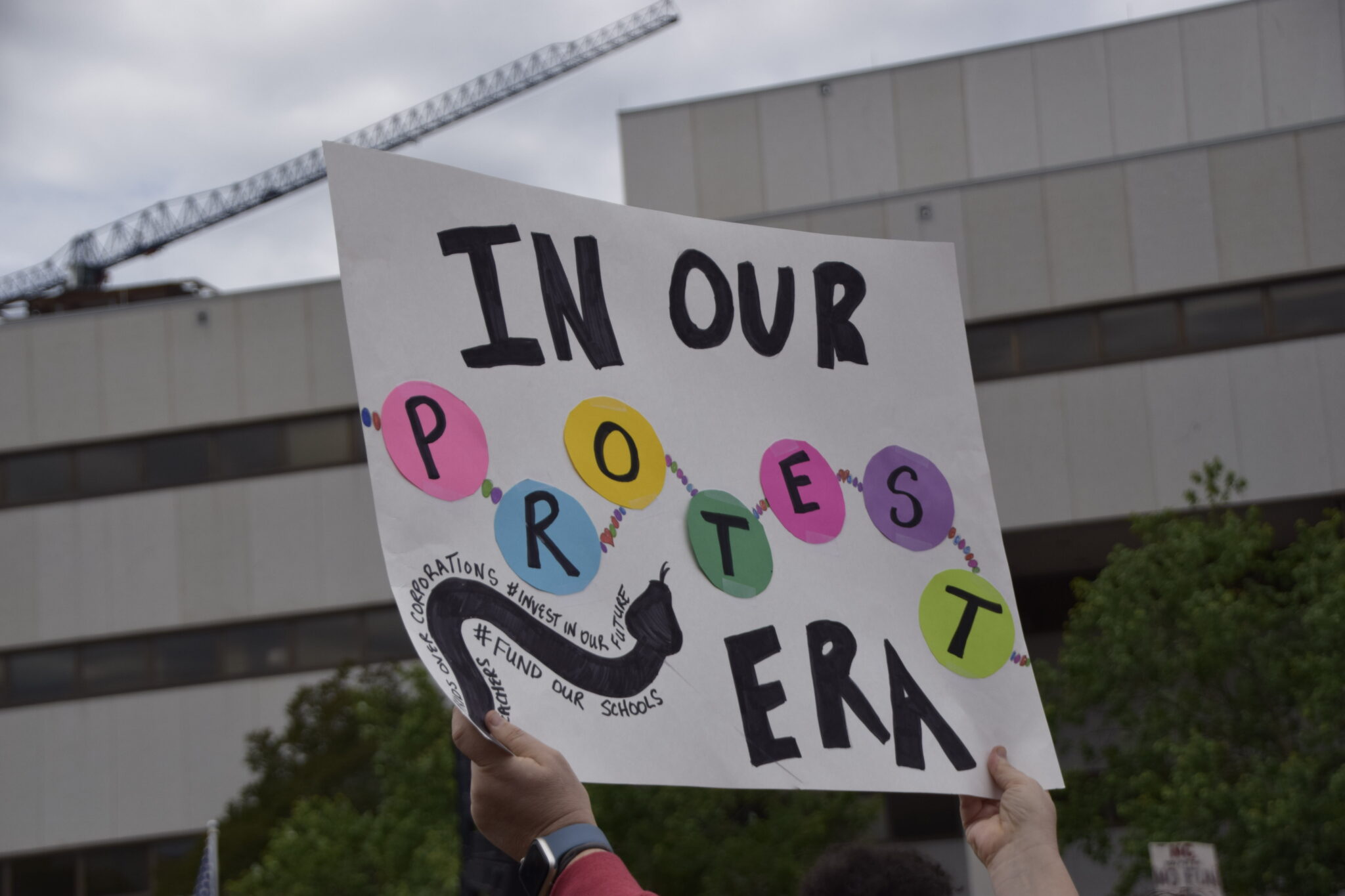
The march is being held on May Day, also known as worker’s day, and it will be one of many events happening across the country. This march is also part of a broader NCAE campaign, known as “Kids Over Corporations.”
NCAE says the march is focused around five demands:
- Investing $20,000 per student in North Carolina’s public schools by 2030,
- Ending corporate tax cuts,
- Eliminating private school vouchers,
- Fair maps and restoring checks and balances, and
- The right to organize and bargain collectively.
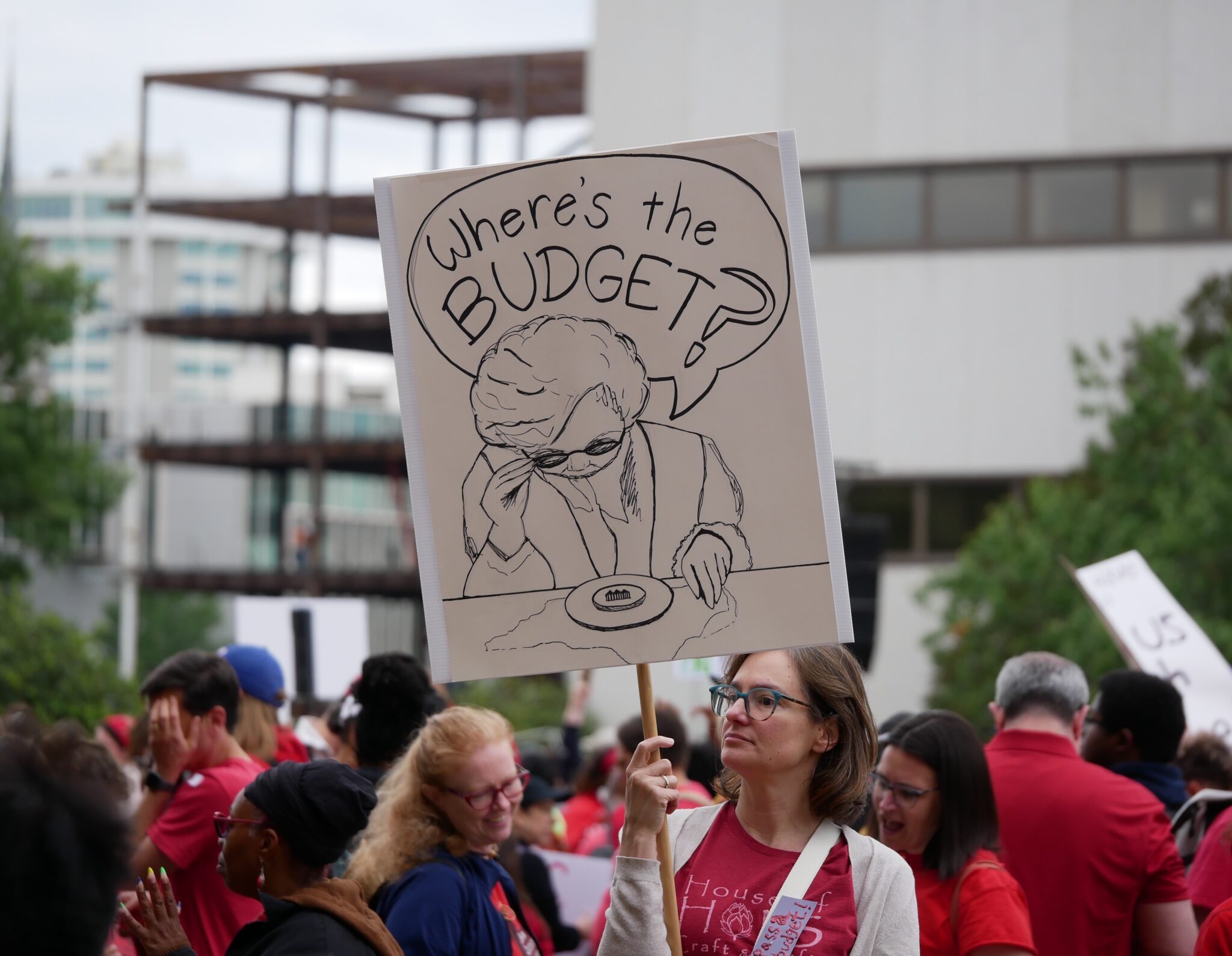
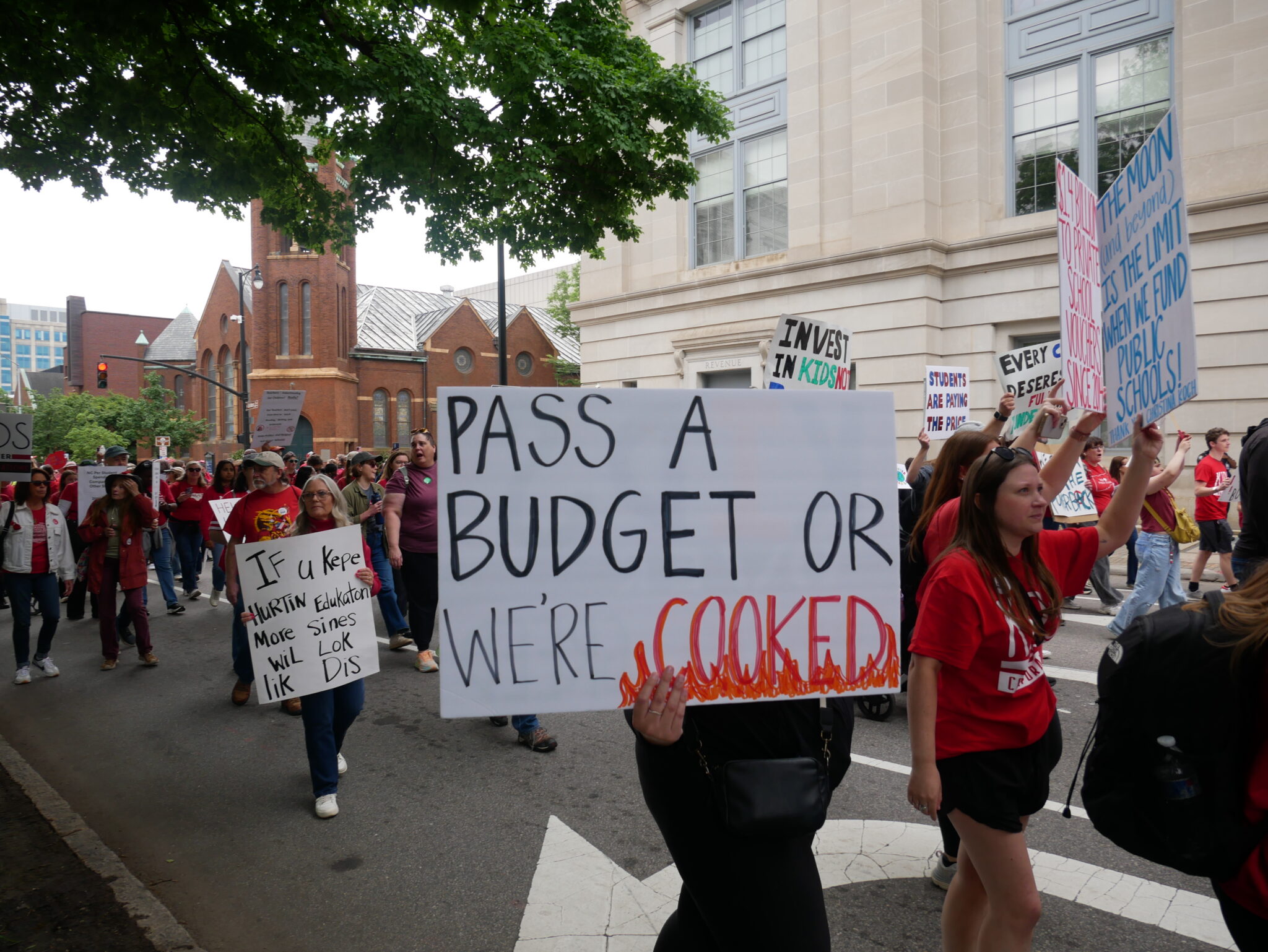
Last year, North Carolina was the only state in the country to not pass a new comprehensive state budget. In addition to the lack of a budget, the march is taking place after a recent decision by the N.C. Supreme Court ending decades of school finance litigation.
Tamika Walker Kelly, NCAE president, said in a press release that NCAE “will not back down” in “demanding qualified educators in every classroom and safe, well-resourced schools for every student.”
“Our lawmakers have shown time and again that the resources exist — they have simply chosen not to invest them in our children,” she said. “If they will not act, we will. And that starts with making our voices heard on May 1.”
According to the Kids Over Corporations website, “there will be many follow-up activities, actions, meetings, opportunities, and more” following the march. “We will discuss those with you on May 1 and in the following weeks.”
EdNC’s coverage of NCAE marches


What leaders and elected officials are saying
On Wednesday, Superintendent Maurice “Mo” Green issued a statement ahead of the march:
Our top priority in North Carolina public schools is our students. Our educators know that the most important place they can be on any school day is with the students who depend on them. Those educators also deserve to be paid appropriately for their incredible work that is leading to historic academic achievements for our state. When they are not receiving adequate compensation, it is important that their voices be heard.
…
I am hopeful that there is a path forward. Governor Stein’s budget proposal, the State Board of Education’s and my legislative request, and the early signals from the North Carolina House budget leaders all point toward substantial investment in teacher pay and public education. I believe that the educators marching on May 1, as well as the educators in schools that day, are part of why those proposals are gaining momentum. I am grateful to all of them.
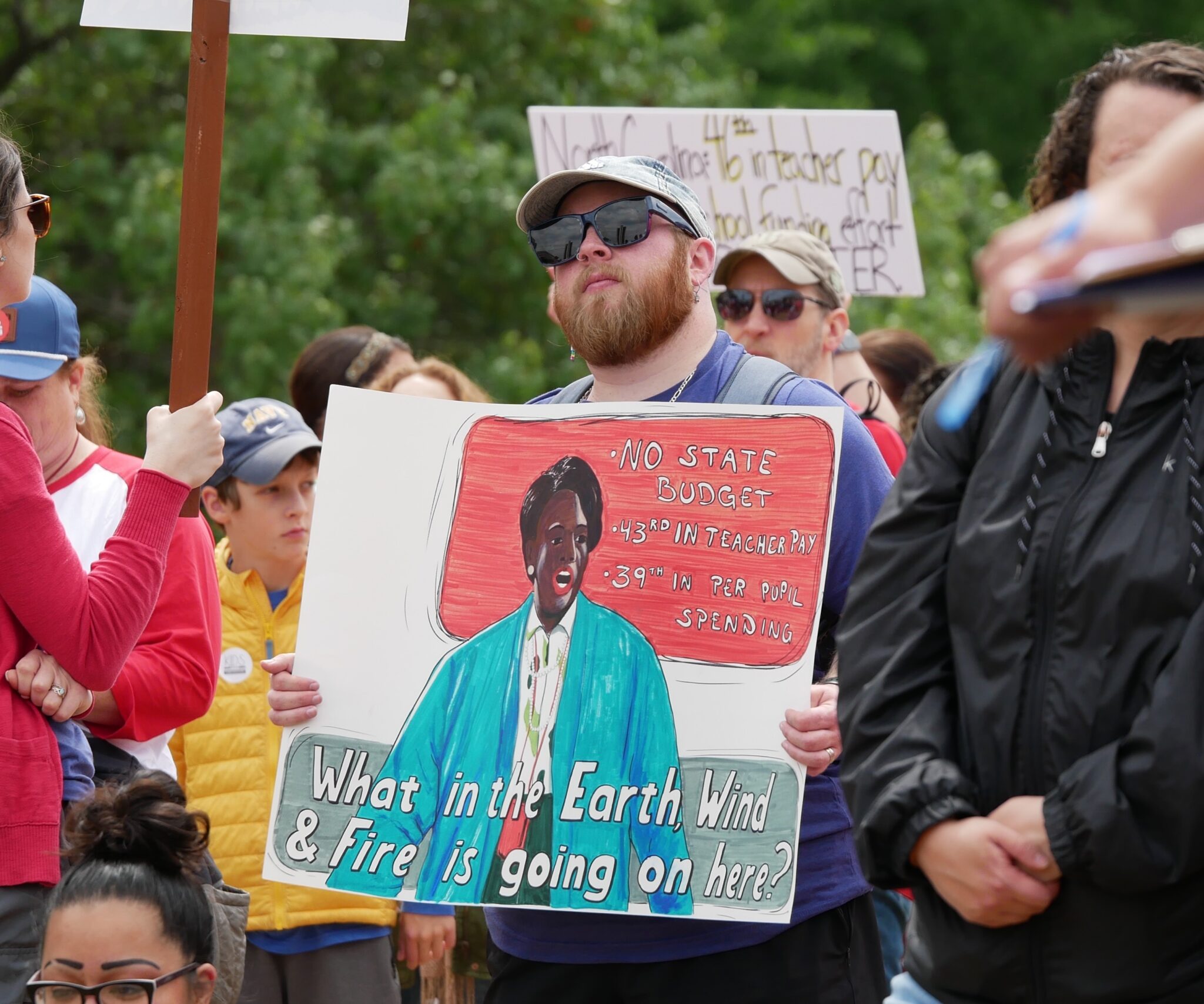
On Friday morning, ahead of the rally starting, Rockingham County Sheriff Sam Page — who in November beat Senate President Pro Tempore Phil Berger in the Republican primary for N.C. Senate District 26 — said North Carolina should be first in teacher pay, referencing recent estimates that show North Carolina at 46th in average teacher pay in 2025-26.
Page, who said he formerly worked as a school resource officer (SRO), said he would like to see starting pay increase to around $50,000, noting it is difficult for schools to hire teachers when “you’re the lowest paid in the nation.” Currently, base pay for beginning teachers is $41,000 in North Carolina.

“I’m here to listen to the educators of our state and hear their concerns,” Page said. “We need to fully fund our public schools and make sure our teachers are paid competitively.”
Rep. Julie von Haefen, D-Wake, said she has mixed emotions being at the march. Notably, she said she is carrying the same sign she made 10 years ago when she was PTA president in Wake County.
“I think that it’s going to take a large outcry and a large push by the public to get any changes really done,” she said.
Von Haefen said a caucus of Democratic leaders has been meeting regularly with the NCAE and other education advocates leading up to the short session.
“I’m so happy that there’s such a huge public concern about this issue, but I’m sad that we’re still here,” she said. “… It gives me hope, especially when I see kiddos here, and that’s why I continue to substitute teach (in Wake), because I need to stay grounded in who we’re fighting for. So I hope that a lot of people do bring their kids here today, because that’s what gives me hope.”
House Minority Leader Robert Reives, D-Chatham, said not a single member of the General Assembly would be where they are without public education. He said lawmakers should prioritize spending more on public education, and not on private schools through the Opportunity Scholarships program.
“Our job is not to sit here and try to figure out what we can and can’t do for our buddies and our friends and people who are just like us. Actually, my faith informs me that I should concentrate harder on people who aren’t just like me to make sure that they have a chance to have a better life,” said Reives, who is a Christian.
Reives noted that the House’s budget proposal included higher raises for educators.
“What we need is the same strong education system that every single person sitting in that building right now is benefiting from,” he said, referring to the legislature.
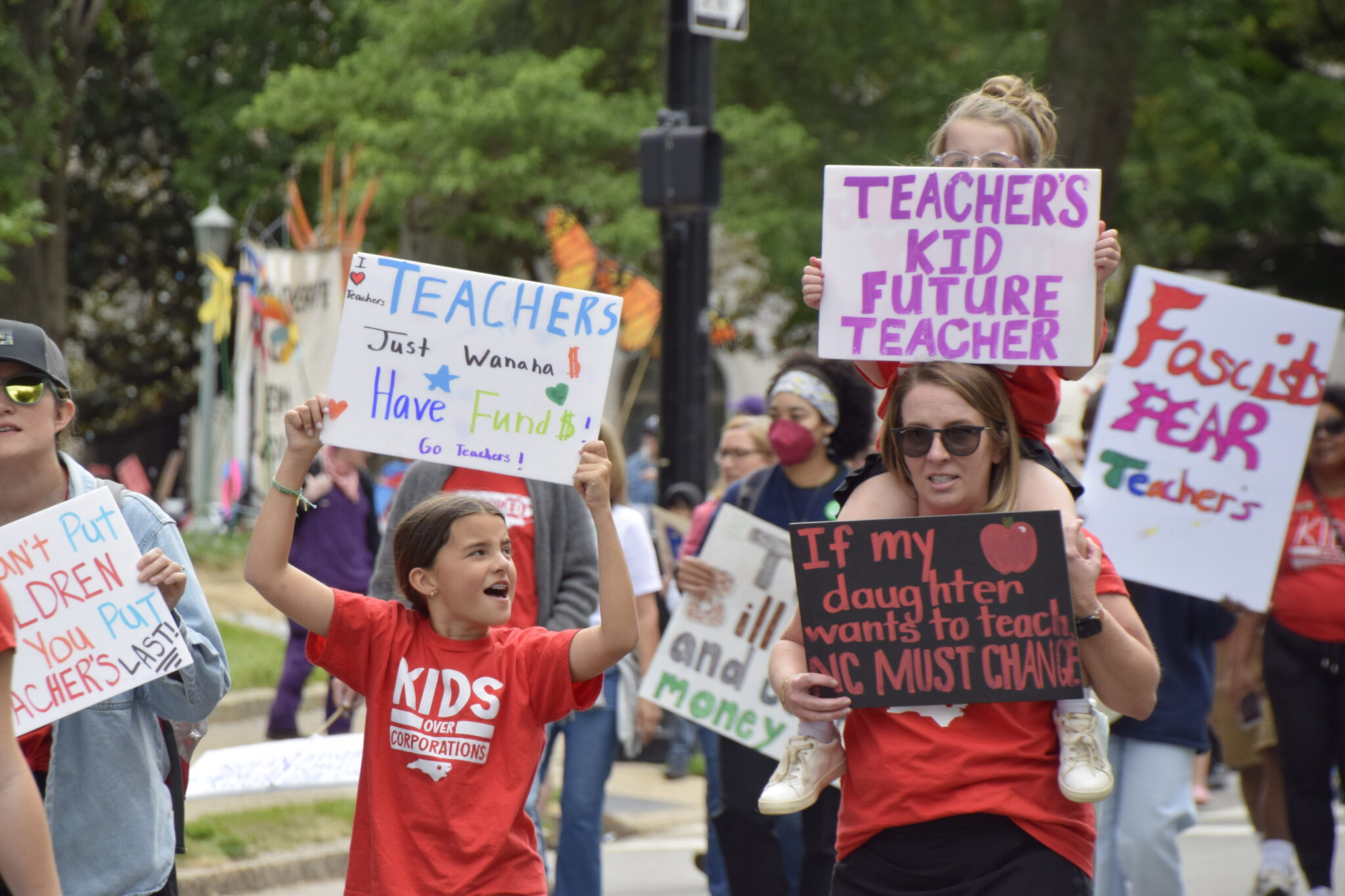
During the march, Sen. Sophia Chitlik, D-Durham, said she hopes the march serves as a “wake-up call” for the General Assembly.
“I think what’s going to change this is people, and so I hope some of these folks out here in red shirts run for office and replace people who aren’t listening to them,” Chitlik said. “… There are people in the building who are fighting for you every day. We have not forgotten you. We’re sorry, and we need to do better.”
After the march, Rep. Zack Hawkins, D-Durham, said all lawmakers should be at the march, “because teachers just don’t take the time out of the classroom for nothing.” He said the North Carolina House is “1,000% behind these teachers.”
“As a former public educator and as someone that comes from a family of educators, there’s nothing more important than public education and making sure that we have student achievement, and one of the ways to ensure that that happens is by investing in teachers,” Hawkins said.
U.S. Congresswoman Deborah Ross, D-North Carolina, said she attended the rally to support public education and North Carolina teachers. Ross said “the public is paying attention, and elections will make a difference.”
“The (N.C.) legislature has taken its eye off the prize. They are giving money for private school vouchers to people who could already afford private schools,” she said. “It’s taking away from our public schools. It’s particularly hurting kids in rural areas, and we need to reinvest in public education.”
Updates from before the march
Updated 10 a.m. EST
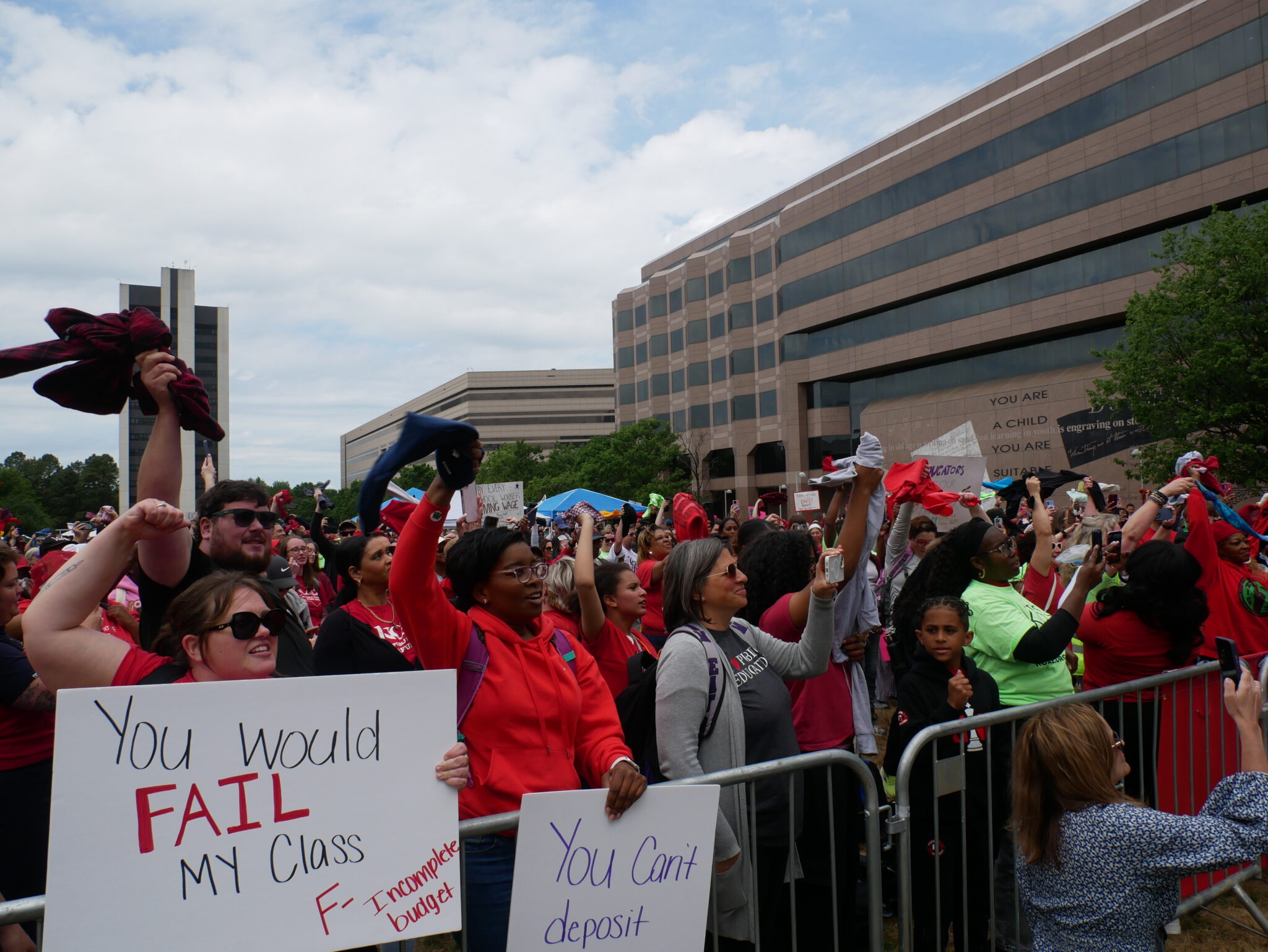
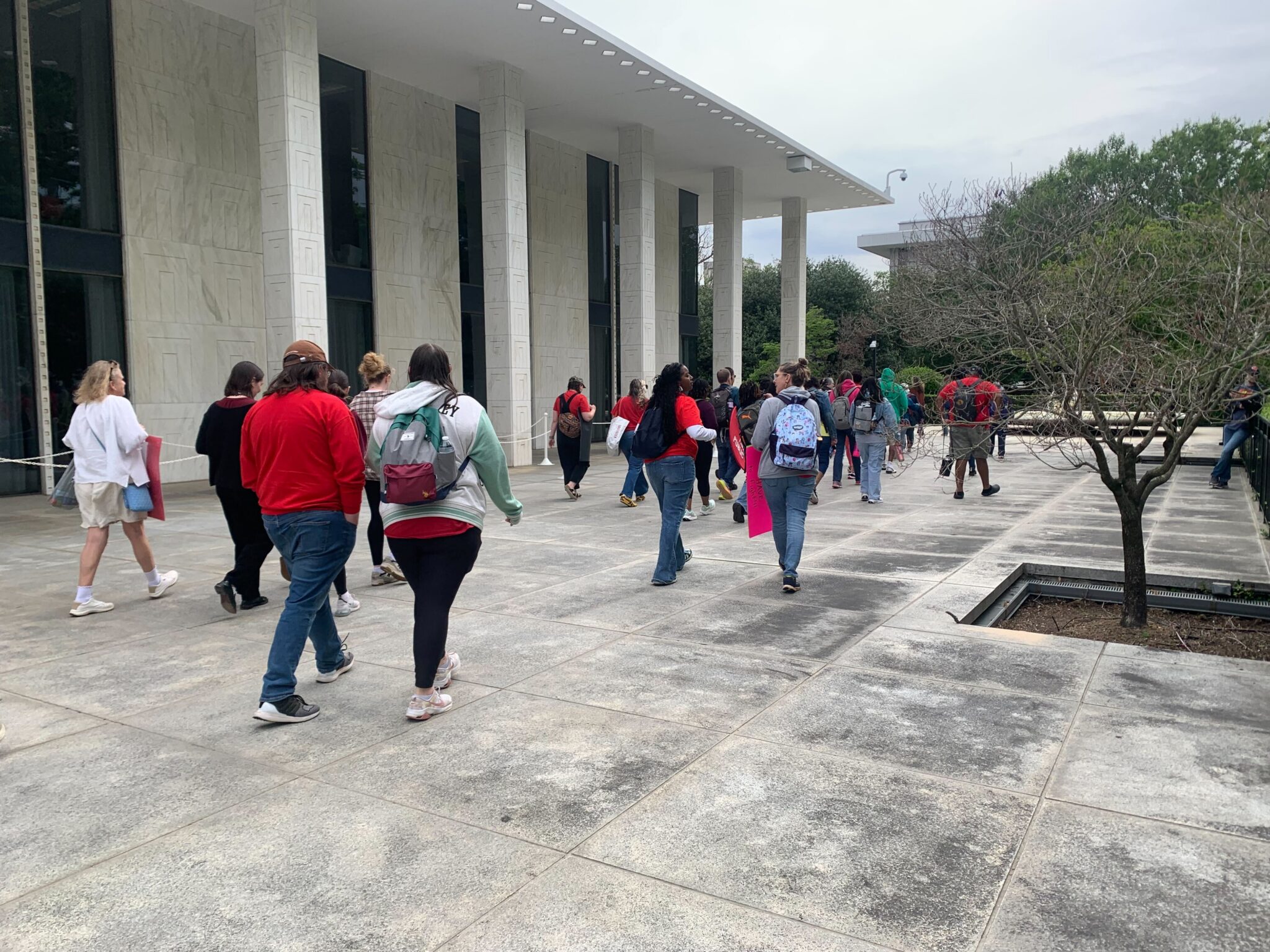
At around 9:49 a.m., hundreds of educators and advocates are already gathering at Halifax Mall, looping around the front of the legislature.
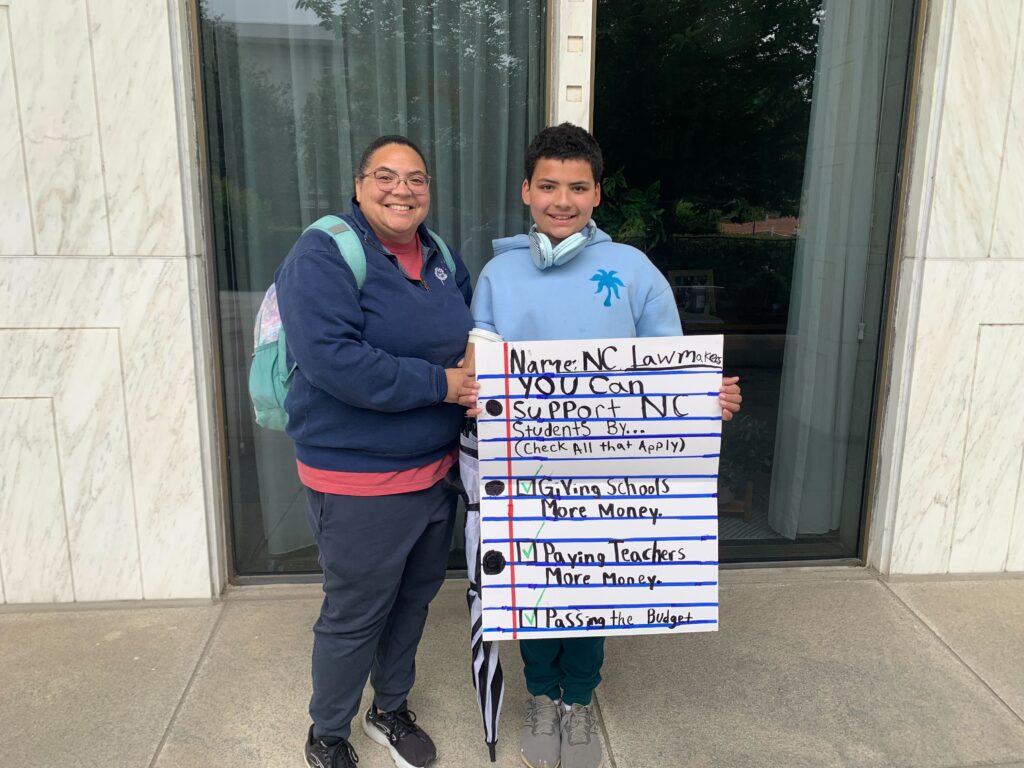
Michael Cole, a first grade teacher, brought her fifth grade son, Ryan, to the rally to call on lawmakers to pass a budget with funds for public schools, including money for smaller class sizes and the State Health Plan.
“I want them to wake up and see that they’re hurting the teachers, and they’re hurting the students by not passing this budget,” Michael said.
Updated 10:30 a.m. EST
Ahead of planned remarks at 11 a.m., EdNC reporters spoke with attendees about why they’re marching.
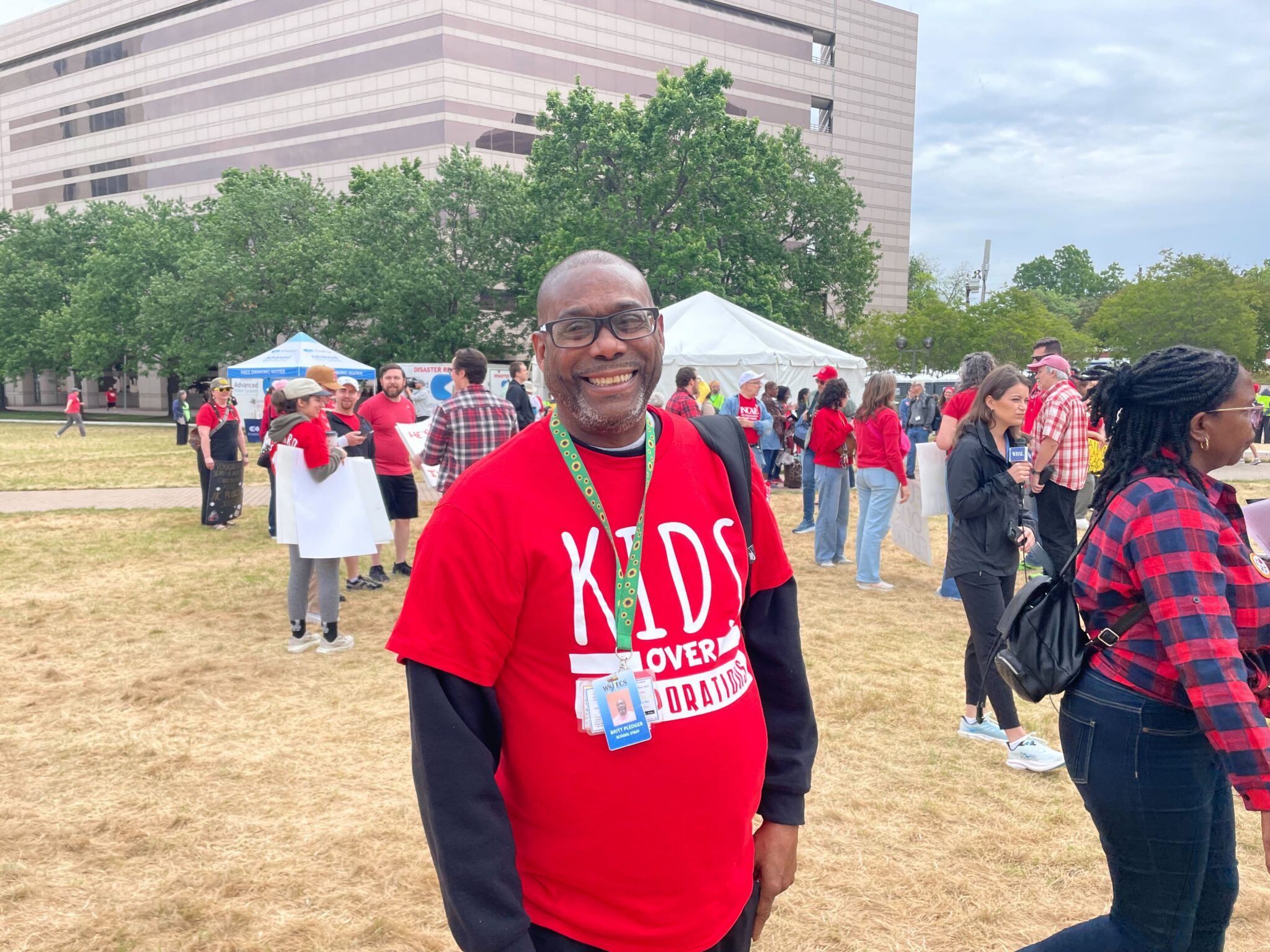
Britt Pledger, head chef at Wiley Middle in Forsyth County, said he is marching for better supports for students, their learning, and their environment.
“Our children are not able to get what they need because of the finances, the tax cuts … it’s gotten ridiculous,” he said. “We’re doing five jobs in one day. But most importantly, I’m an educator, because the children look up to me. Everyone knows Mr. Britt.”
Wake County special education preschool teacher Ellen Jerome said she needs more staff to support the varying needs of children she serves, and the workload she is responsible for.
“We are with those most vulnerable students that really need us more than anything and we’re determined to still be here for them, but we are hoping for support along the way,” she said.
Kandice Nangle, an emotional behavior support classroom teacher in Wake County, said she took a $15,000 pay cut in her job coming from Texas. “We just want to be able to pay for our house, pay for food, and not have a second job,” she said.
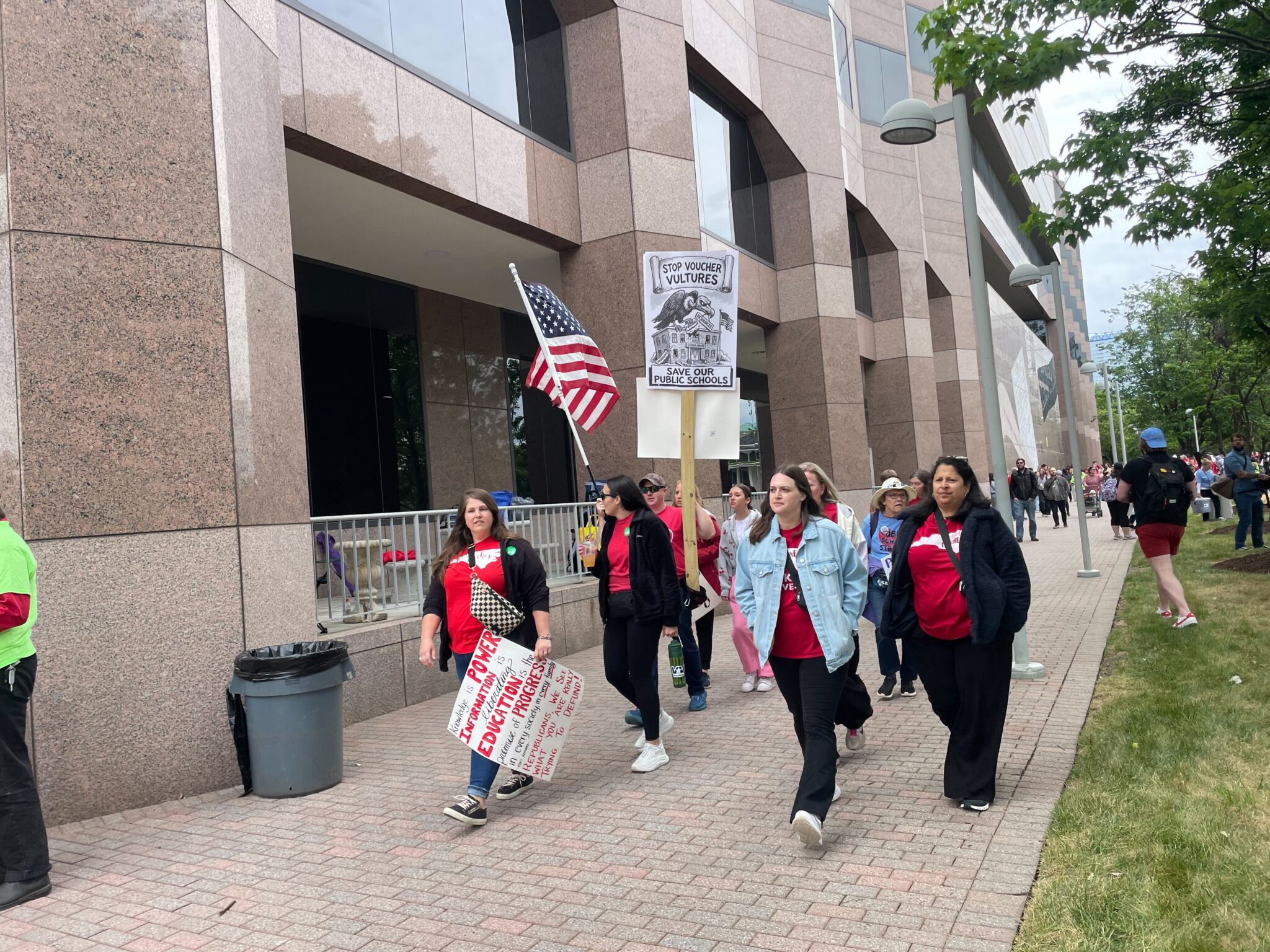
Susan Book, a parent advocate in the Triangle with a son with special needs, said her son deserves instructional support and the structure he needs to learn. Book also showed up to the rallies in 2018 and 2019, when her son was in elementary school. She said the lack of progress since is disheartening, and that her son is about to graduate.
“Right now, it’s unstable. Sometimes we get what we need and sometimes we don’t,” she said.
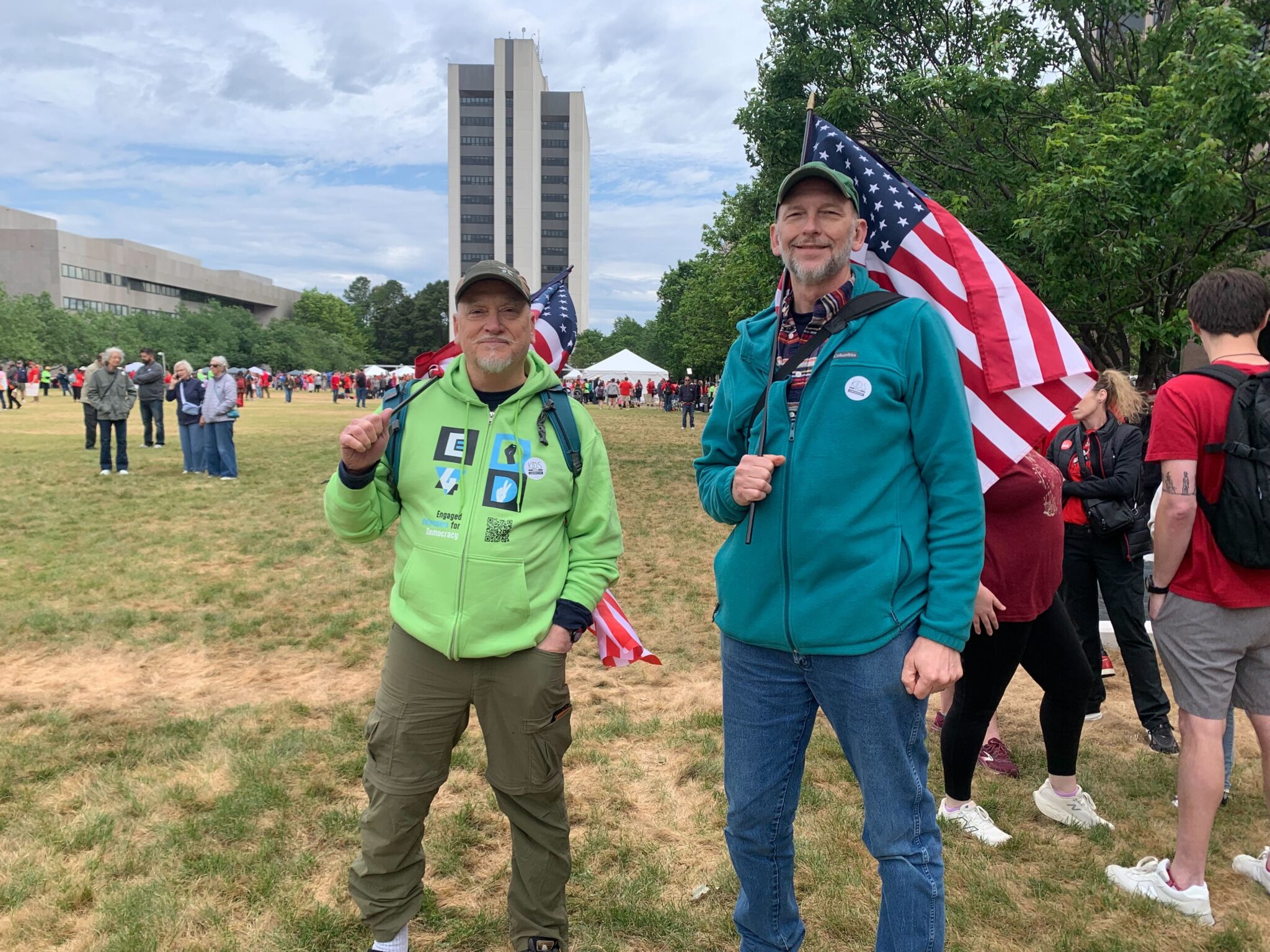
Kent Wicker, from Durham, said he has been “participating in a lot of demonstrations as part of the resistance movement in general.”
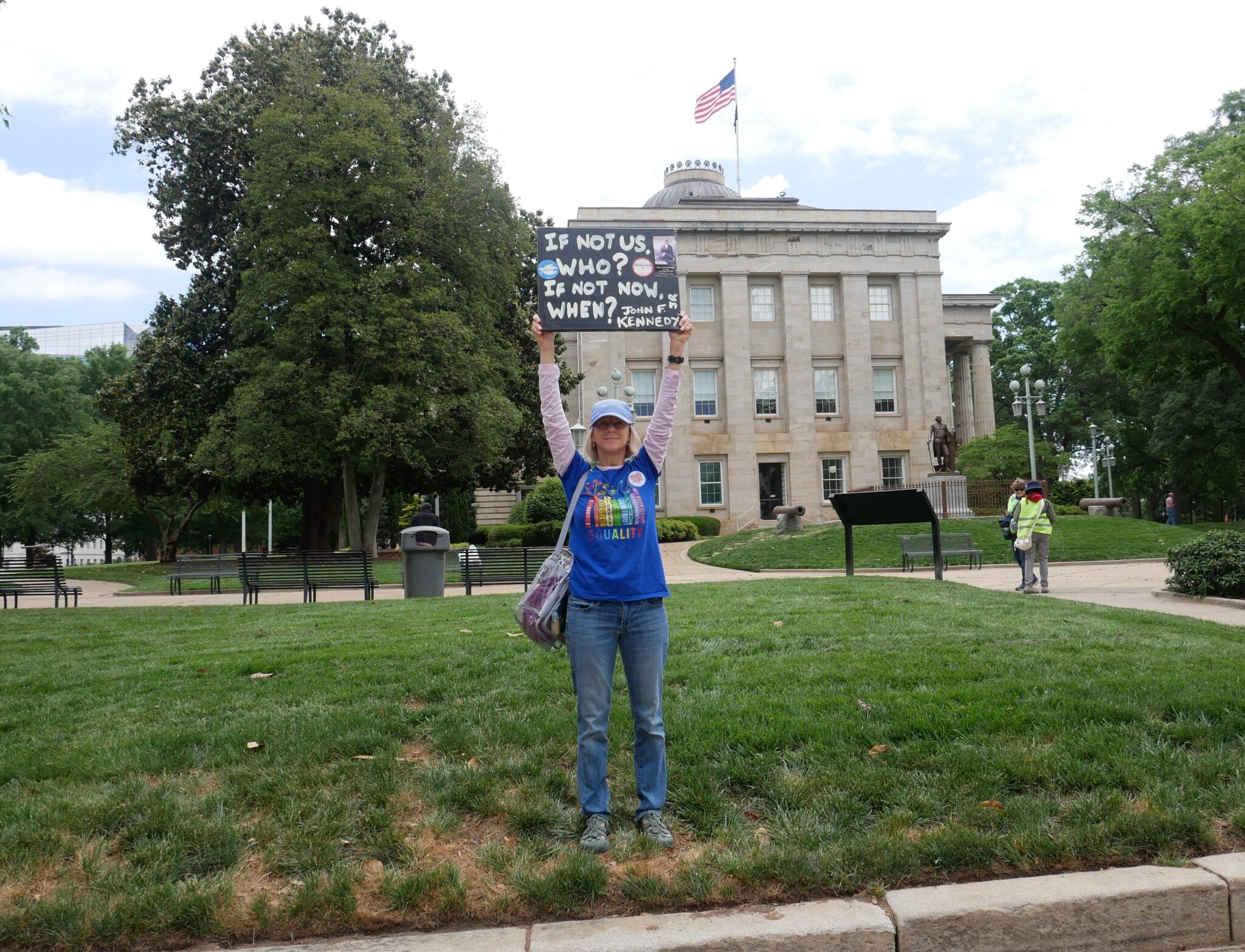
He brought an American flag instead of a sign to “remind people how this is really what America is about.”
Guilford County educators Kany Whitehead and Ryan Carter said they are attending for better pay and for their students.
“A lot of them don’t get the voice that they deserve to get when it comes to their education, so I’m acting as an advocate for them,” Carter said.
“We have some amazing kids out there, and they deserve all the resources that they need to be even more exceptional,” Whitehead added.
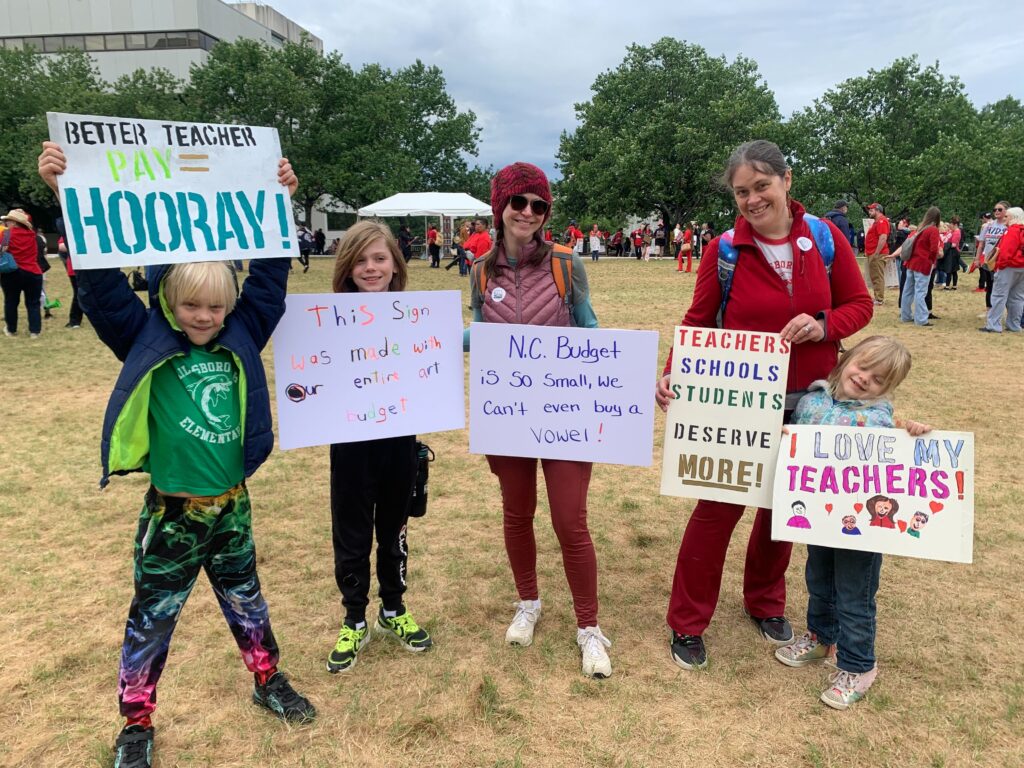
Daniel Grant-King, an elementary special ed teacher in Durham Public Schools said: “We need to fully fund public schools. We have teacher vacancies that are on the rise. We have people leaving the profession left and right.”
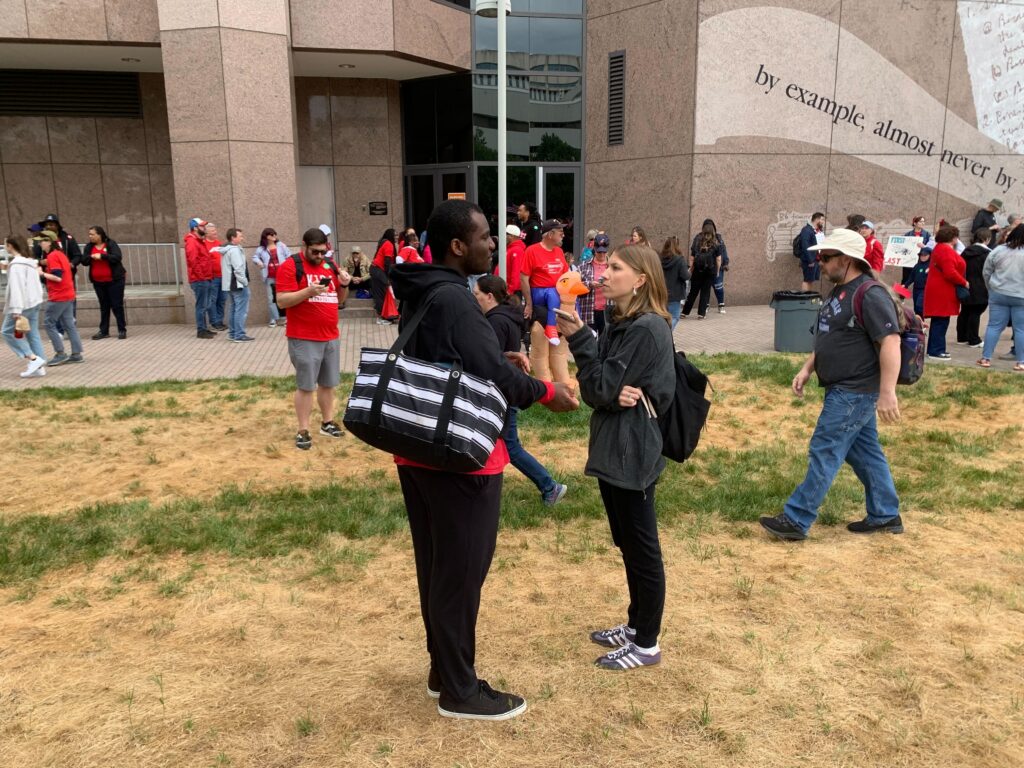
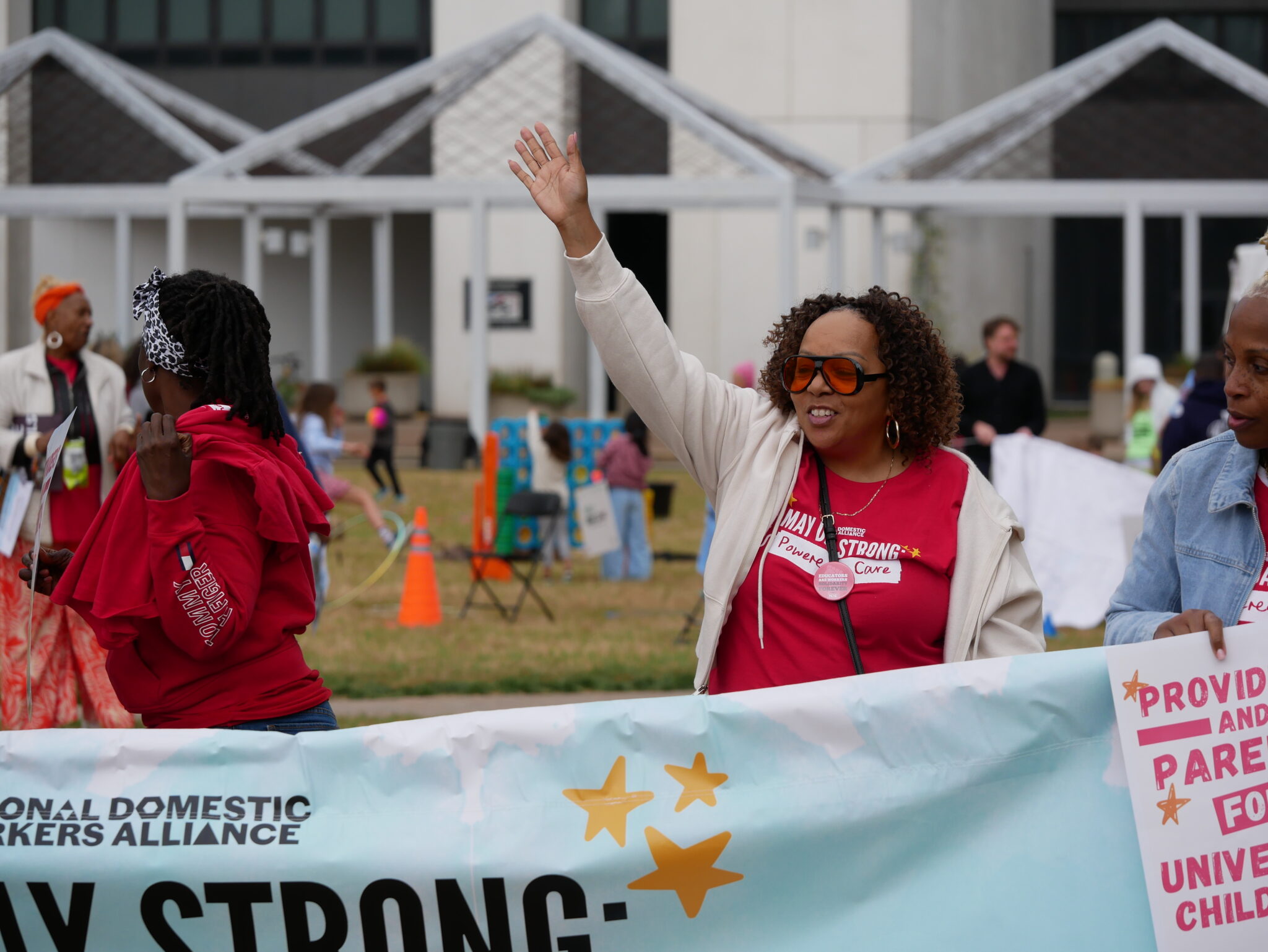
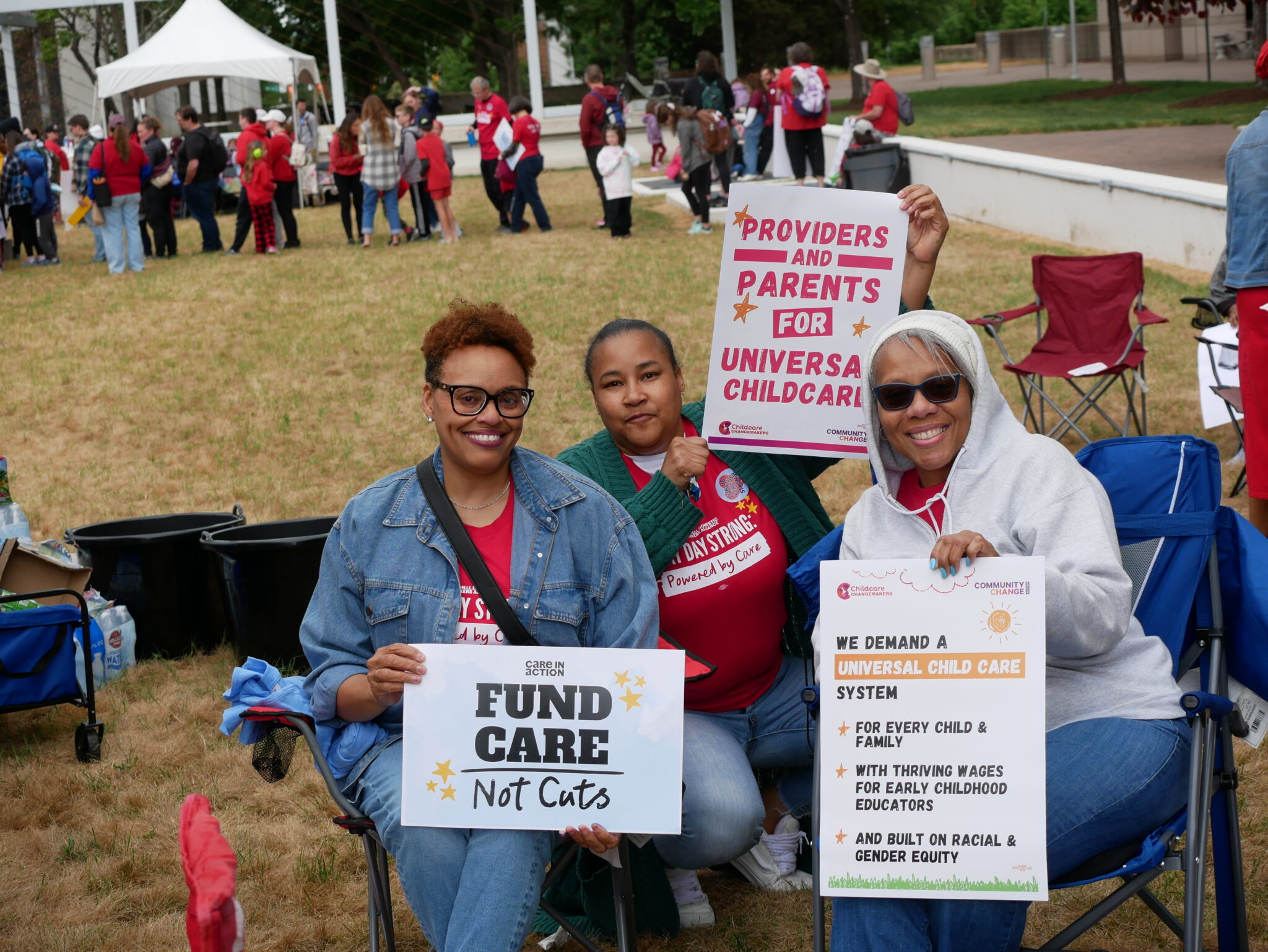
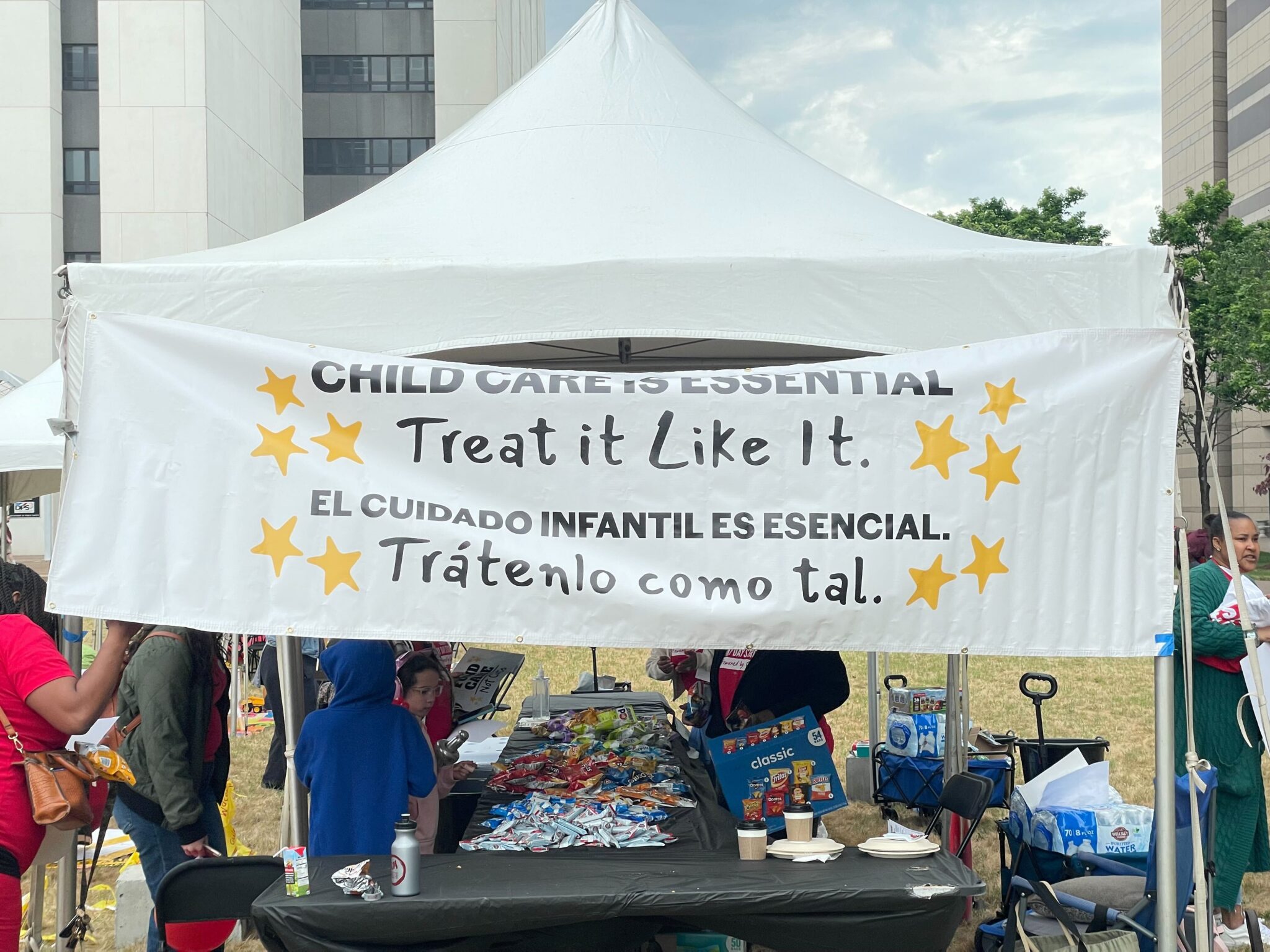
Dozens of child care providers also showed up to march for funding and recognition for the early education they provide.
Shevon Lyons, a NC Pre-K teacher at a child care center in Durham, has been in the field for more than two decades, but lacks retirement or health insurance.
“I’m here because I believe we should be state employees,” she said. “We are governed by the state, we have to follow state rules and regulations, they can come shut us down at any time, but you don’t want to give us the benefits that you give other school teachers.”
Lyons added: “We are all here together because we’re fighting for the same thing. We all need the same things across the board. (Before)-K is just as strenuous as K-12. They learn the most in the years that we gave them… that’s where they get their foundation.”
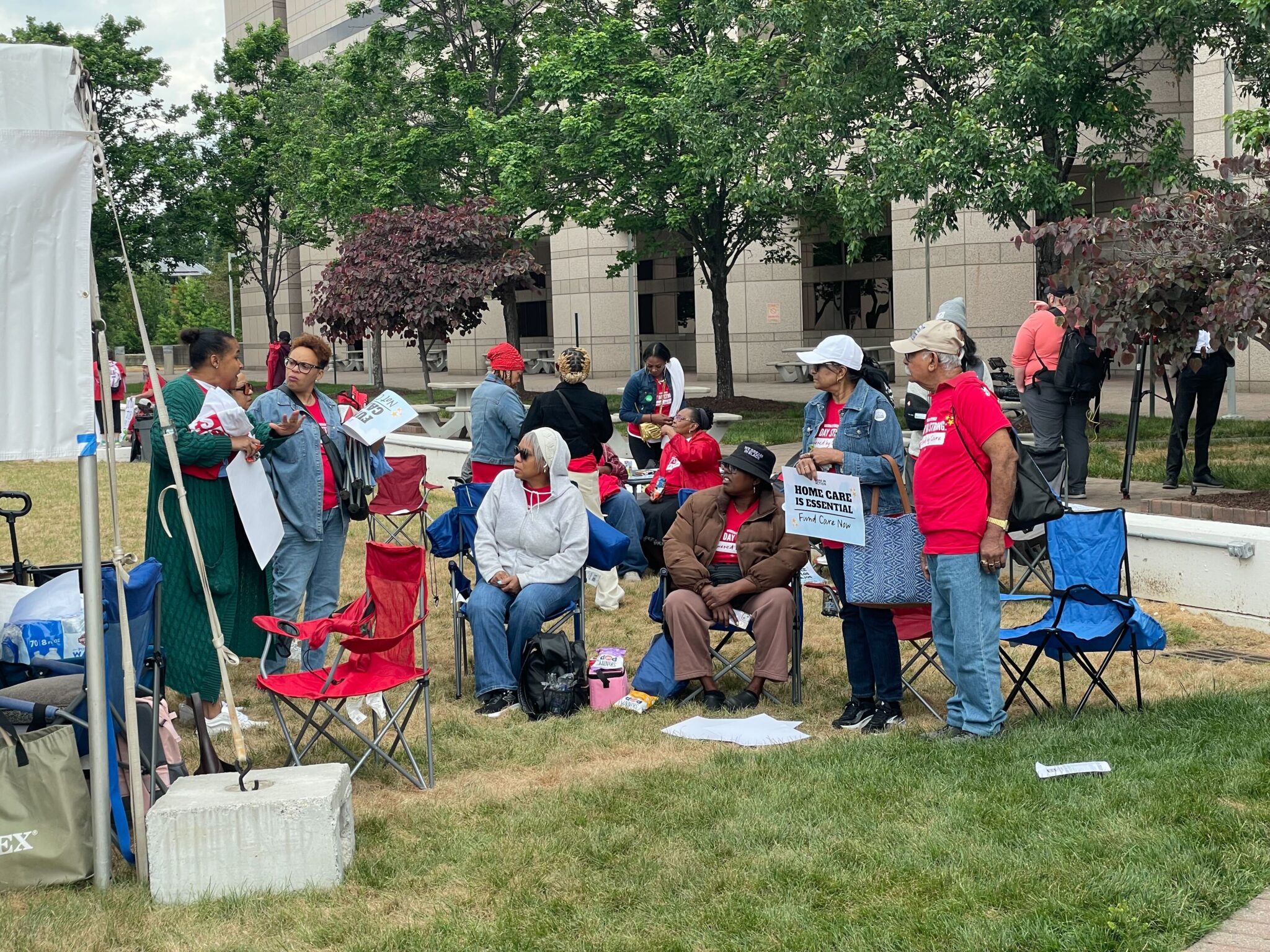
Here is a video showing the size of the crowd about 25 minutes before planned remarks at 11 a.m.
Remarks before the march
Updated 11:30 EST
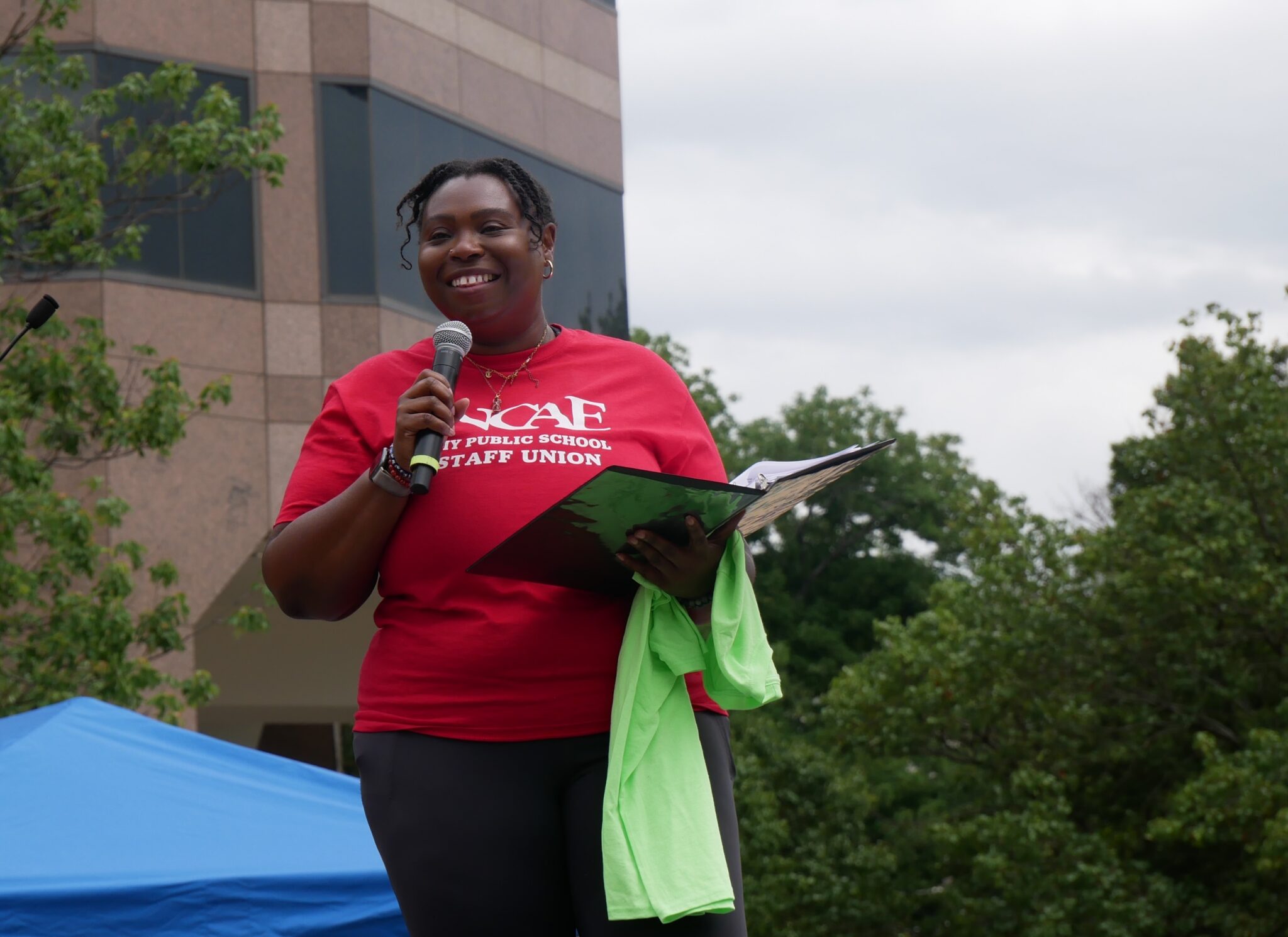
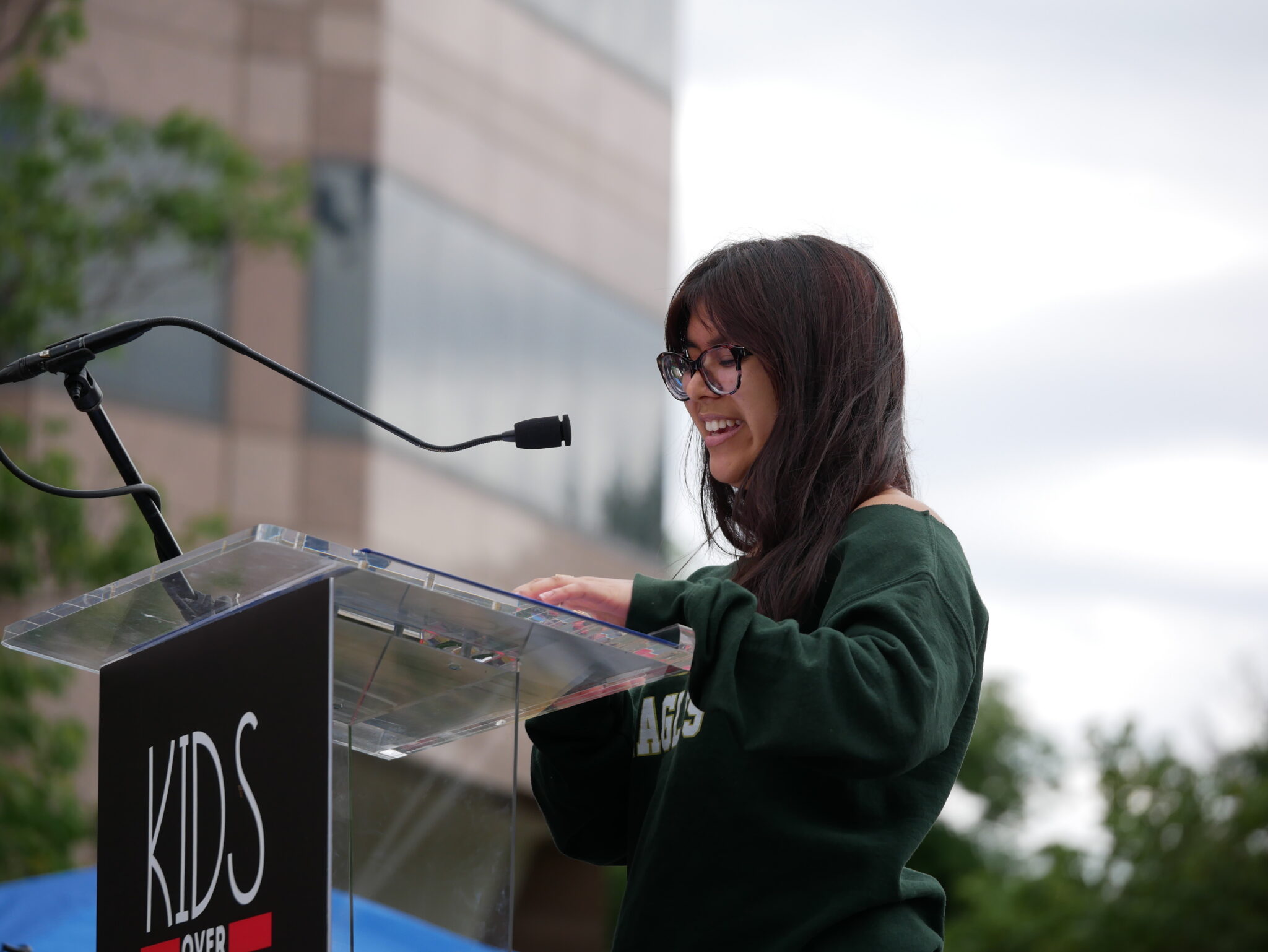
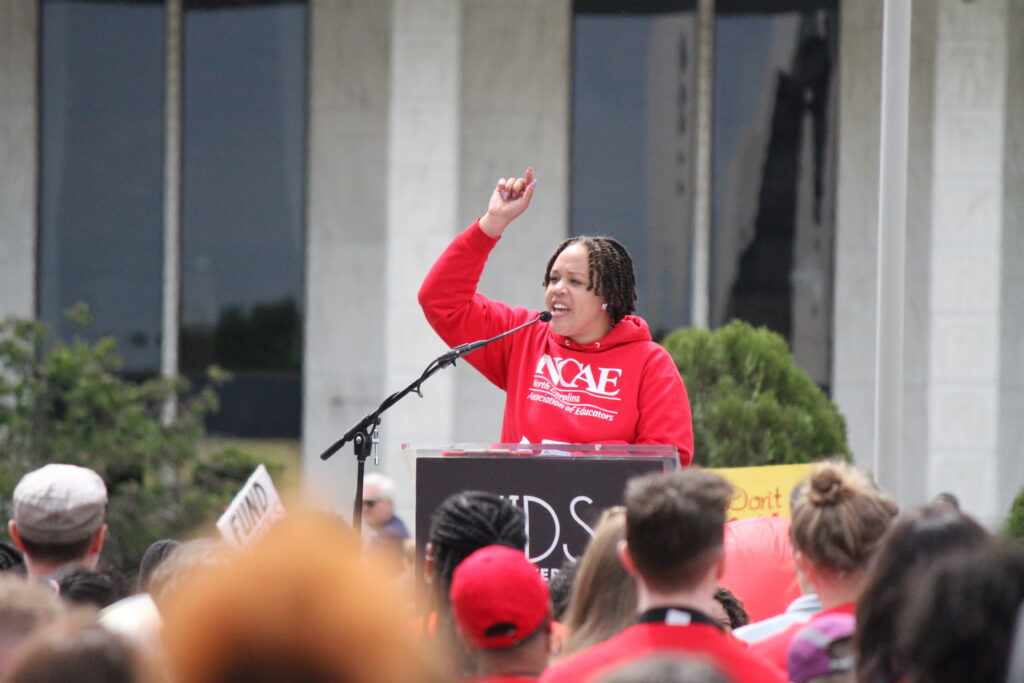
A few minutes after 11 a.m., NCAE gathered attendees for opening remarks. NCAE President Kelly started by saying, “every child in North Carolina deserves a well-funded public school.”
“There’s nothing radical about that. There’s nothing liberal about that,” she said to cheers in the crowd. “We are organized, we are mobilized, and we are going to take our democracy back.”
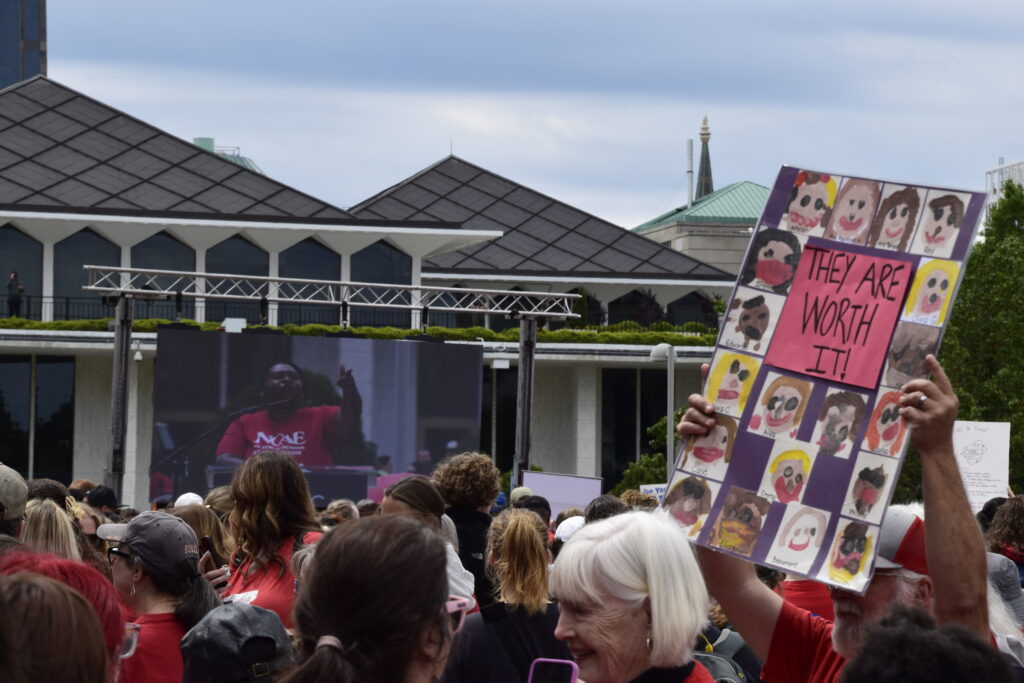
Kelly said one way to do that is by supporting Senate Bill 943, “Kids Over Corporations Act,” which was filed by Democrats earlier in the week. That bill would repeal the scheduled phaseout of the corporate income tax in North Carolina and set the rate at 5%. The corporate income tax rate, previously the lowest in the nation among states that collected corporate income taxes, at 2.5% before 2025, is being phased out entirely by 2030. Its 2026 level is 2%.
Guilford County school counselor Shana Richards said more funding is needing for mental health supports for students, and for retaining high-quality teachers in the classroom.
“We tell them to dream big,” Richards said of her students. “And dream big they do. But our state does not invest in their dreams. … We know that our students deserve more, and we know the gap between what they deserve and what they actually receive is showing up in ways that we can’t ignore.”
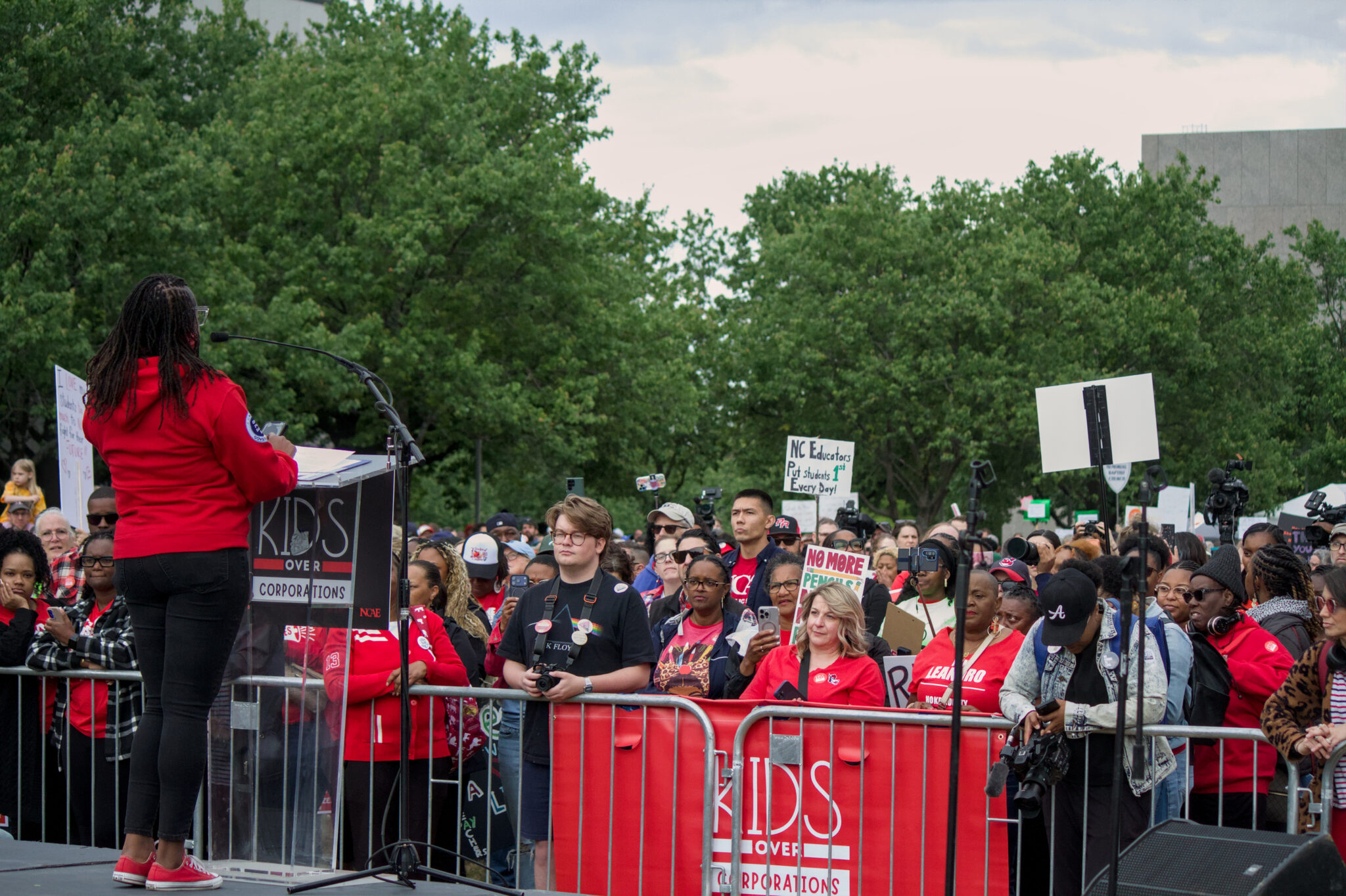
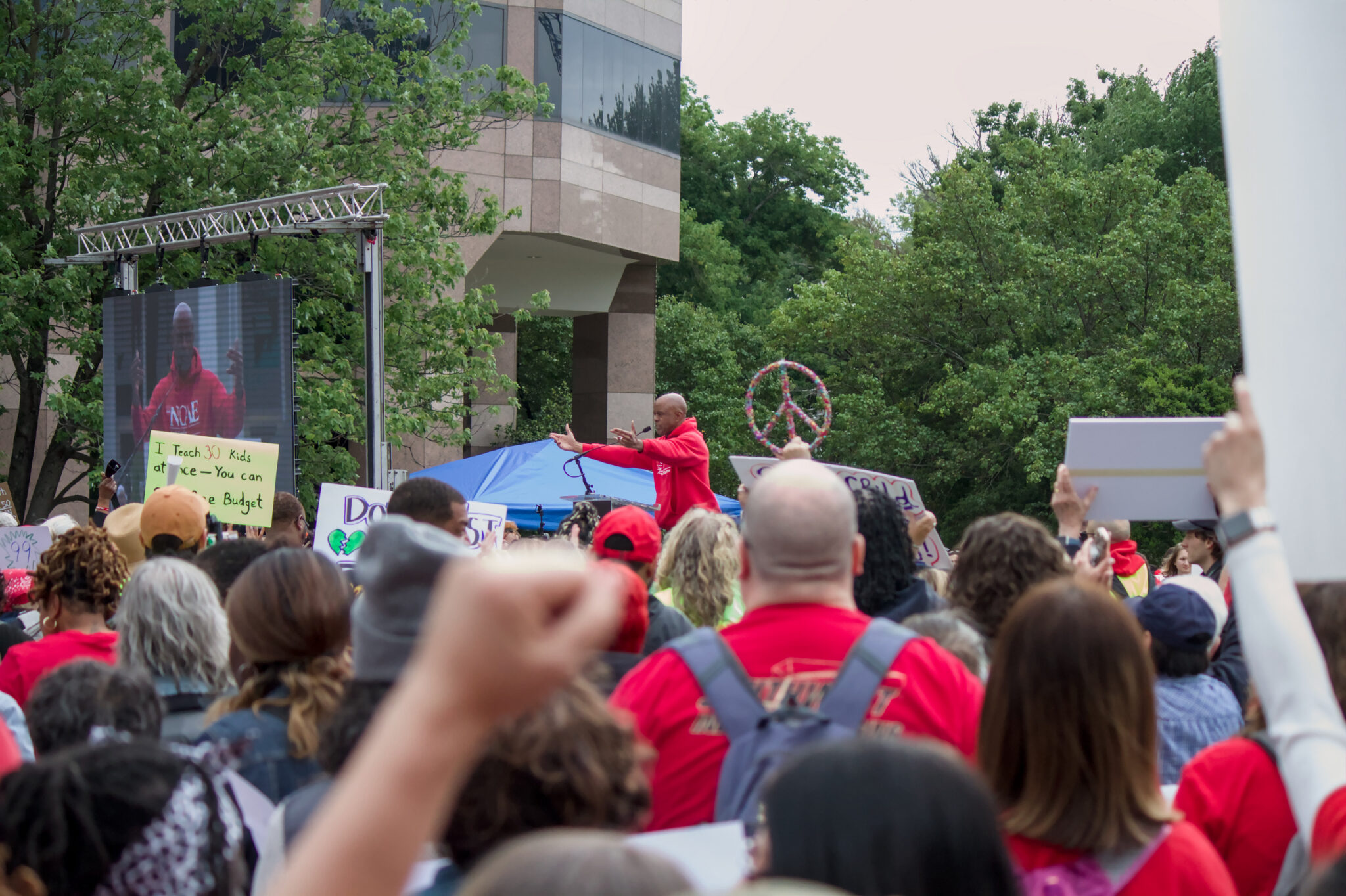
New Hanover County custodian Daniel Webb said he does the work of three custodians, but is only paid for one. He referenced mounting school construction and repair needs, which have grown to nearly $13 billion across the state.
“I’m tired of going to my building, opening up in the mornings, sounding the alarm, and seeing more Band-Aids than bricks because the district will not fix our problems, just put a Band-Aid over it,” he said.
Updated 12:00 p.m. EST
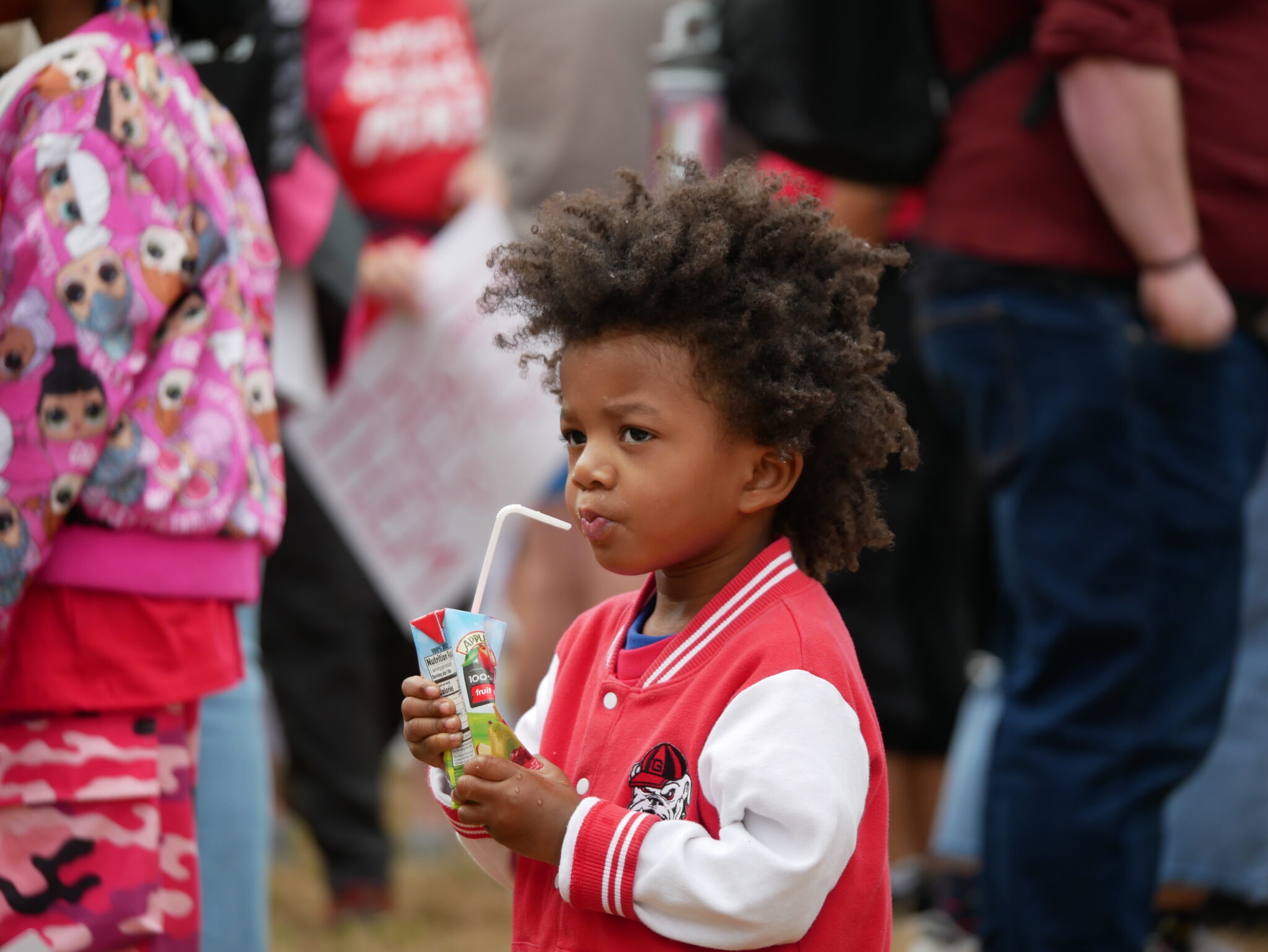
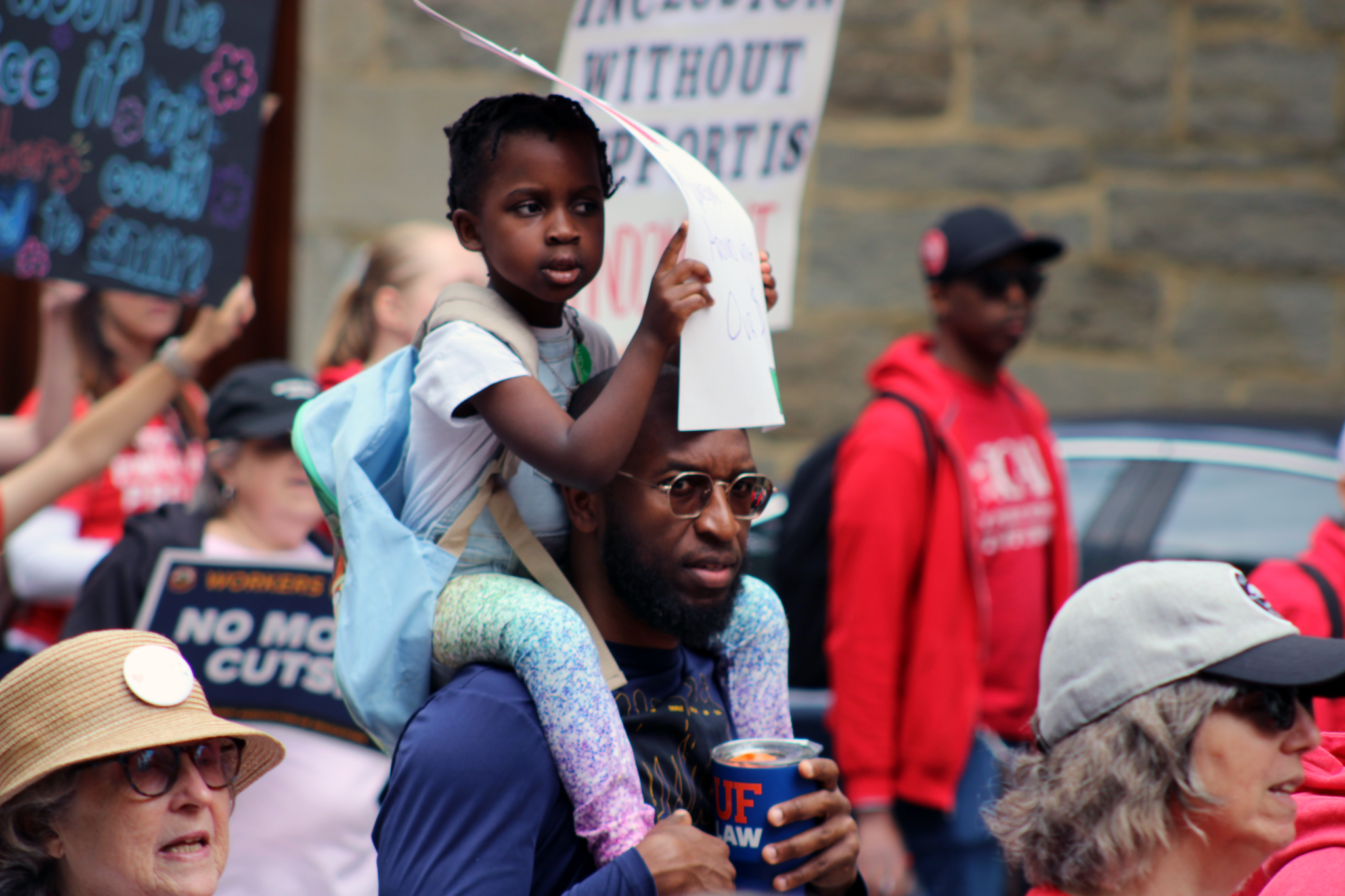
Parents, grandparents, and students also shared their reason for marching.
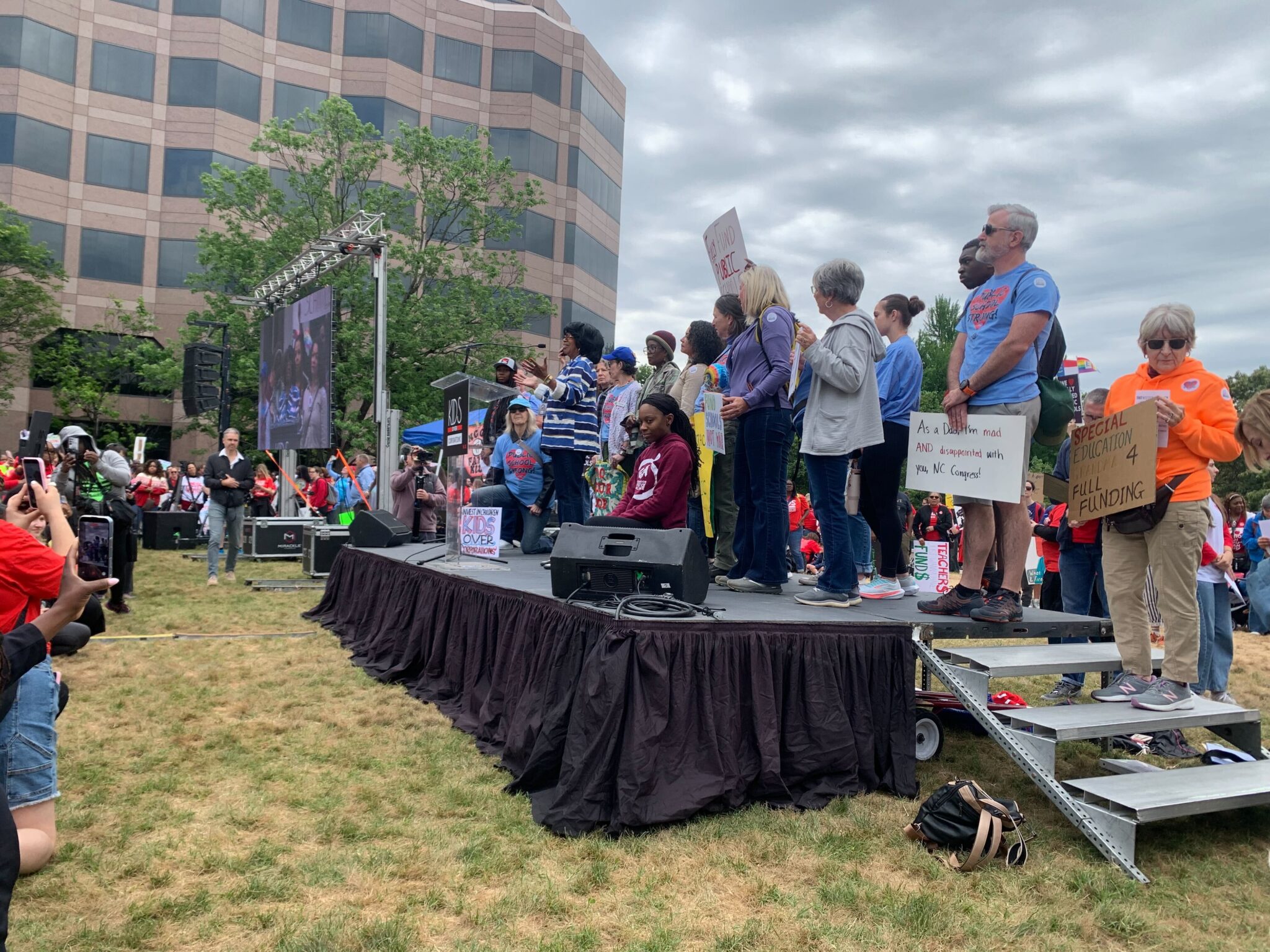
Tykayla Livingston, a journalist, educator, and parent, said she attended the same elementary school as her sons, and saw how “it’s changed after years of funding cuts.”
“So that’s why I’m here, because I want it all — for my children and for every child in North Carolina,” she said. “We have the resources.”
Sandra White, an early childhood educator and organizer with National Domestic Workers Alliance (NDWA), said early educators and teachers have something in common.
“We do what we do because we love what we do,” said White, who is president of the North Raleigh Providers Network and the Family Child Care Association of Wake County. “But our educational system is underfunded.”
Enloe student Wasswa Myers shares why he is marching. Liz Bell/EdNC
Before the march, Wake NCAE President and NCAE President Elect Christina Cole also shared remarks.
“We have work to do. We put in enormous amounts of time and labor to get to this historic day, and it will take enormous amounts of time and labor to build a movement powerful enough to win all the things you and your students deserve,” she said.
Cole invited attendees to report back to Halifax Mall for local and regional meetings after the march.
“We cannot leave today without being committed to win,” Cole said, leading the crowd in a chant. “Let’s march y’all.”
During the march
Updated 12:45 p.m. EST
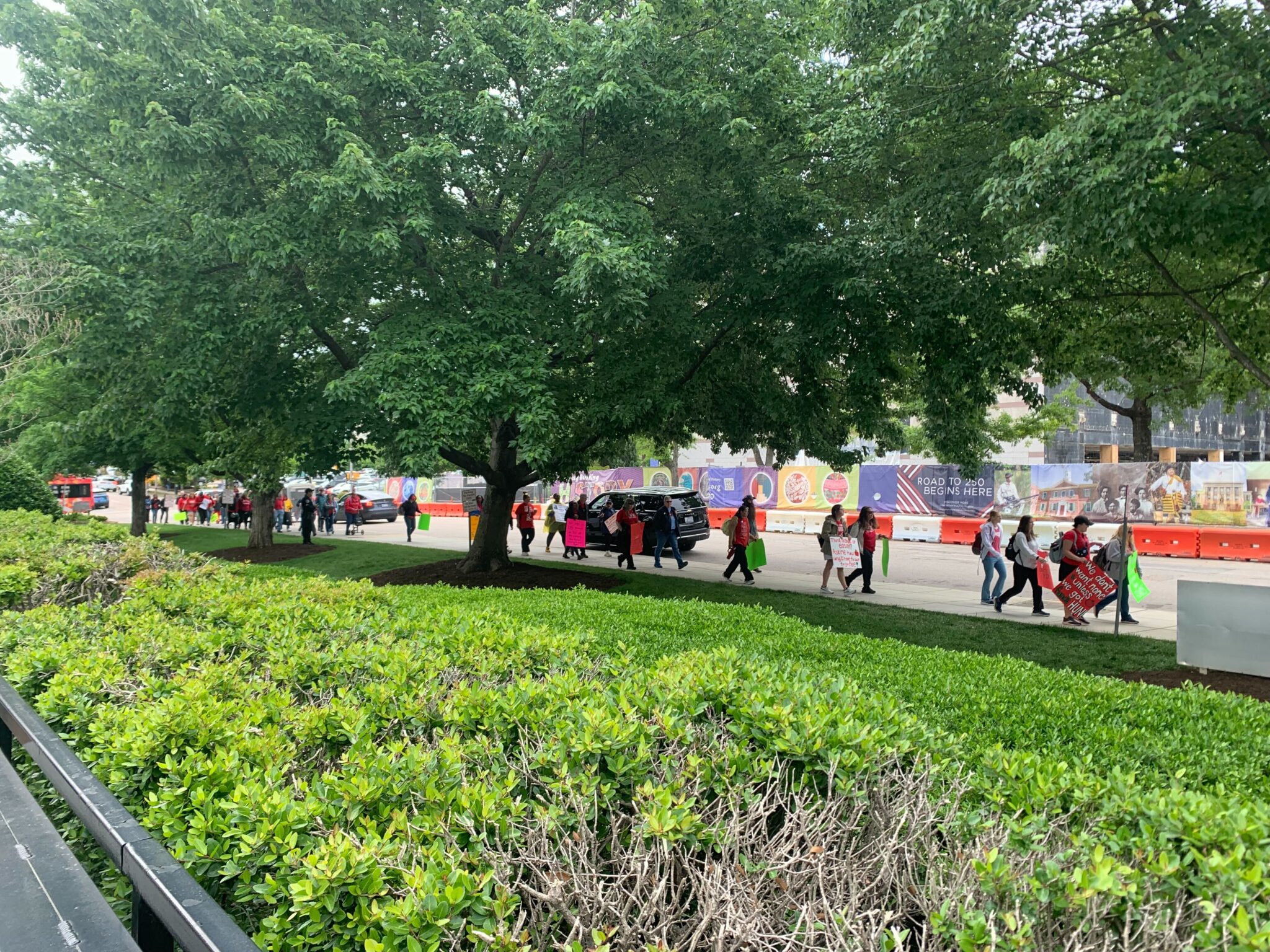
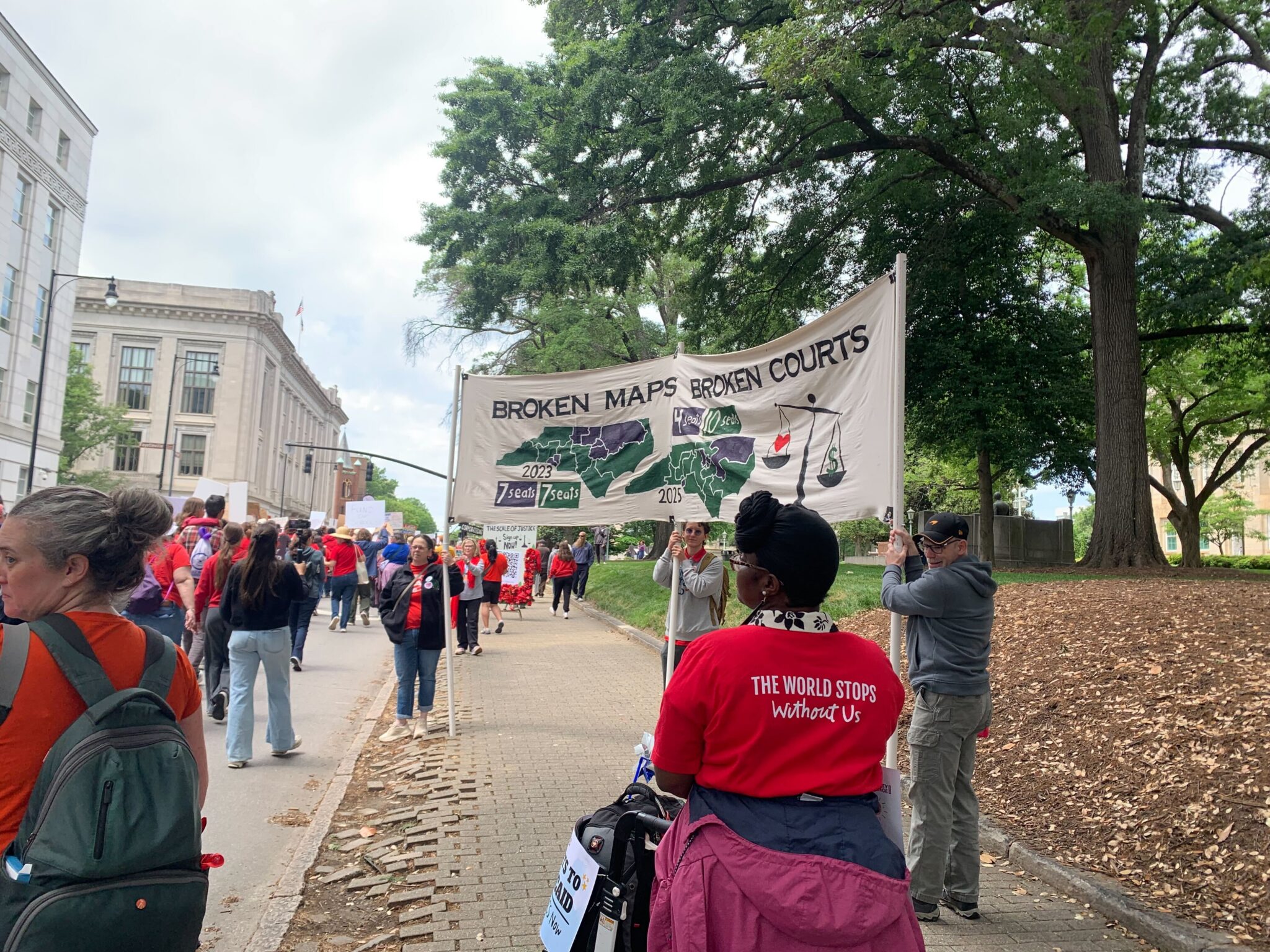
At approximately 12:20, attendees began the march from Halifax Mall toward the state capitol building.
At the front of the march, attendees started a chant: “We are the union! The educators’ union!”
Though NCAE is classified as a 501(c)(6), a nonprofit designation for professional organizations, in recent years, it has embraced union language. In a 2023 address, Kelly declared the year’s theme to be the “Power of our Union and the Promise of Public Schools.”
Elsewhere in the march, attendees said, “This is what democracy looks like!”
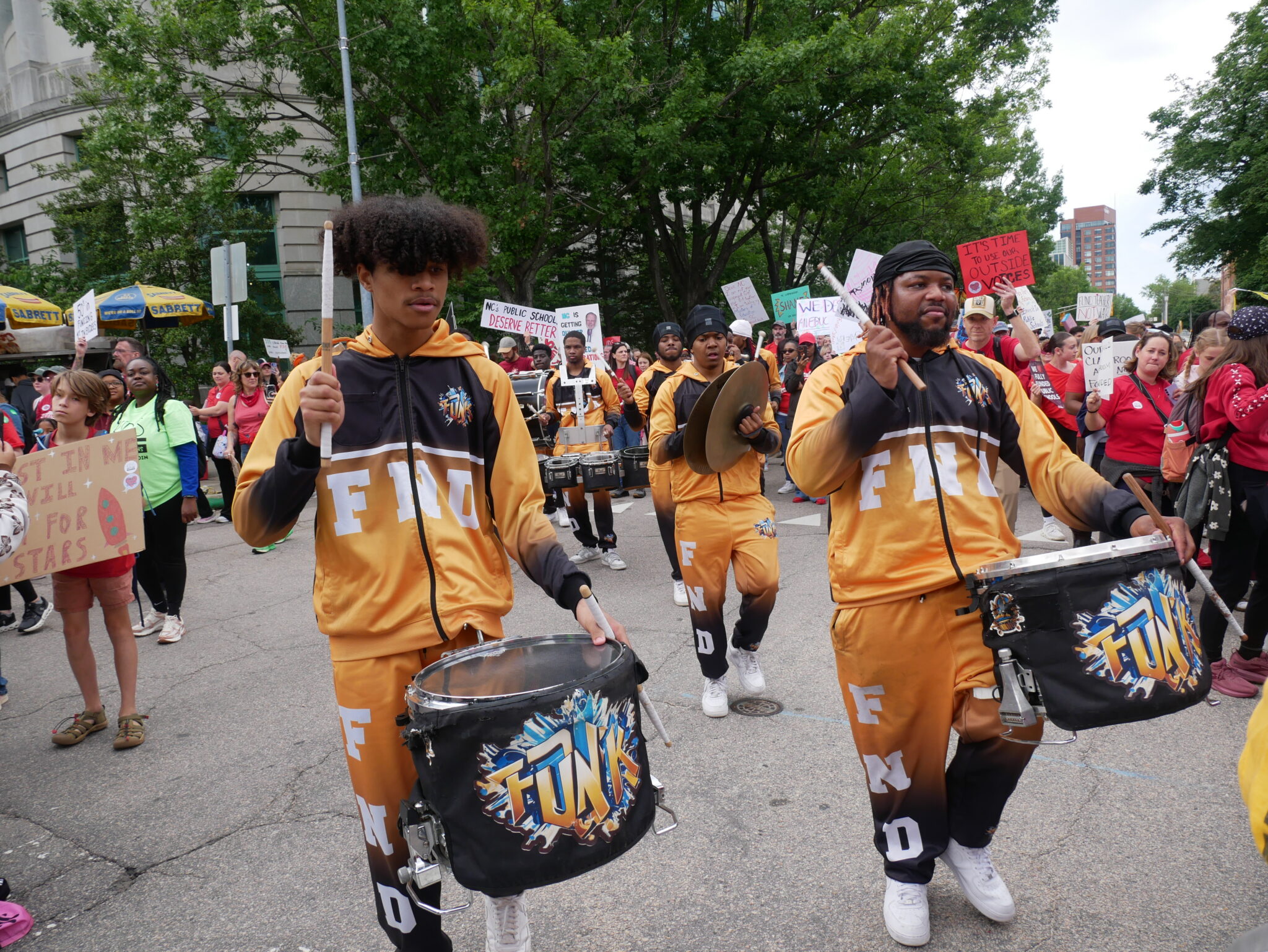
As marchers made their way toward the capitol, in addition to chants, you could also hear drumming.
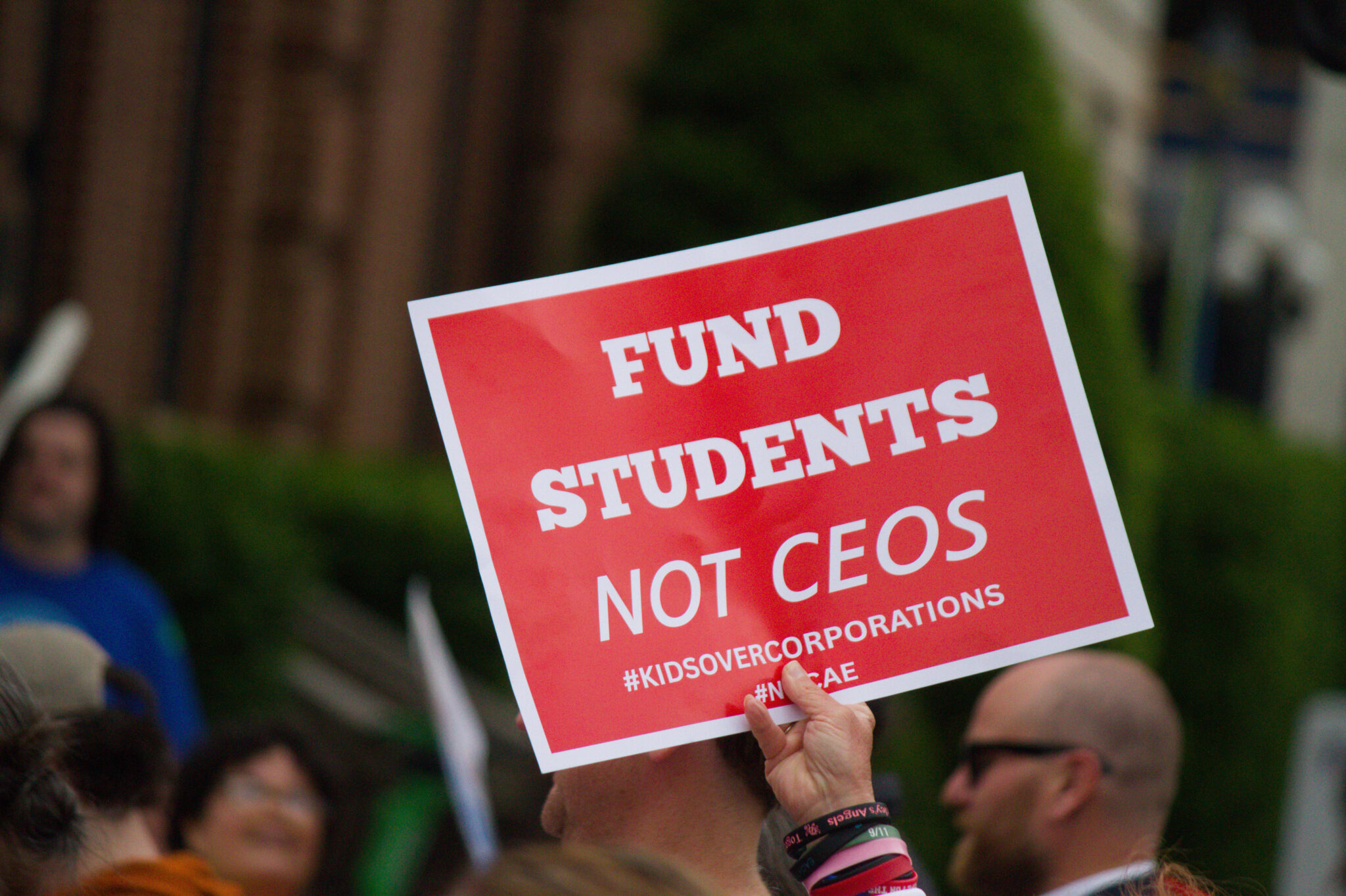
Aside from the main issues of the rally, protestors expressed anger at recent Immigration and Customs Enforcement (ICE) actions, and held signs and chanted calling on Duke Energy to support NCAE’s proposed 5% corporate tax in the Kids Over Corporations Act, while also speaking out against the company’s proposed rate increases. Some attendees also spoke out against recent redistricting efforts, which they say led to unfair election maps.
One attendee, Colton Cheviron, said the new maps “create an imbalance between Republicans and Democrats for sure, and stop people’s voices from being heard,” when it comes to education and other issues.
Updated at 1:15 p.m. EST
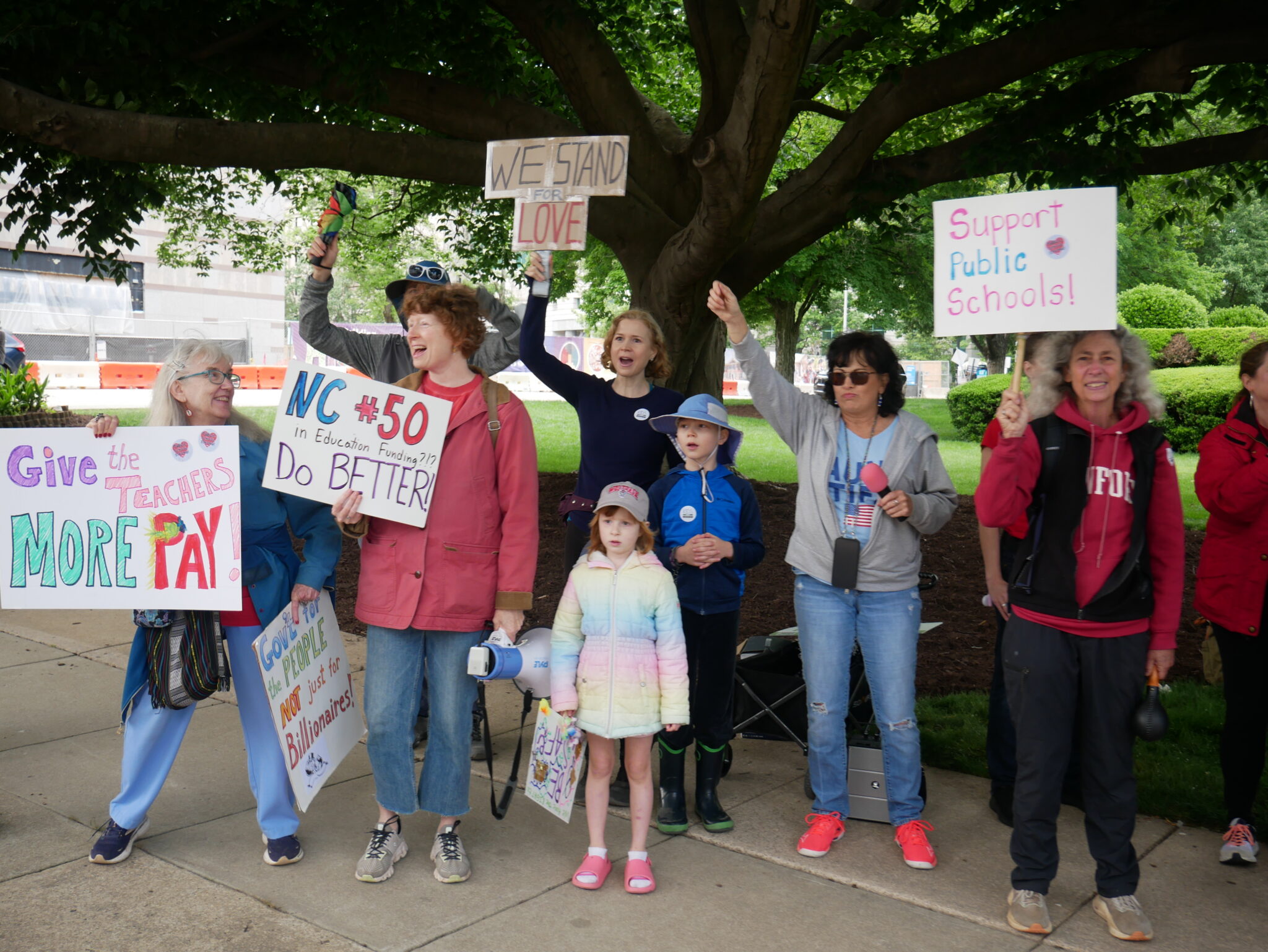
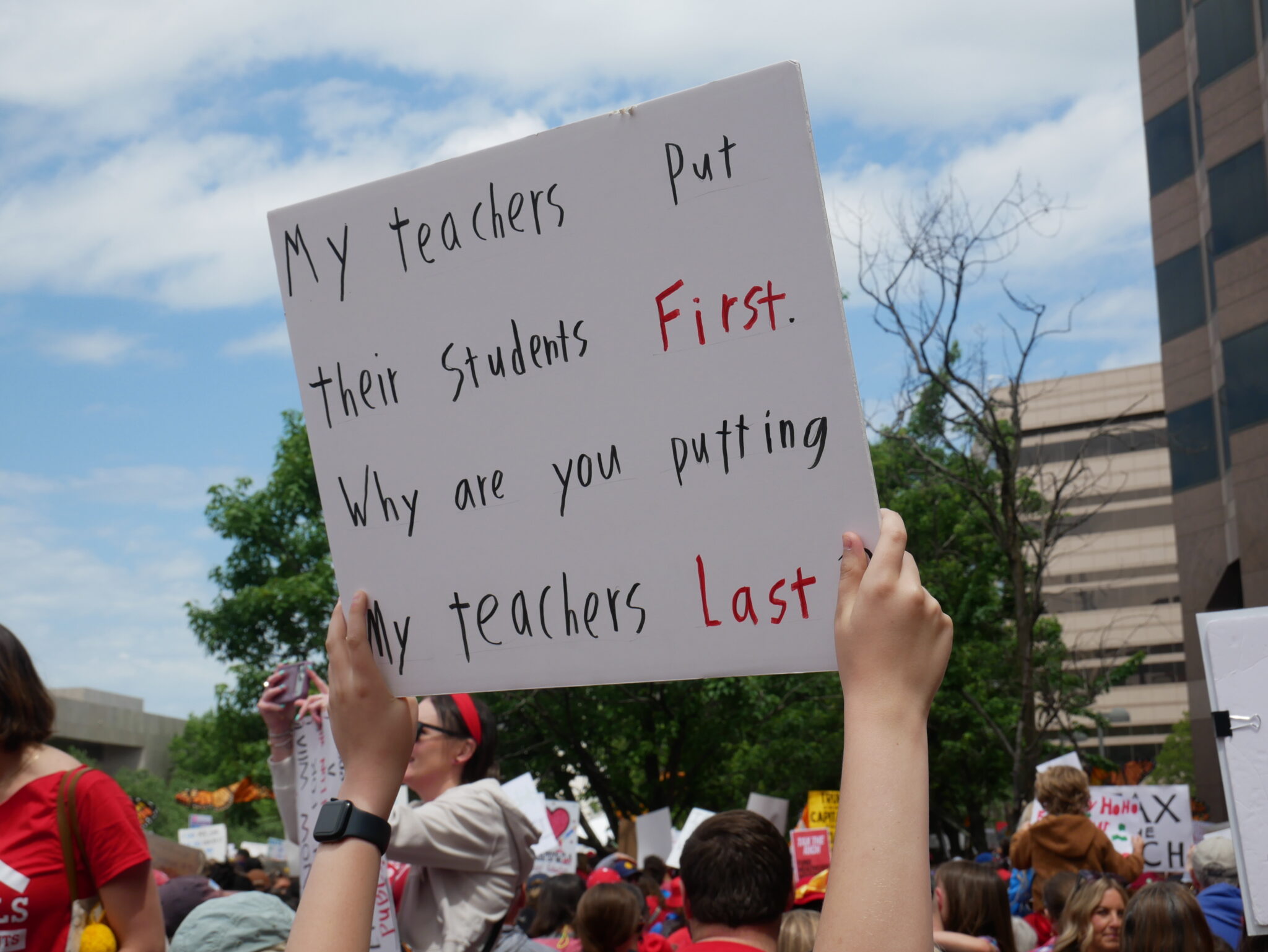
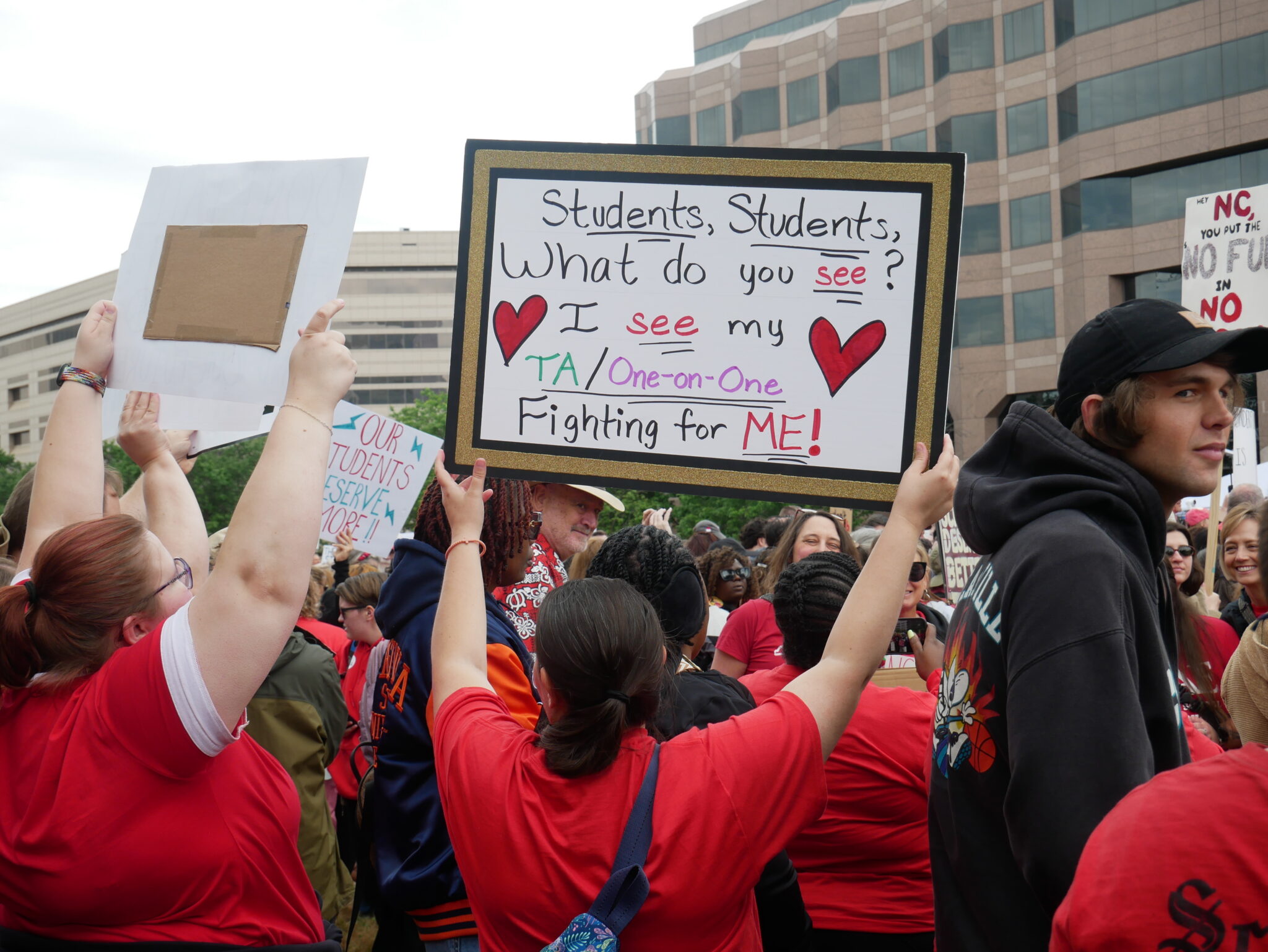
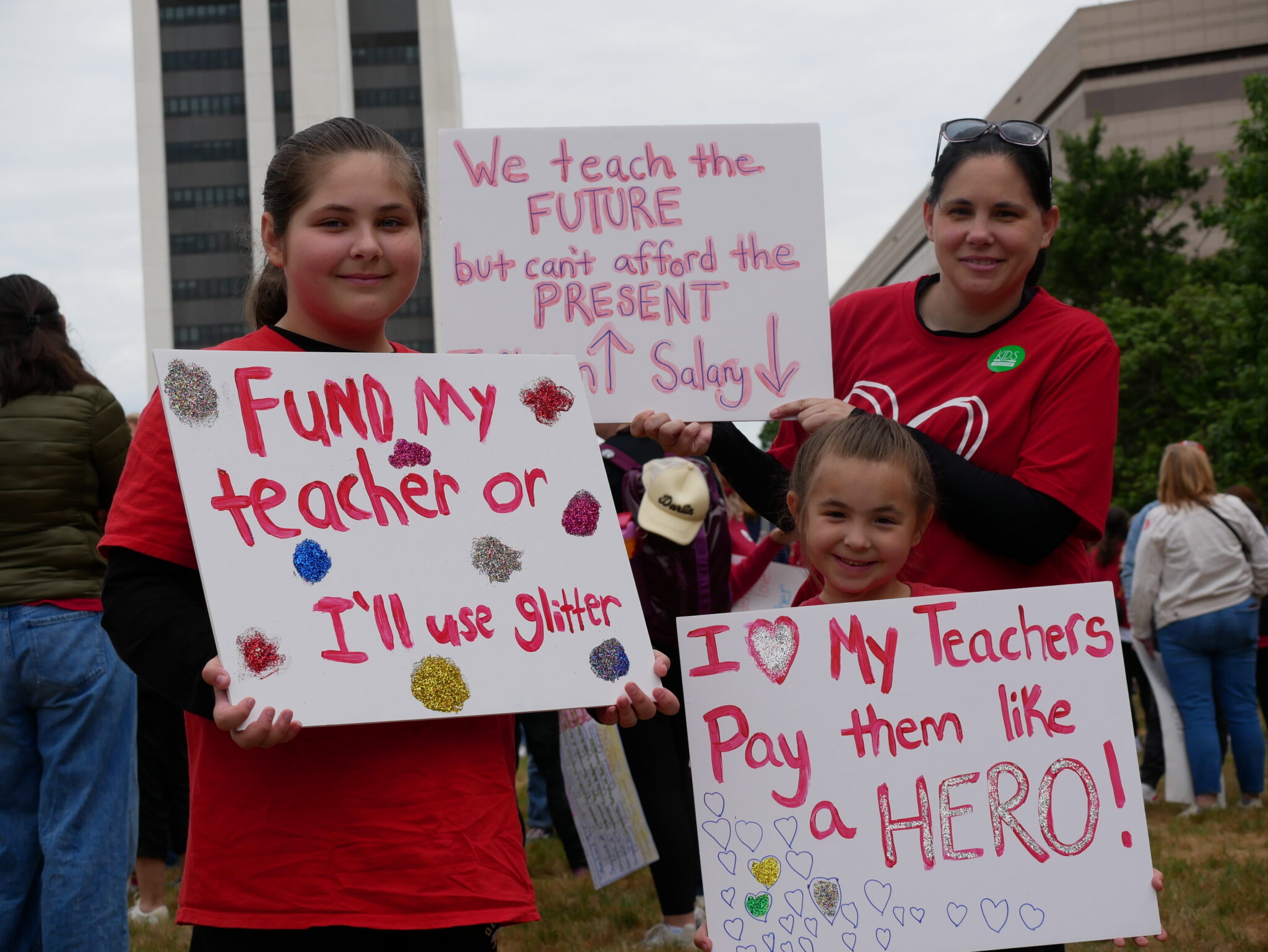
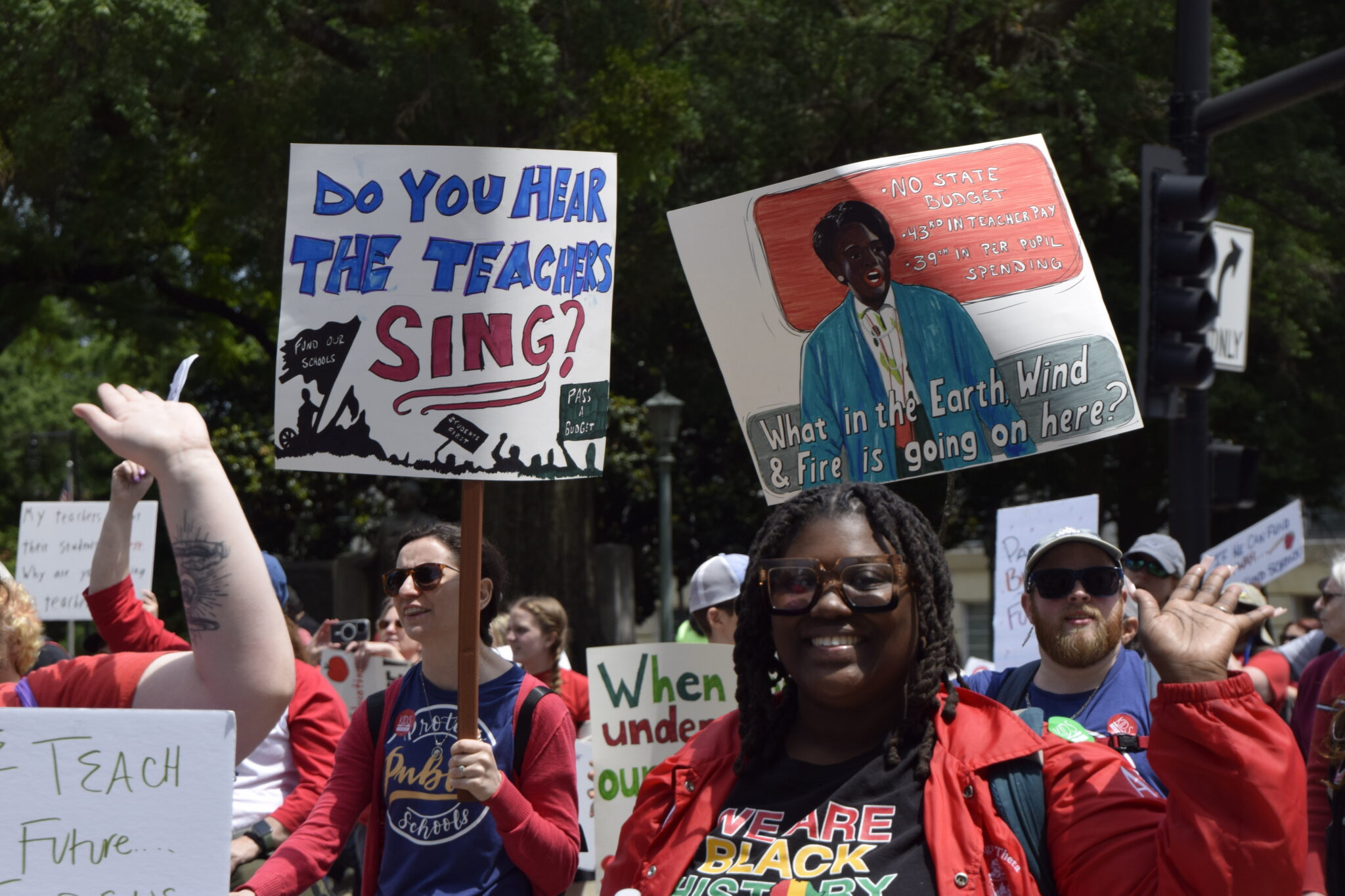
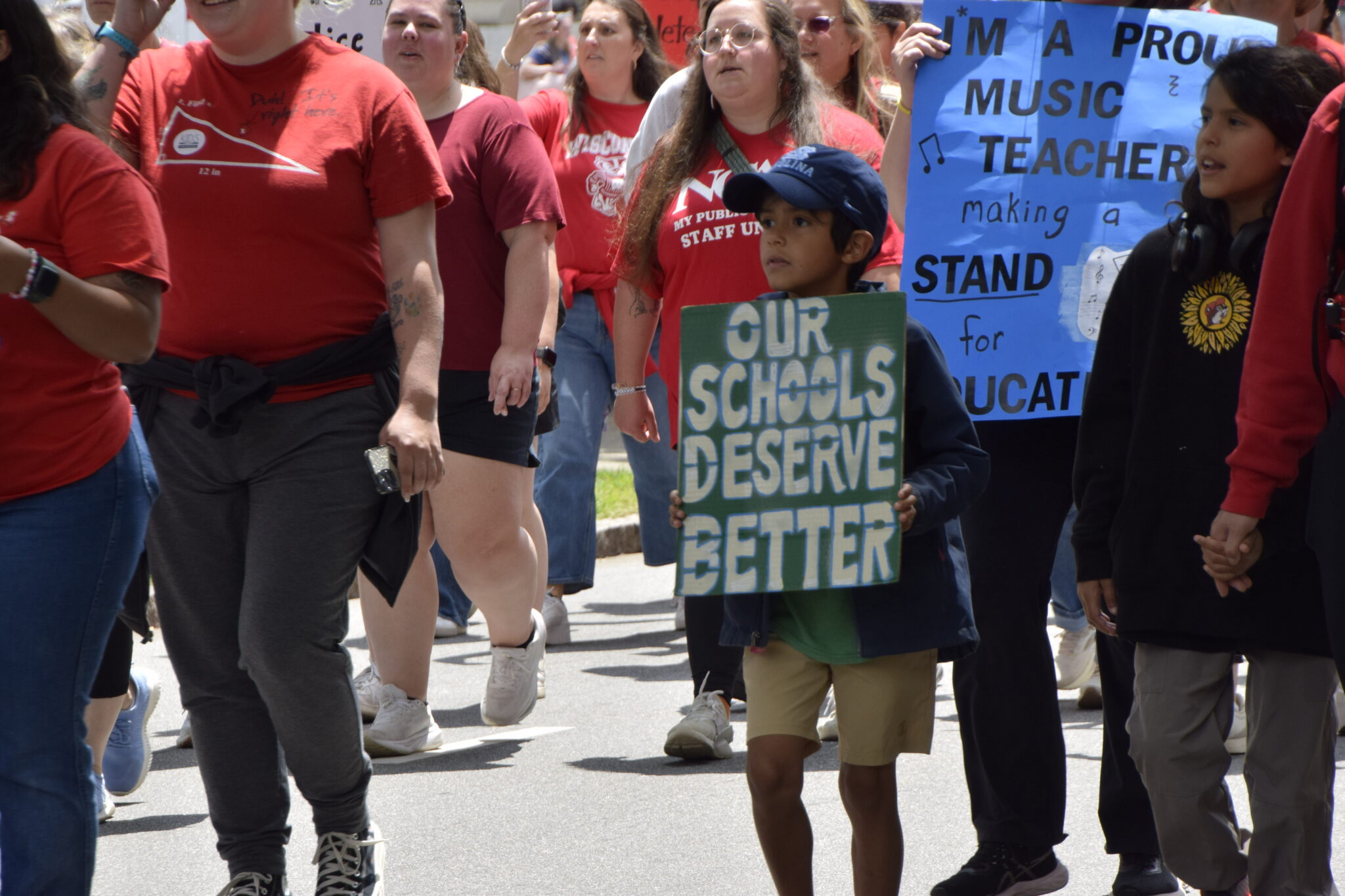
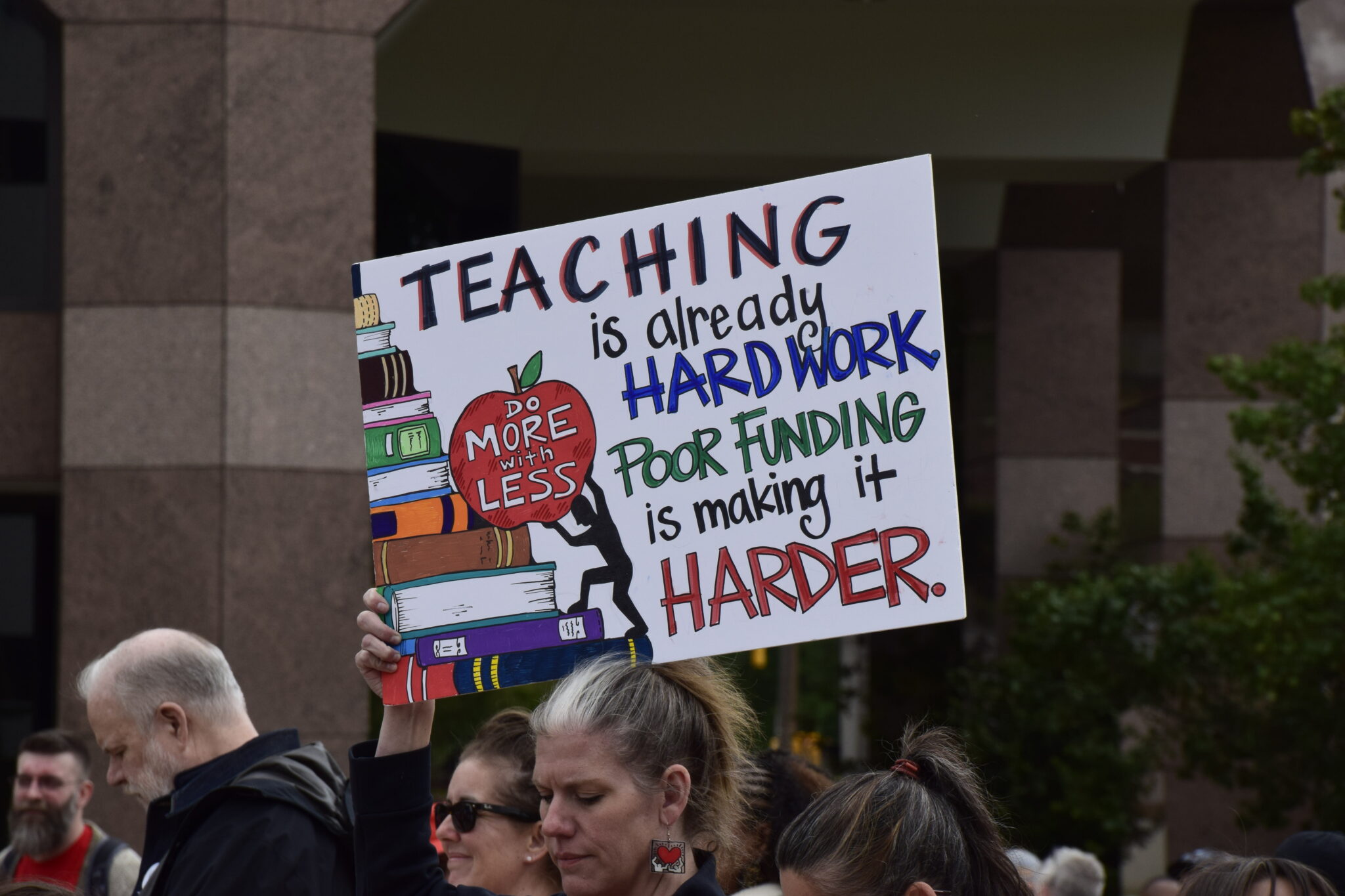
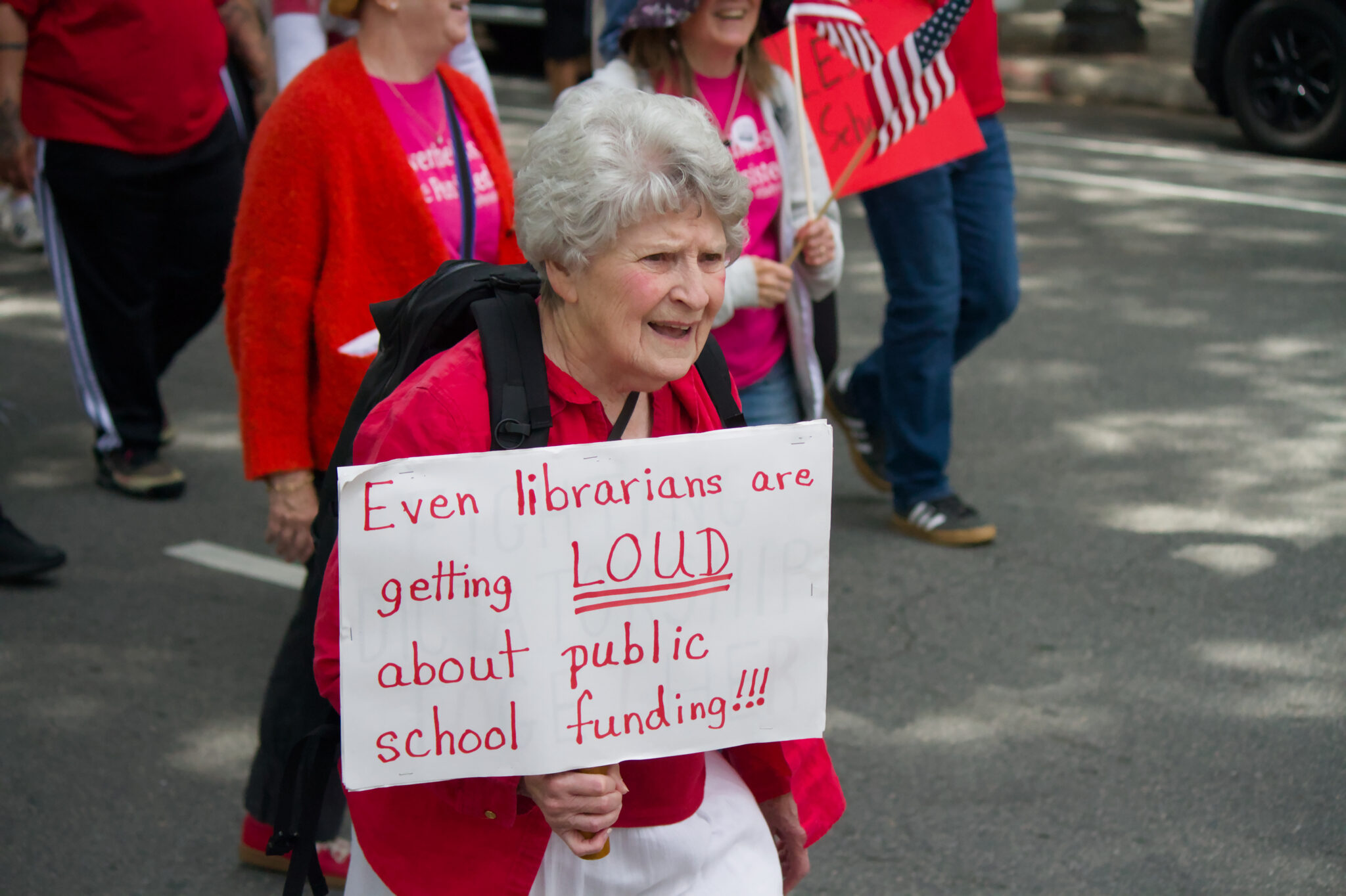
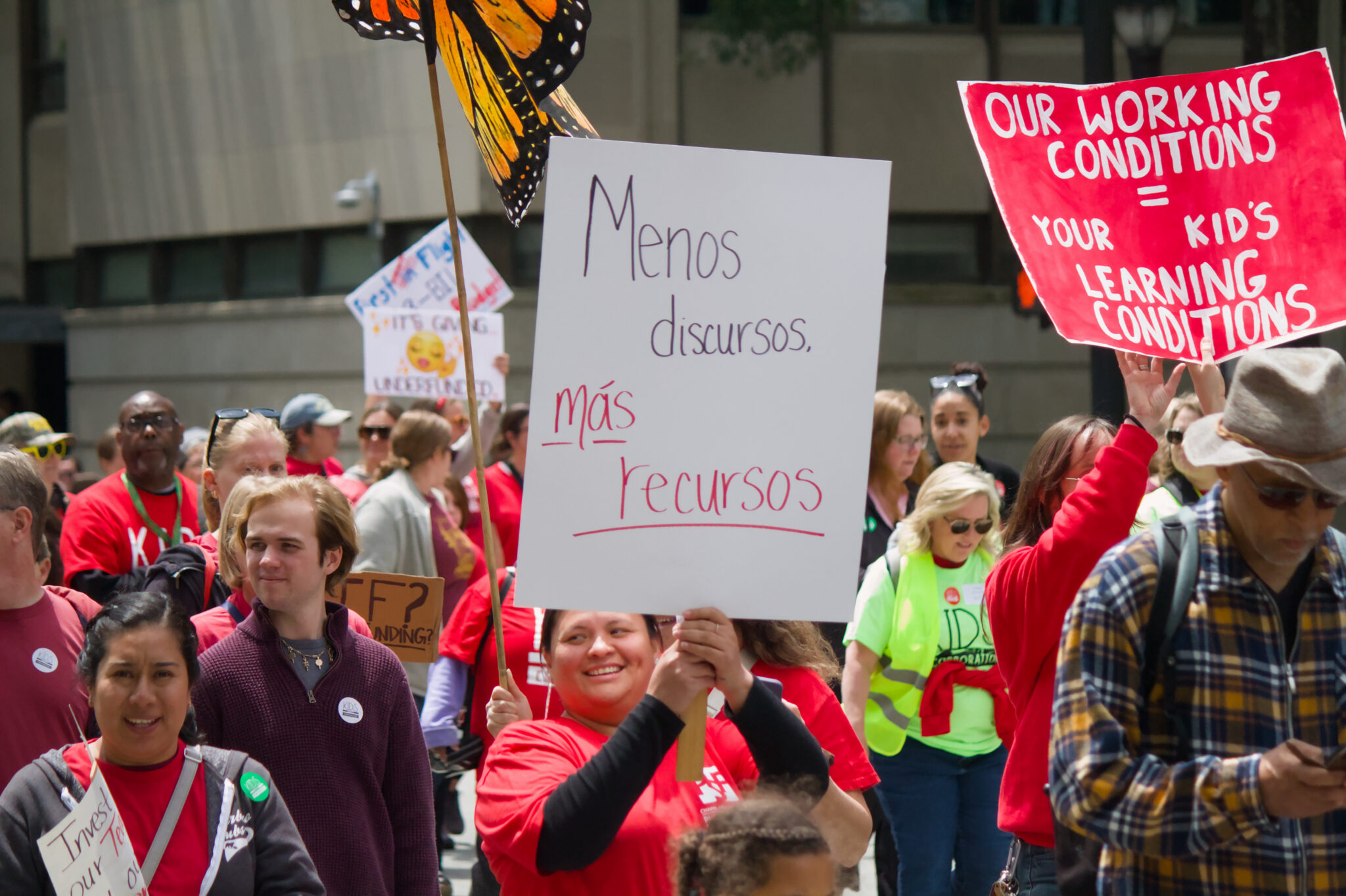
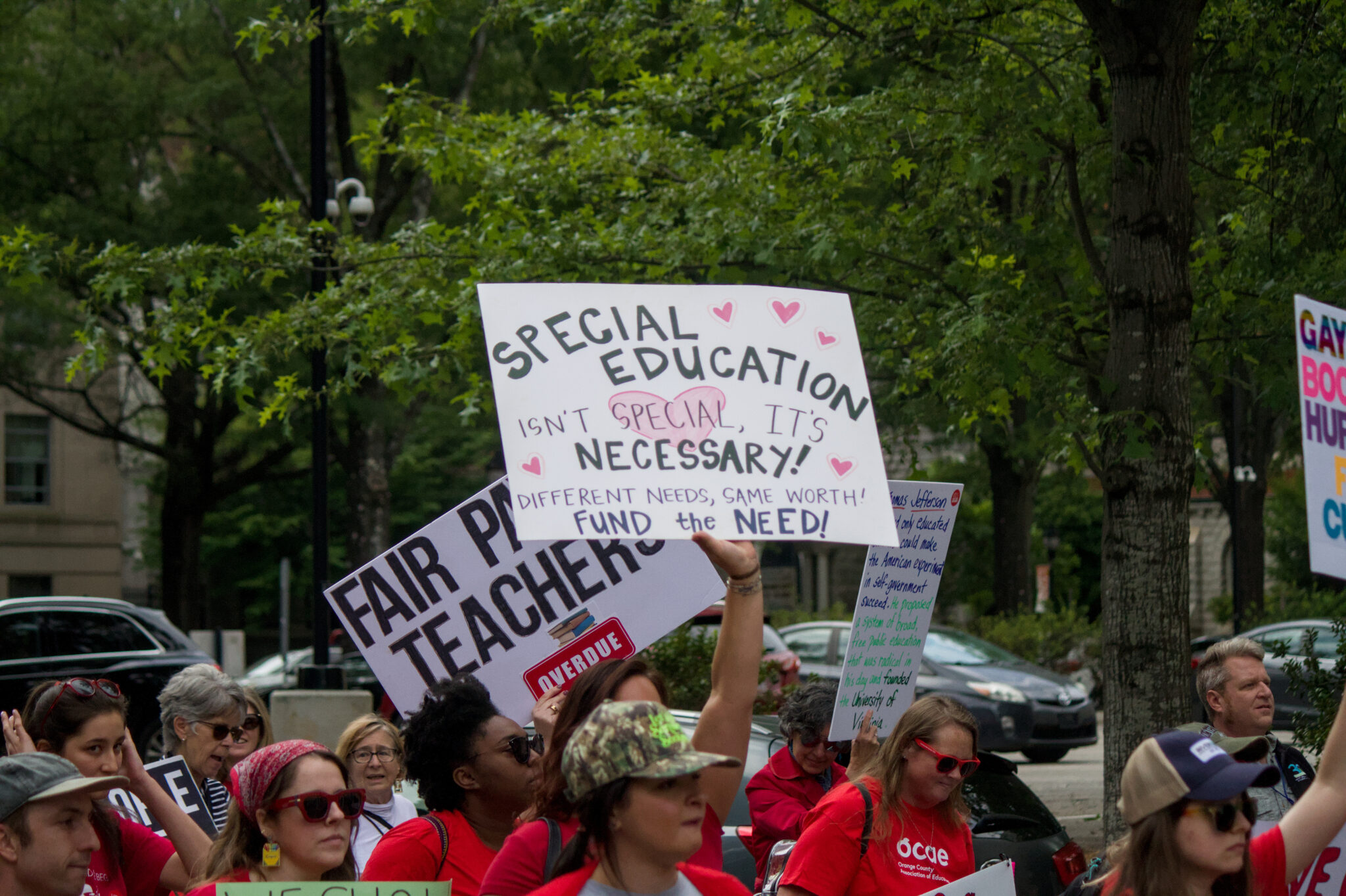
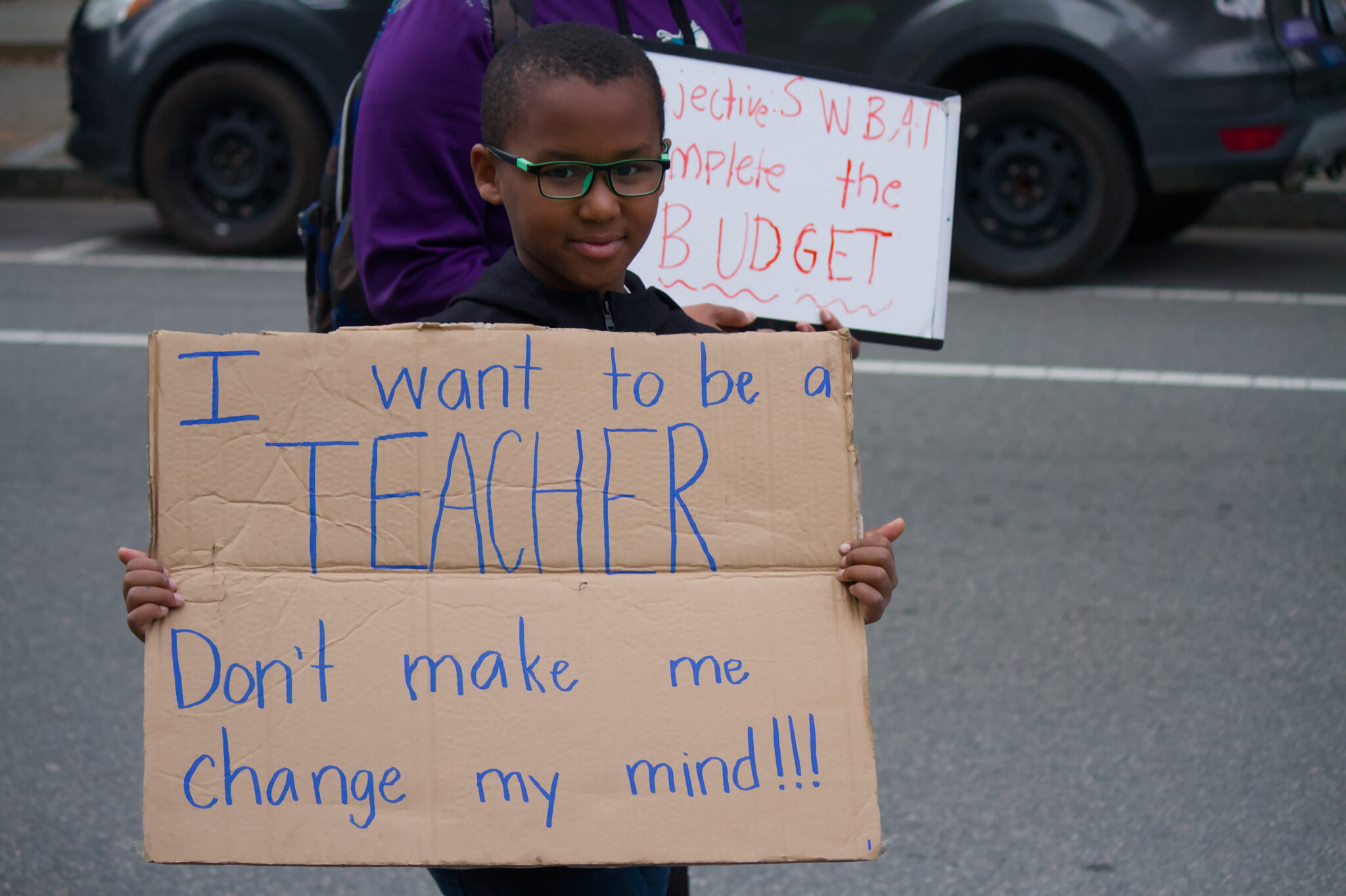
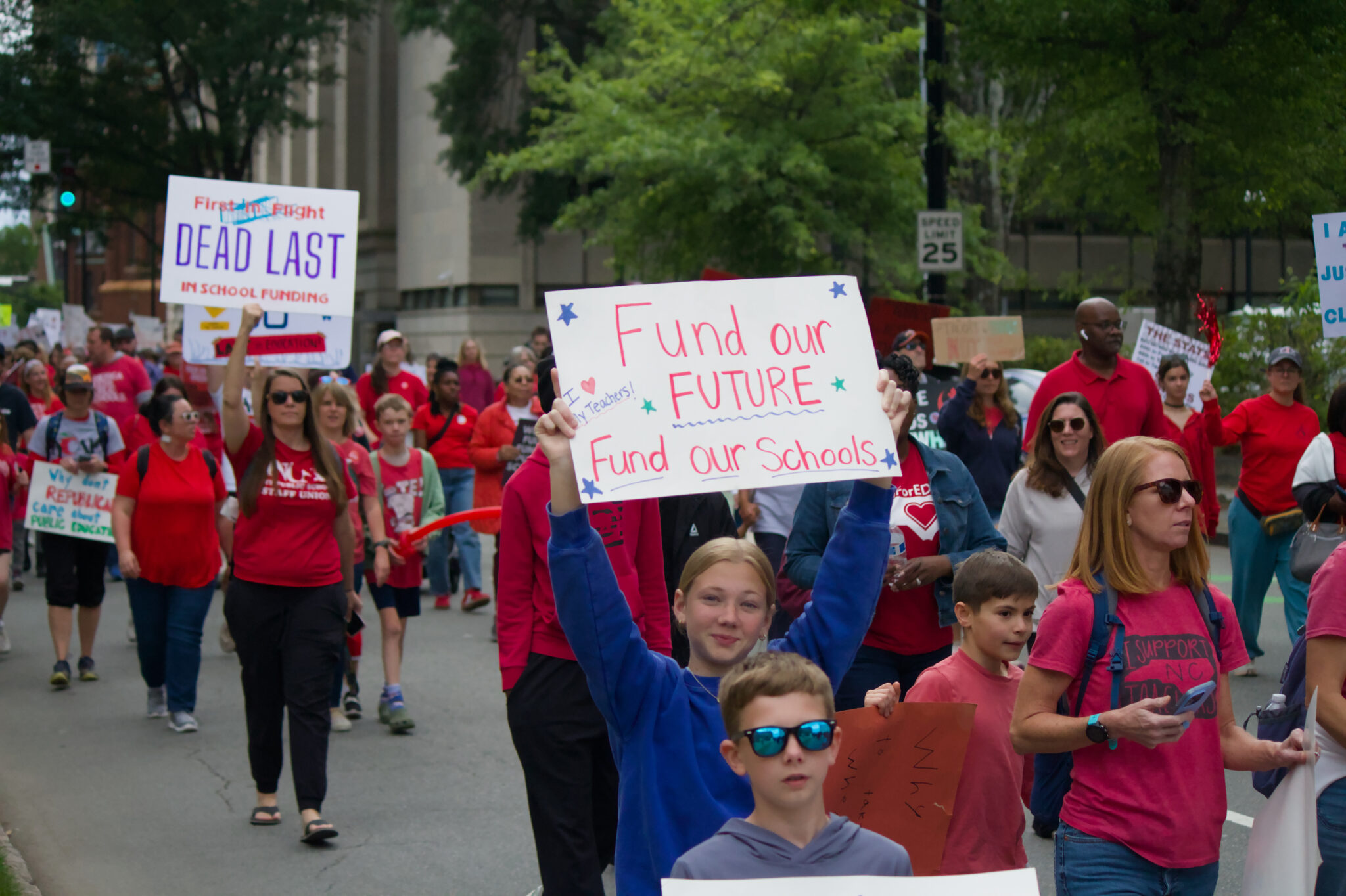
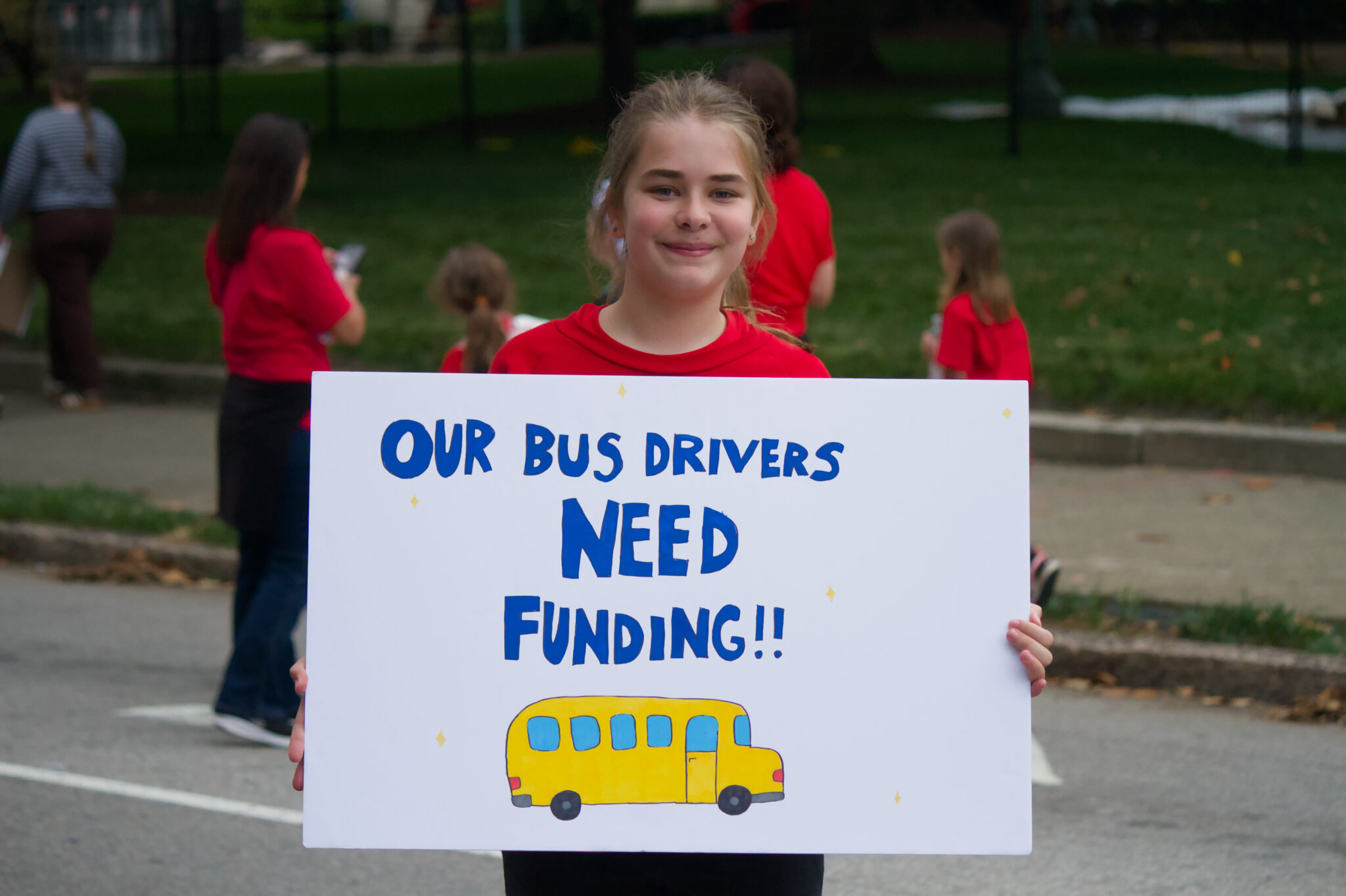
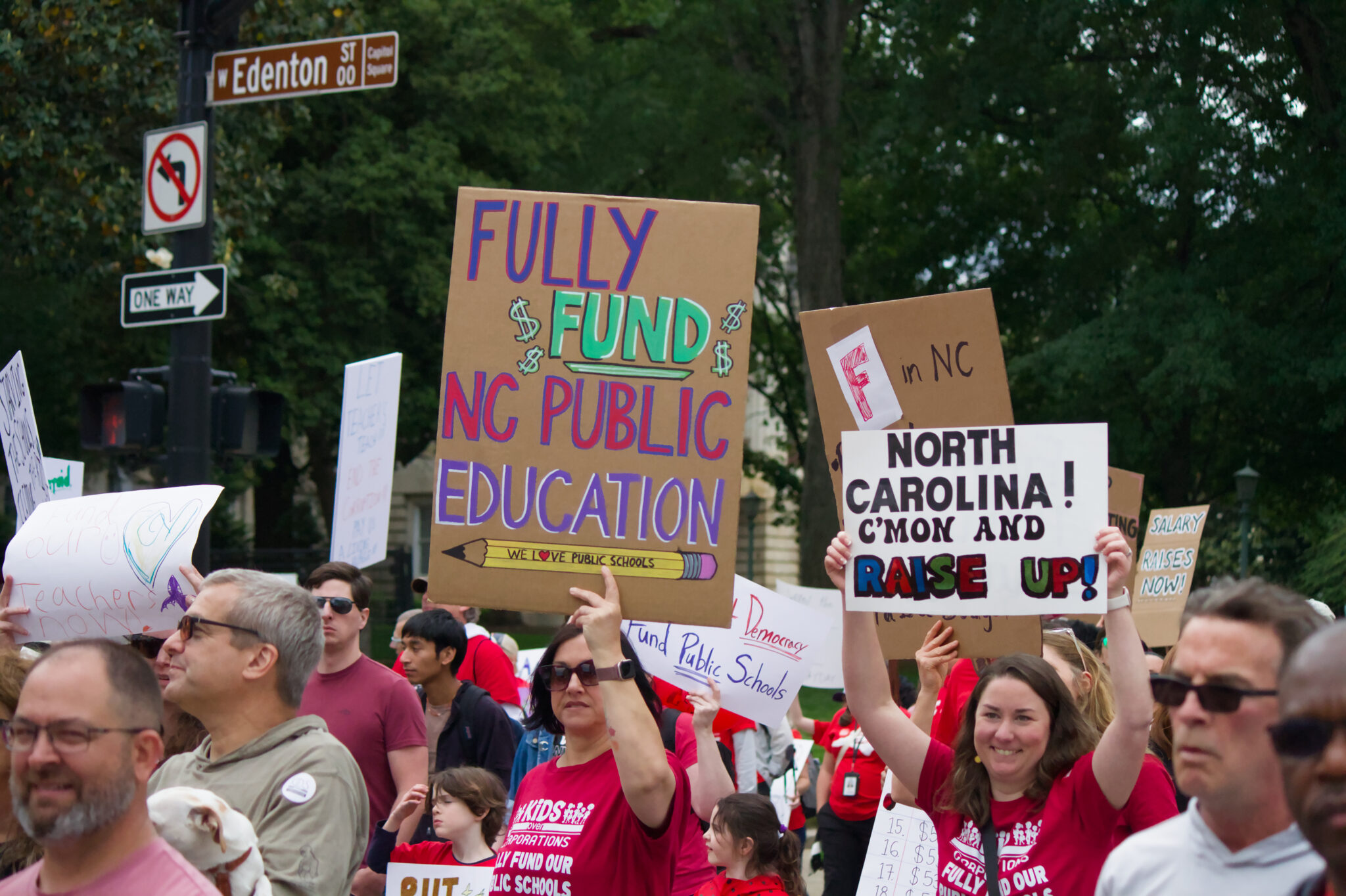
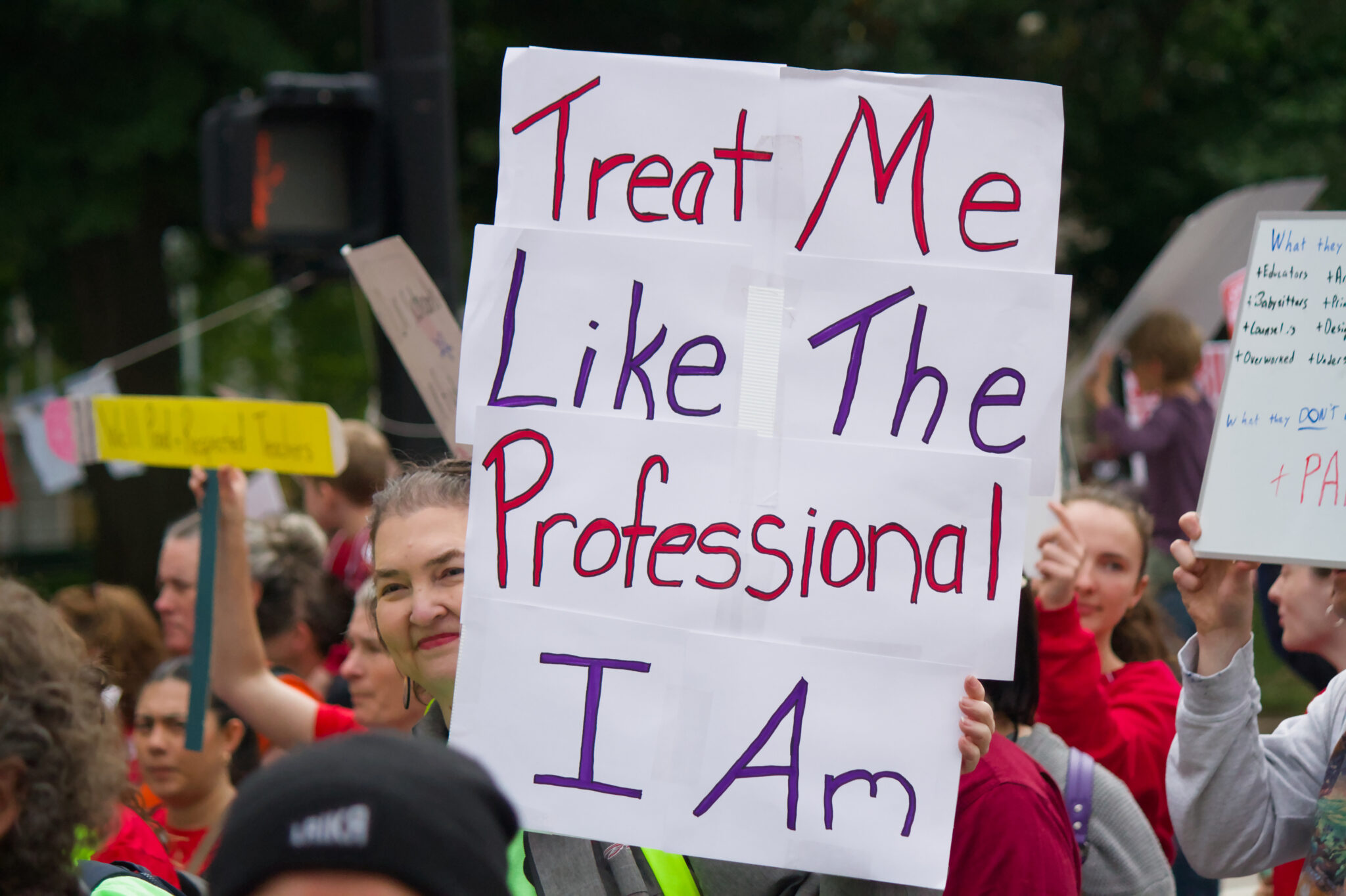
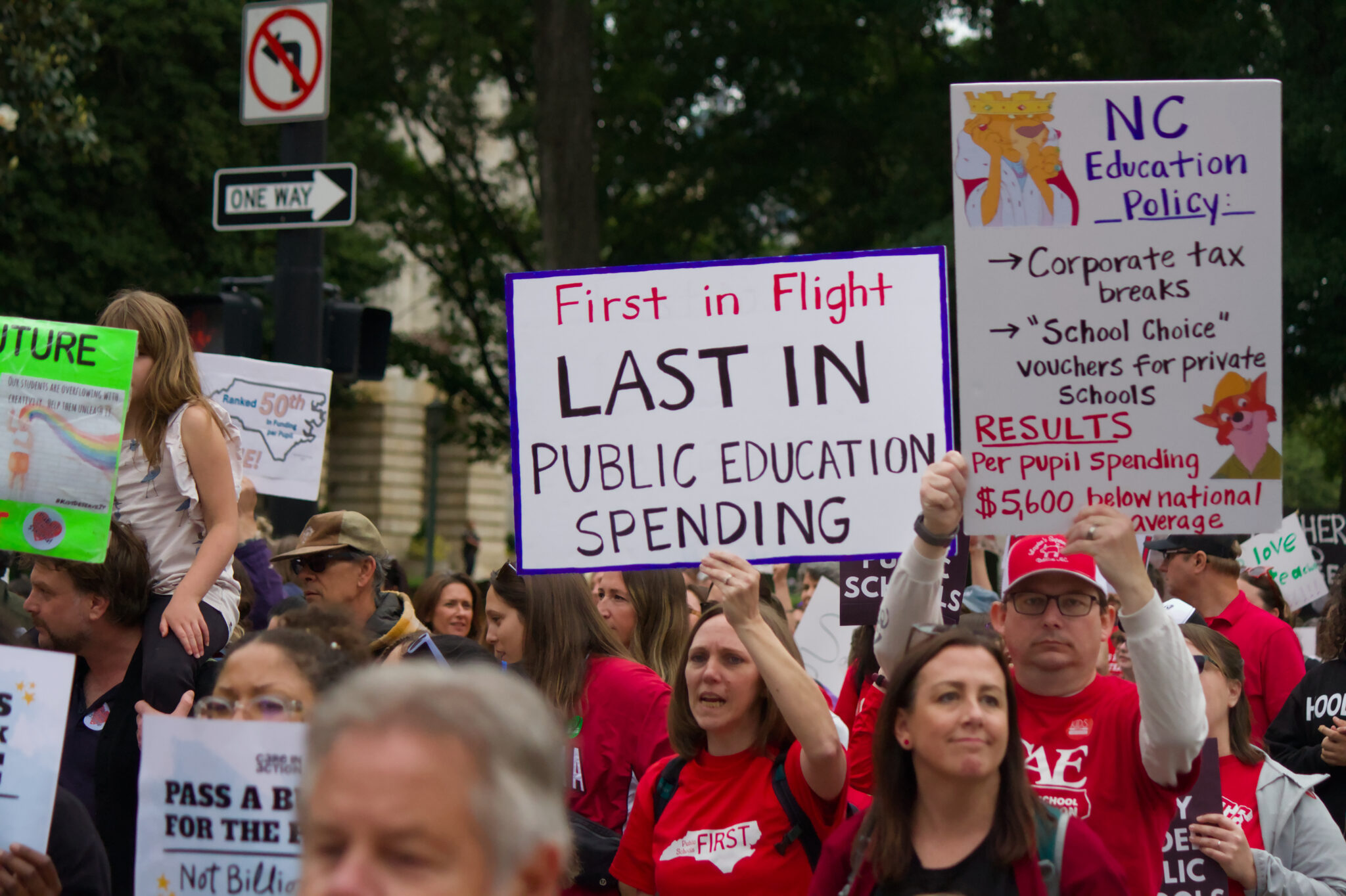
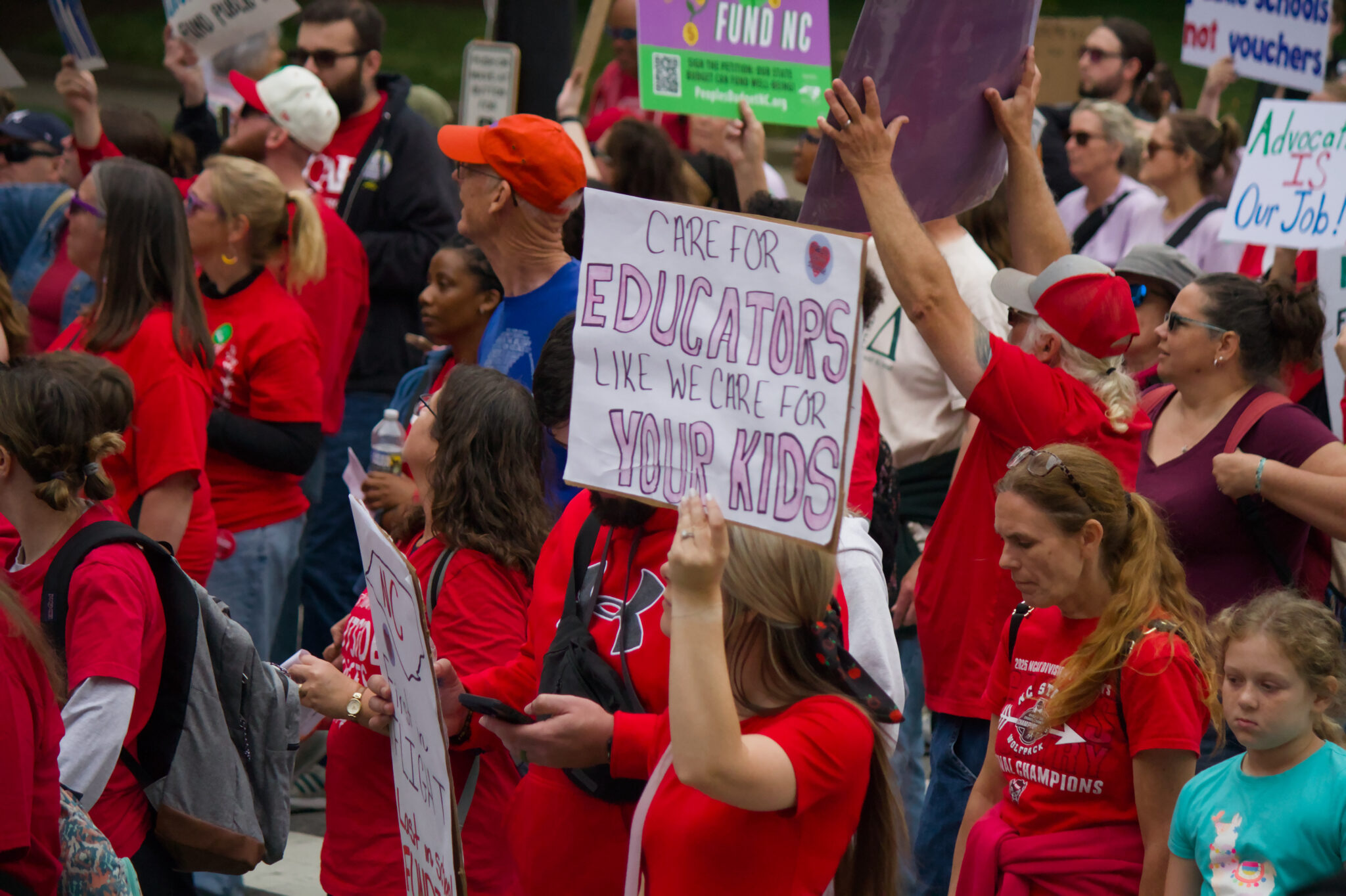
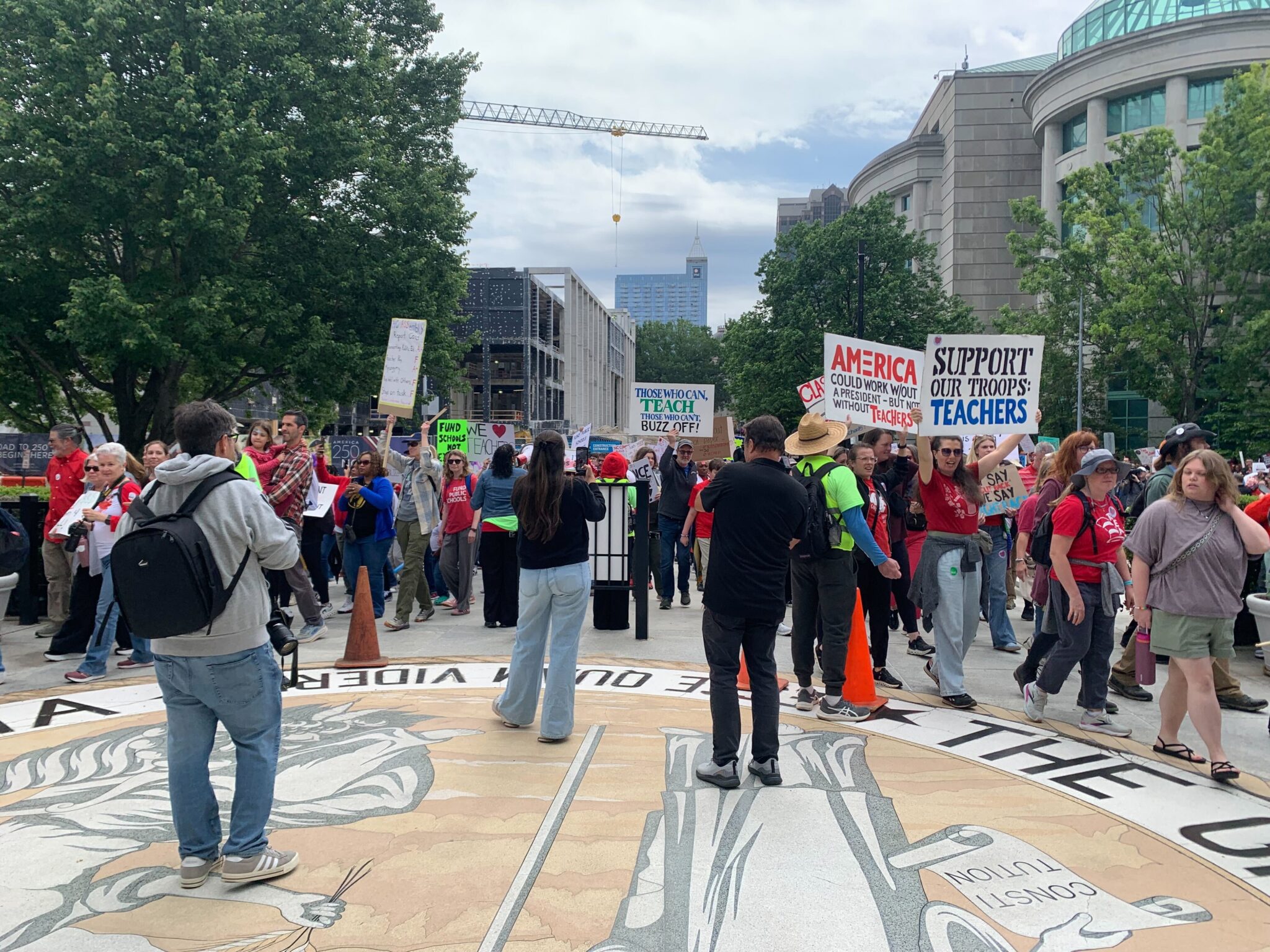
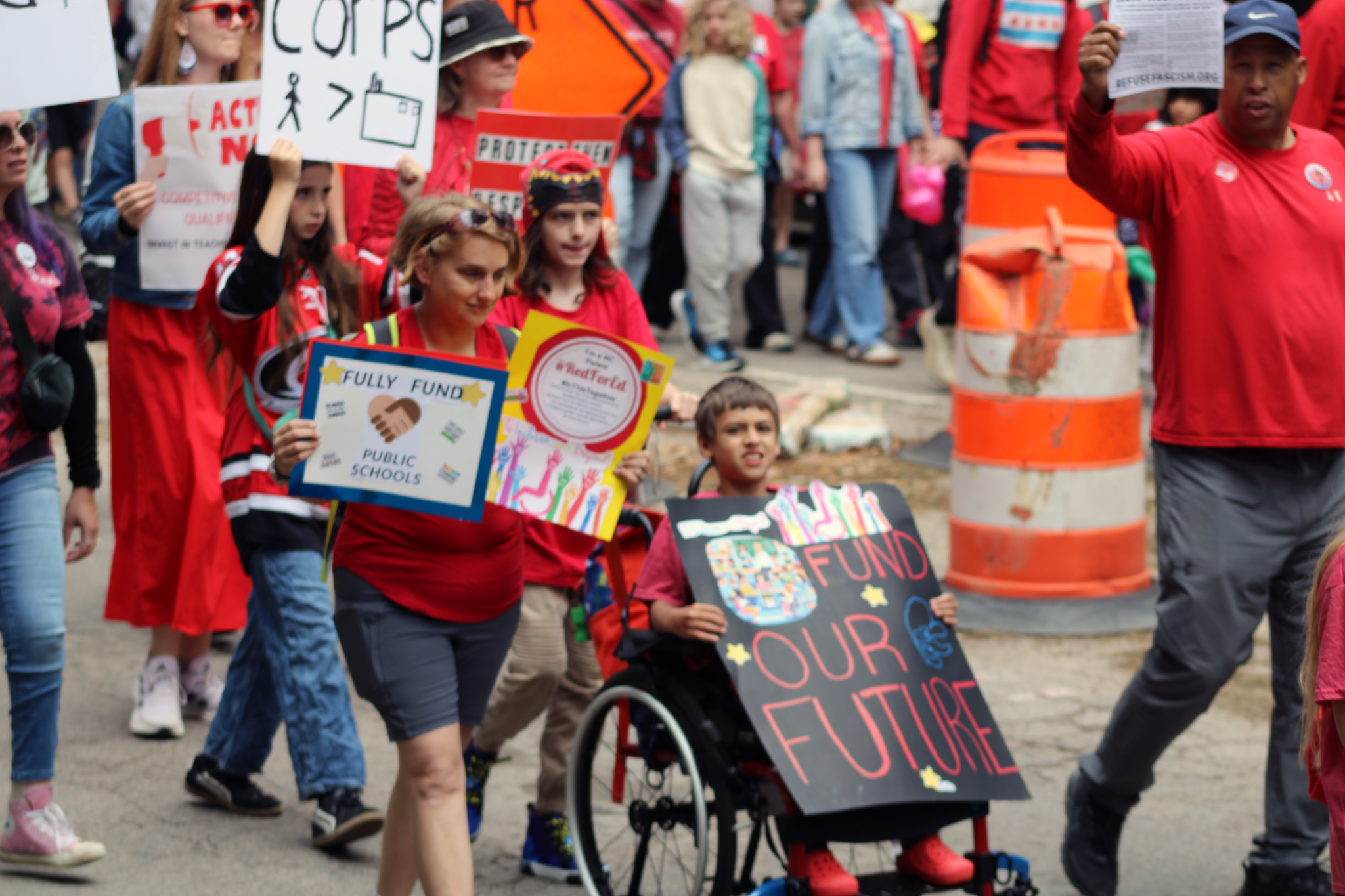
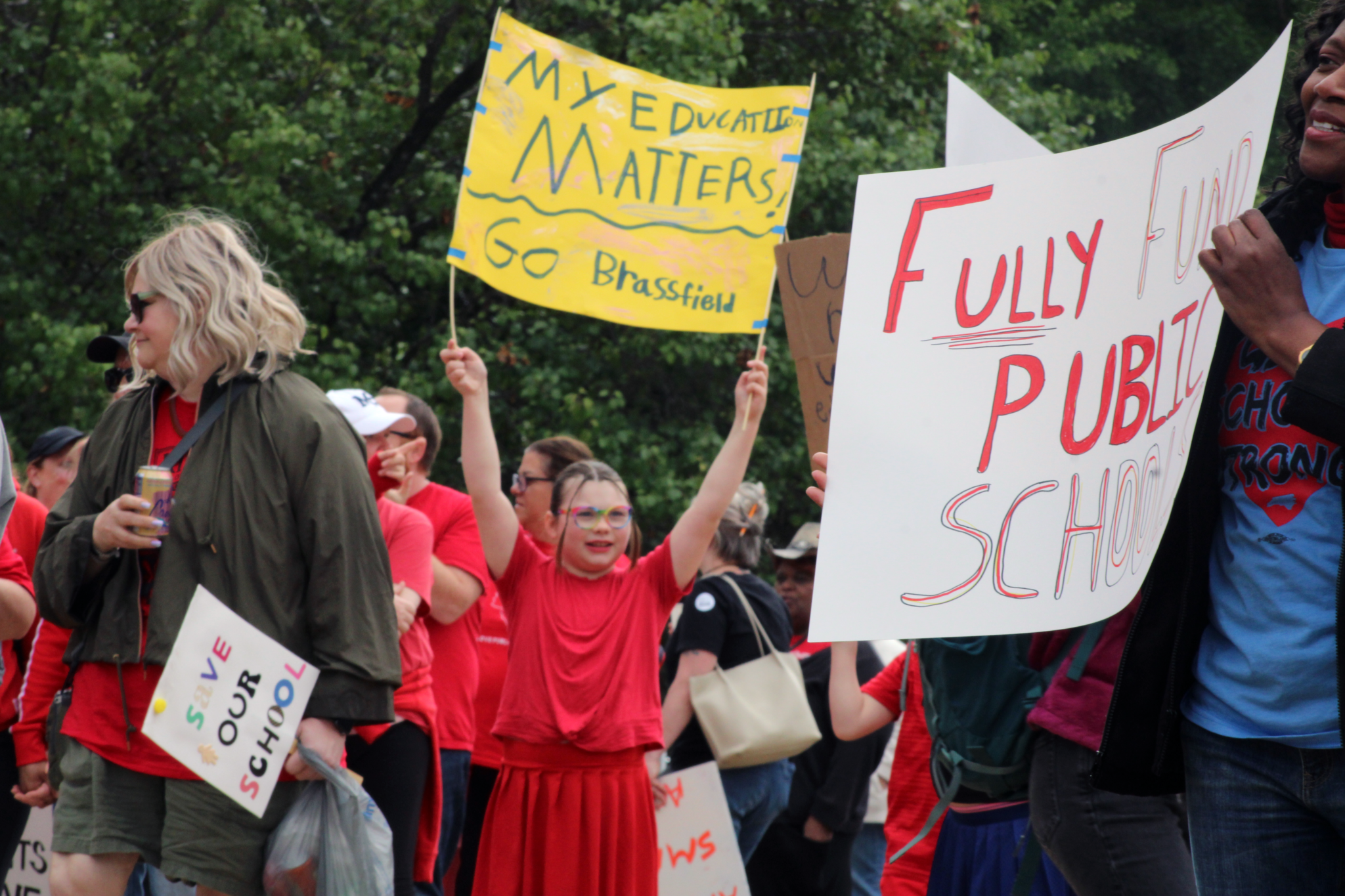
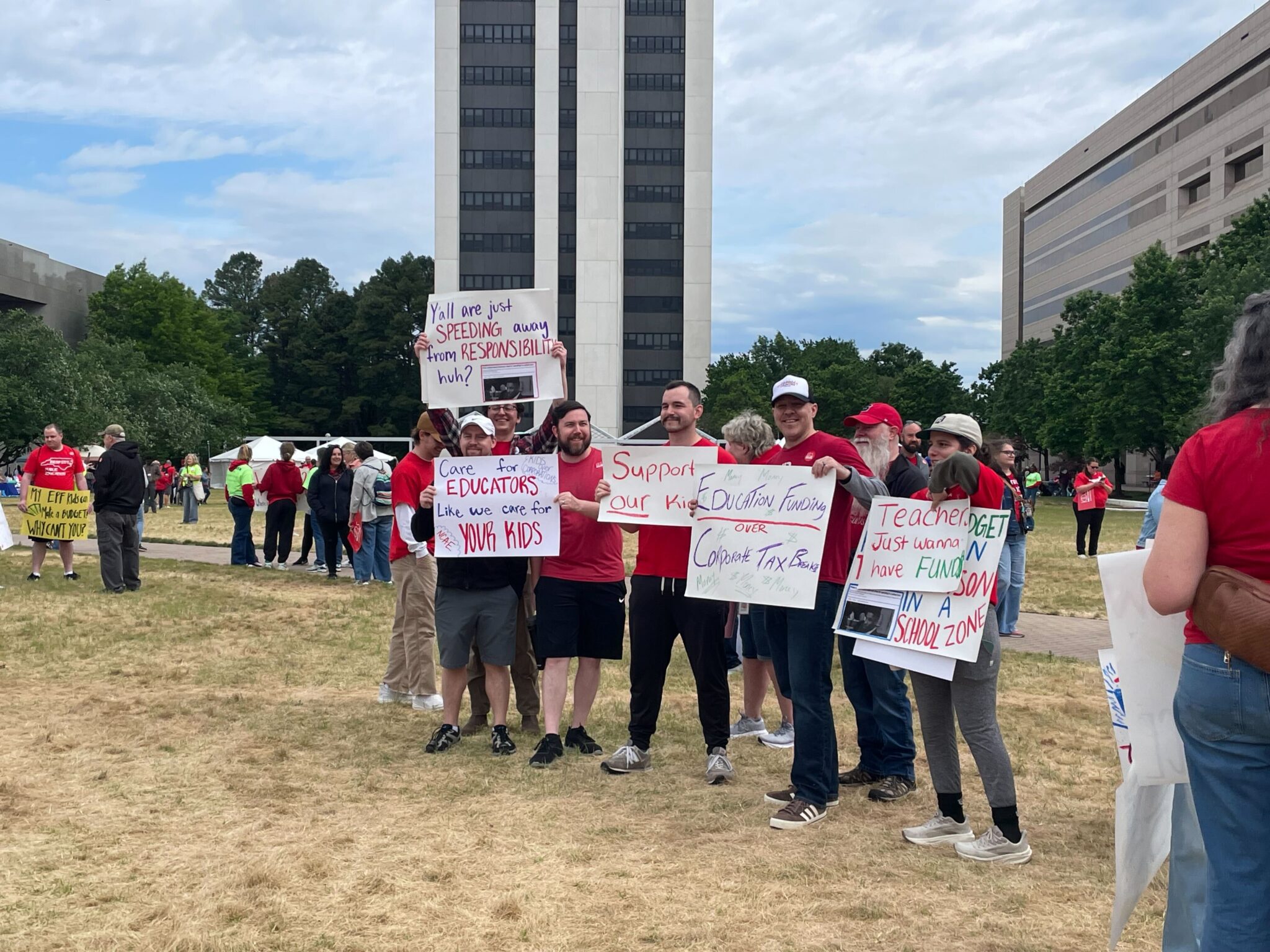
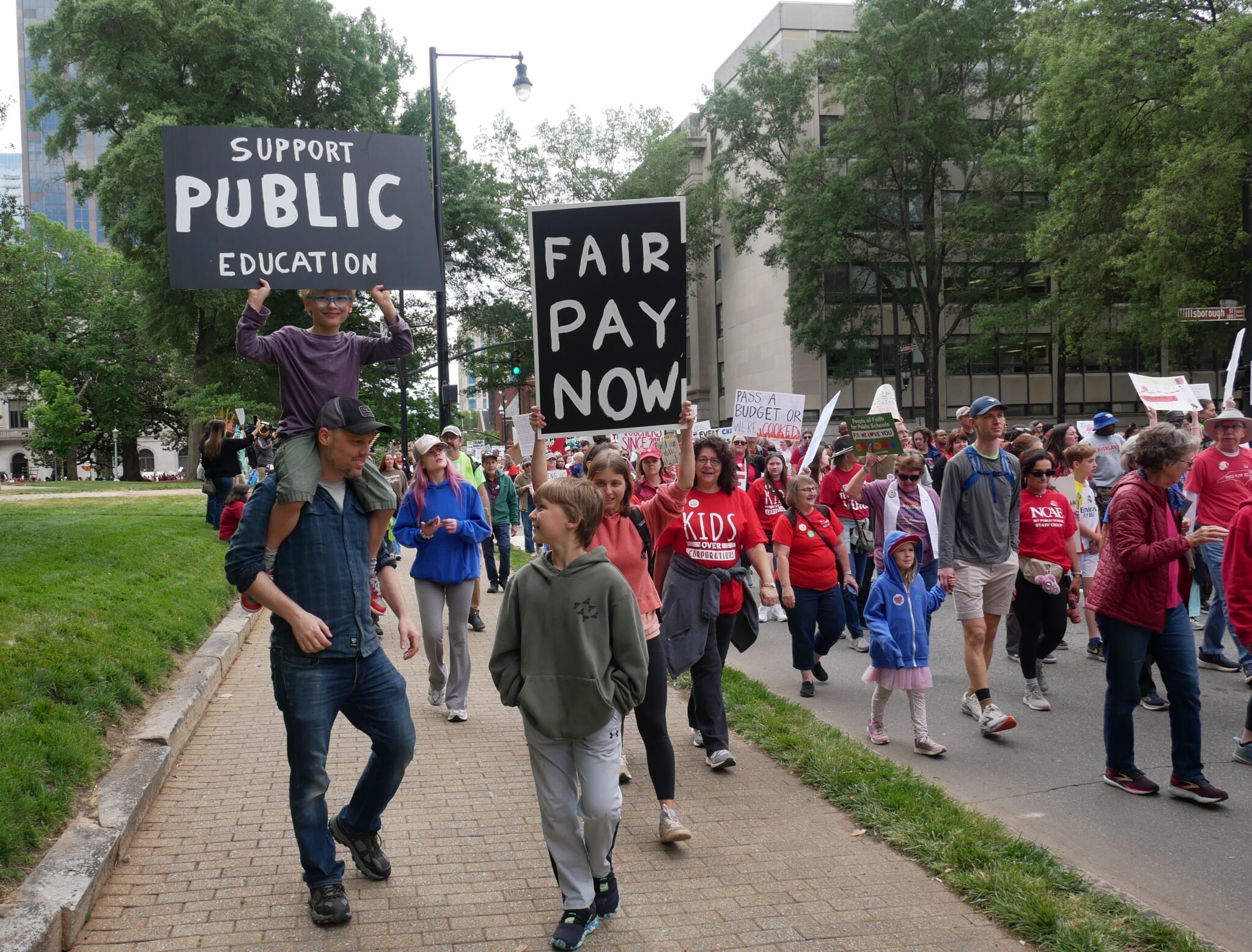
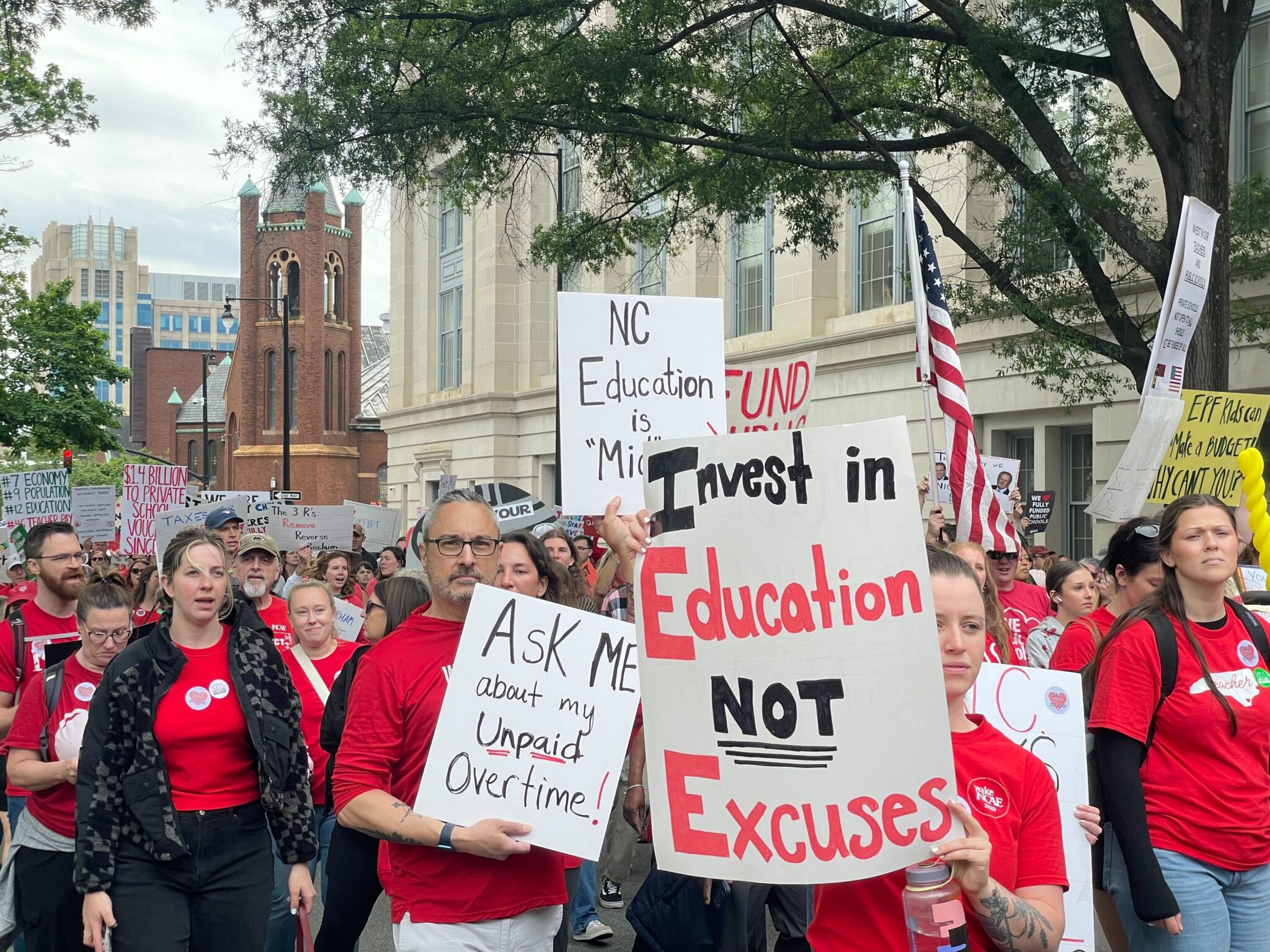
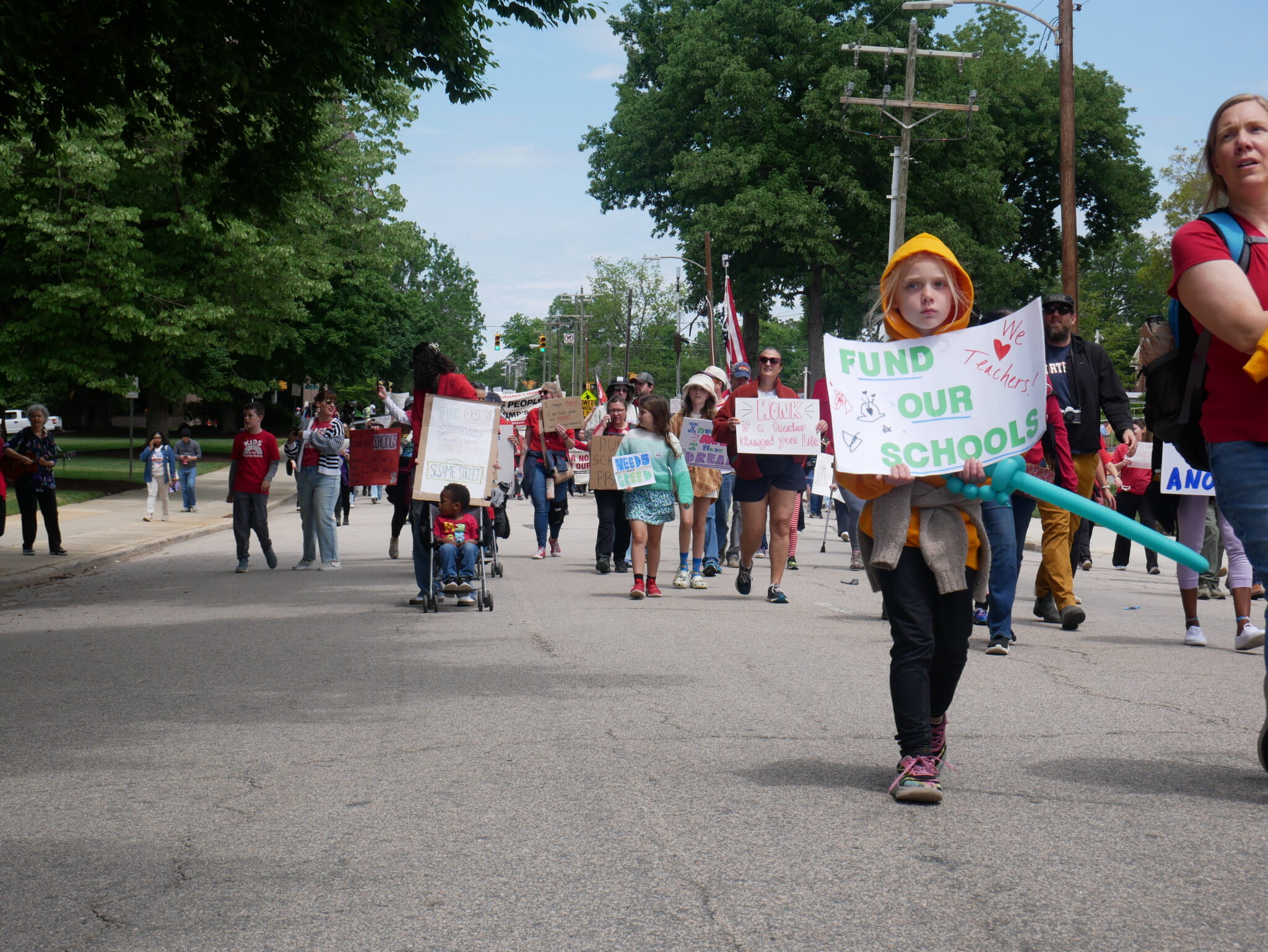
EdNC joined attendees as they marched from the capitol back toward Halifax Mall. Here are a few of the signs we saw:
Children are worth the investment
Fair pay = Teachers stay
Support Public Education
FAIR PAY NOW
We must VOTE for the leaders who want to FUND PUBLIC EDUCATION
Invest in me & I will shoot for the stars
Invest in Education NOT Excuses
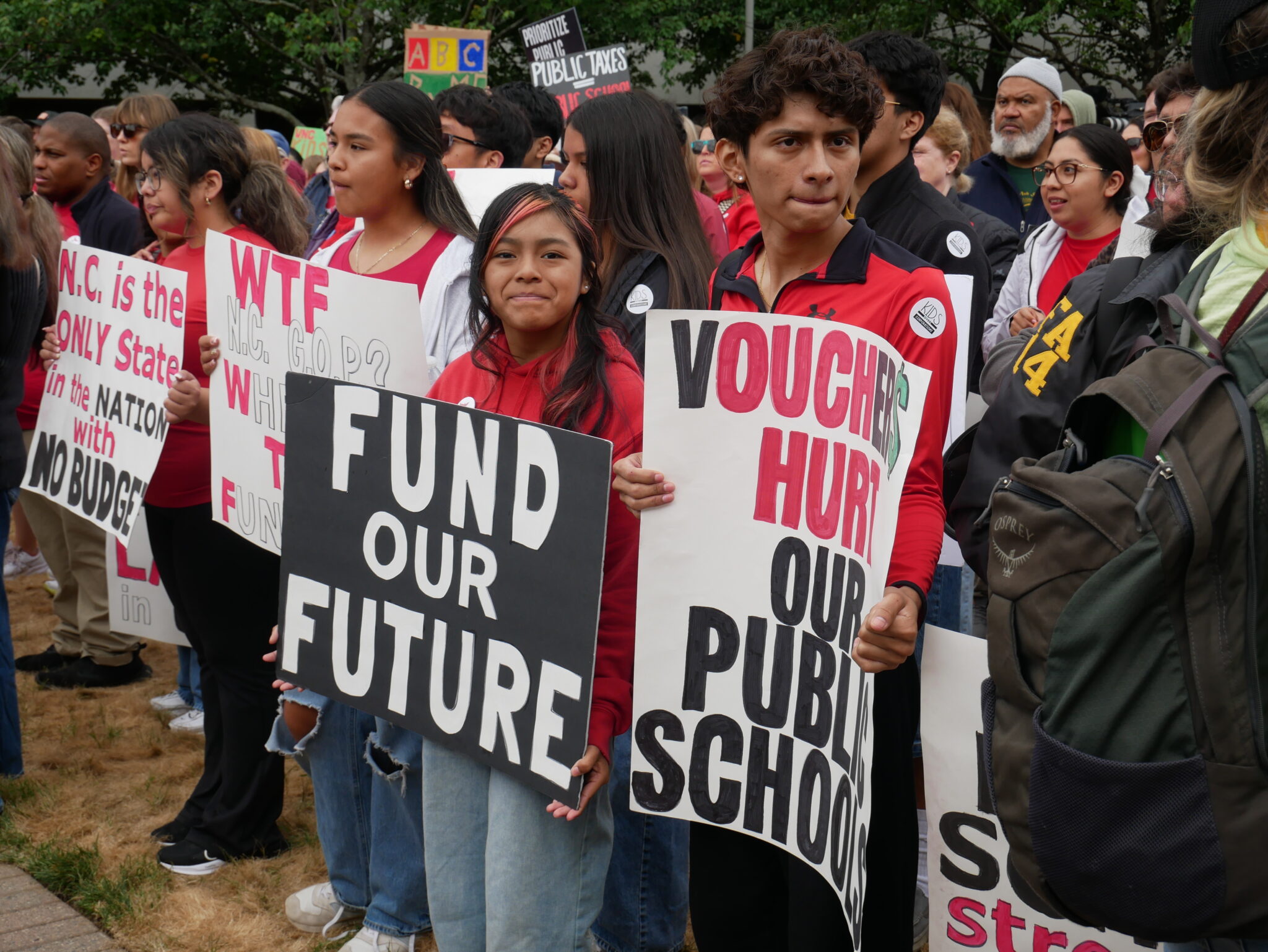
FUND OUR FUTURE
Public school kids are constituents
Special education isn’t special, it’s necessary! Different needs same worth! Fund the need!
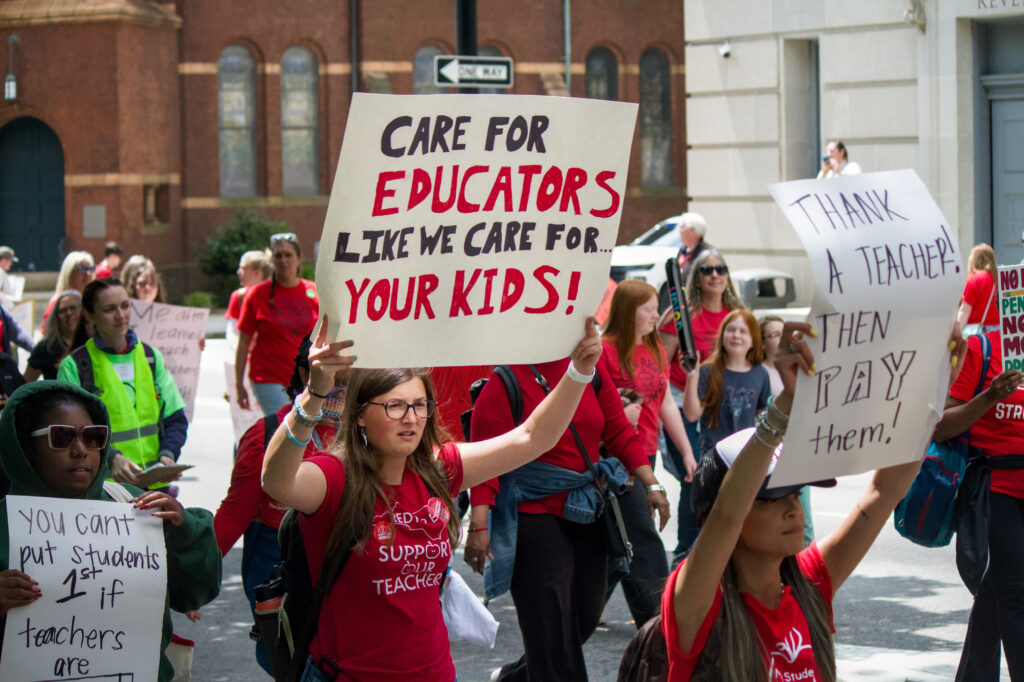
Thank a teacher! Then pay them!
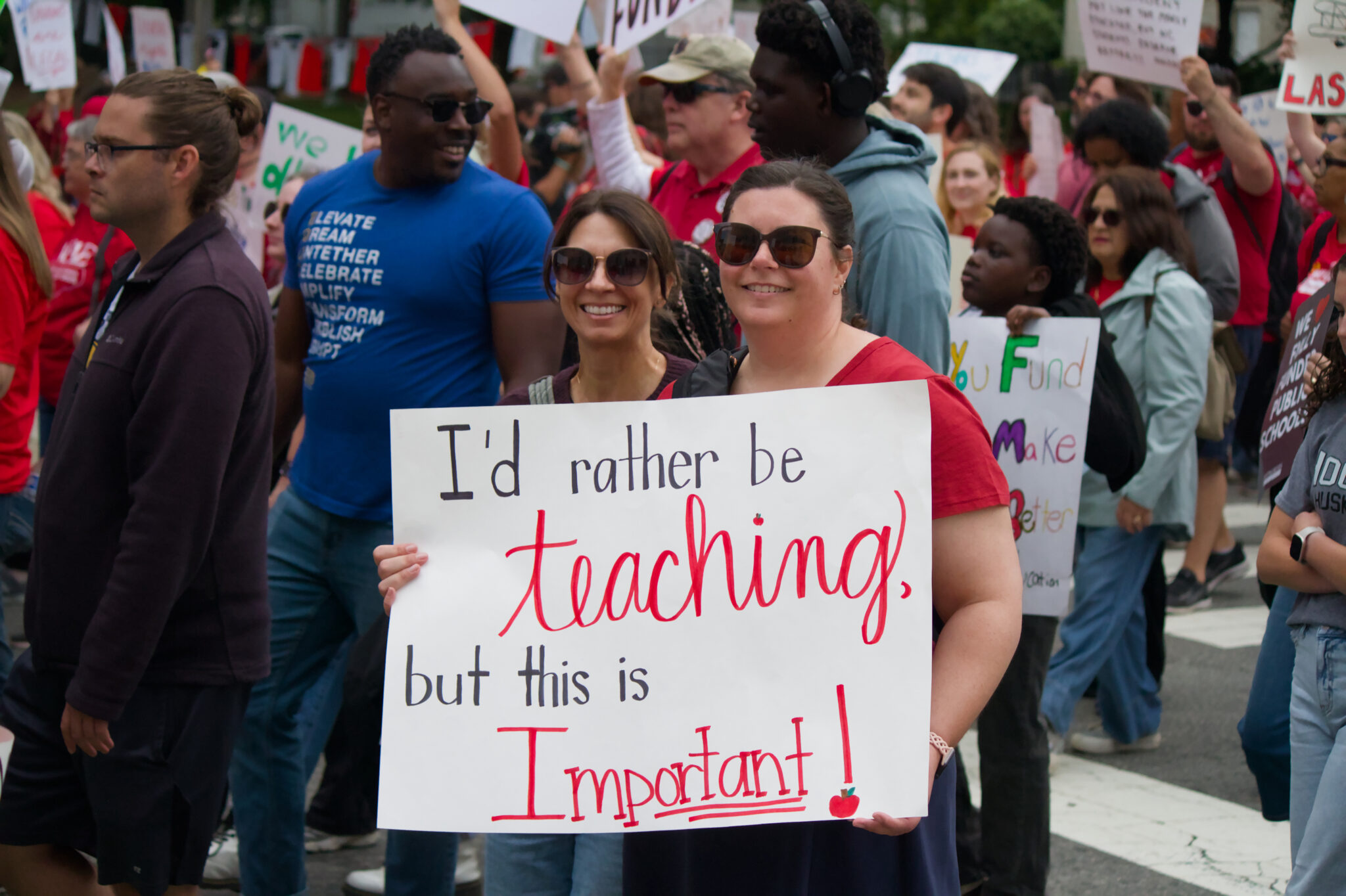
I’d rather be teaching, but this is important!
Care for educators like we care for your kids
Regional meetings and what’s next
Updated 3 p.m. EST
Following the march, attendees gathered into regional cohorts to discuss future local organizing.
Kelly told EdNC these meetings were important because “this rally today is really just the kick off to an entire campaign for Kids Over Corporations, and so they will be talking about ways to continue this work, engage with lawmakers… to continue to keep this message in the community’s minds.”
Cherie Feemster, region 3 director for NCAE in Gaston, said the biggest purpose of the regional meetings is for people to know there is “unity in your local” chapter.
“Every local that’s represented here has needs,” she said. “The regional meetings are giving them strategic and tools … to know that they’re not by themselves when they go back.”
Some of those strategies include getting other attendees’ contact information, and attending county commissioners and school board of education meetings in their community.
Two educators from Rowan-Salisbury Schools — Victoria Blue and Deirdre Davis — joined the metro Charlotte regional meeting.
Moving forward, Blue said attendees want to make sure every region works toward building majority, meaning NCAE membership includes a majority of public school educators in each region.
“Our students are important. They’re so important to us, that we’re willing to not only take days without pay, but to ensure their education and future,” said Blue, noting that her district didn’t cancel school for the rally.
“What affects us affects the children ultimately,” Davis added. “So we want to make sure that our legislators know that.”
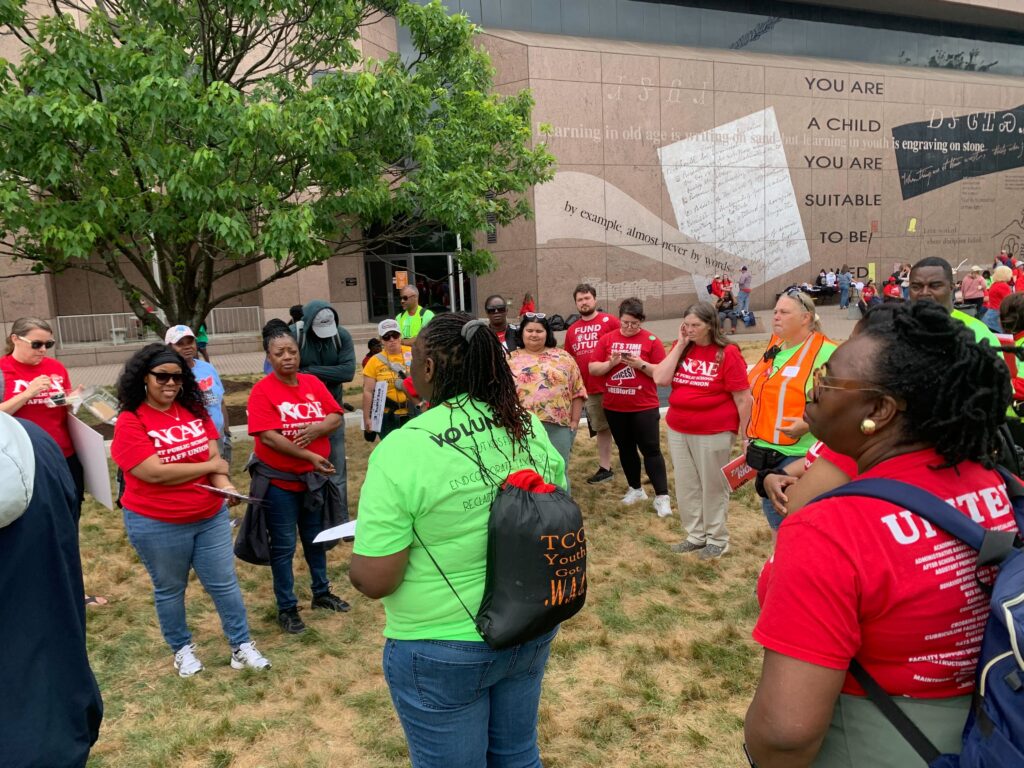
Mario Blanchard, a math teacher and president of the Pitt County NCAE chapter, said the lack of a budget impacts classified staff in particular.
“Ultimately, what I would hope is that there are going to be educators in the rooms when these policies are being made so we can fully fund our schools appropriately,” he said.
Kelly told EdNC that NCAE was pleased with the turnout at the rally, and that funding for public education should be a nonpartisan issue.
“It’s been really exciting and amazing to see the turnout of educators and students and parents and people who love public schools all out to support our students,” she said. “They know what the real life experience is in our public schools, and they are speaking truth to power in this moment about what we need to do to change it.”
More photos from the rally