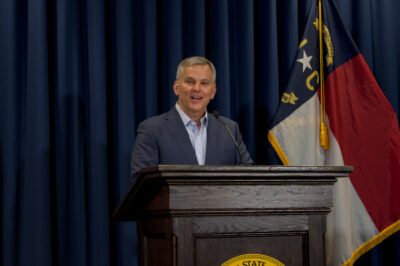
At a quarterly meeting on Tuesday, members of the Governor’s Teacher Advisory Committee discussed efforts to study teacher retention and provided updates on their advocacy priorities this short session.
The committee is composed of active educators who have been tasked to spend two years advising Gov. Josh Stein and his office on a wide range of educational issues, per an executive order.
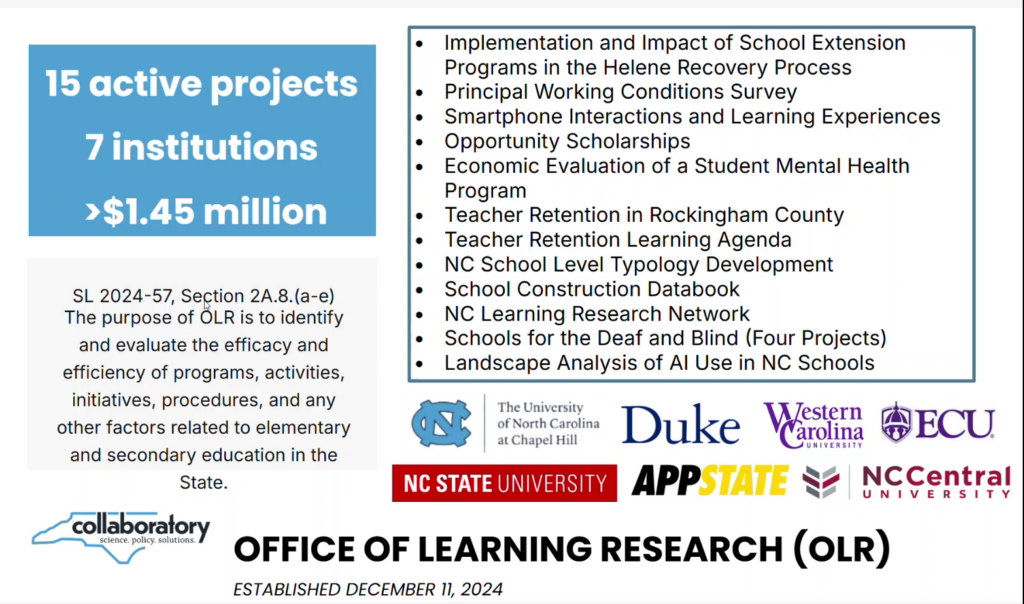
The committee met with researchers Jeni Corn and Lam Pham from the North Carolina Collaboratory, a research funding agency that partners with academic institutions to find applications for their findings that can be relayed to lawmakers.
The Collaboratory is in the midst of expanding its K-12 portfolio. Corn said they are kicking off their inquiry into what can be done to retain teachers in North Carolina. During their presentation, researchers said teacher retention is a complex issue, and that persistent issues and resolution efforts are often disconnected between stakeholder groups.
 Sign up for the EdWeekly, a Friday roundup of the most important education news of the week.
The goal is to form a network focused on improving teacher retention and develop a shared agenda around it, researchers said.
Small group discussions were facilitated by the researchers, asking the committee members things they wished lawmakers knew about what made them stay in teaching.
Amanda Aguauyo, a committee member and arts educator in Orange County Schools, said that one reason veteran teachers stay is benefits. “But newbie teachers aren’t getting those benefits anymore, yet another reason they’re not staying,” Aguayo said.
The researchers also shared current K-12 education projects they are working on, which are pictured below:
Committee advocacy projects
The advisory committee has small groups focused on four common themes:
- Meeting students where they are,
- Support staff allotment in schools,
- Literacy, and
- Recruiting, respecting, and retaining teachers.
Sharing findings from a survey the recruitment and retention group conducted, New Hanover County Schools educator Hannah Moon said pay is not the top reason teachers leave the classroom. Their survey of over 400 responses found that many teachers are burned out from workload and student behavior.
“Educators are not leaving because of one issue but, rather, because of a complex system failure that has been years in the making,” Moon said.
The committee’s official recommendations to the governor based on the groups’ research will be made public in June.
Read more



Legislative updates
This is the first meeting the committee has had during the legislative short session, which started April 21.
The group was briefed by the governor’s office on the recent deal reached on Medicaid funding.
Both the House and the Senate held votes on April 22 approving House Bill 696, which includes the funding, along with new oversight rules. The deal will put $319 million toward the state’s Medicaid rebase for the remainder of the fiscal year. EdNC’s previous reporting on the first week of the new session can be found here.
The committee also highlighted Stein’s budget proposal for the 2026-27 fiscal year.
The proposal raises the average teacher base pay in the state by 11%. It would also raise starting teacher pay to the highest in the Southeast and remove the “pay plateau” for teachers between 15 and 24 years of service. The proposal also restores master’s pay — higher pay for educators with master’s degrees in the subject they teach.
Stein’s budget proposes a new exceptional children funding formula. It also includes funding for more support staff such as nurses, counselors, resource officers, and social workers. It also allocates funding for universal school breakfast.
Rachel Candaso, committee chair and 2025 Burroughs Wellcome Fund North Carolina Teacher of the Year, said the issues they discussed as a committee were issues that the governor is ready to address.
“Whether it’s increasing access to pre-K, creating funds to support our school buildings for aging infrastructure — these are all things that he has prioritized as well,” Candaso said. “I think that’s important for us to see that we’re not just echoing out these issues we see, and no one’s listening. It is actually prevalent, and people are working to address them.”
Elena Ashburn, a senior education policy advisor in the governor’s office, said the governor is prioritizing those issues because of what the educators on the committee have shared so far.
The next meeting for the committee will be held July 28 in Raleigh.

Recommended reading