
Ahead of Workforce Pell, NC community colleges discuss efforts to leverage student data and reenroll adult learners

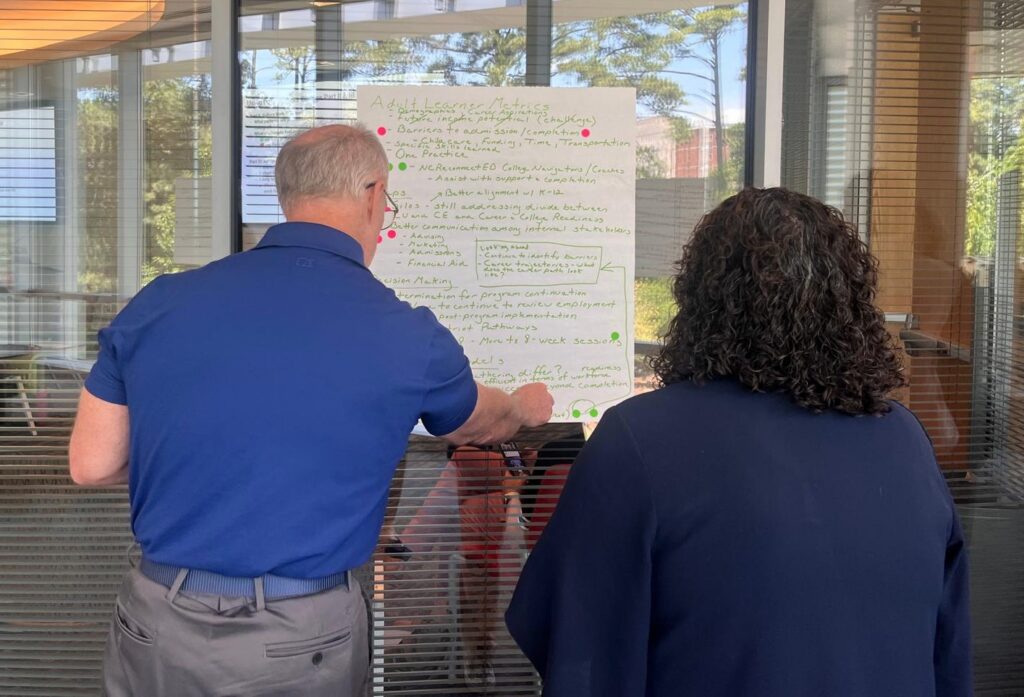
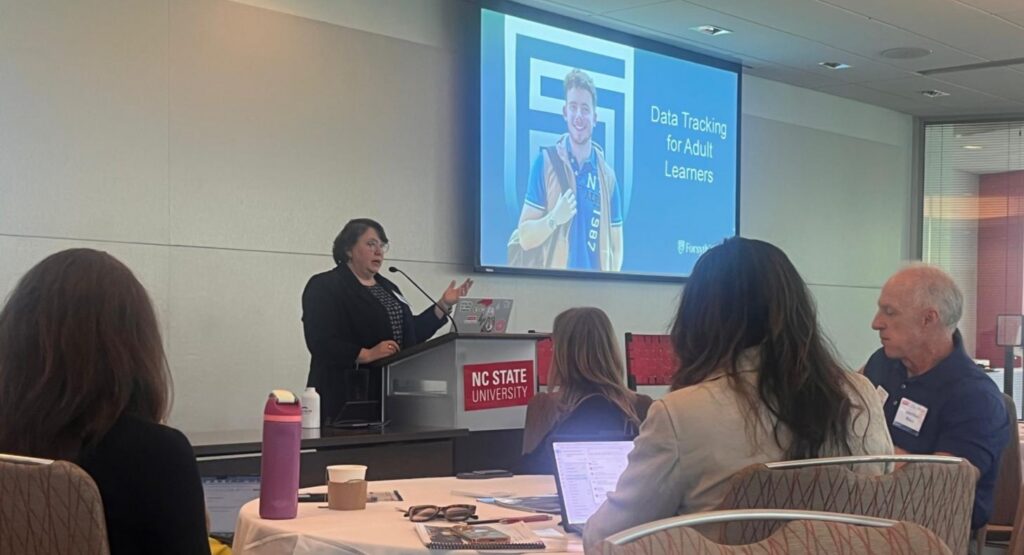
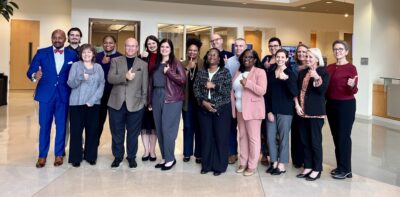
Community college leaders from across North Carolina met on June 2 to discuss how to structure, collect, and use student data to better engage with adult learners ages 25 and older.
Efforts to reenroll adult learners, particularly those in continuing education programs, is the focus of NC ReconnectEd, a community of practice composed of colleges participating in the statewide effort to reenroll adult learners known as NC Reconnect. Launched in 2021 at five colleges, NC Reconnect has now grown to include 29 colleges across six cohorts.
While enrollment in continuing education programs is growing in North Carolina, existing data systems make it difficult to track students in these programs, according to Sarah Deal, director of research at the Belk Center for Community College Leadership and Research.
Almost 40% of the more than 5,400 adult learners in the initial four cohorts of NC Reconnect were enrolled in continuing education programs according to the Belk Center’s most recent adult learner guidebook.
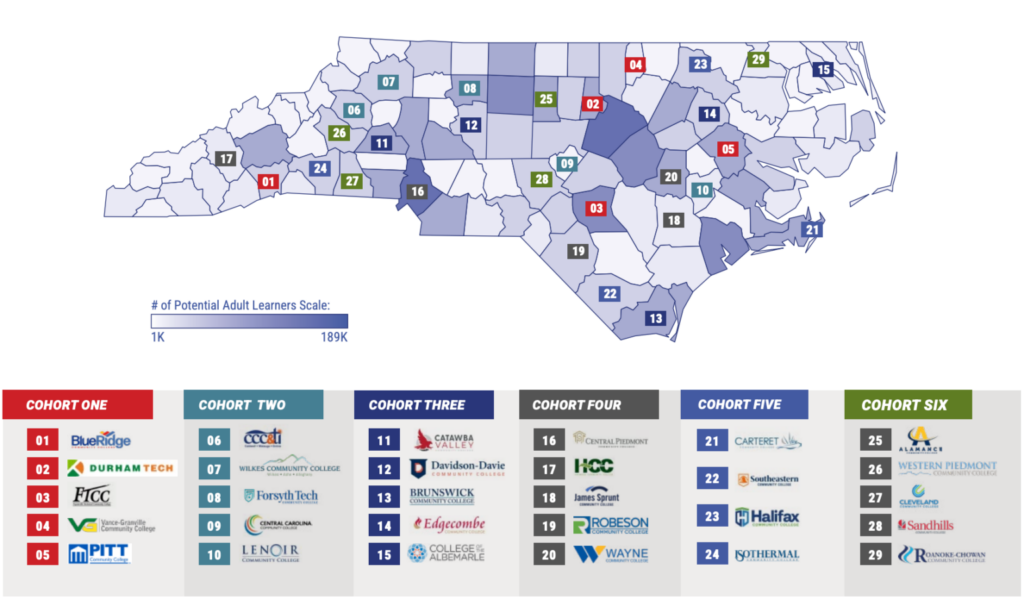
Generally, each of North Carolina’s 58 community colleges takes a different approach to tracking student data. And, at each college, a variety of data and information technology platforms inform the data governance structure.
While the N.C. Community College System is in the midst of a major technology transformation, including a new data warehouse, Deal encouraged attendees to examine ways their colleges can use existing systems to better support adult learners.
“You all are the translators between this data and practice,” said Deal, asking attendees to think about “the individuals behind the data and what we can do to fold them in more deeply into our colleges.”
Read more on adult learners
Forsyth Tech and Central Carolina share lessons learned from NC Reconnect
Amy Ball Braswell, assistant vice president of student success at Forsyth Technical Community College (Forsyth Tech), said that “good data” means being able to track a student, and the parts of the college they’ve interacted with, from that students’ point of inquiry to their program completion.
Braswell explained that over the last five years, Forsyth Tech has leveraged initiatives like NC Reconnect alongside the college’s strategic innovation and effectiveness office to refine how the college collects and uses student data. In a presentation, Braswell showed attendees that Forsyth Tech uses PowerBi dashboard reports to track a variety of measures across student enrollment and success.
This includes a report specific to NC Reconnect students. Braswell explained that, early on in the college’s NC Reconnect participation, Forsyth Tech identified a handful of key data points that would be helpful to track students’ progress through their programs. Now, those data points are updated weekly.
The college also has a dashboard dedicated to continuing education enrollment, including enrollment by term, subject area, and age. In addition to simplifying access to the data, Braswell noted that accompanying data visualizations make it easy to explain trends in student enrollment to college leadership.
At Central Carolina Community College (CCCC), Meghan Brown, vice president of advancement and operations, said the college is applying lessons learned from NC Reconnect to reach more prospective students interested in short-term training.
When the college joined NC Reconnect in the initiative’s second cohort, Brown said many adult learners chose to enroll in automotive, machining, or welding curriculum programs. Many students were hired and began jobs before finishing their program — and while that is a positive outcome for the student, it meant the college did not track the students’ completion.
“They should have been in a short-term training program,” said Brown.
As CCCC works on building short-term training pathways, Brown said one of the strategies the college plans to use is to “recreate Reconnect” by identifying students that stopped out of specific programs. Instead of pulling a data report on all of CCCC’s previous adult learners who did not complete their program, Brown said the college is focusing resources on reaching out to students who previously took career and technical education (CTE) curriculum programs and would be a strong fit for a short-term continuing education program.
Brown also said the college has had success engaging with adult learners who have life circumstances that the college has resources to support.
For example, Brown highlighted CCCC’s resources for military families given the college’s proximity to a military base. Narrowing down the college’s data to identify military-affiliated students who enrolled but did not complete a program in the last two years and sharing the specific resources available to them, Brown said, was an effective way to reach students.
Workforce Pell’s impact on how community colleges will track and use data
One challenge raised at the meeting was how colleges are preparing for Workforce Pell. Beginning as early as July 1, this new stream of federal student aid will help students pay for short-term training programs that lead to a stackable credential and employment in an in-demand or high-wage field.
Federal legislation outlines specific measures eligible programs must meet, including a 70% completion rate, a 70% job placement rate, and a novel value-added earnings measure, among other requirements.
Community colleges’ ability to track data on these metrics will play an important role in maintaining eligibility for Workforce Pell.
Read more on Workforce Pell

Many colleges are working to unify curriculum and continuing education departments to streamline the way they collect and track student data. Stormy Mascitelli, a consultant for CCCC and president of InsightWorks, said that data would ideally live in one centralized location within a college and, eventually, be fully automated so that college leadership can quickly understand data trends. CCCC is moving toward that goal, she said, as the college has worked on building Slate, a Customer Relationship Management (CRM) system, over the last five years.
Brown noted that the system office’s consideration of a unified CRM would impact CCCC’s progress.
“I think as we talk about data, it’s hard not to think about policy, too,” Brown said.
At Forsyth Tech, Braswell noted similar challenges in aligning data systems.
“We have that constant push and pull between different departments wanting certain data, wanting it to live in a certain place, wanting this funnel to be very clear … while also battling data integrity and making sure everybody’s on the same page and can agree of what the end goal is, which is to best serve the students,” said Braswell.
 Sign up for Awake58, our newsletter on all things community college.
Collecting necessary wage and employment data is another challenge for colleges working to meet Workforce Pell requirements. One reason, Brown noted, is that wage data reflective of the real-time labor market is difficult to track. Data from two years ago, she said, might not be useful five months from now.
Another challenge both Braswell and Brown noted is that community college budgets often don’t have sufficient funds to hire personnel to oversee the new data collection required for Workforce Pell.
“You can’t have the technology without other people to make it work,” said Brown.
The community of practice identified ongoing initiatives that might lead to helpful wage and employment data. NCWorks and ApprenticeshipNC are two existing efforts that already track students’ wage data, but are limited to students that participate in these specific efforts.
Two new initiatives that have the potential to surface best practices on wage data collection include Good Jobs WNC and AdvanceNC. Good Jobs WNC is a locally led coalition of colleges, employers, philanthropies, and national nonprofit America Achieves with the goal of connecting local residents to in-demand jobs in western North Carolina. AdvanceNC is a collaboration between community colleges, universities, and local workforce development boards to help fill advanced manufacturing jobs and is tracking students’ movement into high-wage jobs.
Read more
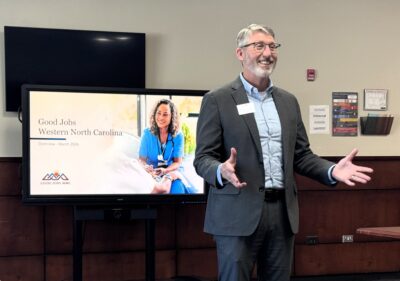
Last week’s convening was the final NC ReconnectEd community of practice meeting. Launched in fall 2025, ReconnectEd’s series of events convened NC Reconnect college faculty and staff to discuss and share knowledge about adult learners enrolled in workforce and continuing education programs.
Over the last year, topics discussed ranged from changes in community college funding to faculty’s role in supporting adult learner success.
While the June meeting was the formal conclusion of the community of practice, the Belk Center will continue to support and coordinate professional development and learning opportunities for colleges participating in NC Reconnect.
“We know there are questions still to answer, so continue to engage,” said Audrey Jaeger, the executive director of the Belk Center.