
What is AdvanceNC? Meet the collaboration rethinking how to serve advanced manufacturing employers and jobseekers

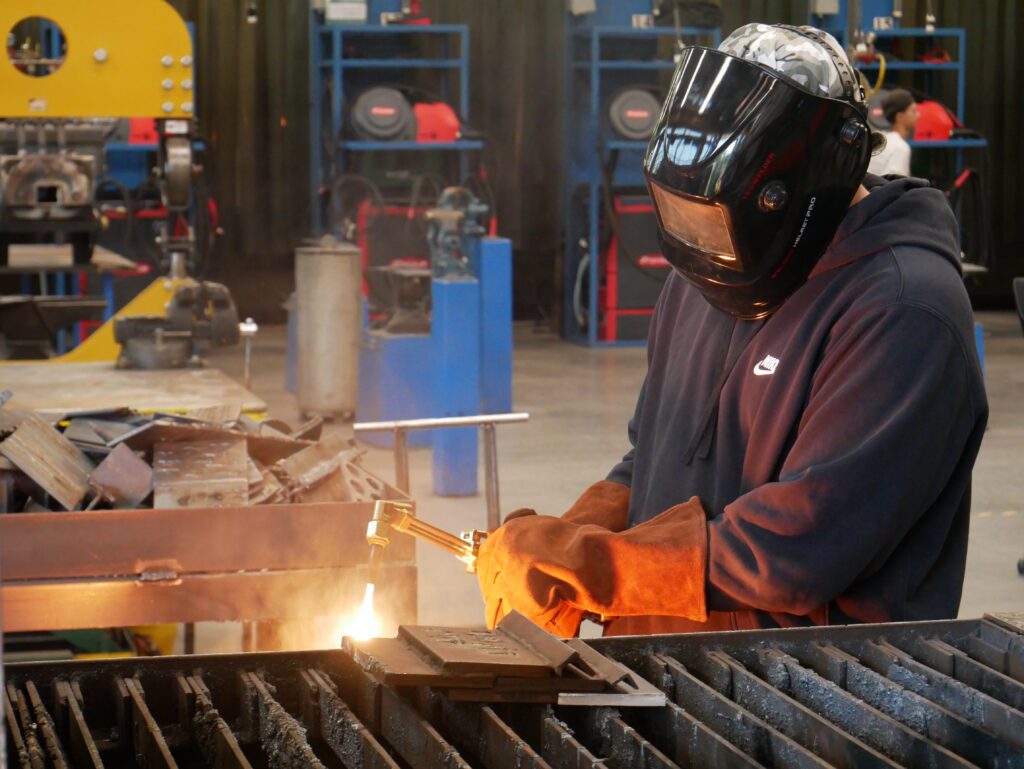
2025 was a record-breaking year for economic development in North Carolina. Toyota opened its first U.S. electric battery plant in Randolph County, Fujifilm Biotechnologies opened a new facility in Wake County, and JetZero announced the largest job commitment in state history in Guilford County.
As these employers look to rapidly hire thousands of new employees in advanced manufacturing roles, where should they turn? The state has 58 community colleges, 16 public universities in the UNC System, and 20 local workforce development boards.
Faced with this abundant but often-siloed landscape of workforce resources, it can be difficult for employers and jobseekers to know where to start.
“You have all of these really strong components of a workforce ecosystem, but (they are) not necessarily working together,” said Margaret Roberton, vice president of workforce development at Central Carolina Community College.
Historically, when companies needed to hire a few hundred new employees, Roberton said a single community college or workforce development board could usually support that demand. But with companies now looking to fill thousands of new positions — 33,000 jobs were announced last year alone — “all of a sudden, everybody knows they can’t do it by themselves,” she said.
At the same time, the manufacturing landscape is transforming as jobs increasingly require the use of innovative technologies such as automated systems, robotics, 3D printing, and computer-integrated design. These advanced manufacturing jobs span sectors including aerospace, biotechnology, and renewable energy, and aim to “increase efficiency, reduce waste, ensure safety, and produce high-quality goods.”
Developing a robust talent pipeline for advanced manufacturing jobs that meets the needs of both employers and jobseekers required a paradigm shift — one that involved significantly more coordination and alignment across workforce partners.
AdvanceNC was created to meet that need.
 Sign up for Awake58, our newsletter on all things community college.
Who’s involved in AdvanceNC?
First launched in 2023, AdvanceNC is a collaborative initiative involving 12 community colleges, three universities, seven workforce development boards, and other workforce partners across a 21-county footprint in central North Carolina.
Central Carolina Community College, where Roberton works, spearheads the initiative, providing staff and administrative support. Every member of AdvanceNC, listed below, can assign someone to the AdvanceNC executive committee, and a smaller leadership group rotates out of that committee.
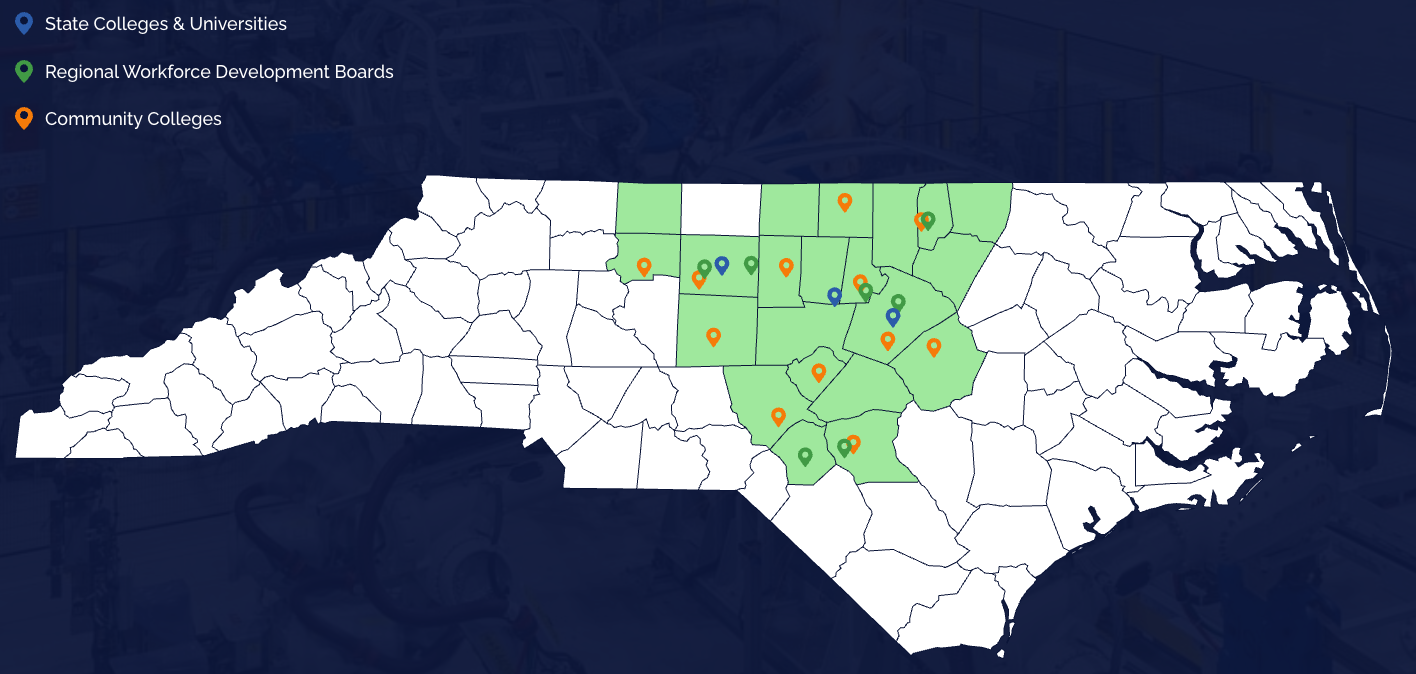
Community Colleges
- Alamance
- Central Carolina
- Durham Technical
- Fayetteville Technical
- Forsyth Technical
- Guilford Technical
- Johnston
- Piedmont
- Randolph
- Sandhills
- Vance-Granville
- Wake Technical
Universities
- NC State University
- NC Agricultural & Technical State University
- UNC Chapel Hill, Kenan-Flagler Business School
Workforce Development Boards
- Capital Area Workforce Development
- Durham Workforce Development
- GuilfordWorks
- Kerr-Tar Workforce Development
- Lumber River Workforce Development
- Mid-Carolina Workforce Development
- Piedmont Triad Regional Workforce Development
Other
Offering a ‘single source of information’ on advanced manufacturing
Justin Snyder, senior vice president of student learning and workforce development at Alamance Community College, said joining AdvanceNC was a “no-brainer.”
“As we continue to grow and serve business and industry, we can’t do that alone,” Snyder said.
Community colleges usually focus only on their geographic service area, but that doesn’t always match the reality of workforce needs, Snyder said. Students seek jobs beyond county borders, and local employers may need workers skilled in a trade the nearest college doesn’t offer.
“Neither employers nor students know or care about our service areas — and they shouldn’t have to,” Roberton said.
Collaborations between community colleges, four-year institutions, and workforce development boards have always existed — but AdvanceNC takes a comprehensive, regional approach to aligning these resources, bringing them together in new ways, Roberton said.
“We recognize it’s hard to navigate everybody, and we want to create a space where employers and individuals can have a single place that then takes them to those individual places they need to get support — kind of a single source of information,” she said.
Initially, Roberton said AdvanceNC’s efforts focused on how to best collaborate across education and workforce actors. That included identifying where activities could be streamlined and resolving barriers that were inhibiting progress.
Then, in 2025, the Golden LEAF Foundation invested $1 million in AdvanceNC to support five community colleges in the 12 most rural counties in the region. That investment was matched by an additional $1.4 million from Education Design Lab and myFutureNC, bringing new resources to the effort.
Now, Roberton said employers are proactively coming to AdvanceNC to discuss help with solving workforce challenges, including hiring and training needs.
“That is the whole point,” she said. “Come here, we will connect you with all of these resources, you can define your problem, and we can help figure out how we get a talent pipeline to you.”
Read more on AdvanceNC


Designing micro-pathways to align learning with employer needs
Community colleges typically enroll most students in diploma or degree programs that take one or two years. And while attaining a degree or diploma is still the ultimate goal for students, Roberton said, employers have a need for talent now, and jobseekers want to know exactly what they need to learn to get a job.
Micro-pathways offer a solution. Education Design Lab, a national nonprofit working with AdvanceNC on the development of micro-pathways, defines micro-pathways as including two or more stackable credentials that can be delivered within less than a year and result in a job at or above the local median wage.
“It’s aligning the learning with the skills needed for the job,” said Roberton.
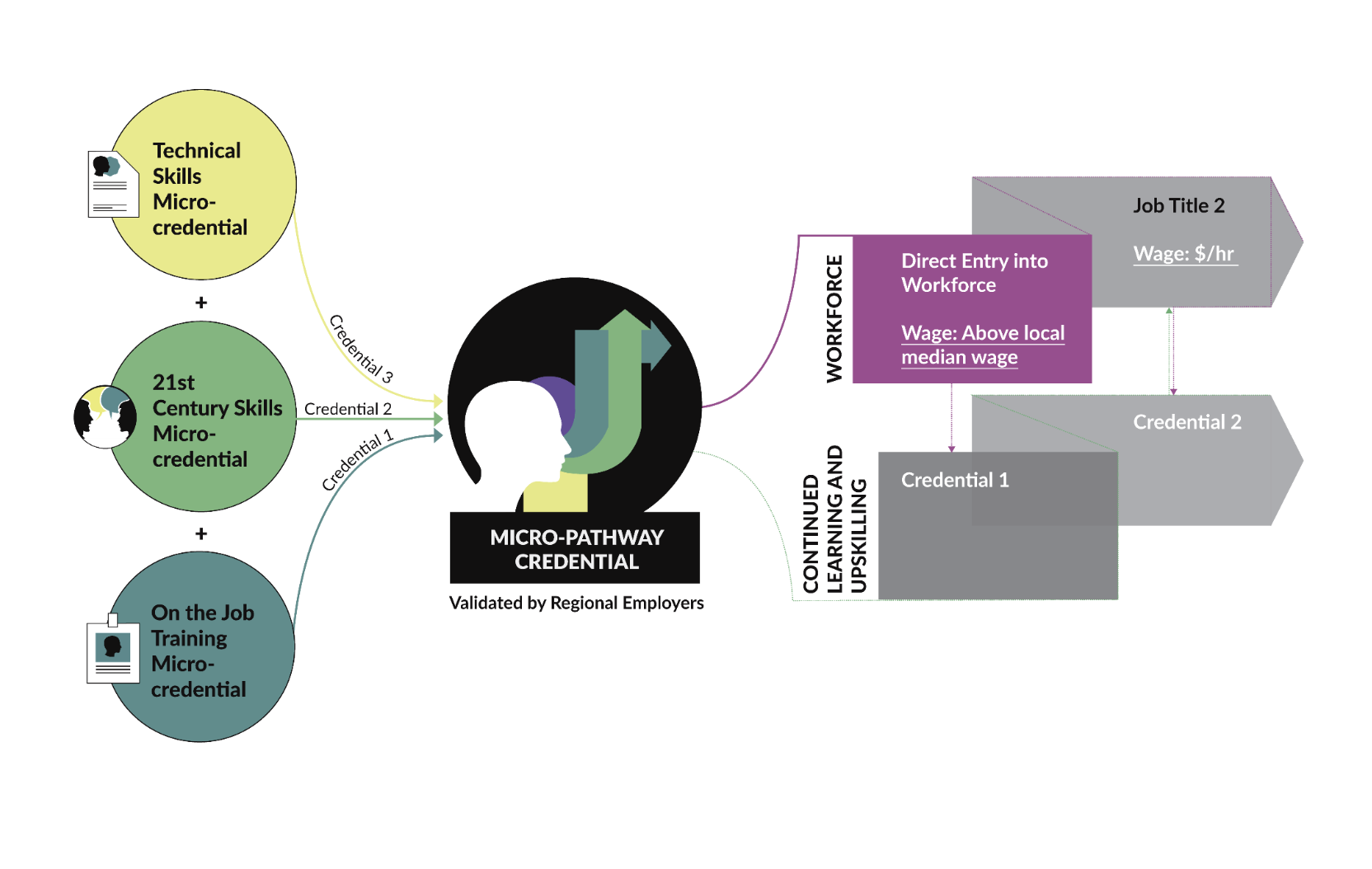
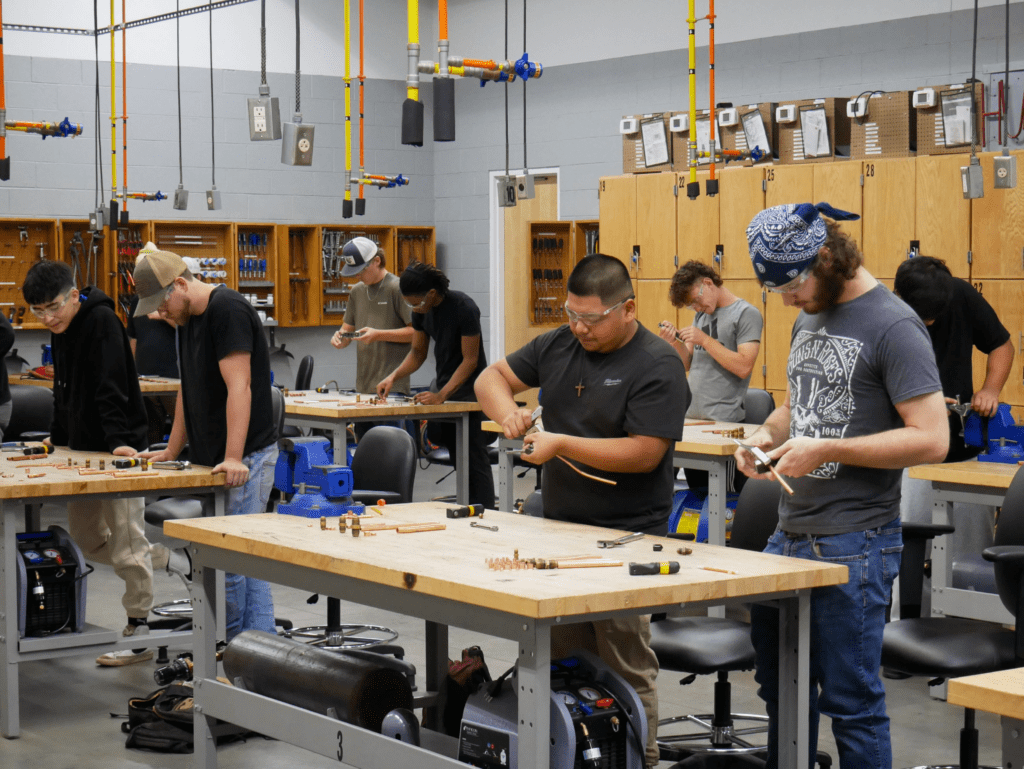
AdvanceNC is now working to design and deploy 13 micro-pathways that will standardize training across community colleges, helping students earn credentials and start working more quickly. According to AdvanceNC, the initial pathways will include industrial machinery mechanic, industrial HVAC technician, welding, and CNC machinist, helping learners gain the technical skills needed to maintain, troubleshoot, and operate modern industrial equipment and systems.
Each micro-pathway uses employer input to break learning into modules that are aligned with specific jobs. Credentials are stackable, meaning even if a course is taken in continuing education, it articulates into curriculum credit, moving students toward a diploma or degree over time.
“That was a really different way for community colleges to think,” said Roberton. “You’re deconstructing the degree, to some extent, to have the degree align with the jobs.”
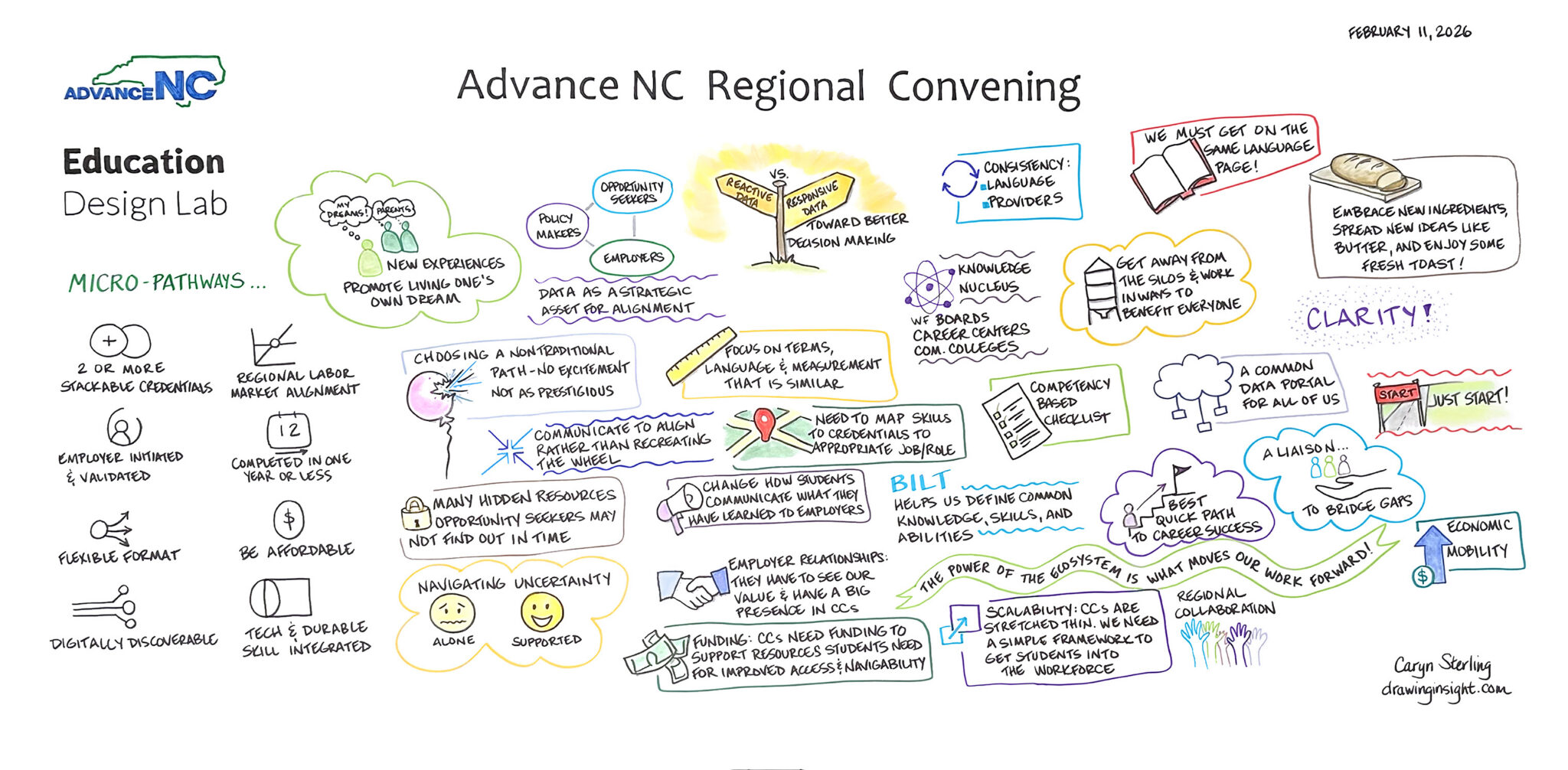
In fall 2026, Alamance Community College plans to launch welding and CNC machinist micro-pathways. Snyder said he hopes micro-pathways will allow the college to promote programs in small chunks, making them more manageable for students already working full time.
“We know education’s changing. Students are coming back to school, and they’re looking to get what they need to get back in the workforce and get there as quickly as possible,” Snyder said.
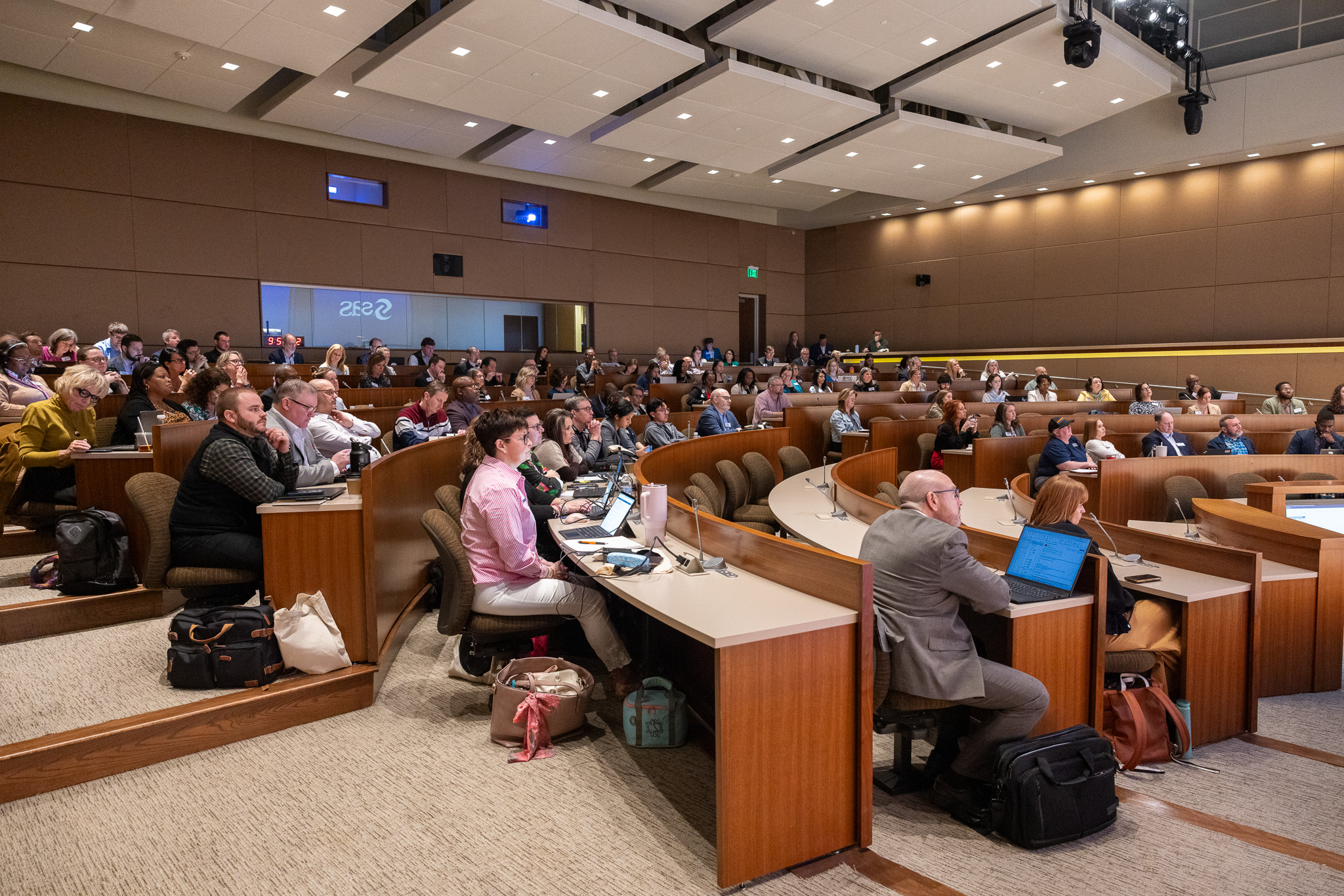
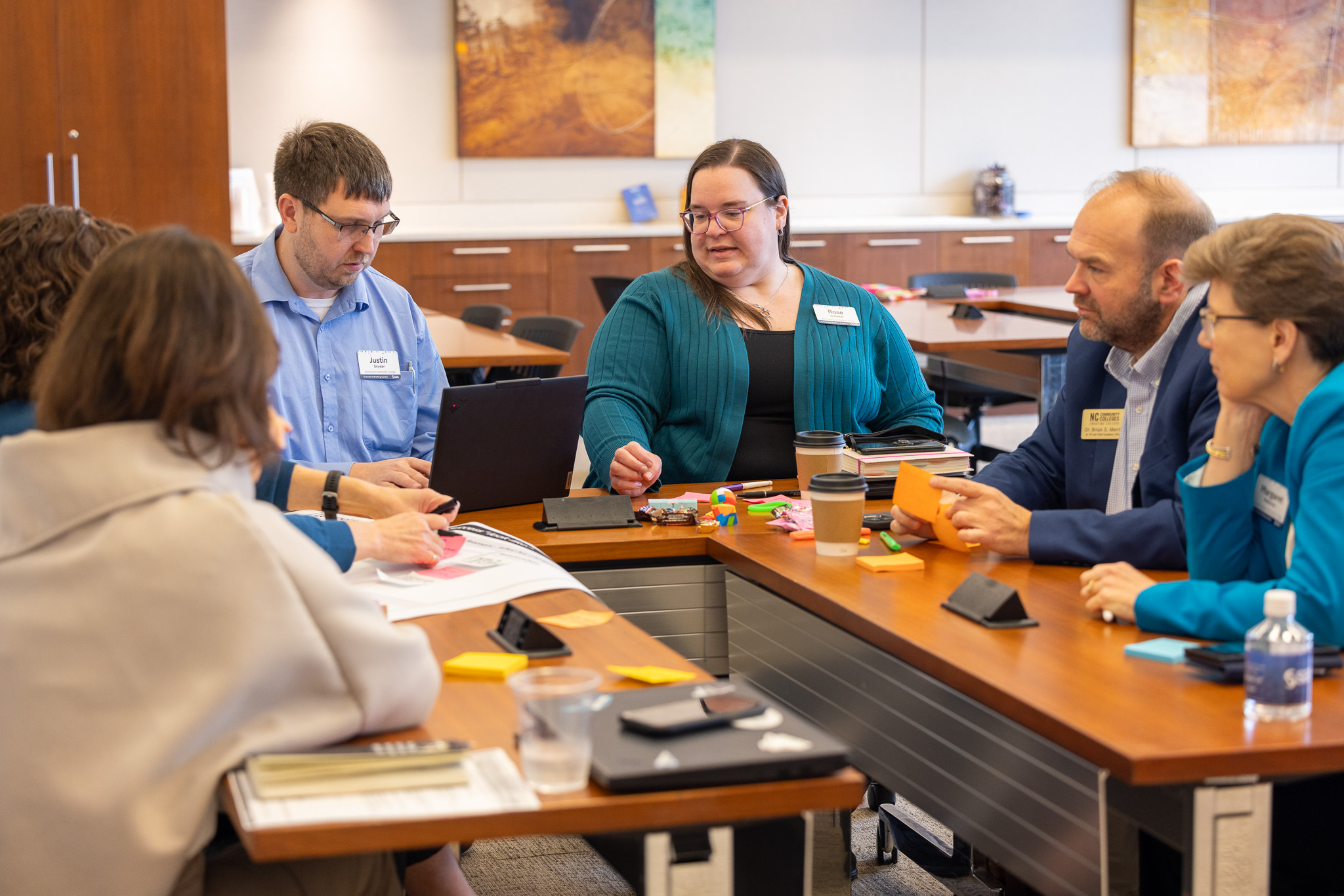
The work to develop micro-pathways begins by bringing together college deans, subject matter experts, and employer partners. Community colleges talk to employers all the time, Roberton said, but the micro-pathway development process engages them as a group and allows colleges to “think from employer to us first, not us to employer.”
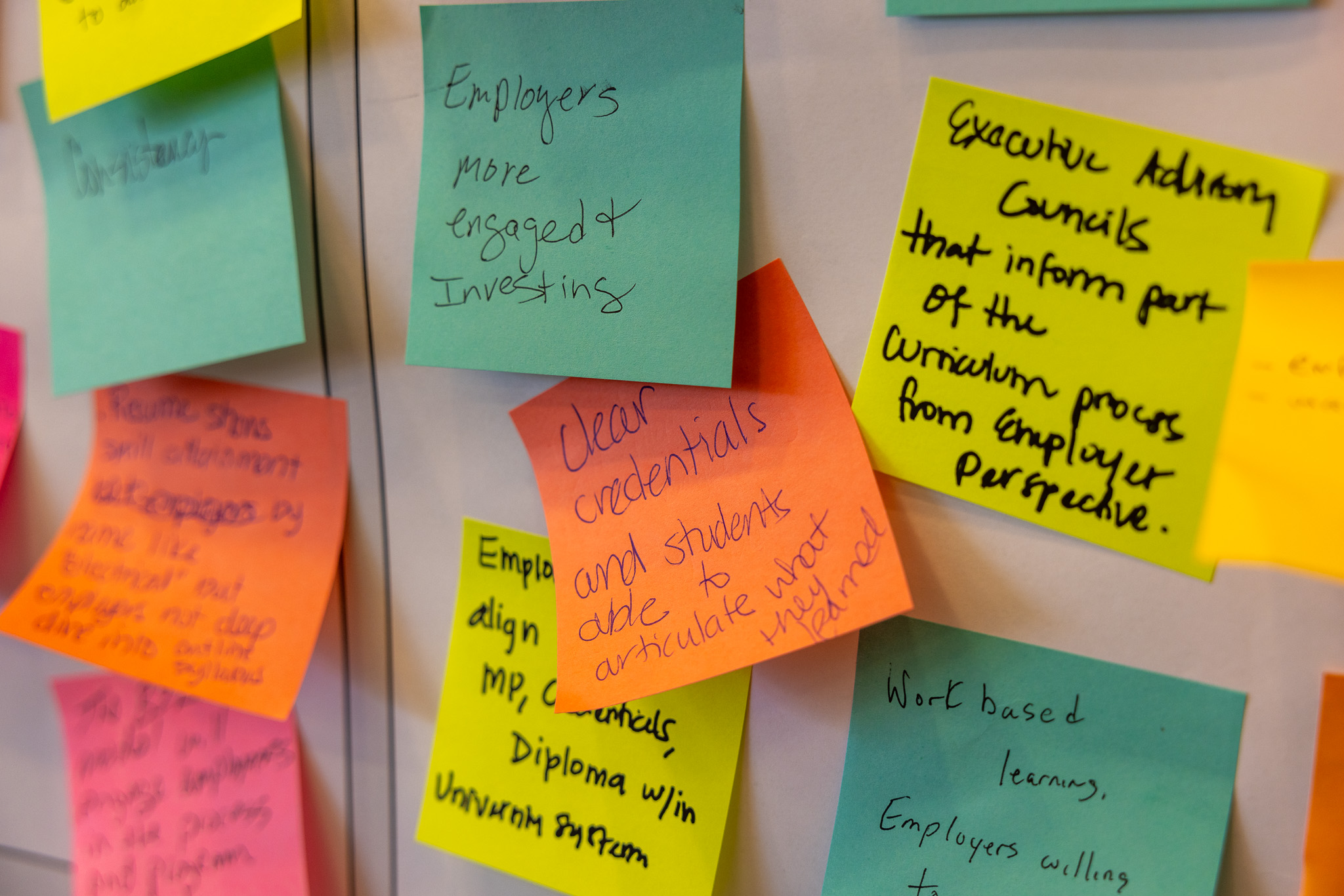
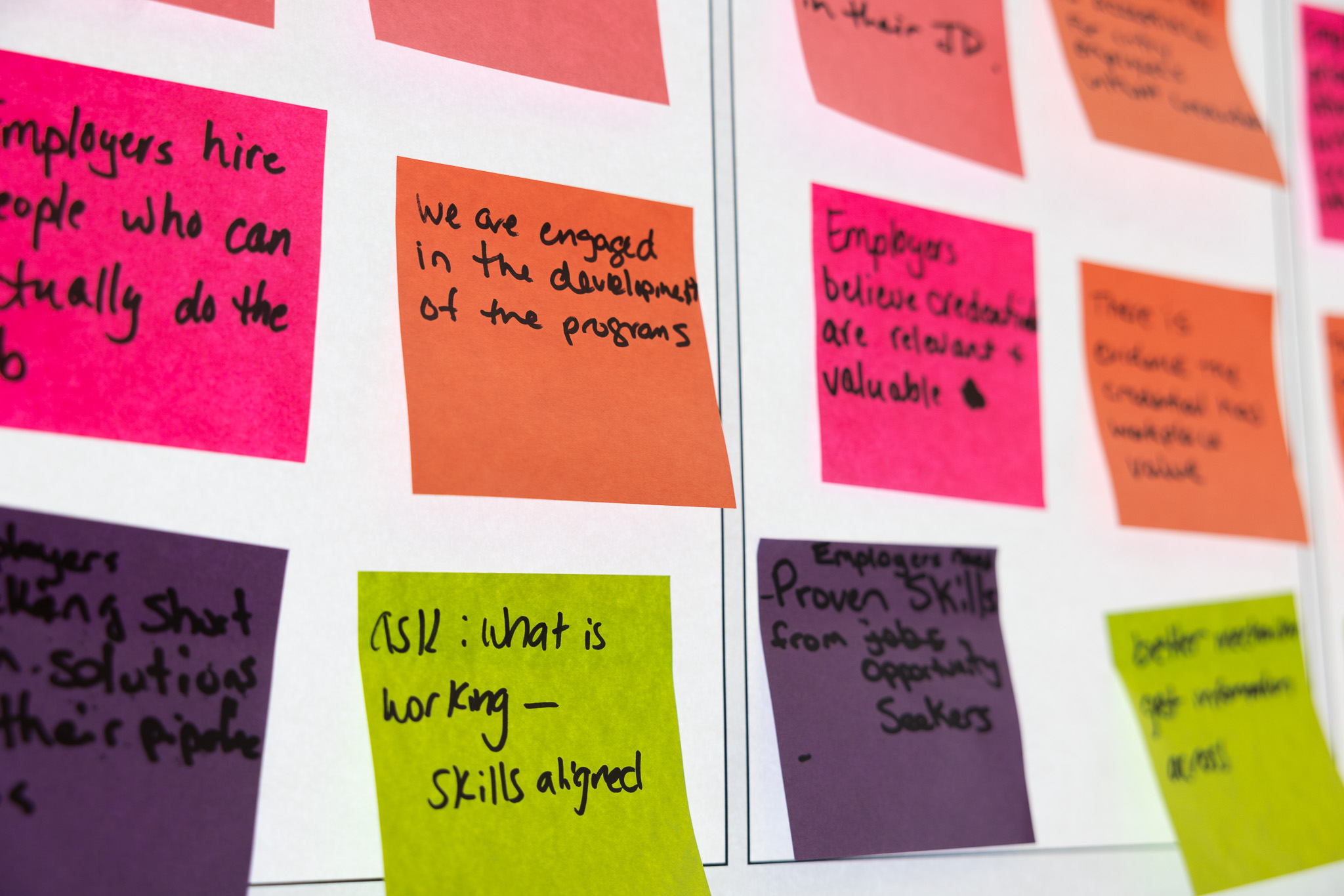
During a recent AdvanceNC conversation about the welding micro-pathway, Snyder said faculty across three community colleges realized they were facing the same challenges and planned a follow up conversation to discuss how to solve it. Separately, Snyder spoke with an employer that isn’t located in Alamance County but hires the college’s graduates.
These kinds of connections, Snyder said, would not be possible without AdvanceNC’s work — highlighting the opportunities that come from community colleges working together.
AdvanceNC anticipates enrolling 1,000 students in these micro-pathways across the 12 community colleges, resulting in at least 800 students earning high-demand micro-credentials and third-party industry certifications, according to a press release.
Roberton said AdvanceNC is also working with the N.C. Community College System to track and measure micro-credential completion, ensuring these efforts contribute to the state’s attainment goal of having 2 million North Carolinians ages 25-44 hold a high-quality credential or postsecondary degree by 2030.
Looking ahead
As AdvanceNC prepares to launch its first micro-pathways in fall 2026, benefits are already surfacing from the alignment and collaborations the initiative has fostered.
For example, Alamance Community College doesn’t offer a semiconductor program, but there is a local semiconductor manufacturer in need of workers. To meet that employer need, a partnership was forged to allow Alamance students to take courses at Central Carolina Community College — something that is “outside of the norm,” Snyder said.
“We’re not typically sending students to another community college,” he said. “When an industry partner said, ‘Hey, we need this,’ we were able to immediately connect through the work of AdvanceNC and begin to promote that program to students and support our industry partner in a way that we couldn’t have earlier.”
This kind of coordination and collaboration is “not going to be optional” in the future, Snyder said, especially as community colleges navigate potential funding cuts. Recognizing that every community college can’t be everything to everyone, and leveraging the strengths of different colleges, will be necessary to best meet student and employer needs, he said.
“It doesn’t necessarily make sense for there to be 11 different programs of everything at every college,” he said. “With some of these really high-cost advanced manufacturing programs — does it make sense for us to think about hubs? … How can we share instructors? How can we really think outside the box to meet the needs of our employer partners?”
Looking ahead, Roberton hopes to see AdvanceNC solidify a structure that supports attracting and retaining advanced manufacturing jobs in the state by ensuring employer needs are met and workforce partners are aligned. For North Carolina to remain a strong and competitive state for the industry, “workforce is always part of the conversation,” she said.
AdvanceNC is also working to elevate the profession of advanced manufacturing, including through summer camps and employer engagements, to ensure students understand the career paths and high-quality jobs that exist in their communities.
“AdvanceNC in and of itself doesn’t do the things — but it can be the structure that makes it easier,” Roberton said. “Behind it, the partners are always working toward: How do we better align?”