
Meet Deborah Brown, the 2026 NC Charter School Principal of the Year

This article was originally published by the North Carolina Coalition for Charter Schools.
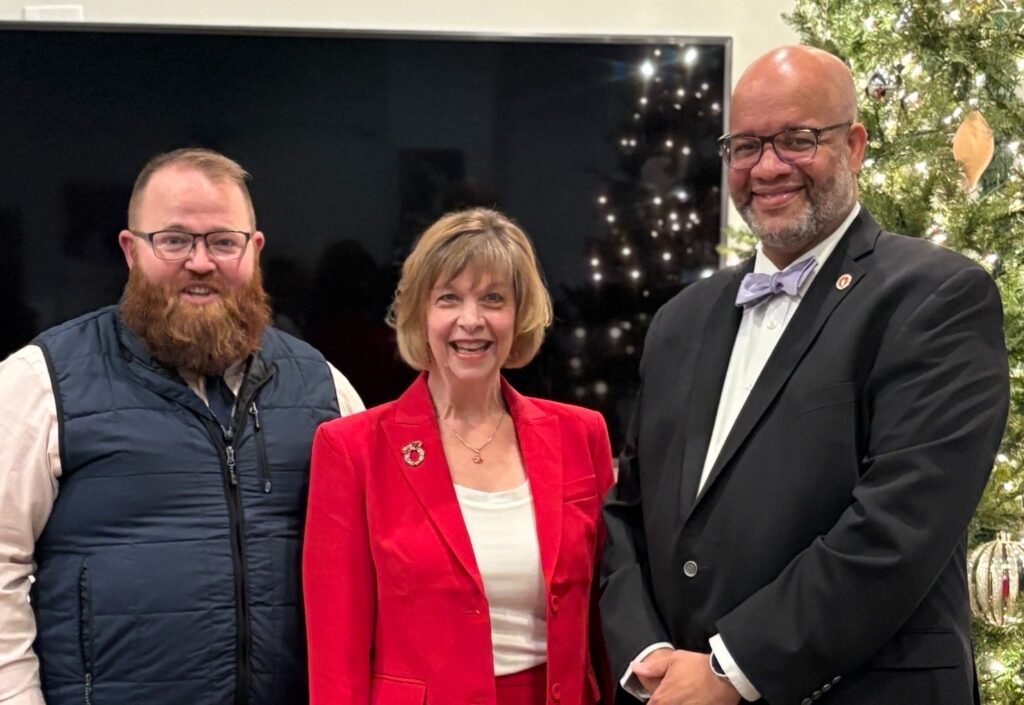
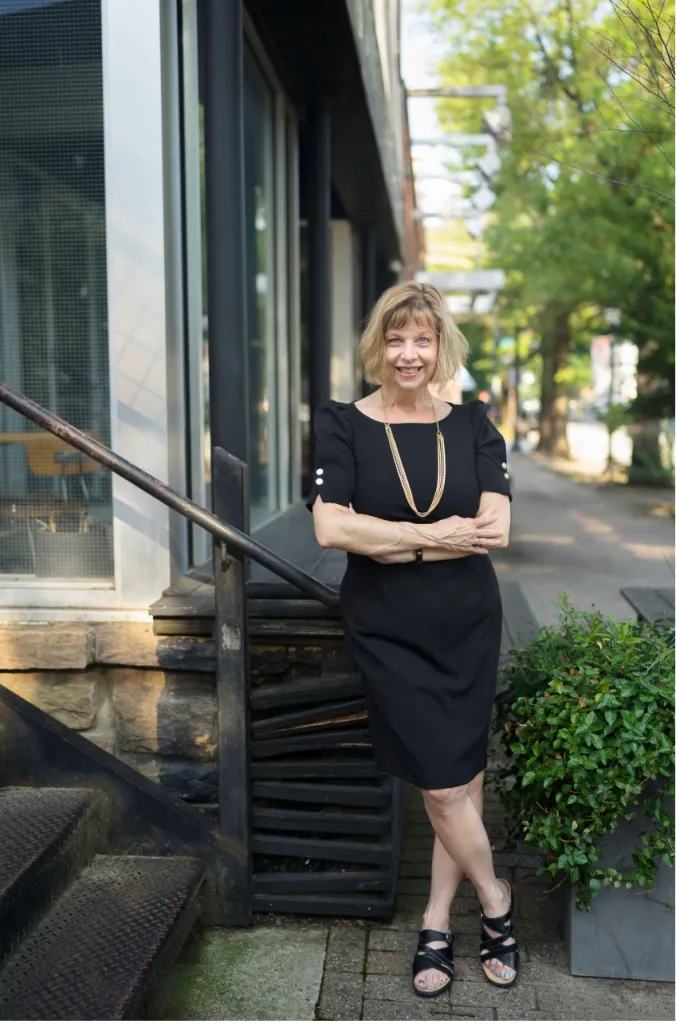
Deborah Brown, the middle school director at The Exploris School, is the 2026 North Carolina Charter School Principal of the Year. An independent public charter school in Raleigh, Exploris serves students in grades K-8.
The North Carolina Department of Public Instruction (DPI) announced Brown’s honor in February, along with eight other regional finalists for the overall 2026 Wells Fargo North Carolina Principal of the Year. The overall award, announced on May 15, went to Mariah Walker.
The principal recognition is Brown’s second statewide honor for charter excellence. In 2017, she also received the North Carolina Charter School Teacher of the Year award.
Kristen Blair, the Coalition’s communications director, spoke with Brown recently about her work with middle schoolers, her views on the flipped classroom, her collaborative approach to school leadership, and more.
 Sign up for the EdDaily to start each weekday with the top education news.
Coalition: Congratulations on your recognition as North Carolina’s 2026 Charter School Principal of the Year. What was that like, and what are your plans for the rest of this year?
Deborah Brown: It was a real honor and a special moment. I was quite surprised to be nominated again, this time for the leadership role. The school announcement occurred during our Annual Expressions Day. Our resource director walked in with my parents, my aunt and uncle, Jake Wilson (the 2025 North Carolina Charter School Principal of the Year), and our newest National Principal of the Year. The entire school was there, with lots of cheers.
This award holds a twofold meaning for me. First, it gives me a platform to share all of the amazing things that Exploris does.
It’s also an opportunity to be a spokesperson for what public charter schools were designed to do: to be innovative, laboratory schools. My experience helping to found Research Triangle High School made me a true believer in our public charter schools. I saw what a difference it made to have certain freedoms — to make creative academic decisions, try new methodologies, and respond immediately to the school community and its needs. I believe charters can be the rising tide that lifts all educational boats.
Coalition: Like Jake Wilson, the 2025 Charter School Principal of the Year, you work with adolescents! What are some of the most effective ways you’ve learned to relate to students in the throes of so much developmental change?
Brown: When I was a classroom teacher, my specialty was British literature. I loved working with older kids and dealing with higher-level academic content. But as an administrator, I love being at this point. It’s the sweet spot in the lever. Students are very much not yet who they are going to be. Middle school students still have one foot in the elementary school world, and their emotions are right on the surface all of the time. They walk in here as 11-year-olds and walk out at 14. I can see that turnaround.
Several years ago, we had a group of sixth grade girls who were really getting into social aggression. Some of it involved social media, and some of it involved being exclusionary. But we poured into them, working with them on the impact their behavior was having, better choices they could be making, connecting with people, and being empathetic.
Now, these same girls are in eighth grade. When a sixth grader came to see me this fall, absolutely sobbing, this same group of girls took her in. They literally had an arm around her, and they told her, “I remember when that happened to me. I’ve been there before. Here’s what got me through it. We’ve got your back.”
I got to sit back and say, “That’s what we’re about in middle school!”
Brown: I was working at Southeast Raleigh Magnet High and with the New Tech Network on project-based learning. I had just discovered backwards flipping. Then I met with Eric Grunden, Pamela Blizzard, the founding team at RTHS, and I heard their vision for this school.
Flipping involved this idea that you could take content and record it in short videos that map to kids’ attention spans. Students control where they watch it, what time of day they watch it, and if they need to watch it again. So, when they came to class, I didn’t have to do the lecture piece; they already had those basics. They could start working immediately on collaborative, creative projects. It was revolutionary. We saw some incredible depth of learning through that program and methodology.
We’re having similar discussions now around AI, and I’m doing a lot of training with my staff. Instead of saying, let’s put cellphones away and block ChatGPT from everything, I say this: Let’s teach students how to use these things in an ethical way. They can use these tools in more impactful ways to deepen, rather than circumvent, their learning.
Read more about AI
Coalition: What drew you to the charter sector initially?
Brown: I had a career in upstate New York and then taught in Boston. I moved to North Carolina in 1999, and I worked for 10 years in Wake County. In 2012, I was part of the team that opened RTHS. But my kids went to Exploris in middle school. I taught middle school for five years, so I knew how foundational and formative those years were. I decided to take a step back from teaching during the two years my kids were in those intermediate grades. My husband and I saw middle school as our last best shot to get them on the right trajectory for high school and emotional success.
Because I wasn’t teaching, I was able to volunteer in the school. I was “that” parent! I drove for all of the field trips, and I volunteered almost all the time. I also stayed in touch with a lot of the Exploris teachers. I just loved the techniques they were using and the way they integrated community partnerships with real-world learning experiences.
Coalition: You’ve been at The Exploris School since 2019. What has that experience been like, and what prompted your transition from teaching to administration?
Brown: I had been moving more and more into roles as a teacher-leader. At SE Raleigh Magnet High, I was one of two teachers that started iLead 21, a student leadership program. When I went to RTHS, I loved being in the classroom. But really, the pendulum swing was having a chance to do a lot of the leadership pieces and shape the vision of the school.
As Charter School Teacher of the Year, I became more interested not just in impacting my classroom, but also in how systems set teachers up for success. When I was in the classroom, administrators were the gatekeepers. They were the ones who said no. I tried to say yes to teachers as much as possible: “What’s your vision? What’s your dream?”
I’ve also always loved policy. Examining ideas — and the best way to implement them — resonates with how my brain works. One of the things I’ve really enjoyed as a school leader is getting a deeper dive into education policy and advocacy.
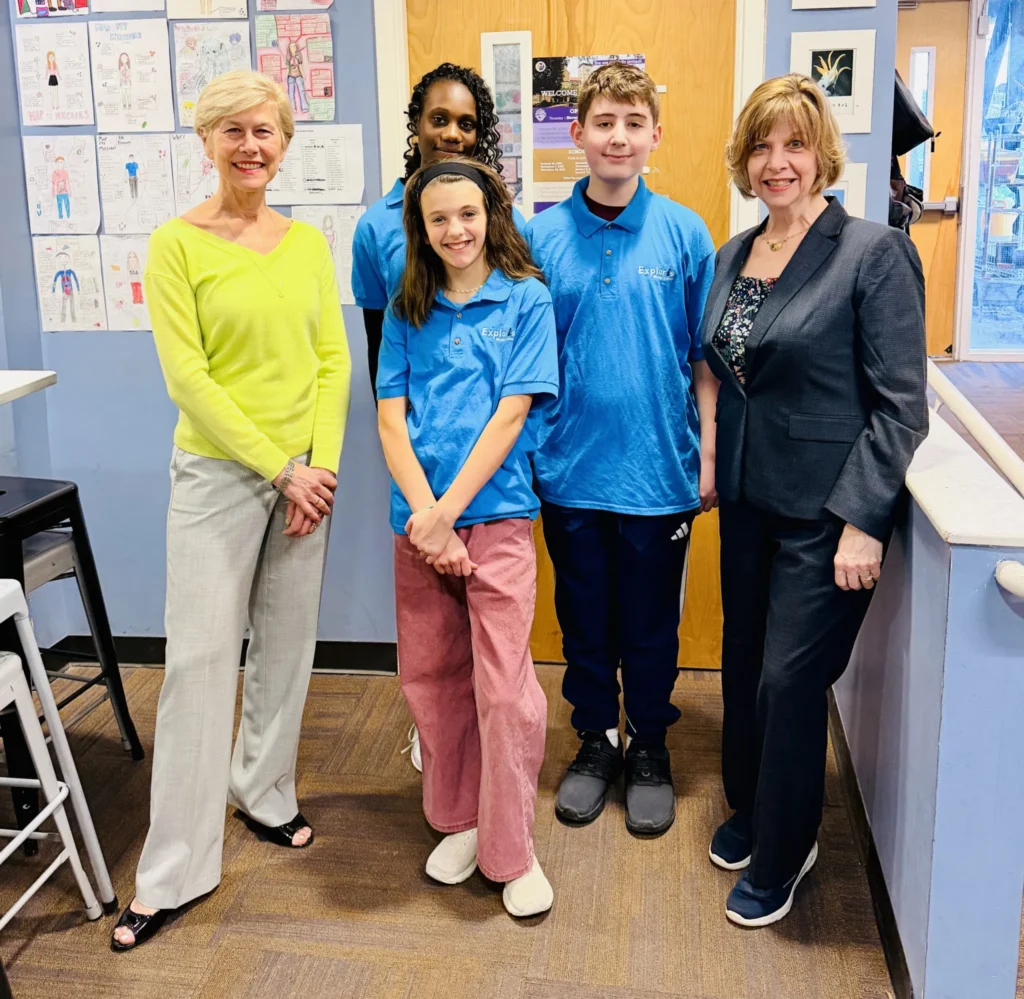
Brown: When my children were at Exploris, it was just grades 6, 7, and 8. It was small, and if you wanted to have a staff meeting, everybody just stepped out in the hallway. There was no physical or theoretical distance between the classroom and leadership decisions. But by the time I rejoined Exploris, the organization had grown and shifted. We had an elementary school. We now had an executive director, two associate directors, a business manager, and instructional coach. There was this huge distance. When I talked with teachers, I heard a lot of dissatisfaction about how that distance had grown.
In 2019, I started as the associate director for middle school at Exploris. Our executive director, who was in charge of the K-8 organization, left for another position. The board asked me to step in as interim executive director for the year. Since school was closed for the pandemic, I asked the board if we could take a step back. We formed a committee that studied teacher-led schools. The Center for Teacher Quality at NC State helped guide us through that process. Our model involved breaking down the workflow.
Now, we have a five-person team as the main governing body. We have two directors: one for middle and one for elementary school. We have a director of resources who fills that COO level, and we added elected positions from middle and elementary school. These teachers, who are elected by their peers, give us insight into how our decisions are impacting them. Some things don’t work in the model, and we tweak it. But it’s particularly effective if we’re doing anything related to an instructional decision. We like to think that even if it’s slower, it’s stronger.
Brown: We want our teachers to be growing ahead of our kids, if not more. It’s understanding that if “sit and get” doesn’t work for kids, it’s not going to work for adults. We need to craft professional development that actually meets adults’ needs and at the same time meets school goals and school vision.
One of our goals for Exploris is ensuring student access. So, we voluntarily implemented a weighted lottery the year I came in. I think we were one of the first public charter schools to do this intentionally. We knew that came with a change for our staff. Exploris was known for being a high-performing gifted school. We were also very well-resourced with our families and parents. Suddenly, we went from a student population of about 8-9% free- and reduced-price lunch to about 31% free- and reduced-price lunch. This better matches Wake County’s demographics, which was our goal.
But we knew our staff was going to need some support in making that transition. One of the things we selected for the whole school was Responsive Classroom training. At the same time, we knew that each individual teacher was going to need something different.
Coalition: What is your favorite charter school moment?
Brown: Oh my gosh, that’s a hard one! There are so many. I think it was graduation for that first RTHS class with these kids that I had watched come in as freshmen at 14. I taught them for four years, watched them grow and evolve and form this strong identity as a class, and they formed the foundation of this amazing RTHS program.
I chaired the grad committee for that first graduation. I designed the green graduation robes with a white stole that had the school seal imprinted on it. It was so wonderful to see that vision come to life, and it’s still being used for RTHS graduations today. I was also able to watch the close bonds those students had built with each other. We actually had some marriages that came out of that group! I still stay in touch with some of those kids; 2016 was our first graduating class, so it has been 10 years.
That first graduation marked a real story of a charter school journey — the vision, the roadblocks, and successes. Initially, the school leaders weren’t even sure they could get the certificate of occupancy for the building. In April the year before the school opened, Eric Grunden, the founding director at RTHS, had reached out to us and said, “If you haven’t quit your current job yet, you might not want to put your notice in just yet.”
So, we went from the uncertainty of wondering if we would even have a school to a beautiful new building with gorgeous, proud graduates walking across the stage.
Coalition: Is there anything I didn’t ask that you believe is an important part of this conversation?
Brown: Exploris has a unique project-based approach. Our projects are crafted through our expedition model, which is standards-based, and tends to be science-forward. But we also often bring in language arts and humanities, social studies, and civics pieces. You look at the problems that need to be solved and then lay the standards on top of that.
One of my all-time favorite projects came in 2016 with our kindergartners. It was around the election, and the kindergartners were wondering why all the adults were mad. They thought, how can we make people happy? Right down the street is a local restaurant called A Place at the Table. It’s based on pay what you can, and it serves people from all different demographics. We got those paper sleeves that go around coffee cups, and the kindergartners decorated them and wrote messages. For weeks, if you went and got a cup of coffee at A Place at the Table, it came with a hand-decorated sleeve from an Exploris kindergartner.
What I love about that story is that it’s not just an arts and crafts project, if you think about kindergarten standards for numbers, letters, colors, and shapes. They’re learning the skills, but in a way that embeds them deeply in the community and can make an impact. That academic depth, with student ownership and real world impact, is a triumvirate that makes Exploris really special.