
Onslow County leaders seek child care solutions as military child care, a national model, faces limitations

Rachel Nelson has worked in child care since she was a 19-year-old college student at UNC-Charlotte. She worked for two decades across multiple states, including several years in Onslow County, providing technical assistance to increase program quality.
Nelson thought she had seen it all — a child care program in a warehouse without walls, a program in a converted auto repair shop, mom-and-pop programs, and large chains.
Then she went onto a military base.
In 2013, Nelson took a child care job on Camp Lejeune, the largest Marine Corps base on the East Coast, in Onslow County. It was a whole new world.
“I had a wish that all child care had the resources and supports that installation child care has,” said Nelson, now the deputy director of the Marine and Family Programs Division, which oversees eight child development centers (CDCs) on base.
 Sign up for Early Bird, our newsletter on all things early childhood.
The military child care model, established by Congress in 1989, is widely considered to be the best publicly supported system in the country, with the Department of War (DoW) investing about $1.8 billion annually as of 2024. Even still, families’ needs are outpacing the model’s capacity.
In Onslow County — home to Camp Lejeune, Marine Corps Air Station New River, and several training schools — the on-base and off-base child care systems stand in stark contrast. A worsening off-base child care crisis, local leaders say, is threatening both the local community’s health and workforce and, as military families’ needs evolve, the country’s military readiness.
The country’s biggest employer-sponsored model — amid a desert
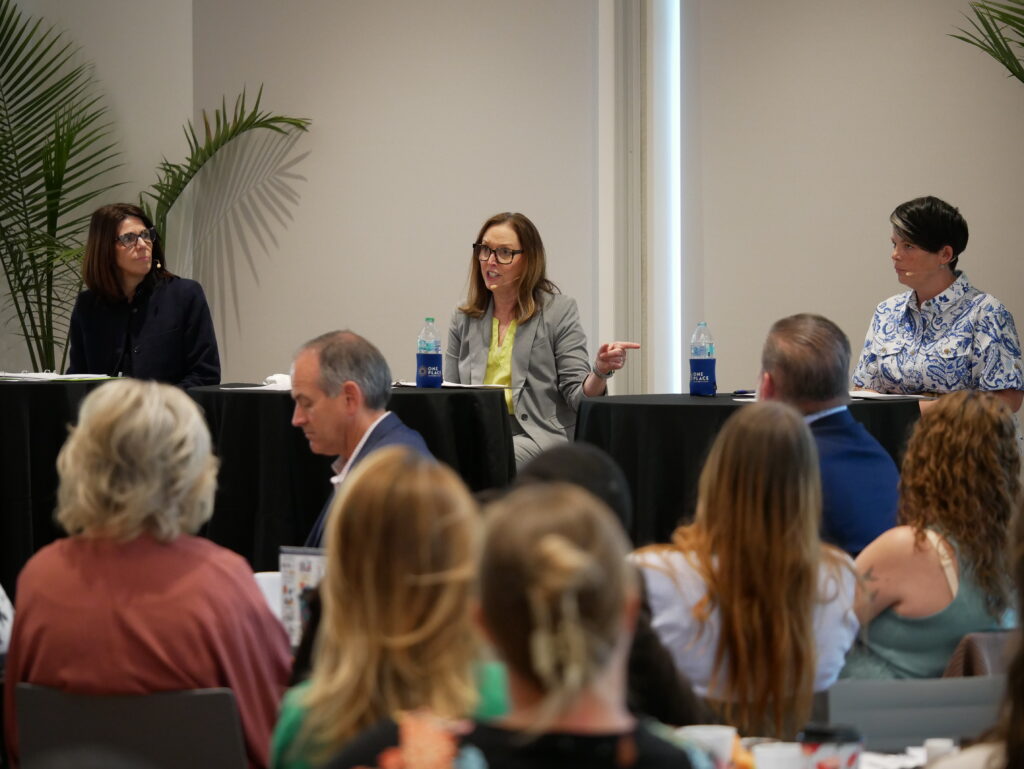
Since October, local Onslow County leaders, from business to education to government, have been meeting to explore solutions to their unique child care needs. One Place, the local Smart Start partnership, launched a task force to bring ideas across sectors to the table.
“No one’s coming to save us,” said Dawn Rochelle, CEO of One Place, at a meeting in February.
Off-base, the community has lost 32% of its licensed child care sites in the last decade, according to One Place. In the time since the local child care task force started meeting, six programs have closed, with another center closure expected this summer, One Place staff said. Programs are serving about 3,000 children, 200 fewer since October.
Licensed care in Onslow County is meeting roughly 45% of the potential need, according to a national analysis from the Buffett Early Childhood Institute at the University of Nebraska. The average annual cost for infant care in the county is $12,168, according to a task force presentation.

Providers, as is the case in the child care industry across the country, are stuck. They cannot pay their teachers competitive wages and keep care affordable for families.
“This is not an issue that (we) can wait any longer to solve,” Rochelle said.
On-base, there are eight CDCs serving about 1,452 children, according to a local meeting presentation. With the military’s investment, teachers receive higher pay than their off-base peers and are offered benefits, including free child care for their own children. Parents pay on a sliding scale based on their family’s total income. Priority is given to children based on their parents’ rank and working status.
The investment translates into kinds of access and quality that is often difficult to provide in private care, Nelson said.
For example, CDCs can offer more care for infants and toddlers, which is particularly difficult to come by in the private industry because of its low ratio requirements. At one of the larger CDCs on base, Nelson said eight of its 24 classrooms serve infants. Twenty out of the 24 rooms are for children under 3 years old.

“You don’t see that (off-base) because the cost of care is so expensive when you have those smaller group sizes and ratios,” Nelson said.
With the military’s investment, CDCs are also able to hire personnel outside of classroom teachers to meet children’s needs. Centers have child care health consultants and behavioral health staff, for example, which helps serve children with special needs.
“Military child care is able to support, in many cases … children that programs out in town would really struggle with supporting — special medical needs or those emotional regulation needs — and not because the folks out in town care any less, but because they don’t have those additional supports that are so helpful,” Nelson said.
As of 2015, 97% of CDCs were nationally accredited, according to a 2020 report from the Congressional Research Service, compared to about 9% of civilian centers.
Raising quality all comes back to fairly paying and investing in people, Nelson said. On top of higher pay and benefits, Nelson said the on-the-job training CDCs provide to teachers through online modules removes barriers to enter the profession.
“Quality doesn’t come from the store,” Nelson said. “Quality comes from the people. And so when you invest in the staff, in the workforce, that’s how you increase quality.”
‘I’m always conflicted. Do I do it for the staff? Do I do it for the families?’
In off-base community-based programs, providers are trying to do just that with limited resources. Without the kind of consistent and robust outside investment that military programs receive, they are often bending over backwards to pay teachers and keep care affordable for families.
It’s a math problem that has become harder to solve since the end of pandemic stabilization funds, providers told EdNC. Stabilization grants were first provided to child care facilities by the American Rescue Plan Act of 2021 and then extended at a lower rate by the state legislature through March of 2025.
“It’s much more challenging now — much more challenging,” said Gina Shepherd, director of New Beginnings Child Care, which owns three child care sites and one private K-12 school in the area.
The program was able to raise base teacher pay by about $4 while receiving stabilization grants, Shepherd said, which administrators have maintained. Without that outside funding source, the budget is tight month to month, she said. And finding quality staff who will stay has gotten harder.

At the time of EdNC’s visit in March, Shepherd had an empty 2-year-old classroom and was waiting to find a qualified teacher to open another NC Pre-K classroom.
“I can say with certainty that staffing has never quite been the same,” Shepherd said.
At Quality Childcare and Preschool, with locations in Sneads Ferry and Holly Ridge, owner and director Shannon Pope said she is balancing the same math problem. Pope is continuously looking for grants and extra funding to support and retain teachers.
“The margins are tight,” Pope said. “If you want to treat your staff well and make sure that the morale is high and they stay with you, that is where your entire budget goes, is to your staff.”
The program participates in the TEACH scholarship program, which covers teachers’ tuition to go back to school. Pope also signed the centers up for the early childhood apprenticeship program to allow teachers to work while earning credentials. She, like Shepherd, also increased teachers’ wages with stabilization funds. She provides health insurance and paid time off, unique benefits in the field.
Related reads


It is a constant struggle to find the funding to support staff and not price out families, she said.
“I’m always conflicted. Do I do it for the staff? Do I do it for the families?” she said. “Well, if we didn’t have families, I wouldn’t be able to pay my staff and wouldn’t have staff. But if I don’t have happy staff, then I have angry families. I don’t know what to do.”
“I want us to thrive, and not just, you know, tread water all the time,” she said.
‘We need to tap into community-based child care’
Despite consistent investment and high quality, the military has struggled to keep up with families’ demands for care, running out of space on installations. In recent years, branches have launched new programs that utilize community-based providers to meet families’ needs.
In the last two years, commanders across North Carolina’s bases have raised child care as one of the top quality of life concerns, said Joseph Speranza, a retired senior chief corpsman and member of the North Carolina Military Affairs Commission. When Speranza was in the service, his spouse stayed home to take care of their children.
They were able to survive off of one income, which is not the case for most military families today.
“We always had issues; however, I think they’re getting worse,” said Speranza, a member of the local task force.
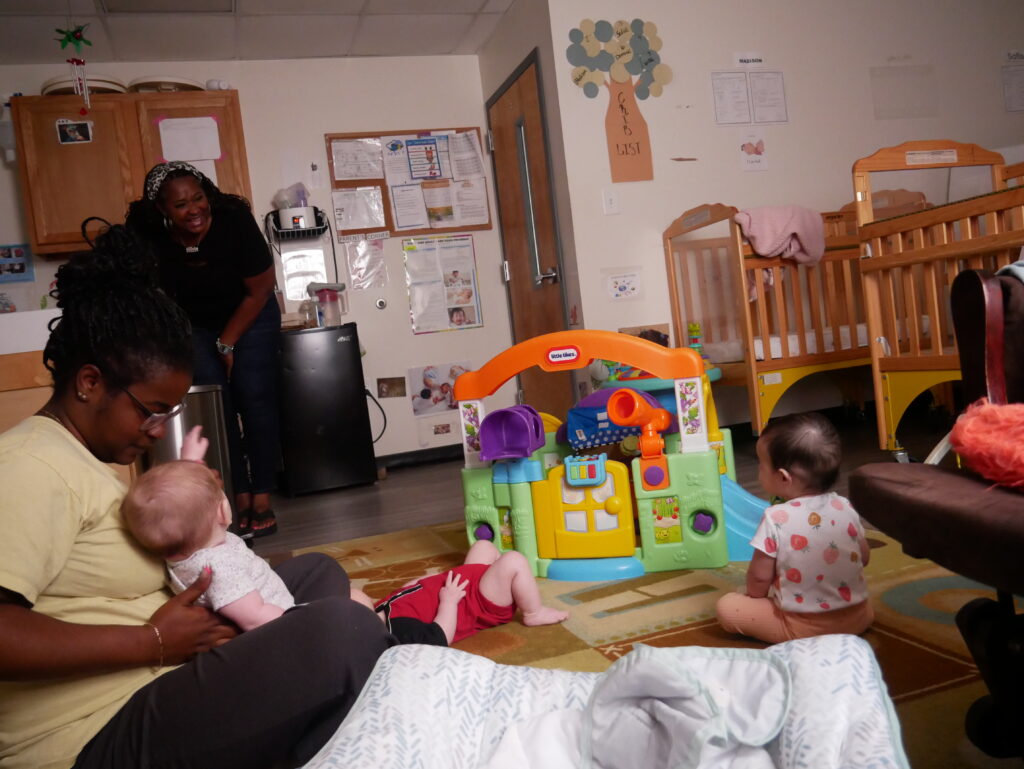
In a 2025 survey from national nonprofit Blue Star Families, 68% of military family respondents said having two incomes is “vitally important to their family’s financial well-being.” Respondents listed child care as one of their main challenges, with 86% citing high costs, 67% citing long waitlists, and 52% citing concerns with the quality of care.
In Onslow County, a relatively low cost of living, older on-base facilities, and Hurricane Florence damage have all factored into many families’ decisions to live off base in recent years, Speranza said. That also impacts families’ care preferences.
“So what … more of the military service members do is they end up flooding our local communities,” Speranza said.
In some cases, a lack of child care leads to military families making tough decisions, like choosing for a spouse to juggle work and care or drop out of the workforce.
When Shannen Downing’s husband was stationed as a pilot at Marine Corps Air Station New River in 2022, she had already struggled to find care for her first child in Texas and Florida. She wanted to return to the classroom as a teacher as soon as she could, so she and her husband sped up having children.
“Family planning wise, (we thought), ‘Let’s have our children closer together so that I can get back into the workforce faster,’” Downing said.
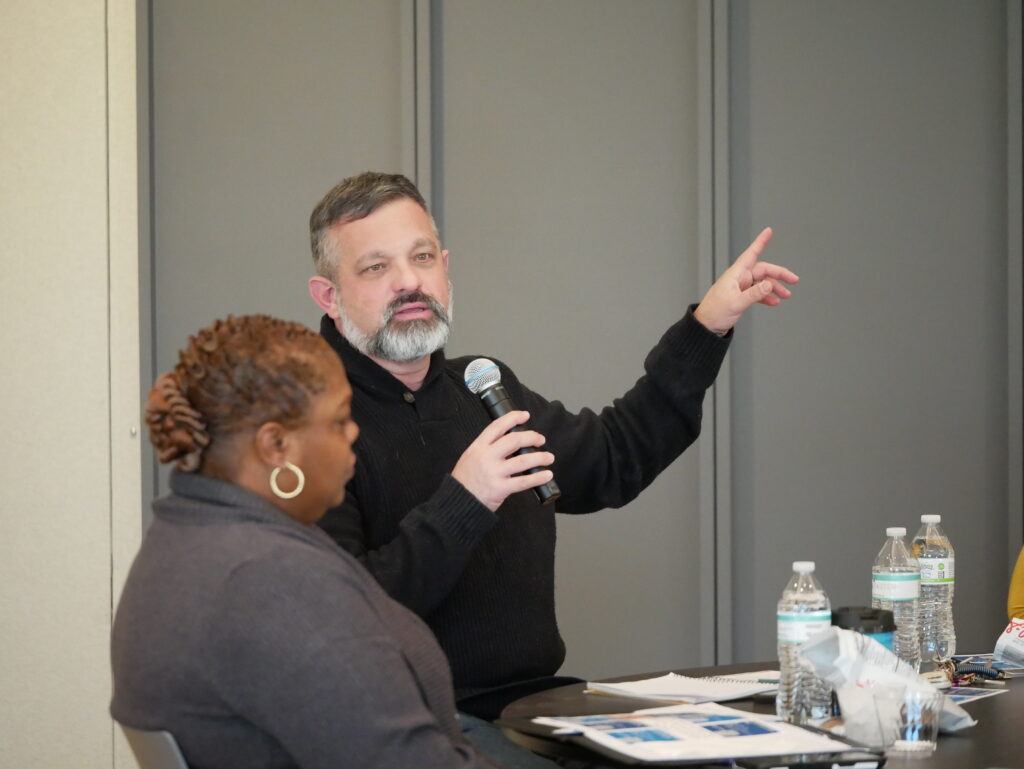
In Onslow County, things didn’t get any easier. Downing, who was living on base at the time, checked out the CDCs and found waitlists between six and nine months long. She took a remote job and tried to work full-time and care for her children.
When she had her third child in the summer of 2025, she decided it was time to try to find care again. Though her family was no longer living on base, she tried the installation’s CDCs, putting her children on waitlists at each one.
“I couldn’t get child care reliably enough to accept a position,” Downing said. When she did find off-base care, it was a larger monthly expense than her family’s mortgage.
With space limits and growing demand, the military has used fee assistance programs as another strategy to connect families with the care they need to serve the country.
“There’s not enough on-post child care, but also it’s not necessarily accessible to where families are living,” said Susan Gale Perry, CEO of Child Care Aware of America, a national nonprofit that administers several military fee assistance programs. “And so that is why, at a certain point, the military said, ‘Gosh, you know, we’re not going to solve this just with on-installation care, we need to tap into community-based child care.”
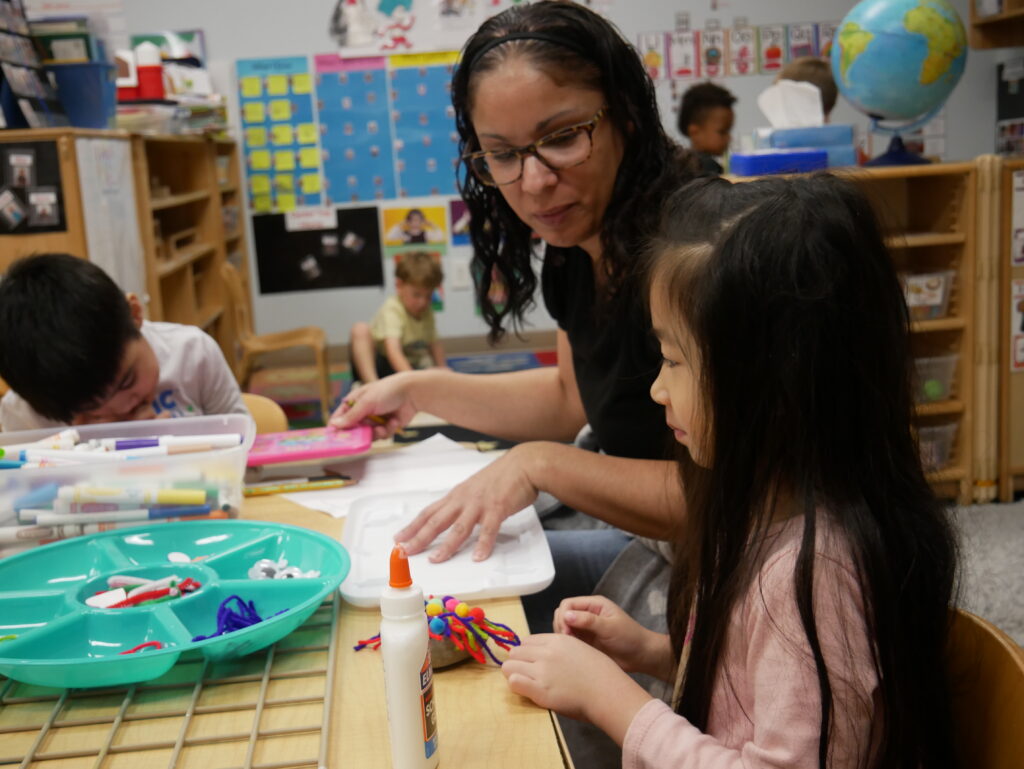
After finally finding care, Downing heard about the Military Child Care in Your Neighborhood (MCCYN) program, which helps families with the cost of community-based care. Her three children are now all enrolled in New Beginnings Child Care. Her family went from paying $2,300 to $1,600 for two children per month (the oldest child is in a free public preschool classroom).
Each branch provides fee assistance for community-based care, covering a portion based on rank and spouse status, with the family covering the rest. Since 2023, North Carolina has participated in MCCYN PLUS, which allows child care programs meeting a certain level of quality based on state ratings to participate, rather than only nationally accredited programs.
Fee assistance is one of several ways the military model is trying to partner with bases’ surrounding communities to serve families’ needs. Fayetteville’s Fort Bragg, for example, is part of a pilot that helps families with the cost of hiring individuals to provide full-time in-home child care. In Norfolk, Virginia, the DoW partnered with the Armed Services YMCA to open three new centers in the last year for military families waitlisted for care. In other instances, the DoW has bought out slots at other community-based programs to reserve them for children of military families.
Related reads


A connection to care is particularly important for military families without extended family close by, experts say. Child care can also provide consistency amid change and stress.
That’s been the case for Downing and her children, she said.
“They are our support system,” she said, speaking about her children’s child care teachers. “They are my shoulder to lean on when my husband is gone and I’m kind of just holding it all together with a piece of dental floss.”
When her husband deploys, Downing said she notifies her children’s teachers so they can provide a little extra support.
“I feel like they’re part of our team, like they’re part of our family team.”
‘All of those puzzle pieces working together’
Even with new strategies, military families’ needs cannot be solved in a vacuum, experts told EdNC. Fee assistance programs, for example, cannot keep community-based providers open or create enough slots.
“Military Child Care in Your Neighborhood is a very important piece of the puzzle; installation child care is an important, vital piece of the puzzle; but child care in our community is another piece of the puzzle,” Nelson said. “And it takes all of those puzzle pieces working together to help meet the overall need. Not one of them could stand alone.”
In Onslow County, child care shortages are being felt by commanders, as well as local employers across industries, from education to law enforcement.
Across the local economy, child care shortages are costing an estimated $83 million per year, which is mainly from employee turnover and absenteeism, according to a presentation from Neil Harrington, NC Child’s senior director of policy and research.
“Workforce issues at child care centers themselves really drive a lot of these access issues,” Harrington said.
When all is said and done, young children’s learning is also at stake. Teachers are missing out on opportunities to identify problems and intervene early, local K-12 teachers shared at roundtables hosted by the local task force.
“During the task force, we heard from kindergarten teachers from Onslow County Schools,” said Stacey Knox, chief growth officer at One Place. “They know the difference. They see it in the child. They see it in how they are doing when they arrive at kindergarten if they have not been in early learning programs.”
Some families, unable to afford or find licensed care, are instead piecing together half-day programs and informal arrangements. Catie Hollis, a mother of an 8-month-old and a 4-year-old, relies on an unlicensed half-day program at the YMCA and a trusted neighbor. She said she’s noticed parents turning to similar options on Facebook groups.
“We have a lot of families in this community that are in a real desperate pinch that need the care,” Hollis said, “and if they see somebody post on Facebook that they can do it for $150 a week, I think that that sounds more appealing to them than waiting on subsidy or paying $250 a week at a center.”
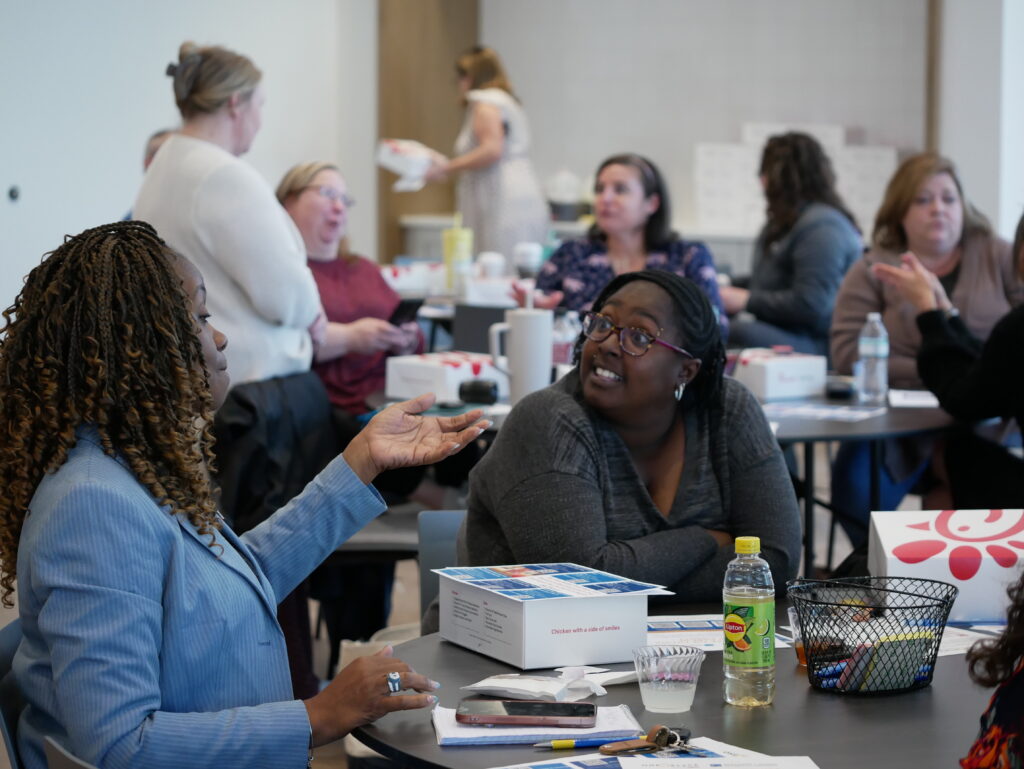
Local leaders are recognizing the problem as one in need of a systemic solution.
In some ways, they are pulling inspiration from the military model. At the final local task force meeting, members discussed cost sharing models that split the cost of child care among multiple entities, including employers, parents, and local or state governments.
“You can’t fund it without additional funding coming … from outside. It can’t just be parents,” Knox said.
Knox said her own family benefited from “probably the strongest share model that came to be, and that was after the passing of the Military Child Care Act of 1989.”
“When you think about sharing the cost, there are ways to do this that make the investment a better outcome for children (and) a better outcome for an employer,” Knox said.
Local leaders are also considering a substitute pool to help address staffing instability, a fund that would cover tuition for the children of child care teachers, and pre-built in-home child care models.

One Place staff are spreading awareness about the federal Employer-Provided Child Care Credit (45F), which was made permanent in 2025 and provides tax credits to businesses that help their employees with child care.
They are also advocating for flexibility from the state on how to spend their Smart Start funding in order to back local initiatives.
“I believe that we have to always look at, what is the money that we have, and how can we spend it differently?” Rochelle said.
At the state level, advocates are requesting additional subsidy funding from the legislature to increase the amount programs receive to serve eligible children. Low rates are contributing to staffing challenges and, in some cases, closures, advocates say.
In Onslow County, this would mean programs would receive between $150 and $275 in additional funding per child per month, according to estimates from NC Child.
“The bottom line is until we have both supply and demand side investment — and that does mean more public investment — we’re not going to get underneath the fundamental problems,” Perry said.

In April, One Place held its annual State of the Child breakfast in Jacksonville and presented its findings from months of discussions with task force members, child care providers, business leaders, military personnel, and educators. They told community members about challenges of access, quality, and affordability. They shared potential solutions. Then Rochelle, executive director of One Place, turned to the audience.
“What role will you play? What tables will you sit at for our community?” she asked.
Nelson told EdNC that child care is both infrastructure and a shared responsibility “in a caring community.”
Laurette Leagon, president of the Jacksonville Onslow Chamber of Commerce, agrees.
Regarding the need for more high-quality and affordable child care, Leagon said: “I don’t know what the answer is, but we’re going to keep trying until we find it.”
Editor’s note: Support for this article was provided by the Better Life Lab at New America as part of its Child Care Innovation Reporting Project. The lab awarded grants for “solutions-oriented stories focusing on how and why care issues matter to families and children, our communities, and a thriving economy with thriving families.”