
Senate education committee moves forward social media age verification, teacher licensure changes

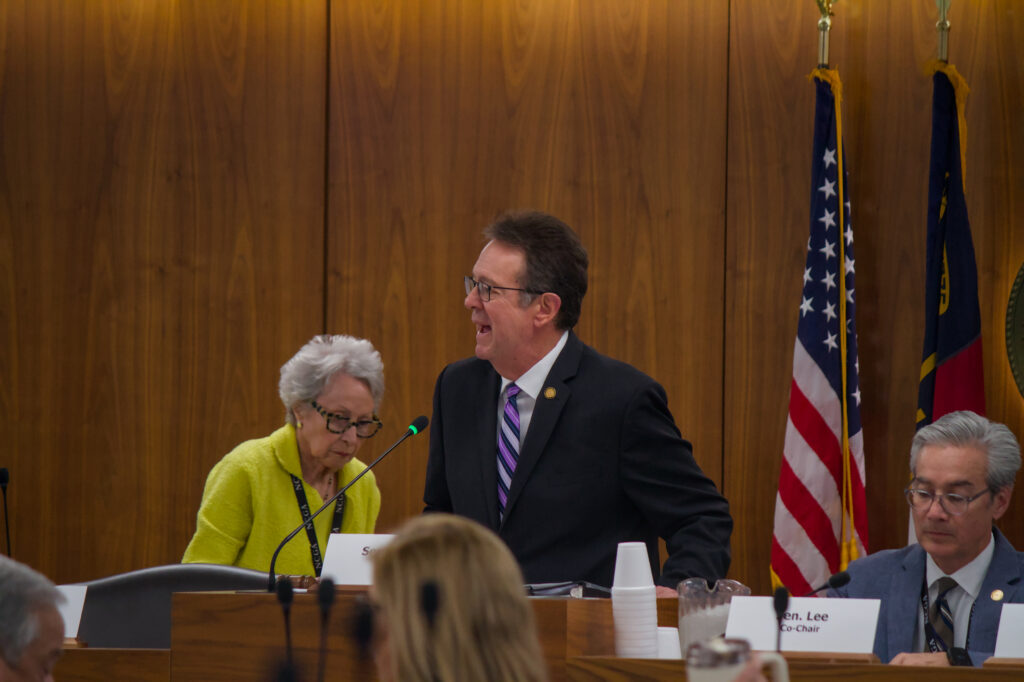
A bill to require age verification for social media platforms and a bill to remove some testing requirements for teacher licensure were both moved forward with bipartisan support in the Senate Education/Higher Education Committee on Wednesday.
The age verification bill, House Bill 301, passed the House in a 106-6 vote last year. It would require that social media platforms prohibit minors under 14 years old from holding accounts, require parental consent for youth ages 14 and 15, and mandate that platforms verify the age of users to ensure they are at least 16 years old.
HB 301 would impose a civil penalty of up to $50,000 per violation to platforms, and would allow up to $10,000 in damages to be collected on behalf of minor account holders.
 Sign up for the EdWeekly, a Friday roundup of the most important education news of the week.
Rep. Jeff Zenger, R-Forsyth, who sponsored the bill and introduced it to the Senate committee, said there is support across the board for social media restrictions — even from Meta, the parent company of the social media platforms Instagram and Facebook.
“I was really surprised,” Zenger said of Meta’s support. “We worked with them, and they were all in. They gave us great suggestions and helped us to really tweak (the bill) in terms of how it’s enforced.”
Meta encouraged a move toward enforcement at the app store level, rather than within specific major platforms, according to an attorney representing Meta that spoke during the public comment period. Zenger said that change to the bill is planned.
Reacting to the bill, Sen. Amy Galey, R-Alamance, referenced a California Superior Court decision that found Meta and Google liable for millions in damages after they harmed a young user with the addictive design of Facebook and the video streaming site YouTube.
“It is important to recognize that Meta has created this situation,” Galey said, before supporting the bill. “I think this is great that we’re going to work to protect our young people’s mental health.”
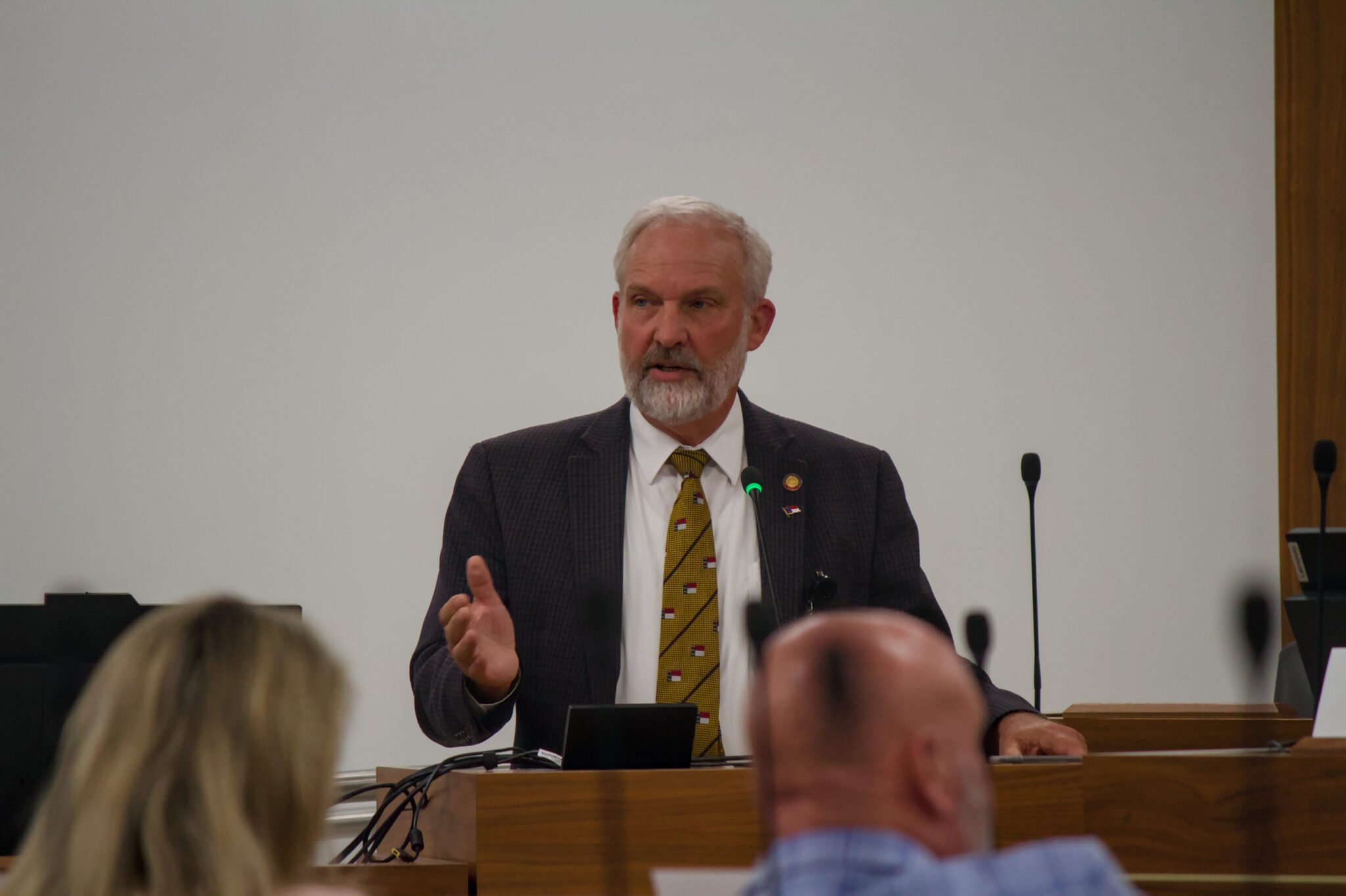
Both Republicans and Democrats on the committee expressed support for HB 301, and voiced the need to protect children from social media platforms.
“I just want to commend this effort to rein in what is extremely addictive technology, and to free our young people from dependence on social media, which is driving so much of what you said: isolation, depression, self harm,” said Sen. Sophia Chitlik, D-Durham. “Any effort to regulate this, I think, is a good one.”
Sen. Jay Chaudhuri, D-Wake, recalled his former job in the attorney general’s office, working to regulate MySpace to protect children from online predators.
“Today the threats are not predators — it feels like it’s the algorithms,” Chaudhuri said. “I hope this is an opportunity … not only for public education, but just to keep our democracy alive.”
Some concerns were expressed about specifics of the bill, such as the manner in which platforms will verify users’ ages and litigation affecting similar bills in other states. Laws restricting social media access in other states have been fought in the courts on First Amendment grounds.
Ultimately, HB 301 was moved forward, after the addition of an amendment that introduces artificial intelligence (AI) instruction standards into North Carolina’s computer science curriculum, starting in the 2028-29 school year.
Sen. Michael Lee, R-New Hanover, said “I think the policy is great, I think the appropriation will likely follow.”
The age verification bill comes after a state ban on cellphones in classrooms was passed last year. Some districts previously had cellphone use policies, but this school year is the first year that cellphone restrictions are being enforced statewide.

Teacher licensure modifications
Next, the committee turned to Senate Bill 840, which would modify teacher licensure exam requirements and allow the State Board of Education to convert a limited license to a continuing professional license if a teacher shows high performance for two years.
Specifically, the bill would remove the first year exam requirement for licensure, but keep the third year exam.
“The goal is simple: Do not block a potential teacher before they even start their training,” said Sen. Tom McInnis, R-Moore, the sponsor of the bill. “We should expect quality, but we should not create unnecessary front-end barriers.”
McGinnis said good principals, principal bonus incentives, and the education required to become a teacher all ensure the removal of the first year exam and the path from a limited license to a continuing license don’t sacrifice teacher quality.
Lee said he supports the bill, and that the Department of Public Instruction (DPI) supports the provisions of the bill as well.
“We have superintendents, we’ve got principals, and now Advanced Teaching Roles,” Lee said. “We’ve got lead teachers to really make sure and benchmark that the teachers are establishing high quality in the classroom.”
The bill cleared the committee after a voice vote with bipartisan support.
Solly’s Law supporters return to the legislature
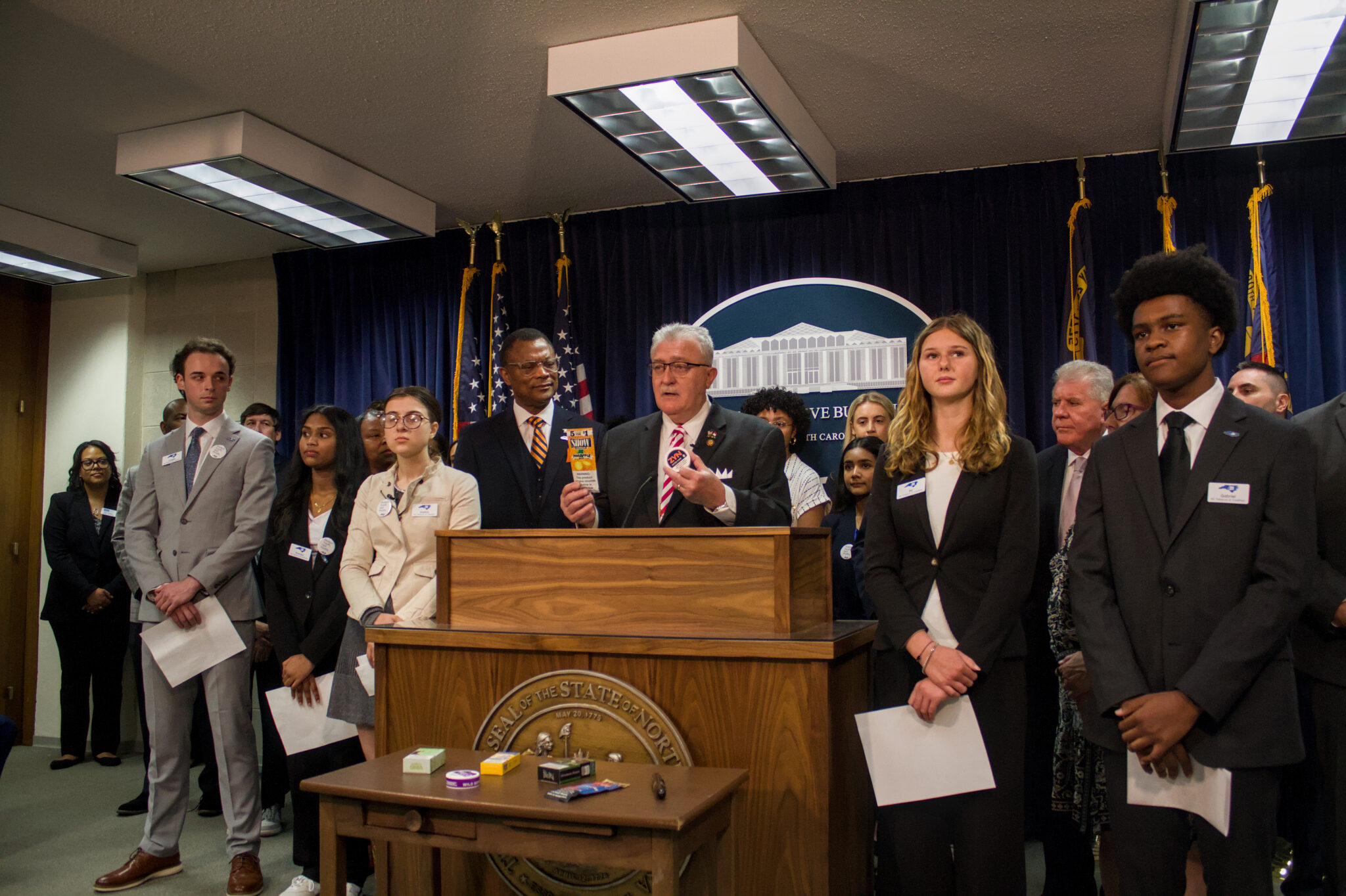
Advocates and lawmakers gathered again, after a push last year, to ask the legislature to pass House Bill 430, a bill to restrict youth vaping that has been stuck in the rules committee since March 2025.
The bill is titled “Solly’s Law” after Solomon Wynn, a high school student and football player who died of illnesses related to vaping. At a press conference, a student said Solomon would have graduated this year.
HB 430 would raise the age to buy vapes, cigarettes, cigars, nicotine pouches, and other nicotine products from 18 to 21. The federal legal age is already 21 — North Carolina is one of six states that hasn’t matched state law to federal law, according to the NC Tobacco 21 Coalition.
It would also institute a $400 annual permitting fee to finance enforcement through North Carolina Alcohol Law Enforcement.
“Young people want this change,” said Be Lanier, a student from New Hanover County. “Solly’s Law is about protecting youth across North Carolina from an industry that is moving faster than our policies. This isn’t just a local issue. It’s happening in every county, every school and every community.”
Eric Cunningham, the superintendent of Halifax County Schools, also spoke in support of the bill. He called the proliferation of nicotine and vaping products in schools a “crisis.”
“We are not seeing casual use. We are seeing addiction. Students become aggressive when we take them. Students fight. Students even run out of the building — students will do almost anything to get that vape pen back,” Cunningham said. “When a young person is willing to risk suspension, arrest, or physical harm for a device, that is addiction.”
Cunningham spoke directly to young people: “We are fighting for you, not against you. We want you healthy, focused, and free from an industry that profits from your harm.”
Intellectual and Developmental Disabilities Caucus day
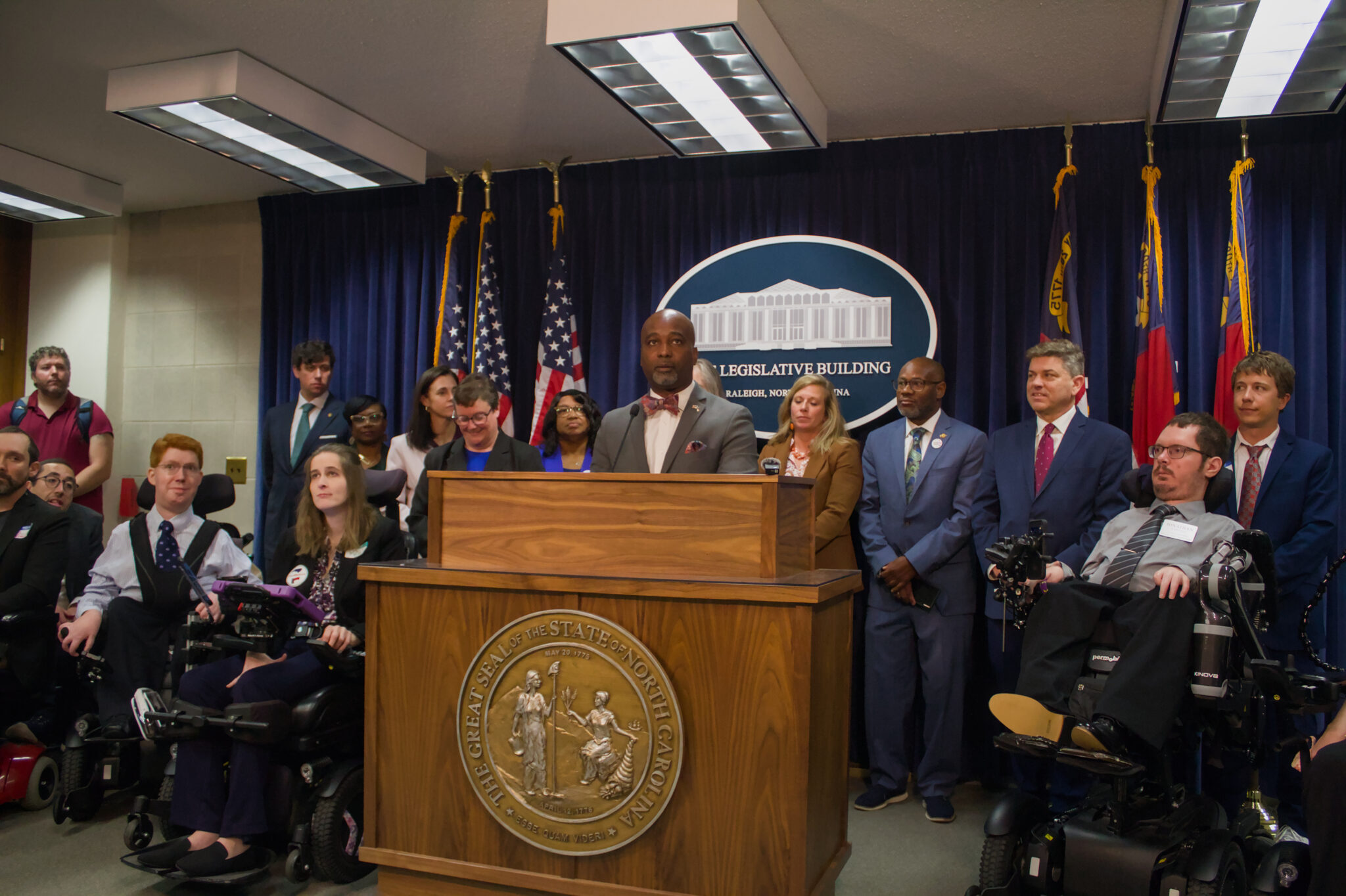
Wednesday was a day of advocacy for the the North Carolina Intellectual and Developmental Disabilities (I/DD) Caucus. Advocates and lawmakers gathered for a press conference after a day of meetings.
Advocates celebrated the passage of House Bill 696, the Medicaid rebase bill, but said there is more work to be done to support people with I/DD. HB 696 passed both chambers of the General Assembly and was signed into law by Gov. Josh Stein on Thursday.
“Medicaid does not just support my life. It makes my life possible,” said advocate Kay McMillan. “Without it, I do not just lose modest services. I lose my independence, and you would be sentencing me to a nursing home where I cannot contribute to my community or continue to reach my potential.”
Advocates called for passing the “IDD Omnibus” bill which would increase pay for direct care workers and fund NC Innovations Waiver slots, among other things, said Rep. Zack Hawkins, D-Durham, sponsor of the bill.
At the press conference, Rep. Sarah Crawford, D-Wake, called for the omnibus bill to be passed along with House Bill 1076, which Crawford filed this week.
HB 1076 would reduce funding to the Opportunity Scholarship program — North Carolina’s private school voucher program — and redirect that funding toward clearing up 6,635 slots on the NC Innovations Waiver waitlist. The Innovations Waiver is a Medicaid-funded program that provides essential home and community-based services.
That waitlist has nearly 21,000 people on it, according to Talley Wells, executive director of the North Carolina Council on Developmental Disabilities.
Finally, a group of Democratic lawmakers, joined by advocates, also introduced a bill this week that would protect the constitutional right for all children to attend public schools in state law.