8 counties convene for inaugural AttainmentNC cohort, discuss local workforce priorities

In August, myFutureNC announced a cohort of eight North Carolina counties that would participate in AttainmentNC, the organization’s county-based model to collaboratively solve education and workforce challenges. According to a press release, local leadership teams in each of the eight counties will work together for the next two years, supported by $200,000 from myFutureNC, bringing together groups from education, economic development, and industry to strengthen career pathways in their communities.
In June 2019, North Carolina established an ambitious attainment goal: By 2030, 2 million residents between the ages of 25 and 44 will have completed a high-quality credential or postsecondary degree. AttainmentNC is one part of myFutureNC’s work to achieve that goal.
The county teams each gathered for the first time in person last week. They also virtually met as an entire cohort throughout the day to hear from myFutureNC staff and other leaders in workforce and economic development, as well as interact with other county teams.
“AttainmentNC takes our statewide attainment goal, and it asks a very practical question,” Cecelia Holden, president and CEO of myFutureNC, told the teams. “What does it take to turn a statewide goal into locally led, measurable action? How can we solve for one and extend to many? How do we drive system-level change that becomes the business model for generations and administrations to come?”
Each county participating in AttainmentNC has the broad goal of creating 100 career and employer-connected learning opportunities in their areas by June 2028. During their meeting last week, counties discussed their goal for the next two years — including their workforce challenges, target industries, priority populations, and more.
“The goal is not just to create another program,” said Holden. “This is a business model. It’s to look at the entire pathway from education to employment.”
The following counties were selected to be a part of the initial AttainmentNC cohort:
- Bertie County
- Burke County
- Craven County
- Forsyth County
- Haywood County
- Iredell County
- Sampson County
- Wilson County
 Sign up for Awake58, our newsletter on all things community college.
North Carolina’s workforce
Currently, “North Carolina’s workforce demand is outpacing its talent pipeline,” according to research from myFutureNC. While the state has made progress towards its attainment goal, with 1.72 million residents ages 25 to 44 held a qualifying degree or credential in 2024, according to Holden, there is still room to go.
Degree and credential attainment matters to solving workforce needs identified by North Carolina employers. Roughly two-thirds of jobs in the state require some form of education beyond high school, while only 59% of adult residents ages 25 to 44 hold a credential.
The work of AttainmentNC focuses specifically on career and employer-connected learning (CCL) or “strategies that help people better connect education to meaningful careers while helping employers build stronger local talent pipelines,” according to the press release.
Experiences that qualify as CCL include meaningful shadowing, work-based learning, pre-apprenticeships, apprenticeships, and more. These opportunities allow people to understand how education interacts with industry, how attainment might open a door that had previously been shut, and to become connected to and experienced in a specific industry.
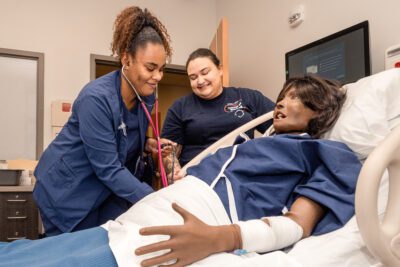
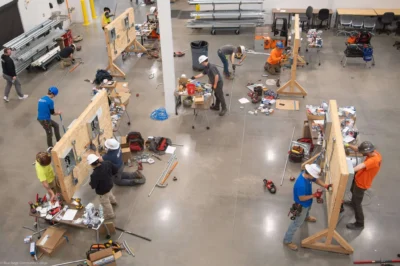
Nearly all of the eight counties chose healthcare as the industry of interest for their CCL goal, and many counties also picked the skilled trades. These fields have been identified as statewide sectors that are experiencing talent shortages and also lead to family-sustaining wages.
Read more
Grounding work in their local context
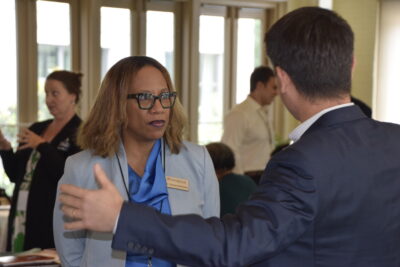
Situating conversations in the unique contexts of their counties, the AttainmentNC teams discussed how local attitudes, capabilities, and needs should shape their path forward in defining and later completing their CCL goal. John Fraley, chair of myFutureNC’s Board of Directors, told the teams that their expertise comes from being local.
“You know your communities, you know your students and families, you know your employers, you know where opportunities exist, and you know where people are still running into barriers,” said Fraley. “That local knowledge is something no organization in Raleigh — and certainly no single statewide organization — can replicate.”
The myFutureNC county dashboard allows each team to view their 2026 attainment profile, which includes information on the county’s attainment trends, population demographics, industry needs, employer statistics, degree and credential progress, identified opportunities for growth, and more. This data, as well as the lived experiences of those gathered together, guided the teams in their in-person county discussions, defining what success would look like for their community.
“While we’ve got one statewide goal, we need to locally design strategies to reach it,” Holden said. “So AttainmentNC provides this common framework, resources, data, and support. But the work itself belongs to each of you in these eight rooms.”
You can use the dashboard to explore the attainment profile for any county in the state here.
A collaborative cohort
After the counties had the opportunity to discuss and reflect amongst their teams, they were paired with another county with similar workforce or industry focuses. They shared their developing goals and received feedback and support from the other county.
This hour-long session allowed the county teams to consider perspectives outside of their region — bringing in the experiences of other cohort members and learning how other parts of the state have addressed or thought about workforce and attainment challenges.
At the end of the day, each county spoke to the whole cohort for three minutes, describing their goals and the challenges ahead. Each team was encouraged to listen to what other counties had planned, both to hear from counties doing work that might benefit their own or who were embarking on projects they could lend expertise to.
The teams were told by Adam Carter, an AttainmentNC adviser, to “take note of opportunities for collaboration.”
“We’ll have almost two years together after this initial convening, and that’s the benefit of having a statewide network: that we have an amazing group of people across the state, and that y’all are actually going to be able to support one another through this time together, building shared expertise,” said Carter. “You are your own best resources.”