
The Food Ark brings hope
Last week, groups from across the Triangle region pitched their idea for the Jamie Kirk Hahn Foundation Fresh Food Challenge. The Foundation, named after my late wife, focuses on the intersection of food and hunger, education, and community economic development.
The Fresh Food Challenge was born out of her desire to see how for-profit businesses and the free market might pair up with nonprofit organizations to promote fresh food with better nutrition for our most vulnerable. The pitch day featured judges from a variety of food-related sectors while attendees included leaders within the faith community, nonprofit arena, and other community members.
The challenge featured four finalists, all inspiring, but one group stood out given our work at EdNC.
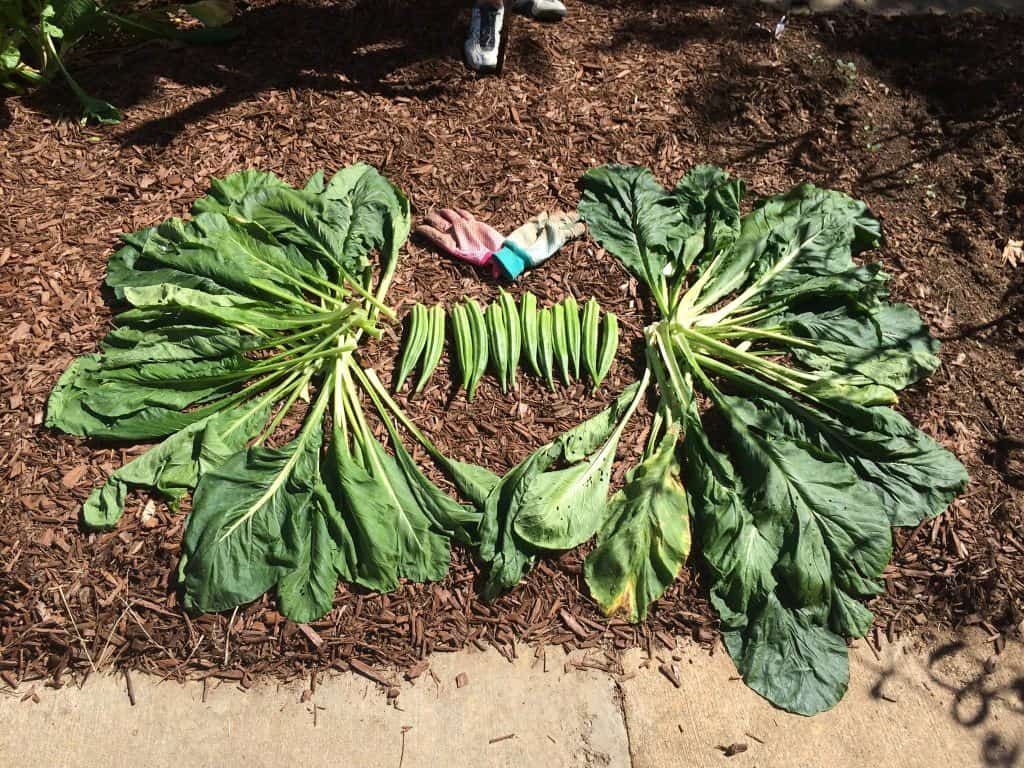
The Food Ark is a student-led-and-run 501(c)3 nonprofit that grew out of Enloe and Broughton High Schools. The students told us that they witnessed “first hand the food insecurity of a third of their peers,” and they felt a desire to do more to increase student achievement and opportunity. The Food Ark has launched a food pantry, for example, in an effort to address immediate needs. They also have launched school gardens at both Enloe and Broughton.
Celia Zhou of The Food Ark spoke to the unifying nature of school gardens., including the number of student clubs and staff who have come together to build out the gardens at each location. Zhou said, “Most of our produce is given to the staff at our school, to create a ‘give back to the community that gave to you’ mantra. We have discovered that school gardens are a uniting force in the name of education and service.”
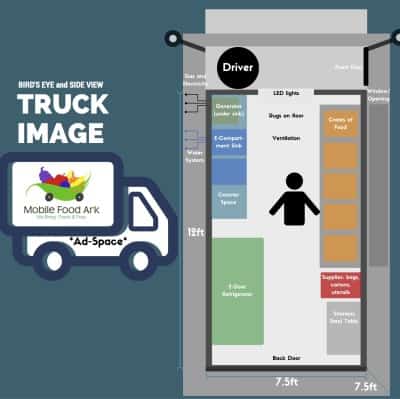
Zhou, and her fellow students, developed a concept called a Mobile Food Ark — a food truck that will provide fresh fruits and vegetables to those in need around the community. The idea was to run the food truck throughout the week in an effort to take food to various shelters, campsites, and soup kitchens to provide community members with healthy food.
Their ingenuity impressed the judges deeply. But more than the ingenuity behind the idea, it was their optimism and hope that gripped us that morning. It is easy, perhaps, to become cynical in an age of coarsening political dialogue and an economic recovery that feels tenuous to many. My own life experiences have taught me that it is harder to find optimism, even as it is hope that you must rely on in trying times.
Zhou told us that morning the plan is for the Ark to “keep growing. We plan to have two additional branches added to our organization — one at the North Carolina School of Science and Mathematics, and another at Panther Creek High School.”
Beyond the growth in sheer number of chapters, or the growth in ambition as the Mobile Food Ark indicates, we were also deeply impressed that they are seeking to build leaders for the future. They addressed their dynamic governance model repeatedly, which is a model that allows for one central leader, but a series of leaders underneath who guide a project, and then advisory leaders who work with the project lead to move the work forward. Their intent is to continually seed leaders for the future so that the Food Ark will continue to grow.
Hunger, and our entire food system, can seem to provide daunting challenges, particularly for those who have worked for decades to alleviate hunger for our most vulnerable.
Promoting nutrition while combating obesity is another seemingly daunting challenge as the obesity rate seems to grow even in the face of public health campaigns and an emphasis on improving nutrition from a young age.
Yet for a morning, if only for a few hours, we saw optimism in the face of these students focused intently on intractable issues. The optimism came from all four groups. They were not daunted, they had hope, and they believed.
I would challenge anyone who believes that Generation Z is lacking in ambition, faith, or civic engagement to visit the students leading The Food Ark. I guarantee you that you will walk away with not only a renewed hope in our future leaders, but a belief that our seemingly intractable problems might be solved if only we try.