
Pitt Community College is flying into the future

A new president has arrived as numerous programs expand at Pitt, including their unmanned aircraft program.
Dr. Lawrence Rouse became president of Pitt Community College on August 1st. He has faced a busy schedule in the first months of his presidency, but he agreed to spend a half hour with us before heading to a local rotary club meeting. Rouse is in the early stages of moving around the community as local leaders reach out with requests to meet the new president after Dr. Dennis Massey led Pitt for fifteen years.

Rouse began his postsecondary career with an interest in having a direct impact on people’s lives. He originally planned to be a social worker.
He started his career in his native South Carolina. He earned his degree in social work and returned home with aspirations to launch his social work career, but frequent interactions with students who had attended technical college (the terminology used in South Carolina for two-year colleges) inspired him to take a different path.
The students he met, Dr. Rouse told us, had returned home to enter the workforce empowered and energized, and he decided he wanted to be part of what he dubbed “vital work.”
After changing his career to the postsecondary space, Rouse left South Carolina and landed at Johnston Community College where he served in a variety of leadership roles. His time at Johnston, Rouse told us, prepared him to become president of James Sprunt Community College, which was his role immediately prior to taking over at Pitt Community College.
Rouse has entered the institution during a period of growth. It is a bustling campus as Pitt serves more students per square foot than any other institution in the North Carolina Community College system.
Rouse explained some of the work ahead for Pitt in the video below:
Dr. Thomas Gould, Vice President of Academic Affairs for Pitt, described part of the secret for their growth. They have focused on meeting industry needs, which in turn has helped them meet the needs of their students.
One issue the members of the Pitt leadership team brought up during the visit was the need to reach prospective students and their families around the opportunities at the institution. Numerous Pitt staff members told us on our visit how important it is for local high school counselors to make the case to prospective students that “life-sustaining wages” exist with a degree or certification from the college.
Pete Gregory, an Automotive Systems Technology instructor, told us he has 20-plus automotive shops calling him for new hires each day. Dr. Gould added in response, “We have 200 welding students today. We could have jobs for 600!”
Another emphasis for Pitt is embracing new technology and concepts ranging from tiny homes to drones.
.@PittCC will auction this 100% student built tiny house. 228 square feet, 20 windows, meets NCDOT requirements to drive it right away. In just 3 semesters of learning. pic.twitter.com/d3t9CpydSr
— EdNC Data (@EdNCdata) August 27, 2018
The tiny home program is part of their “live build” approach to construction, which provides students the opportunity to learn in a hands-on fashion. The construction program not only includes tiny homes, but also features drones—also called unmanned aircraft. As it turns out, drones aren’t just for hobbyists flying them in their neighborhood or local park before crashing them into a tree. They are, in fact, being used for a wide variety of useful purposes.
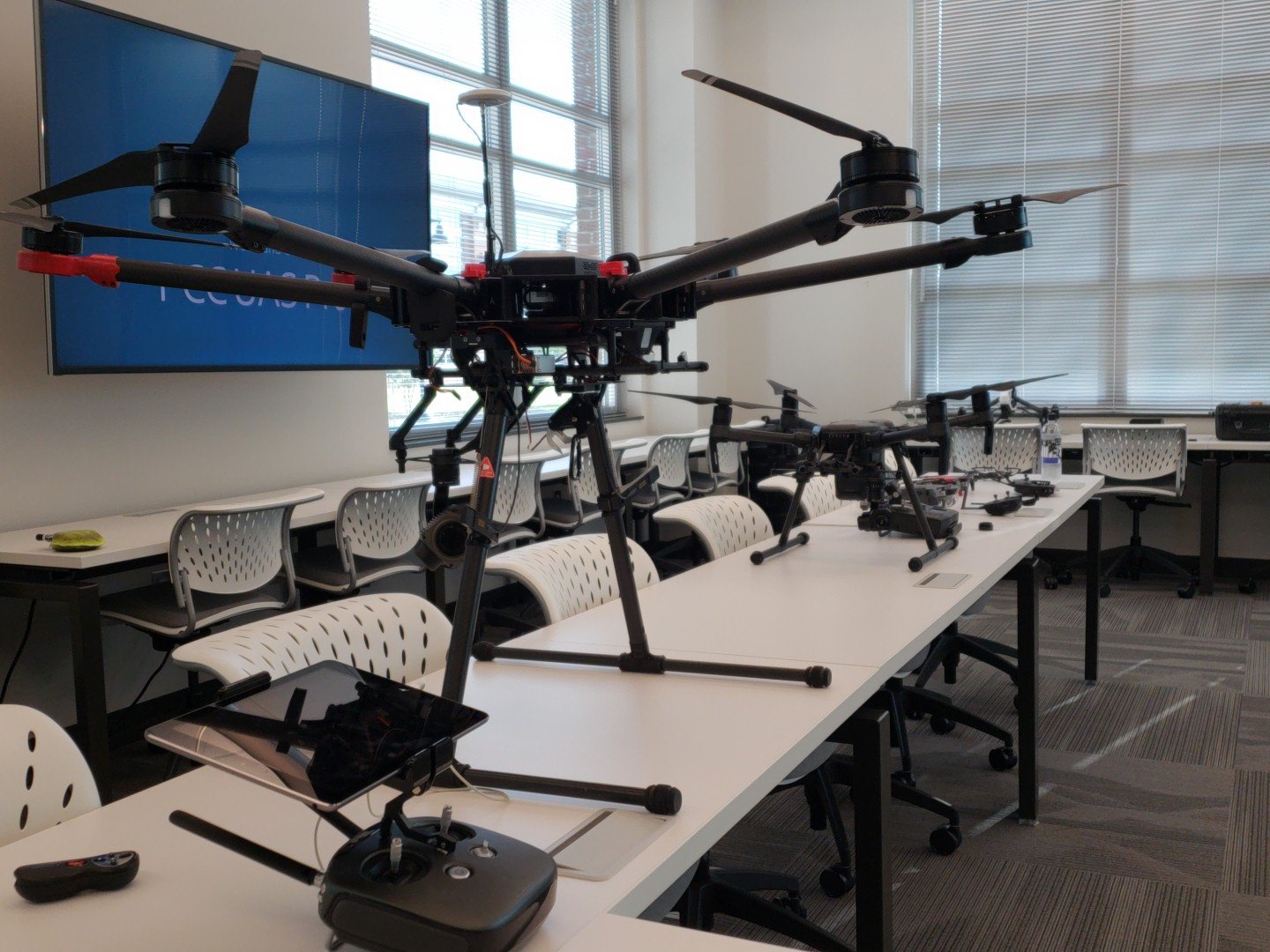
Bill Lewis, the program coordinator, was only too happy to lead us through the growth of their Unmanned Aircraft Systems program that began in 2015 with one drone and now includes 18 aircraft (yes, they are in fact aircraft and are regulated by the FAA).
One point Lewis hammered home is the program actually cuts across numerous areas of study in order to prepare students for a variety of industries ranging from law enforcement to search and rescue to agriculture.
Lewis noted, “This isn’t about the drone. It’s about the data they provide.”
The data drones collect can range from body heat in a field revealing a runaway or criminal to heating and air loss in a newly constructed home to structural issues on bridges or cell towers.
Pitt has one of the largest fleets of unmanned aircraft in the state. Lewis believes they are in the top three in the state with Montgomery Community College being the statewide leader.
Dr. Gould noted later that a strength of the community colleges is their flexibility in terms of launching new programs and curriculum relatively quickly as long as the programs are tied to jobs. This flexibility doesn’t always come tied to funding, however, which can hamper efforts to pay staff, purchase equipment, and promote the offering.
Dr. Rouse, Gould, and others on the leadership team reiterated that one of their primary goals will be working to maximize the opportunities ahead of them through a combination of increased funding and efficiency in the years ahead, which will help them meet their ambitions for the institution.