
Perspective | What North Carolina’s new attainment map tells us


At its annual attainment event in February, myFutureNC released new data on North Carolina’s progress toward its educational attainment goal of 2 million by 2030. According to the latest figures, nearly 1.7 million (1,664,892) North Carolinians aged 25-44 now hold a postsecondary degree or credential. Since myFutureNC was established in 2019, the state has added 214,644 credentialed residents, a significant leap forward in its educational journey.
While North Carolina continues to attract talent and experience economic growth, it is also “educating its own.” Over the past four years, the state’s 25- to 44-year-old population grew by 5%, yet the number of credentialed residents rose by 15%, driving the attainment rate from 53.4% to 58.4% — five-point increase.
A closer look at county progress
Progress isn’t happening at the same pace everywhere. The latest county-level attainment rate changes range from an 8.9-point decline to a remarkable 18.1-point increase.
Seventy-nine of North Carolina’s 100 counties have seen an increase in attainment rates between 2019 and 2023.
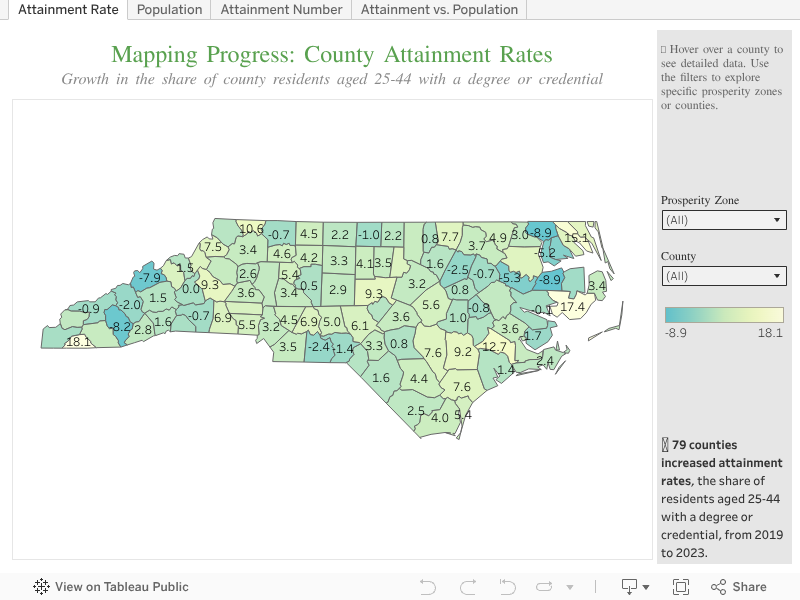
Population changes play a crucial role in shaping these trends. Migration patterns have influenced attainment rates, particularly the movement of credentialed individuals from rural to urban areas in search of higher-paying job opportunities. For rural counties, the challenge isn’t just about educating more residents — it’s about keeping them.
When communities invest in education, workforce development, and local opportunities, they create a growth cycle. Employers take notice. Jobs follow. More residents stay. Burke County is a great example of this dynamic in action, where targeted investments in education and workforce development have helped fuel attainment progress.
The importance of numbers
While changes in attainment rates provide a helpful snapshot, the real impact lies in the actual number of individuals earning degrees and credentials — because behind every number is a student, a family, and a future shaped by opportunity. Each credential earned represents a person gaining the skills needed for a stable career, a business finding a qualified worker, and a community growing stronger.
The goal of 2 million by 2030 isn’t just about statistics; it’s about people and keeping North Carolina competitive for years to come. As myFutureNC President and CEO Cecilia Holden puts it, “Education is economic development, quality health, public safety, and prosperity!”
Yet challenges remain. As highlighted in the third tab of the map below, 27 counties have not increased the number of 25-to 44-year-olds with postsecondary credentials compared to 2019. This underscores some counties’ difficulty retaining or growing their educated workforce.
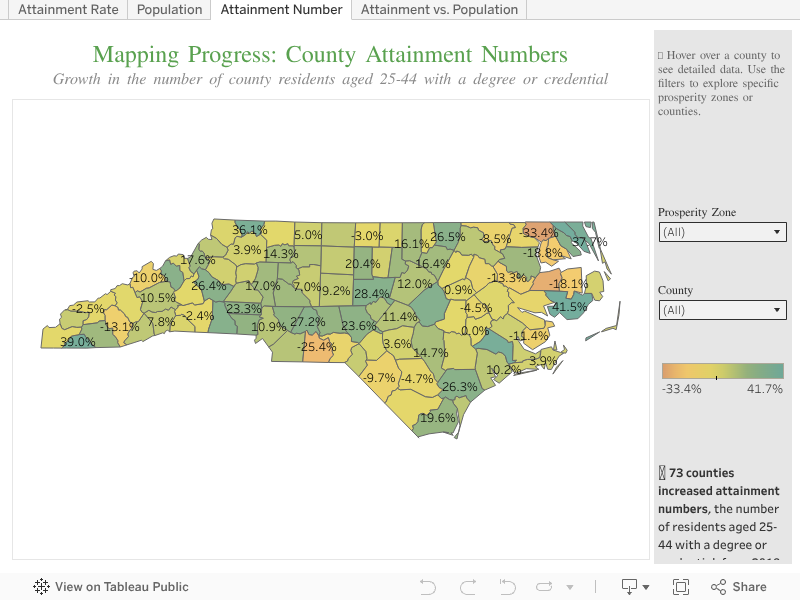
Looking ahead
The map provides a powerful snapshot of North Carolina’s progress. While the overall trend is positive, county-level disparities highlight the need for targeted policies that support postsecondary education and workforce alignment.
The data tell a compelling story — momentum, opportunity, and the ongoing challenge of ensuring educational attainment benefits all North Carolinians. As we work toward 2 million credentialed residents, every community has a part to play. What steps can you take today to advance educational attainment in your community?
Every credential earned represents a brighter future — not just for individuals but also for families, businesses, and entire communities. The real question isn’t whether we can reach the goal; it’s whether we can ensure that no one is left behind.