
Perspective | What early colleges can teach us about expanding dual enrollment
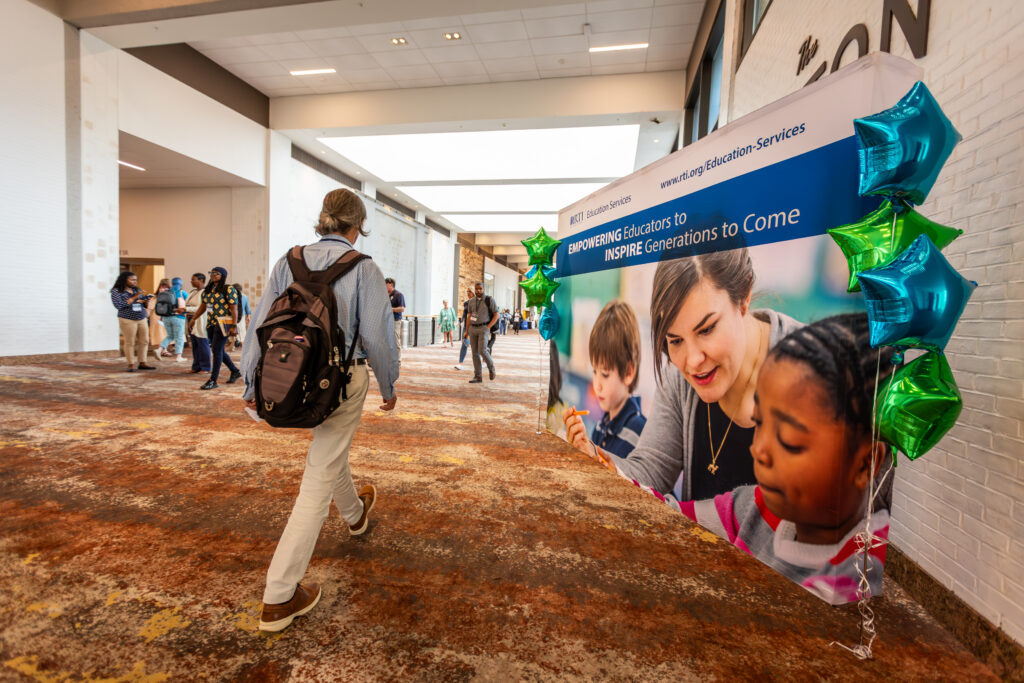
As dual enrollment expands nationwide, what can we learn from North Carolina’s two decades of early college leadership?
That question helped draw nearly 300 educators, researchers, and education leaders from 17 states to Winston-Salem in June for RTI International’s ninth Annual 2026 Early College Summit. At a time when many states are expanding early college and dual enrollment programs, the summit provided participants with an opportunity to share insights, exchange effective practices, and identify lessons learned that can strengthen outcomes for students.
 Sign up for the EdDaily to start each weekday with the top education news.
About the summit
The summit’s national draw reflects interest in learning from North Carolina’s more than two decades of leadership in early college implementation. Over three days, attendees participated in learning sessions and study visits focused on instructional practice, student support, and institutional partnerships.
The summit also featured state-level leaders who have championed innovative approaches in education in North Carolina. Lt. Gov. Rachel Hunt and Dr. Jeff Cox, outgoing president of the North Carolina Community College System, underscored the importance of early colleges and dual enrollment as central strategies for expanding opportunity and strengthening the state’s workforce. Their remarks reinforced a shared message that intentional investment in expanding access to post-secondary education is a key factor in economic and community growth.
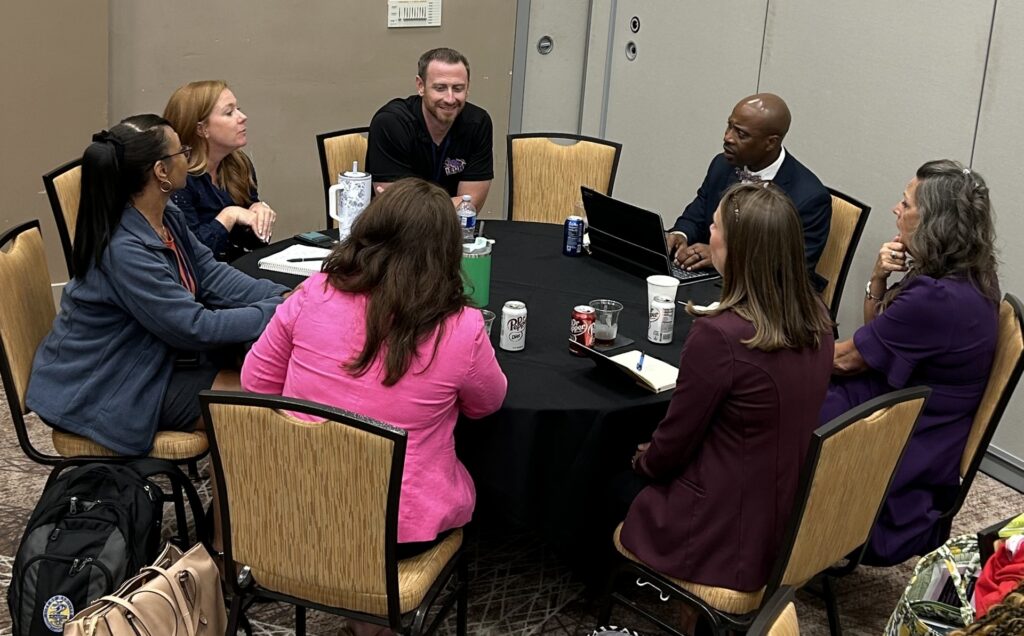
Participants highlighted the value of learning from peers and research across a variety of early college contexts. Dr. Julie Edmunds, Director of the Early College Research Center at UNC Greensboro, described the summit’s value as providing “an opportunity for educators from different states to interact around the common goal of implementing high-quality early college models. Sharing best practices and learning from recent research is extremely valuable and so important for professional growth.”
This sentiment was echoed by Meghan Giovannoni, vice president of student success and partnerships at Quincy College.
RTI’s Early College Summit is an invaluable opportunity to connect with other Early College and Dual Enrollment programs around the country. It provides student-centered professionals with a space to share their experiences and learn from others, while also engaging in meaningful conversations and activities that last well beyond the summit.
— Meghan Giovannoni, vice president of student success and partnerships at Quincy College
Perspectives like these underscore why RTI hosts the annual summit as a way to help practitioners improve programs by bridging research and practice.

Why early colleges matter in the dual enrollment landscape
Across the country, dual enrollment allows high school students to earn college credit while still in high school. The approach has grown rapidly over the past decade, reaching 2.8 million nationally. Research consistently links participation to higher rates of college enrollment and completion.
Yet, access remains uneven, particularly for students historically underrepresented in higher education raising important questions about how to ensure dual enrollment is serving all students. As states seek to expand access, rapid expansion alone does not guarantee impact.
This is where early colleges offer critical lessons. While dual enrollment is a national strategy, states have adopted different approaches to implementation. North Carolina’s approach is defined by Career and College Promise (CCP) which provides multiple pathways for students to engage in college-level coursework at little or no cost. Within CCP, students can participate in traditional dual enrollment programs by taking individual college courses, or they can enroll in an early college, a more comprehensive model that integrates dual enrollment into the design of the entire school experience.
North Carolina has become a national leader in early college implementation through the Cooperative Innovative High Schools (CIHS) component of CCP. As part of CIHS policy, early colleges have been created across the state to expand access to postsecondary opportunities, particularly for first-generation college-going students and those who may face barriers to college access.
Unlike many dual enrollment models that focus on individual college courses, early colleges are designed as whole-school models with intentional pathways into postsecondary education. Early colleges intentionally integrate college coursework with structured academic supports, advising, and a strong college-going culture. This design helps address not just academic barriers, but also the financial, logistical, and social factors that can limit students’ access to and success in postsecondary education. The results of this approach have been well documented.
Two decades of research from Early College Research Center, RTI International, RAND and others has demonstrated the impact of this approach on student outcomes and return on investment.
Studies show that early colleges increase postsecondary credential attainment and accelerate progress toward a degree, with particularly strong impacts for students who are economically disadvantaged, first-generation college students, and students from groups historically underrepresented in higher education. These findings have helped establish early colleges as a proven strategy for increasing college access and attainment.
What comes next
As dual enrollment becomes more common, the risk is that benefits to students will expand unevenly. Without intentional design, the very programs created to open doors can unintentionally reinforce existing gaps. Hunt captured the promise of the early college model in her opening comments at the summit:
Early Colleges help students earn college credit, save money, build confidence, and get a head start on whatever comes next. Whether that’s a four year degree, a credential, an apprenticeship, or a career. Most importantly, they help students understand that college and career success is not reserved for someone else. Everything is within reach.
— North Carolina Lt. Governor Rachel Hunt
Early colleges demonstrate that scale, access, and impact do not have to be in tension. Achieving all three, however, requires sustained collaboration, strong partnerships, and intentional student support.
As states continue expanding dual enrollment opportunities, North Carolina’s early college experience offers a powerful reminder that access alone is not enough. The strongest outcomes occur when access to college coursework is paired with clear pathways, comprehensive support, and meaningful partnerships between schools and colleges.