
Perspective | We need fuller pictures of teachers’ reasons for leaving the profession


All too often, early to mid-career teachers leave the classroom without much fanfare or ceremony.
In stark contrast to those who retire after 30 years, many leave the profession through only a resignation email and the checking of a box. This leaves a gap: a wealth of information that could be used to inform, inspire, and transform the experiences of current and future teachers.
Looking at existing research on teacher attrition, there is a clear need for more informative data collection methods at the district and state level. Beyond the numbers that influence hiring, class sizes, and budgeting, the field of education could benefit from a humanizing approach that provides those in our industry the means to analyze and develop new strategies for support and retention.
 Sign up for the EdDaily to start each weekday with the top education news.
In a 2024 EdNC article, CEO Mebane Rash wrote that “a more nuanced analysis continues to be needed. It is important to understand statewide trends and to address the drivers of those trends, but it is just as important to understand whether teacher supply is healthy, adequate, or stressed district to district.”
Local districts and states need a formal and uniform repository of teacher exit stories to be collected and analyzed alongside teacher attrition data. Local districts and state agencies can house these data, which should be available for analysis to inform policy and practice. Universities could also use these stories to guide educator preparation programs as they create and reform their curricula to better prepare and support beginning teachers.
We have much to learn from the stories of those who have left the classroom. These narratives could positively impact how we train prospective teachers, mentor new hires, and support those in the latter years of their careers. Educators of color, like myself, already few in number and now facing threats from anti-DEI policies, can provide critical information from their experiences.
When I left the K-12 classroom to pursue my doctorate at NC State University, I left behind a few items for the next educator who would take my place. They shouldn’t have to start from scratch, I thought, given my 14-year head start at that particular school. I had watched my mentor try to do the same a couple of years prior, only to realize her 30-year collection of lesson plans, units, decorations, and student exemplars was just too much to leave behind.
Educators are refined collectors in that way, knowing that some experience, methodology, or core memory was attached to their teaching journey. There was little fanfare for me when I made my exit, and I was OK with that. However, my daily tasks, wisdom, and methods that I had cultivated over my tenure had nowhere to go. I tried condensing my role and responsibilities into a couple of pages for my incoming successor, just as my predecessor had done for me, but all that my district required was a resignation email and a checked box indicating that I would not be returning.
Related reads

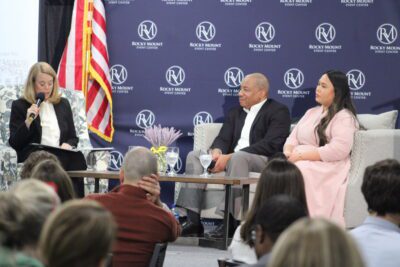

Former teachers’ grievances and triumphs are scattered across blog sites, social media, and occasionally reported on by national media. What some leaders may see as a negative could be the answer for our current and potential educators. These stories are not about blaming our educational system — but understanding and improving it.
While reading these stories, I was encouraged and yet saddened, because what knowledge, what unique wisdom, was taken with them or discarded? I also was struck by the commonalities these teachers’ stories had with mine, even though we were from vastly different districts and states.
Teaching is a deeply human profession. Analyzing why a teacher stays or leaves based on numbers alone is ineffective. We all understand the importance of teachers in our lives and our communities. Any piece of wisdom that could help district leaders make strategic changes — any story that could help the overly enthusiastic student teacher who is running headfirst into the profession — matters. A wealth of knowledge is there, but is anyone in power collecting, analyzing, listening?
Researchers have found that much of attrition data, whether viewed as turnover or mobility, whether focused on novice teachers or those later in their careers, and whether collected by districts or states, is conflicting and lacks uniformity, making policy recommendations difficult. If we had teacher narratives and were actively listening them, it would make a necessary difference.
I recommend a collective repository for districts and states, with uniform guidelines to capture these final insights, victories, and failures — not only to honor them — but to improve the profession they leave behind.