
Perspective | The path doesn’t end at the last bell: Why we are partnering
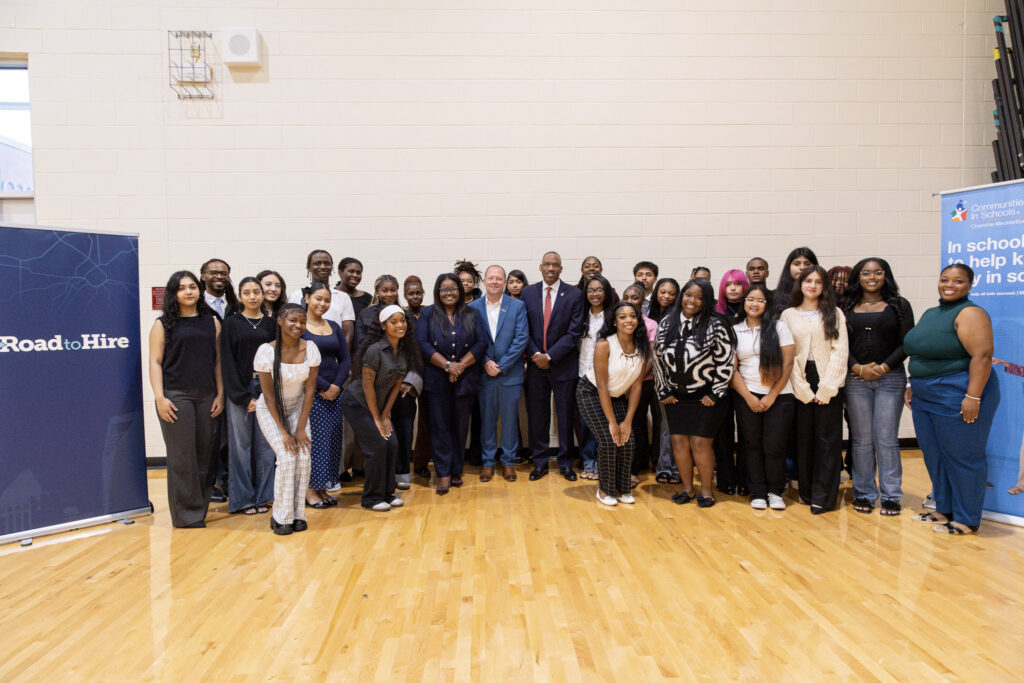
We did not sit down on that panel expecting to create a partnership.
Bank of America Private Bank had invited both of us to participate in a 2024 conversation about leadership, community, and opportunity in Charlotte. We came representing different organizations, with different histories and distinct responsibilities to the young people we serve. Yet as the conversation unfolded, we kept hearing the alignment, particularly in our belief that opportunity cannot begin at the moment someone needs a job. By then, too much of the journey has already happened.
Opportunity is built over time through relationships, exposure, preparation and support — often years before a young person submits a first job application.
Our conversation continued after the panel as we learned more about each other’s work and where our organizations stood in the lives of the young people we serve. What began as a shared perspective between two leaders became a larger question: Could the alignment we heard in that first conversation translate into something meaningful for our organizations and, more importantly, for students?
As our teams joined the conversation, we saw that Communities In Schools (CIS) and Road to Hire had different but complementary strengths. Neither organization would need to stretch beyond its core work to make a stronger connection for students.
This month, those conversations culminated in an official partnership through a memorandum of understanding. The document formalizes our commitment, but it is not where the relationship began. It grew from taking the time to understand each other’s work, building trust and considering whether working together could create something more valuable for young people than either organization could create alone.
Through this partnership, our teams will work to connect the evidence-based integrated students supports model that CIS employs nationwide with the college and career opportunities that Road to Hire will offer them as they move forward. That includes helping students, who have been supported by CIS from kindergarten to 12th grade, learn about and access Road to Hire’s programming. In this way, we are coordinating support around important transitions and making it easier for young people to navigate the opportunities already available to them.
 Sign up for the EdWeekly, a Friday roundup of the most important education news of the week.
Partnerships can sound straightforward when described in an announcement. In practice, organizations have distinct missions, models, and responsibilities. Doing good work together requires clarity about what each can contribute and attention to what students experience when they move from one source of support to another.
For us, one point became increasingly clear: Communities In Schools and Road to Hire do different work, but the young people we serve are the same. Our combined experiences have shown us that there are too many capable students whose life circumstances prevent them from taking full advantage of college scholarships, internships, or career opportunities.
Oftentimes these students simply need a caring adult in their life to help them remove barriers and navigate the challenges that occur outside of the classroom. Without these supports, these future scientists, hedge fund managers, and politicians would likely succumb to food insecurity, chronic absenteeism, and other challenges that are unique to children living in low-income households.
Both of our organizations’ missions align in the belief that graduating from high school should open the door to what comes next, not mark the end of a community’s commitment.
Read more
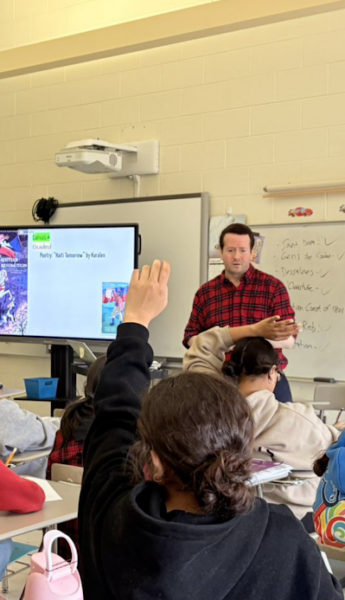
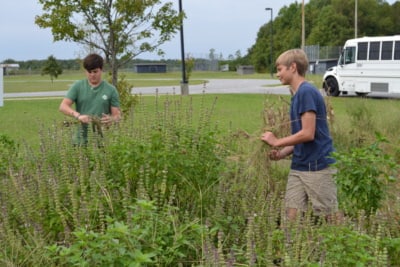
Communities In Schools is present during the years when staying connected to school is essential. Its student support specialists surround students with trusted relationships and individualized supports, both at home and in
school. They help students unlock their potential, so that they can succeed in school and in life. A landmark study by researchers affiliated with Opportunity Insights and Harvard’s EdRedesign Lab provides compelling evidence that this work has an impact well beyond graduation.
Examining CIS implementation in middle schools, researchers found that three years of exposure to CIS increased high school graduation rates by 5.2 percentage points and estimated a 4.3% increase in annual earnings at age 27 for students identified as high-risk, equivalent to approximately $75,000 in additional lifetime earnings.
The study also found that CIS’s schoolwide presence can benefit students beyond those receiving individualized support, with the greatest gains concentrated among students facing the most significant barriers.
Nationally, CIS serves over 2 million students — across 28 states and Washington D.C. — in 3,590 school sites. Here in Charlotte, that work is reaching thousands of students. In school year 2025/2026 CIS-Charlotte provided individual, case-managed support to over 3,335 students across 41 Charlotte-Mecklenburg Schools, while another 19,000 students received broader school-wide services. Ninety-eight percent of students were promoted to the next grade and 100% of CIS seniors graduated.
Behind those numbers are trusted adults embedded in schools who notice when a student stops showing up, ask what is happening, and work with students and families to address the academic, social, emotional or practical barriers standing in the way. Their work helps students remain connected to school, graduate, and begin imagining what comes next.
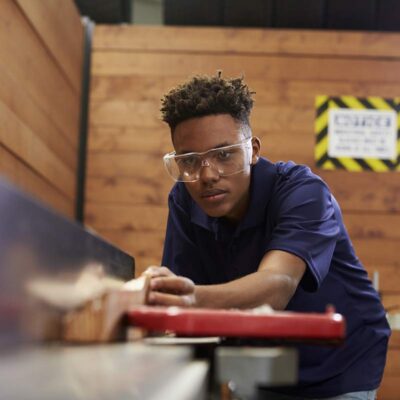
Road to Hire’s work also begins in high school and continues through college and into the workforce. Its six-year commitment starts with intensive college and career preparation. For students who continue into its college program, Road to Hire funds up to four years of college education at preferred partner colleges and universities in select majors.
Each student is paired with a dedicated one-on-one coach and receives ongoing mentorship, professional development, and individualized support. That commitment continues through graduation and workforce placement, helping students turn their education and experiences into careers that can create lasting economic mobility.
Explore more on these organizations
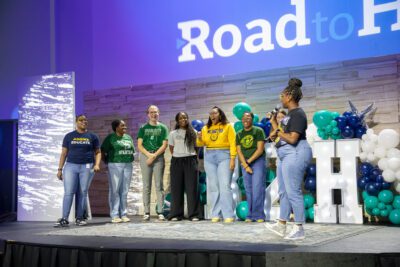
Today, Road to Hire supports more than 1,700 students across its high school and college programs and has built a network of more than 1,000 alumni. The average starting salary for the Road to Hire Class of 2026 was approximately $73,000. Those outcomes reflect an investment made over years, before any outcome is guaranteed.
A six-year commitment also requires us to think about the future workforce students will enter. A student beginning high school programming today may graduate from college into an economy that looks considerably different from the one we know now. We cannot make a long-term promise to young people while preparing them only for the labor market of today.
During one of our early conversations, we both reflected on how we learned to navigate the workplace. Much of what we know about communicating with colleagues, building professional relationships and recovering from mistakes came from being present with other people. Young adults entering the workforce today have fewer guarantees that those lessons will happen naturally. Hybrid work, evolving technology, and artificial intelligence mean that some of what previous generations learned through proximity must now be developed with greater intention.
That is why Road to Hire is working to ensure that every student who completes its programming leaves with AI fluency, along with the judgment, adaptability, communication skills, and confidence to keep learning as the workplace evolves. Preparation for economic mobility must be intentional and cannot wait until graduation or the first day of a job. It begins while students are still in school.
Neither of our organizations can support every part of a young person’s life. This partnership has prompted us to pay closer attention to what happens when a student moves beyond the reach of one program and toward the opportunities offered by another.
Where are our strengths complementary? Where are young people encountering unnecessary confusion or disconnection? What can we improve together?
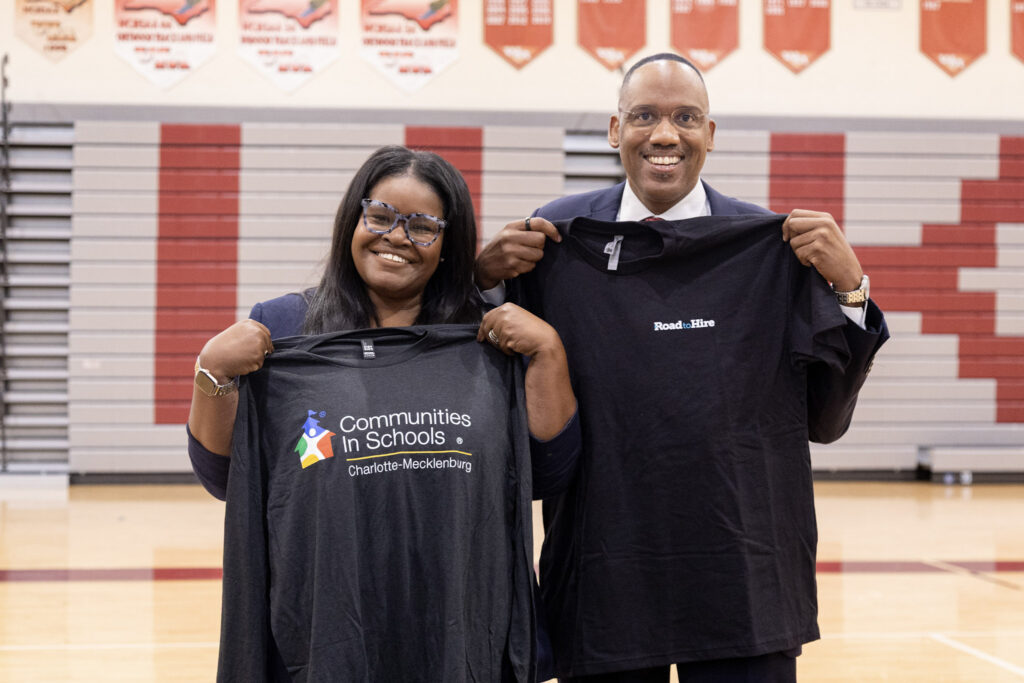
This partnership acknowledges that Charlotte’s young people do not experience life within the confines of our organizational charts. Attendance, belonging, graduation, college persistence, and career preparation are not separate systems to them. They are parts of a single ecosystem.
That is why this partnership will be judged by measurable changes in students’ lives: more students staying connected to school, graduating, reaching college and career opportunities, navigating transitions with less confusion, and persisting toward credentials and careers that support economic mobility.
Communities In Schools will contribute its expertise in school-based relationships, attendance, engagement, and individualized student supports. Road to Hire will contribute its strengths in college access, funding up to four years of college education, career preparation, coaching, workforce connections, and long-term support. Together, we must track whether students are benefiting across those connected stages, identify where they are still being lost, and change course when the path remains unclear.
The standard is simple: Did more young people move forward because we coordinated our efforts? How successful were we in leveraging our collective strengths to ensure a brighter future for more students?
The agreement marks the beginning of that commitment. Now we must do the work, measure what changes, and keep improving the path alongside the young people who will walk it.