
Perspective | Why social and emotional learning is vital to workforce readiness and how to model it in the classroom

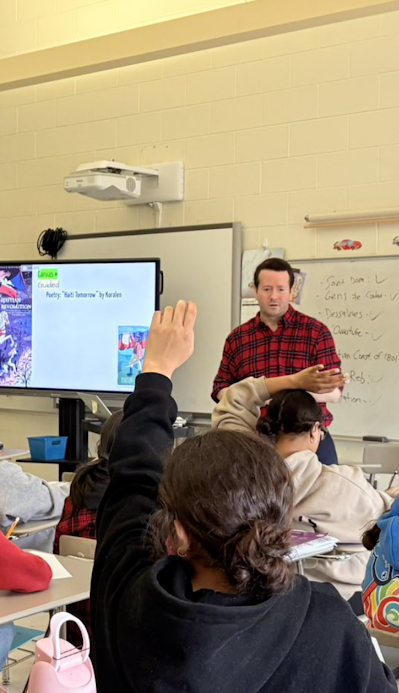
According to a recent study by Microsoft, the top managers in the world believe that only 30-40% of new hires possess the requisite emotional intelligence skills (often referred to as soft skills) in order to tangibly succeed at their jobs.
This is especially concerning considering the fact that STEM (science, technology, engineering, and math) careers are not only the fastest growing sector of the global economy, but the information technology and software companies who make up this sector consistently report that they are increasingly looking for employees who possess those foundational social-emotional skills that make consistent collaboration and success in the workplace far more likely.
In fact, an American Educational Research Association study said that students who participate in social and emotional learning (SEL) programs, especially the same program over an extended period of time, obtained higher rates of achievement and proficiency in their classes and on standardized tests. They also had more classroom engagement than their peers who were not in an SEL program.
Because of these programs, students are better at managing stress and anxiety, exhibit more of a growth mindset to help them push through challenges, and tend to have more focus in the classroom, which means fewer behavioral disruptions and more instructional time. Therefore, based on this evidence, it is high time we rethink how we, as educators, can model sound SEL habits in our own classrooms in order to best serve and prepare our students for the 21st century workforce.
 Sign up for the EdDaily to start each weekday with the top education news.
Strategies for modeling SEL Principles
In my classroom, I consider it of the utmost importance that students feel a sense of safety, belonging, and inclusion whenever they first set foot through the door. Whether that be a certain handshake, playing music, or making a joke, setting the tone for students is a high priority for me. I also have a positive quote jar at the door that students can pull from to inspire them or make them feel better.
At the beginning of the school year, I’ve found that instilling the routine of the class quietly snapping their fingers when they agree with a classmate’s answer puts extra shine on them, and works wonders for their self-esteem.
Additionally, a survey of student hobbies, talents, and interests during the first week can let students know that we are truly invested in them as people, while having the added benefit of being able to sprinkle these interests into lessons for greater engagement. I also try to narrate the positive by saying things like “Keep it up,” “I’m seeing some creativity,” or “I see Johnny jotting a thoughtful idea.”
Read more about SEL
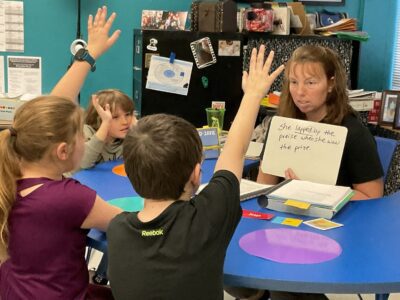
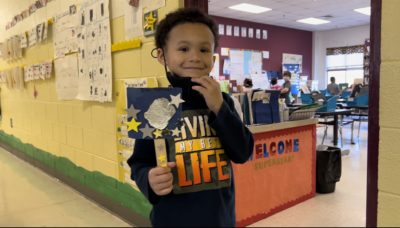
Because the brain at this age is still being molded and shaped at such an exponential rate in terms of plasticity, accentuating what is being done right in the classroom instead of drawing attention to what is going wrong makes sure the atmosphere stays warm and inviting instead of on edge, while also teaching students to be positive instead of negative.
As an extension of this warmth, placing stickers on student work while circulating during independent work, giving a thumbs up after a whispered correction of “I want to keep this small,” or saying “You’ll bounce back” after a consequence can make all the difference in the world in terms of how the rest of a student’s day goes.
For example, if there is a student who normally does not raise their hand much, and they contribute, I like to say something like, “I can tell your recent study habits are paying off,” which can slowly start to build momentum for better outcomes.
In addition, repeating directions, modeling, and chunking the material into visual, numbered checkboxes up front helps create a sense of structure, safety, and direction that many students need, and perhaps may not be getting at home. Even a simple thank you after students follow directions for getting out their notebooks or pencils can go a long way in developing common courtesy.
Read more
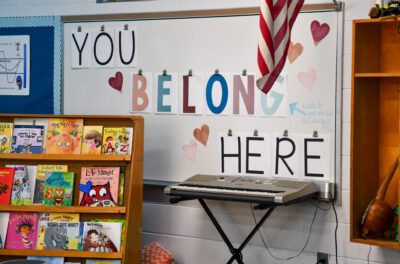
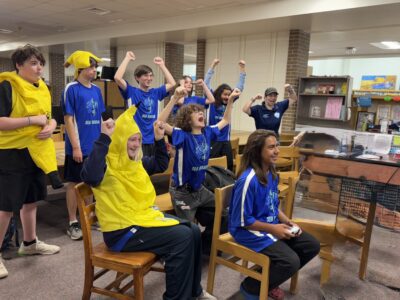
However, words are not the only way SEL can be modeled in the classroom. Initiating rounds of applause for student achievements, as well as nodding, smiling, and doing something as basic as making sure to pause to give students think time can make all the difference between a student feeling comfortable or not, or participating or not.
I also like to add the option to “phone a friend” when I ask a question where, even if they come up blank, they can still feel comfortable taking the risk of raising their hand, with the added bonus that the rest of the class has to stay on their toes since they might get “phoned.” If a student gets it wrong, instead of saying “Incorrect,” I like to say “Next time try…” because as my mentor once told me, mistakes are just different ways of eventually getting to the correct answer.
Finally, in terms of participation, ready-to-share cards and accountable talk cards for discussion and small groups are useful tools to make sure conversations are respectful with no interrupting, and so students know they can piggyback on one another’s answers. This helps foster greater self-confidence, communication skills, and a spirit of collaboration that will be key in the workplace down the road.
The primary takeaway for educators
There are certain things teachers can control in our classrooms, and certain things we cannot. However, one thing we can control is our demeanor. How empathetic and positive we are will be reflected right back at us in terms of student behavior.
Mahatma Gandhi once said “Be the change you wish to see in the world.” If we truly want to grow our students as people and not simply treat them as cogs in an academic machine, it starts by living out the example, not just relying on a chosen SEL program to do the heavy lifting for us.