Perspective | Recognizing National Charter Schools Week

This week, communities across the country celebrate National Charter Schools Week, recognizing the nearly 4 million families nationwide that choose a public charter school education.
Here at home, our state ranks fourth in the nation for charter school enrollment growth, adding more than 31,000 additional students over the past five years. Today, more than 160,000 North Carolina children attend a public charter school, each representing parents making a deliberate choice for their child.
But enrollment numbers only tell part of the story. The greater impact comes from what’s happening inside these schools — and what it means for North Carolina’s economic future.
Our state faces a workforce challenge: The UNC System estimates North Carolina will add 260,000 new jobs over the next decade, requiring skilled workers to fill positions in manufacturing, technology, health sciences, and aerospace.
The question is whether our education system is prepared to deliver them. Across North Carolina, public charter schools are answering that question by offering innovative curricular options and technical training.
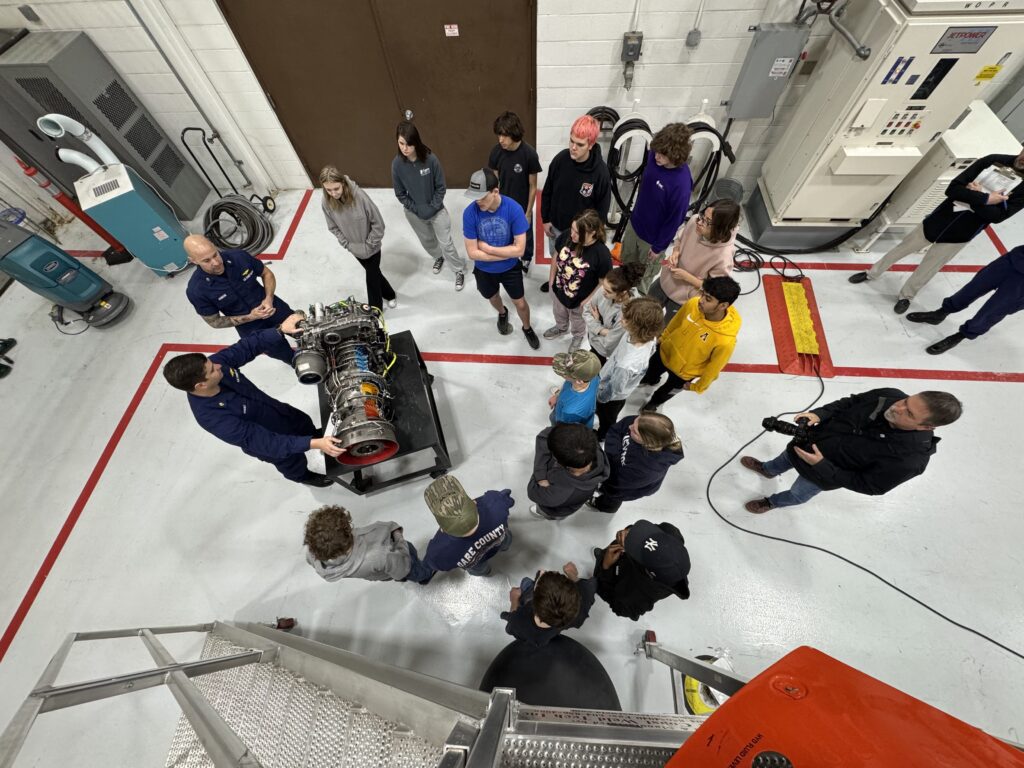
Just consider this recent Facebook post from the Northeast Academy for Aerospace and Advanced Technologies (NEAAAT), an Elizabeth City charter school that’s six miles from one of the largest Coast Guard air stations in the country: “NEAAAT, in partnership with the U.S. Coast Guard Aviation Logistics Center and Airbus Helicopters, is the recipient of the shell and engine parts of an MH-65 Dolphin. This expands aviation students from prototypes to real world application right here in Elizabeth City!”
Do you think maybe they’re doing something right?
 Sign up for the EdDaily to start each weekday with the top education news.
NEAAAT has built an entire curriculum around its community’s workforce needs. Students build drones, study hydraulics, and code robotic vehicles in classrooms “look more like labs and workshops.” The school offers students multiple workforce pathways, including advanced manufacturing. Training begins as early as fifth grade, with “NASA/Biotech 5” offered as an elective.
By high school, students can delve into robotics and technology design. This year, about 130 high school students — more than one-third of the school — have earned OSHA certifications. NEAAAT’s CEO, Dr. Andrew Harris, told me he spoke to a student last week who secured a full-time job after his first internship. He’s leaving school with his electrical license and will begin work the day after graduation already earning more than the area median wage.
That kind of innovation and development is possible precisely because NEAAAT is a charter school.
Or take Triangle Math and Science Academy (TMSA), a network of charter schools with campuses across the Triangle and Triad. TMSA uses the nationally recognized Project Lead the Way curriculum to give students career-connected pathways in computer science, engineering, and biomedical science. In the biomedical pathway, students work “with the same tools used by professionals in hospitals and labs, students engage in compelling, hands-on activities and collaborate to solve problems.”
Aspire Trade High School, in Huntersville, is the first trade-focused public charter school in the Charlotte region. Every day, Aspire students take core academic classes alongside a dedicated trade pathway — in automotive, culinary, welding, HVAC, plumbing, electrical, carpentry, masonry, and medical fields.
Each school’s orientation toward real-world outcomes specific to a community is the charter school model working exactly as intended.
Public charter schools are adapting the education landscape to fit workforce needs right before our eyes — we just need to know where to look.
National Charter Schools Week is a time to acknowledge what is working and to recommit to expanding it. Schools like NEAAAT, TMSA, and Aspire Trade offer a blueprint for what public education can look like when educators have the freedom to design schools around real student and community needs.
The families who choose these schools every day deserve a public education system big enough to say yes to them, and North Carolina lawmakers continue to create a policy environment that allows it.