
Perspective | Let’s take learning outside

I have always been an outdoors enthusiast, and I was blessed to grow up in a rural, North Carolina Piedmont community in an era of “go out and play until the street light comes on.” I remember building forts made of sticks and stones, finding crawdads and salamanders in the creek behind my home, gardening with my mom, searching for arrowheads, and making sculptures out of creek bank clay in sweltering summer heat, or finger-numbing cold winters. The outdoors was my first classroom; my favorite classroom.
Other than organized sports like football or field days, outdoor play happened less and less as I progressed through elementary school in the 1970s and early 80s. Looking back, the decline in outdoor play and exploration after seventh grade was influenced by the findings and release of the famous “Nation at Risk Report: Imperative for Education Reform” in 1983.
Do not get me wrong, I had awesome, inspiring teachers and an amazing experience in the public schools, but the model of education was a very industrialized, bell-to-bell approach for the sake of academic growth and rigor. Connectedness to the great outdoor classroom was lost. The notion that all instruction and learning should be indoors and that the curriculum cannot meet standards and rigor outside the four walls of a school building took root.
Now, the digital age has taken us to frontiers that try to tell us that teaching and learning must be plugged in and screen-based. The push for screen-based learning has largely replaced student learning and outdoor exploration. The pendulum is swinging. The look of the 21st-century classroom is changing and being reimagined.
We should no longer consider the four walls of our modern, climate-controlled learning boxes to be the only place to learn. The great outdoors is the greatest classroom that we have, and teachers of all subjects in all types of school settings can tap into the potential of what the outdoors has to offer.
 Sign up for the EdWeekly, a Friday roundup of the most important education news of the week.
From pandemic to potatoes
My journey into outdoor education and school gardening sprouted out of COVID-era restrictions and a lackluster foray into digital, distance learning with my middle school social studies students. While on lockdown, I spent most of the day outside in the garden and on long walks to keep my mental and physical health in balance. I began reading and researching voraciously.
I am not sure why I gravitated to books about the outdoors and nature connectedness, but three books, in particular, changed my perspective on the importance of the outdoors and outdoor learning: “Forest Bathing” by Dr. Qing Li, “Last Child in the Woods” by Richard Louv, and “Braiding Sweetgrass” by Robin Wall Kimmerer.
Once we returned to a more normal post-pandemic life, I had a new education philosophy and approach — incorporating outdoor learning into my eighth grade social studies classes. Through grant writing, sweat equity, and a little creativity, I sought opportunities to incorporate U.S. and North Carolina history curricula with school gardening. This inspiration was kindled by the books aforementioned and Michael Twitty’s James Beard Award-winning book, “The Cooking Gene: A Journey Through African American Culinary History in the Old South.”
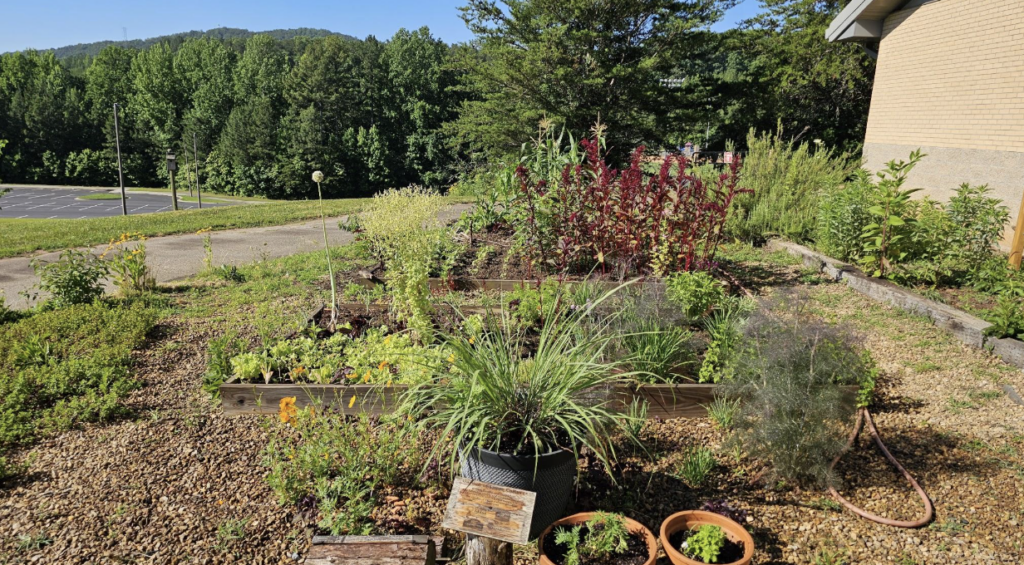
Twitty’s book, along with his work at Colonial Williamsburg developing the Sankofa Heritage Garden highlighting foods and plants of enslaved people, showed me that the study of history can be easily aligned with outdoor learning. My students and I developed what we now call our “Garden of 3 Cultures” to integrate our study of colonial American history and the contributions of Native Americans, enslaved Africans, and European colonists in the complex exchange of the early part of our nation.
Through grants and donations, students and I researched and designed three garden areas that focused on the exchange of food crops in colonial North Carolina along with the cultural and scientific connections. This approach aligned well with my history curriculum standards and provided a springboard for integrating science and the arts.
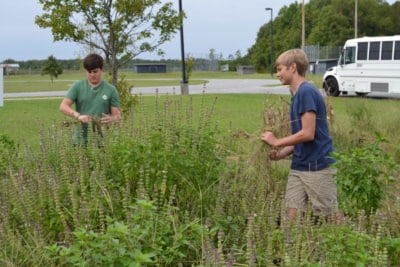
After the first two years of the project, I began utilizing project-based learning to integrate the arts with our history study. We incorporated natural plant dyes and the history of indigo into our garden development. Our “Garden of 3 Cultures” became a vehicle for cross-curricular learning and an outdoor space for hands-on activities and place-based learning. It has grown to now include key North Carolina agricultural products and an exploratory class I teach about agriculture and agricultural careers.
Read more


Research supports outdoor learning and opportunities
A growing body of research and analysis of outdoor play and learning are showing that children and adults, alike, benefit from the outdoors physically and mentally, including academic growth. A 2022 research analysis of 147 studies by Texas A&M University “Getting Out of the Classroom and Into Nature” found that nature based outdoor learning had appreciable benefits for social-emotional learning and academics. The study goes on to strongly encourage the implementation of nature-based learning programs for every child.
While screens and technology have their place in today’s learning environment, we know the dangers of excessive screen time. The benefits of outdoor learning are clear. Many educators recognize these benefits, but they aren’t always sure how to incorporate them into their curriculum. With some guidance, teachers can see that it’s not as intimidating as it can seem.
Want to learn how you can “take it outside” for your classroom? Join me from 5-6 p.m., EST on Nov. 19, 2026 for “Beyond 4 Walls: Harnessing the Benefits of Outdoor Learning.” This will be the next installment of Not Your Average PD, a free online professional development series for educators presented by the Kenan Fellows Program for Teacher Leadership at NC State University.