
Perspective | Leading through trauma


There is a famous quote most often attributed to John Lennon: “Life is what happens when you’re busy making other plans.” It’s an apt description for my professional life when I became president of Asheville-Buncombe Technical Community College (A-B Tech) in July 2020 in the middle of a global pandemic.
We all know what the next few years required of our industry and how much we learned about resiliency, flexibility, patience, change management, and taking care of our colleges and our people. By 2024, the pandemic was finally receding and the first “normal” fall semester in several years was underway.
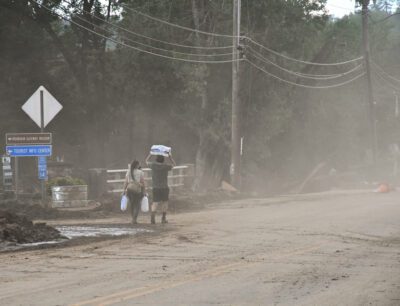
But life once again had other plans: Asheville and western North Carolina were devastated by Hurricane Helene. We were hit with a bad storm on Sept. 26, followed by Helene on Sept. 27, creating a natural disaster of biblical proportions that our region will be recovering from for years to come.
As we mark the two-year anniversary, I can attest that sometimes leadership is thrust upon us. While we engage in extensive disaster training, hurricanes are uncommon occurrences here in the Blue Ridge Mountains. No one wants to have to lead an organization through trauma, and I certainly never thought I would have to make life-and-death decisions. It is a heavy burden.
 Sign up for the EdWeekly, a Friday roundup of the most important education news of the week.
In the aftermath
Immediately after Helene, when we were in a total blackout with no power or communications systems, my immediate priority was taking care of our people. That meant finding our employees and students by any means possible. Many checked in as they got power and cell service or were able to travel to areas with power, but we spent several weeks tracking down the rest of our employees and a couple of months locating all of our students.
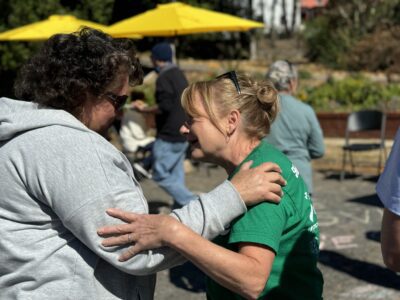
Taking care of employees also meant making sure they got paid, helping them find temporary homes, and providing resources ranging from emergency funds to mental health counseling. We had people who lost everything yet still came to work; their dedication to the college and our students was humbling.
We also provided students with emergency funds, food, clothing, transportation, shelter, and free tuition. A surprising number of them returned when we reopened a month after the storm and enrollment actually increased that spring. I firmly believe our students stuck with us because we supported them. And thanks to generous donations and disaster relief funding, we were able to significantly expand our resources.
Simultaneously, our community was hurting, and I immediately heard from leaders in our service area of Buncombe and Madison counties asking us to help.
Within 48 hours, our main campus in Asheville was home to a Red Cross shelter, a medical shelter, visiting first responders, FEMA processing, and more. Our emergency services campus in Woodfin housed a FEMA village. Our Madison County location became a hub for first responders, donations, FEMA, and other aid organizations. Our people also volunteered, providing food, shelter, transportation, and comfort, proving you can lead from anywhere.
EdNC’s Hurricane Helene playbook

Rebuilding the region
I took immense pride in realizing that community colleges had trained the people who ran into the storm to help and the people who are helping rebuild our region. We educated the first responders, nurses, engineers, construction crews, electricians, linemen, plumbers, counselors, and so many more. It was enormous validation that what we do matters.
I appreciate my peers who helped when we called seeking advice from other colleges that had been through disasters. They helped in the immediate aftermath and accurately advised us that a complete recovery would take years.
Because Helene remains a daily concern for many of our people, businesses, and communities, A-B Tech must continue to be part of the recovery. To that end, we are collaborating with local governments, foundations, and nonprofits to offer new programs and workforce training in targeted sectors that will boost our region’s economic recovery and growth.
Two years later, I am proud of western North Carolina’s resilience and recovery, and especially the contributions of A-B Tech and other community colleges. The stubbornness ingrained in our southern Appalachian people got us through the immediate shock, helped us get beyond the sorrow, and is now spurring us on to make our region even better.
Editor’s note: This article was originally published in the October/November 2026 edition of the Community College Journal.