
What community college leaders in North Carolina and California learned from each other after natural disasters

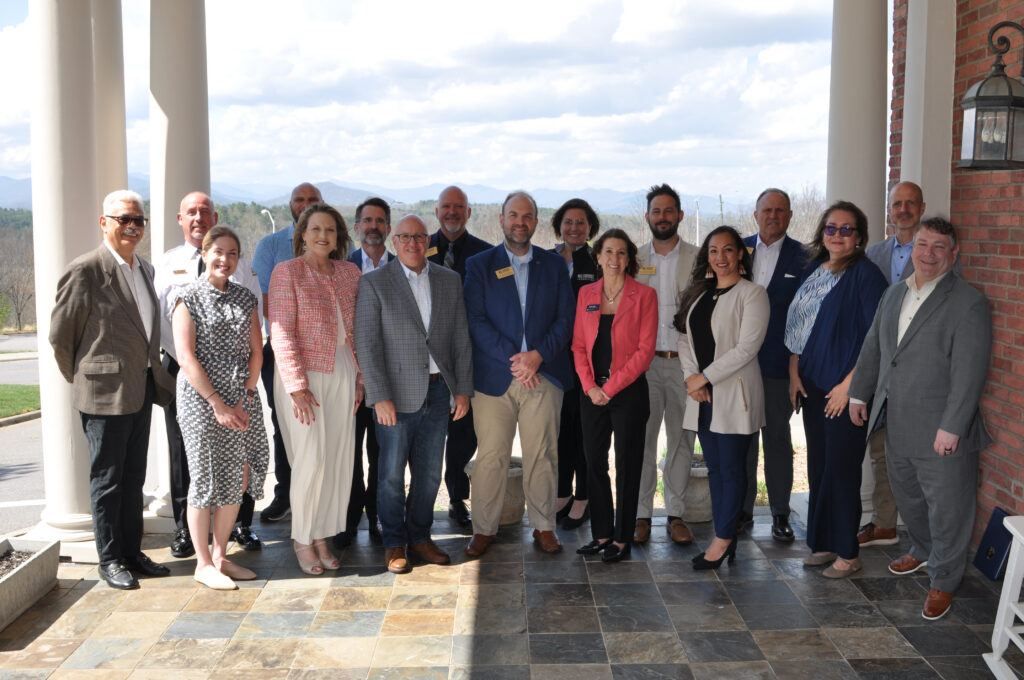
Home to nearly 40 million people, California’s population is roughly 3.5 times the size of North Carolina’s. But despite their differences, the two states share one thing in common: they have two of the largest community college systems in the country.
California Community Colleges has 116 colleges serving 2.2 million students, and the North Carolina Community College System (NCCCS) has 58 colleges serving roughly 630,000 students.
Recognizing the potential to learn from each other, leaders from the two systems decided to pitch the idea of a cross-state leadership exchange in response to a call for micro-grants from the Lumina Foundation. Lumina provided $40,000 for the six-month effort, which included virtual learning calls and one site visit in each state.
 Sign up for Awake58, our newsletter on all things community college.
John Enamait, president of Stanly Community College and one of the North Carolina representatives involved in the effort, said the idea piqued his interest as a way to help inform public policy and practice for the community college sector nationwide.
“It was kind of awe-inspiring to see these two systems coming together and speaking about similarities and differences,” said Enamait.
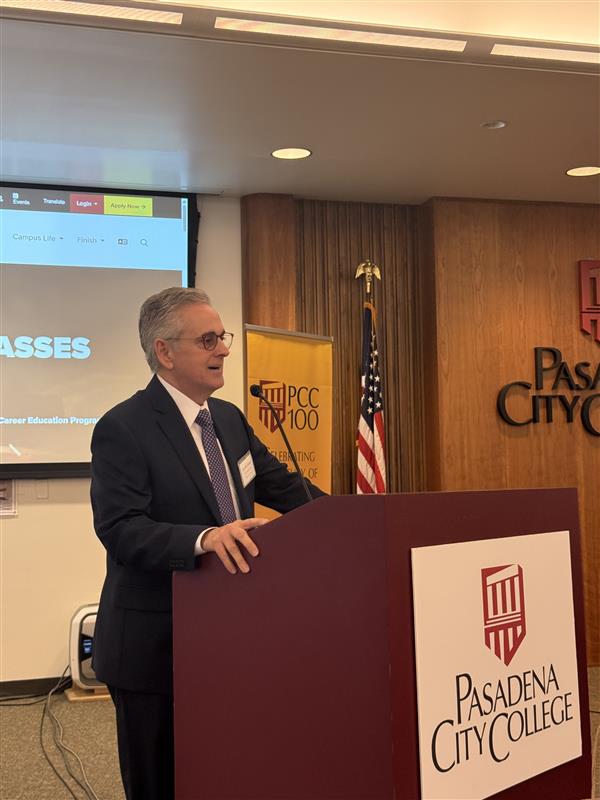
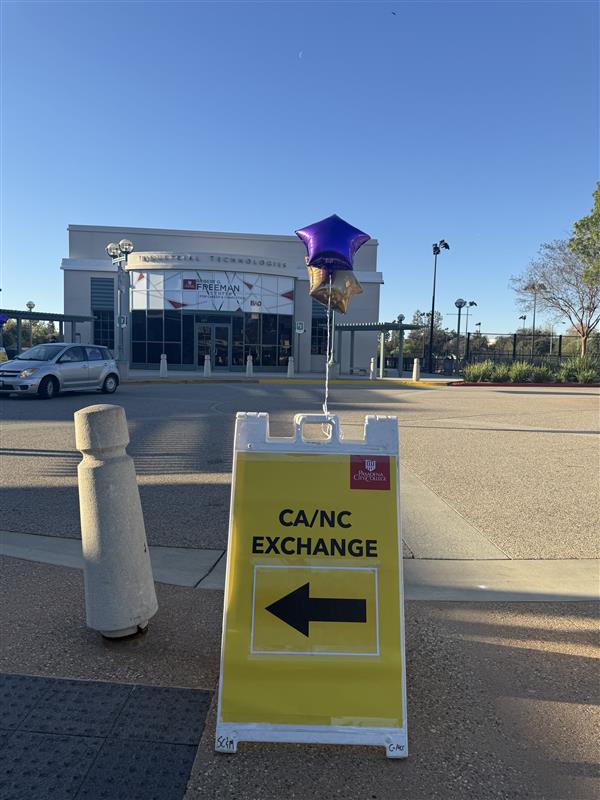
In March, a team from North Carolina — including Enamait, Brian Merritt, senior vice president and chief academic officer at the NCCCS, and Margaret Annunziata, president of Isothermal Community College — traveled to Pasadena City College. Then, in April, a delegation from the California Community Colleges traveled to Asheville.
The leadership exchange focused on how community colleges can adapt in two areas:
- Disaster recovery, relief, and preparedness.
- Local and regional workforce and economic development.
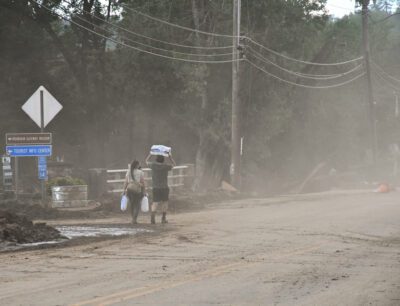
North Carolina community colleges played a critical role in the emergency response and are continuing to advance long-term recovery strategies following Hurricane Helene, which impacted the western region of the state in September 2024. Shortly after, in January 2025, the Eaton and Palisades fires caused widespread destruction in southern California, burning more than 38,000 acres and destroying over 16,000 structures.
This shared experience of responding to significant natural disasters led the group to focus on what they could learn from how state and local institutions engage in disaster response.
During the North Carolina visit, leaders convened at Asheville-Buncombe Community College (A-B Tech), one of the 14 community colleges in the state impacted by Helene. There, the California delegation joined Enamait, Merritt, Annunziata, and additional North Carolina leaders, including NCCCS President Jeff Cox, A-B Tech President John Gossett, State Fire Marshal Brian Taylor, and N.C. Rep. Cody Huneycutt, R-Stanly.
Enamait said California leaders shared reflections on how the state works to respond to wildfires in largely urban settings, whereas North Carolina leaders shared reflections on disaster response in rural communities. Gossett and Annunziata, both presidents of community colleges impacted by Helene, shared how their colleges worked to respond to the storm.
Read more on Helene response

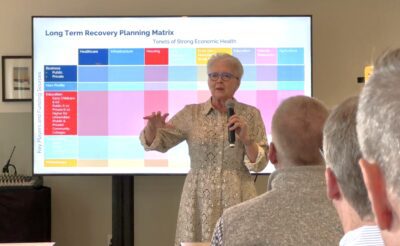
The exchange also covered workforce development, with a focus on how each state is positioning community colleges to respond to the need for a skilled workforce relative to policy change at the federal level. The Trump administration has implemented numerous workforce-related policies that community colleges are responding to, including the upcoming launch of Workforce Pell Grants for short-term training programs and an increasing focus on accountability.
Recently, North Carolina received distinctions as both No. 1 for business and No. 1 for workforce development, which Enamait said sparked interest from California in understanding how the state’s community colleges train workers for high-skill jobs.
“The way our system is designed in North Carolina lends itself, in my opinion, for our community colleges to respond a little more nimbly to the needs of our local areas,” said Enamait.
Reflecting on the experience, Enamait said the small group discussions facilitated deeper learning than is typically possible. Community college leaders often learn from peers during national conferences, but sessions are usually short and don’t allow for as much personal, two-way dialogue.
And because California and North Carolina’s community college systems don’t compete for students, Enamait said leaders were able to focus on truly learning from each other in a more intimate setting.
“There was so much power in sitting around the room, albeit for a day, and having those more in-depth conversations with your peers to try to figure out: ‘How do you handle this?’” Enamait said.
With the exchange complete, participants are now creating a report for Lumina outlining their recommendations and lessons learned. Enamait said he was grateful for the opportunity and hopes that the experience may spur additional investments in similar efforts.
“Our goal for when this ended is we would have a longing for more time together — and that’s exactly what happened at the conclusion of each meeting. We wish we had more time to spend together,” Enamait said.
Editor’s note: Margaret Annunziata serves on EdNC’s Board of Directors.