
Personal finance graduation requirement, suicide risk referral protocol moved forward by House education committee
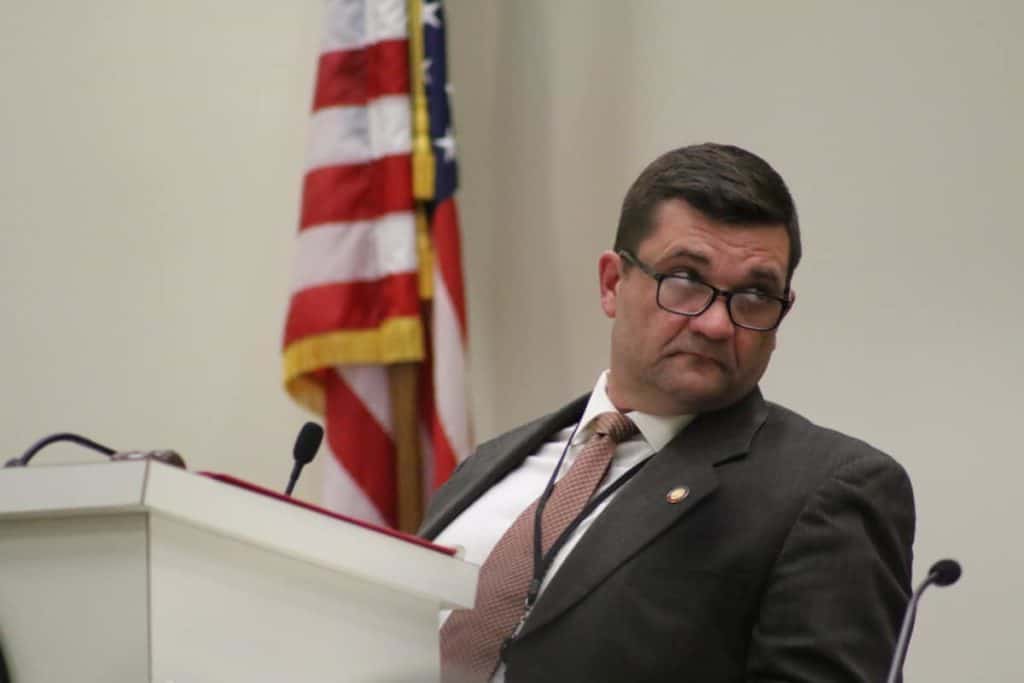

The House education committee Tuesday gave favorable reports to bills that would change high school graduation requirements and assist schools with suicide prevention.
House Bill 433 would require high schoolers to pass an economics and personal finance course in order to graduate. The bill also requires professional development for those teaching the course from the North Carolina Council on Economic Education. Included in the course would be principles such as credit, managing a credit card, borrowing money, mortgages, and planning and paying for postsecondary education.
“Financial literacy is an issue important to every one of us in so far as our kids graduating from high school with the knowledge of not just how to balance a checkbook, but a knowledge of what it means to borrow money, to use money, to have access to money,” said Rep. Craig Horn, R-Union, one of the bill’s sponsors and co-chair of the committee. Horn cited the state’s growing student debt, saying the state has fallen from 16 to 9 percent below the national average.
“It’s not great news that that is a shrinking differential,” Horn said.
The bill would apply to ninth graders starting in 2021. The bill includes a $1,063,800 appropriation for professional development of economics and personal finance teachers. Legislative analysis staff explained that the current four social studies requirements for graduation are Civics and Economics, World History, American History 1, and American History 2. The bill separates economics from the current Civics and Economics course and creates two separate courses. The other two social studies requirements will be determined by the State Board of Education. According to staff, those other two will likely be American History and World History.
House Bill 434, also moved forward unanimously by the committee, would require local boards of education to implement suicide risk referral protocols and policies against teen dating violence. Required elements of the suicide risk referral protocol include informing personnel of suicide risk referral procedures and training, establishing crisis teams, and intervening in certain situations. The bill also encourages local boards of education to implement mental health training for K-12 personnel who work directly with students that addresses youth mental health, suicide prevention, substance abuse, sexual abuse prevention, and sex trafficking prevention.
“I can’t imagine what it must be like to be a parent or brother or sister and have to receive news or, worse yet, discover what happens when a child, perhaps your own child, has died of a self-inflicted wound,” Horn said, adding that suicide is the second leading cause of death in youth ages 10 to 24.
The bill would also require local boards of education to adopt policies against teen dating violence and abuse, provide procedures to discipline or support students involved, and include a teen dating and abuse component in the school’s reproductive health and safety education program. There is no fiscal component of the bill.
Rep. Graig Meyer, D-Orange, said he supports the effort but knows mental health needs in schools will also have to be addressed with more funding for school support personnel.
“It’s probably more important that we make sure that we have the highly-trained social workers, counselors, psychologists, nurses in the schools to be able to support what the teachers do on the front line,” Meyer said.
The committee also gave favorable reports to House Bill 411, which makes a technical change to combine the state’s school performance grades and college and career readiness for federal reporting compliance reasons, and House Bill 437, which mandates that the Holocaust and other genocides be taught in schools.