Since 2011, National School Choice Week has been held the last week of January to “raise equal awareness of traditional public, public charter, public magnet, private, online, home, and nontraditional learning environments,” according to the website. In 2026, it will take place Jan. 25-31.
Across North Carolina, in 2024-25 (the most recent year with comparable data), there were:
- 2,467 local public schools,
- 208 public charter schools,
- 1 public regional school,
- 7 public lab schools,
- 101,880 homeschools (an estimate), and
- 930 private schools.
Public schools offer the most choice within a sector for students and parents: charter, year-round, restart schools, language immersion, single sex, early college, career academies, virtual academies, STEM schools, alternative schools, laboratory schools, community schools, newcomer schools, many magnet options, and more.
Two pillars of Superintendent Mo Green’s strategic plan focus on celebrating the excellence in public education and galvanizing champions to support public education. Public school districts are offering school choice fairs and parent universities. Here is a guide on how to increase enrollment in public schools.
Kristen Blair attended the “Emerging School Models” conference at Harvard for EdNC last year, and here is her update on new school models that are emerging nationwide.
Public schools are also launching new school models.
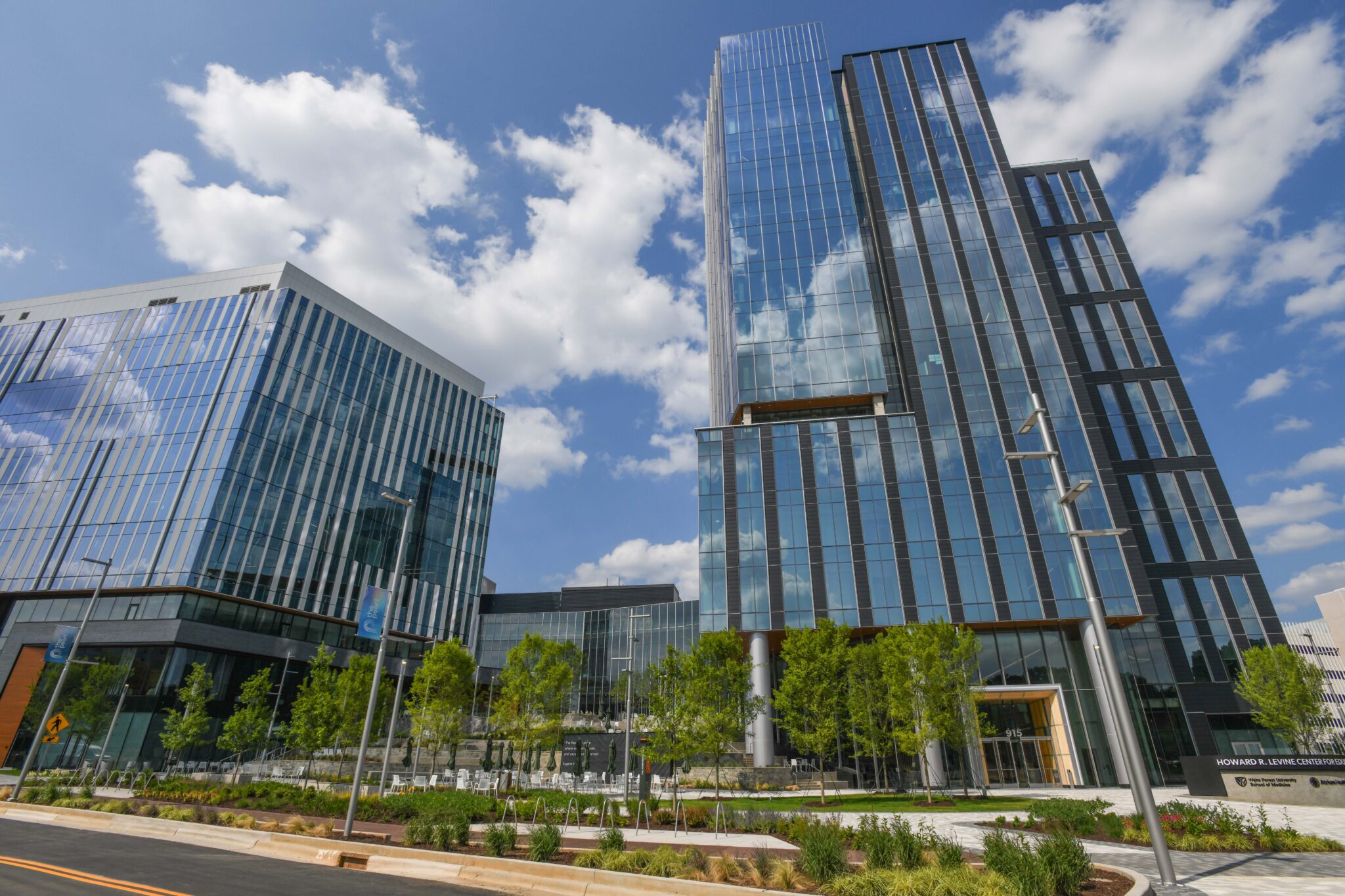
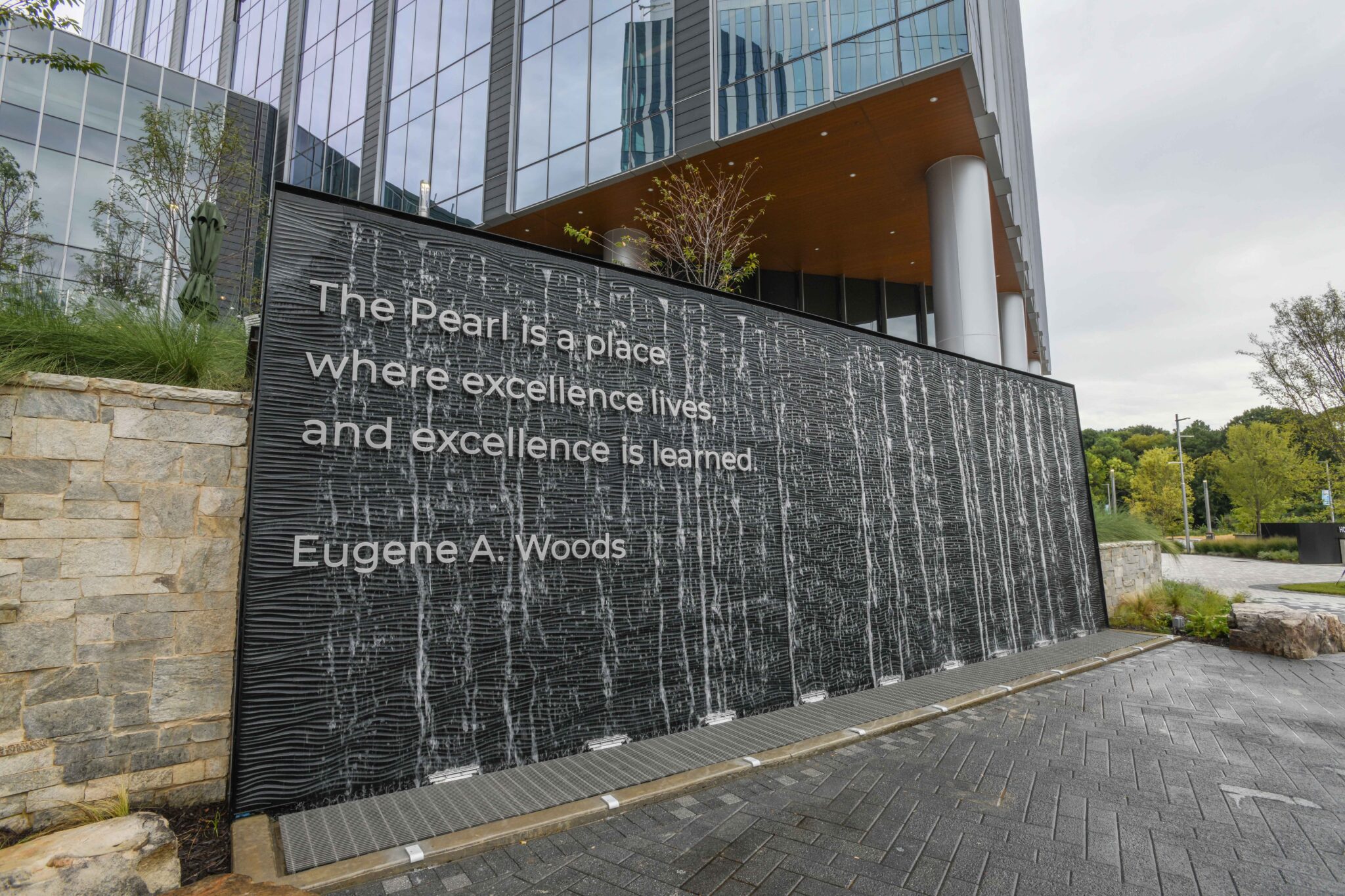
For example, according to this press release, Cabarrus County Schools, Atrium Health, and Charlotte’s new innovation district, The Pearl, announced a first-of-its-kind partnership to create a health care innovation academy — a pioneering microschool designed to prepare high school students for emerging careers in health care and technology scheduled to launch in fall 2026.
“Together, we’re reimagining education through innovation, connection, and opportunity,” says Erin Milam, principal of the Jay M. Robinson High School, which will host the microschool.

More public school districts are also offering open enrollment. Check out how Pamlico County Schools is welcoming families from other counties.
Kwan Graham, Parents for Educational Freedom in North Carolina’s (PEFNC) director of community engagement, leads the organization’s parent liaison team — 13 parents, including Spanish speakers — who offer one-on-one outreach to educate parents about school choice.
This week, EdNC will feature news coverage of the various school choice events, but we will also bring you features about a new initiative working with alternative schools, the state’s regional school, a district-charter partnership, a Q&A with the state’s Office of Charter Schools, a private school that educates students in recovery, and a private school serving young children with dyslexia. EdNC will also be publishing a range of perspectives this week to complement the conversation.
 Sign up for the EdWeekly, a Friday roundup of the most important education news of the week.
The Great Schools North Carolina research on public school options
Founded in 2023, Great Schools North Carolina (GSNC) works to strengthen public education across the state by supporting high-quality public school options and fostering collaboration among educators, communities, and partners. The organization provides strategic funding, partnership, and capacity-building support to remove barriers to success for both existing and new public charter schools and help public schools better serve students and families.
GSNC recently engaged Hattaway Communications to conduct in-depth research on North Carolinians’ perceptions of school choice and messages that encourage support for quality public education options. When asked whether parents should be able to send their children to a public school that is the right fit for them, even if it is not their assigned district school, strong agreement emerged across parties: 87% of Democrats, 85% of independents, and 86% of Republicans expressed support. The findings point to a shared belief among families, according to the research: that children learn best when their school environment aligns with their individual needs, interests, and strengths.
This message was crafted based on the research to foster a shared vision for a great public school choice ecosystem:
Parents across North Carolina are committed to giving their kids the best lives they can. That starts with a great education: one that helps kids grow into confident, capable adults. No matter where they live or how their child learns, every parent wants to feel sure that they’re sending their kid to a school that fits — a safe place where they can explore their interests and build the skills they need to pursue them.
A family’s districted school doesn’t always offer what their child needs to learn well. One size doesn’t fit all, so parents need somewhere to turn when their default options don’t work.
A rich variety of public school options gives parents more room to support their child’s unique needs and strengths. By bringing a range of excellent, free public schools within reach of every family, we can help parents find what their kids need and give them the tools to live great lives.
Let’s make sure families have a clear path to a school that fits, and schools have the resources to deliver a great education.
Through the research, this language was found to best convey the value of public school choice in North Carolina.
No two children are the same, so the same school doesn’t fit every child.
A rich variety of public school options gives parents more room to support their child’s unique needs and strengths.
When the right school is within reach, kids build the skills and confidence they need to live great lives.
The research shows parents across North Carolina want their children to have access to a great public education, one that helps them grow into confident, capable adults. “While many families thrive in their assigned schools, others find that a single model does not always meet every child’s learning needs,” says the organization.
A diverse set of high-quality public school options can give families more flexibility to find the environment where their children can succeed, according to the research. “When families have clear pathways to schools that fit, and schools have the resources they need to serve students well, communities are better positioned to support long-term student success,” says the organization.
Public schools
On Jan. 28 at 1 p.m., the N.C. Department of Public Instruction (DPI) will kick off National School Choice Week with a press conference to launch “Find Your Fit, Build Your Future,” a six-week initiative showcasing the exceptional educational choices available in North Carolina’s public schools, according to this press release.
Earlier that day, we expect a public announcement by NCAE as well.
Watch our recent documentary to see what a year in a public school looks like and see the power of the community school model.
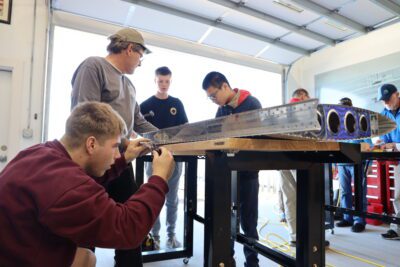
Another favorite EdNC story is this incredible experience students in Dare County had learning to build a plane.

Public charter schools
On Jan. 29 from 11:00 a.m. to 12:30 p.m., the N.C. Association for Public Charter Schools will host a student showcase to celebrate National School Choice Week.
You can find all of EdNC’s coverage of charter schools here. Below is some of EdNC’s favorite coverage of charter schools:
Private schools
The new student application for an Opportunity Scholarship, also known as a voucher, for the 2026-27 school year opens on Feb. 2, 2026.
In 2025, PEFNC announced the launch of EduBuilder, an initiative designed to help what it calls “edupreneurs” start and expand private schools in North Carolina. You can read more about the initiative in the article below.
Research thought leaders want you to know about
As school choice expands across the state, more and more research is being published. This is not exhaustive list; instead, this is research that EdNC has been asked to share by different stakeholders.
Public Schools First NC released this report on vouchers in January 2026. According an email, “This report examines the history of the NC’s voucher programs in the state, explores the original justifications for implementing them, and documents their growth; analyzes the pedagogical and operational differences between public and private schools; considers the mechanisms through which private schools are exempt from accountability measures that apply to public schools; and discusses problems with voucher programs in North Carolina and in other states, including poor academic outcomes. In addition, the report identifies and analyzes problematic features of voucher schools such as racial segregation, discriminatory admissions policies, private school tuition increases, and lack of financial transparency.”
You can see other reports released in 2025 by this organization here.
The Reason Foundation released this report, titled “Public schools without boundaries 2025: Ranking every state’s open enrollment laws” in October 2025.
The John Locke Foundation released this report, titled “Room to Grow: Evaluating Private School Readiness for School Choice Demand in North Carolina” in August 2025.
And the Public School Forum of North Carolina released this report in August 2025, which explores access, affordability, and accountability following the expansion of taxpayer-funded vouchers.
Trends in school choice
School choice is personal for parents as they consider and evaluate the best “fit” for their child.
And school choice is political, with implications for local public schools as funding has not kept up with inflation and public school market share declines in some places.
Often, important policy implications of school choice get lost in those dynamics.
On universality and fiscal responsibility
Whether taxpayer-funded vouchers should be provided to families regardless of income continues to be debated, even among conservatives.
Michael Petrilli, president of the Fordham Institute, in an article titled, “School choice need not mean an expensive windfall for the rich,” says under the surface of school choice expansion, “an important debate is brewing: how to balance the drive for educational freedom with other essential values, including fairness and fiscal responsibility. Simply put: Must the expansion of school choice result in windfalls for America’s wealthiest families, particularly those that already send their children to fancy private schools? Especially when that means blowing big holes in state budgets?”
The primary race between Sen. Phil Berger, R-Rockingham, and Sam Page features key differences in school choice between Republican candidates.
On pluralism
In democracies around the world, according to the leading research on educational pluralism conducted by Ashley Rogers Berner at the John Hopkins School of Education, states don’t exclusively deliver education. But where other countries build choice into their systems, they also build in quality control.
Quality, not accountability, is the word of choice internationally.
Berner talks about why academic content needs to change and expectations need to increase regardless of educational setting.
“To be blunt, a libertarian, let-a-thousand-flowers-bloom approach,” she says, is unlikely to improve important outcomes at scale.
On churn
With more school choice comes what researchers call “churn,” or how often students change schools.
“There are real, tangible impacts on a students’ learning and wellbeing at every churn — especially mid-year,” says an article published by the Fordham Institute titled, “School choice is great, but the churn it allows comes at a cost.”
On unbundling
A November 2025 article in The Economist looks at the experiment happening in Florida, a frontier state for school choice expansion.
“Parents empowered with $8,000 state vouchers to school their children as they see fit are fuelling a new kind of educational marketplace. It blends traditional homeschooling, charter schools and new hyper-specialized ‘microschools’ or ‘co-ops’ that offer unbundled classes on every thing from algebra and forestry to karate,” says the article.
The Economist says parents act as general contractors, “selecting their children’s schooling from a wide range of suppliers and shuttling them between lessons and extra-curricular classes.” It notes that “many of these pupils have learning disabilities that make conventional school hard.”
In one county, “public schools lost 7,000 pupils to ‘deschooling’” and other school choice options.
The article says, “The unbundling of education is shaking up the school system. Conventional schools want to join in.”
Across the country, public school districts are wrestling with how to be more responsive to the expansion of school choice. This study “finds 16 states have statewide cross-district open enrollment and 17 states have statewide within-district open enrollment.”
The Economist article raises the question of whether “unbridled capitalism” will lead to better student outcomes, and given the lack of requirements and reporting, whether researchers will even know.
Recommended reading