
In Jackson County, ‘when the gap exists, that’s our obligation’

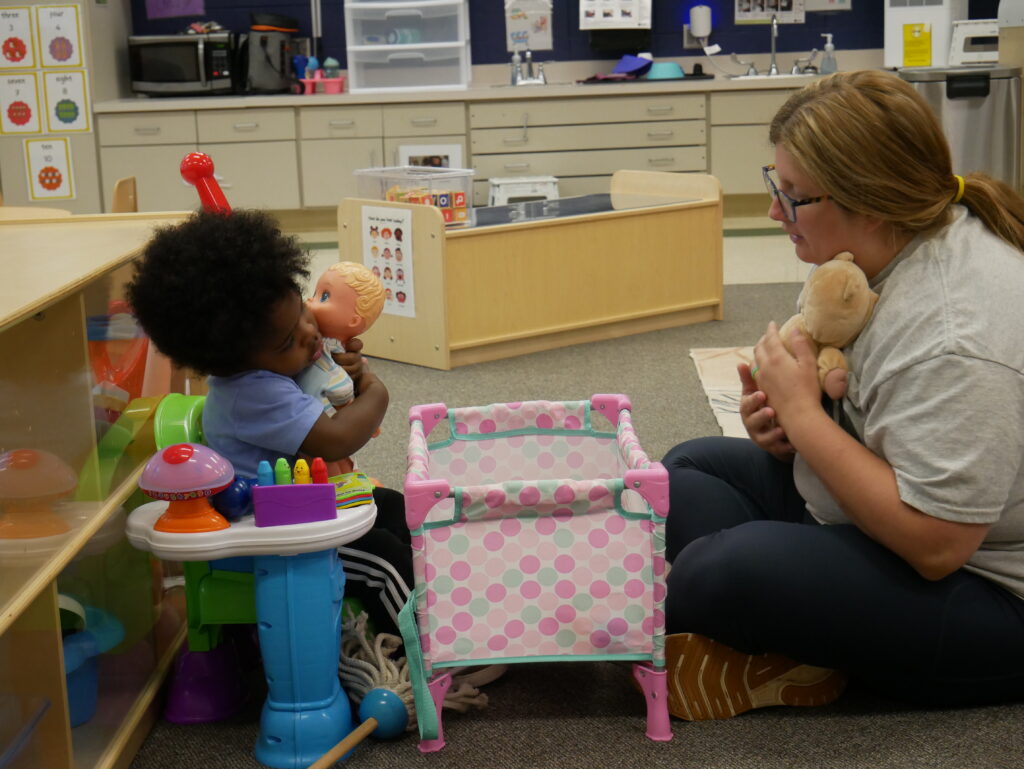
In Jackson County, leaders across the school district, county government, and nonprofits are finding new ways to meet the unique and evolving needs of rural children and families.
To provide care when families need it — including before kindergarten and outside of the school day — local leaders are stepping into new roles.
Jackson County Public Schools is providing child care for infants and toddlers of teachers and community members within an elementary school. The county has purchased two child care programs and is planning to launch a child care incubator to create a pipeline of new providers. The Boys & Girls Club of the Plateau has expanded its after-school and summer care in Cashiers and Highlands and is starting an apprenticeship program. Southwestern Child Development Commission, a regional nonprofit, is providing mental health and business support to providers across the continuum and across the western region. And in Sylva, Awake Children’s Advocacy Center is creating access to medical providers, licensed therapists, and a full suite of supports for children in a variety of crises despite reduced federal funding and increased needs.
 Sign up for Early Bird, our newsletter on all things early childhood.
The barriers keeping children from the environments they need, from transportation and staffing challenges to financial stress and substance abuse, are persistent. Local leaders told EdNC it takes shifting minds to invest in new models.
Tiffany Henry, Jackson County’s director of economic development, convinced county commissioners in March to purchase the property housing a local child care program, Pam’s Child Development Center, to keep the program’s doors from closing and its tuition from rising. It took years of educating members on the importance of child care and its link to the local economy.
It took seeing an old problem in a new way, Henry said.
“The private sector simply wasn’t taking care of it, and that’s our job as local government,” she said. “When the gap exists, that’s our obligation.”
Providing care for teachers’ babies
In 2024, eight employees at a single Jackson County public school were expecting children and couldn’t find child care.
Child care, which is generally hard to afford and find, is particularly expensive and inaccessible during children’s first two years of life. Rural communities in the state have experienced about a 12% decline in child care capacity in recent years, according to a June presentation from Afton Partners.

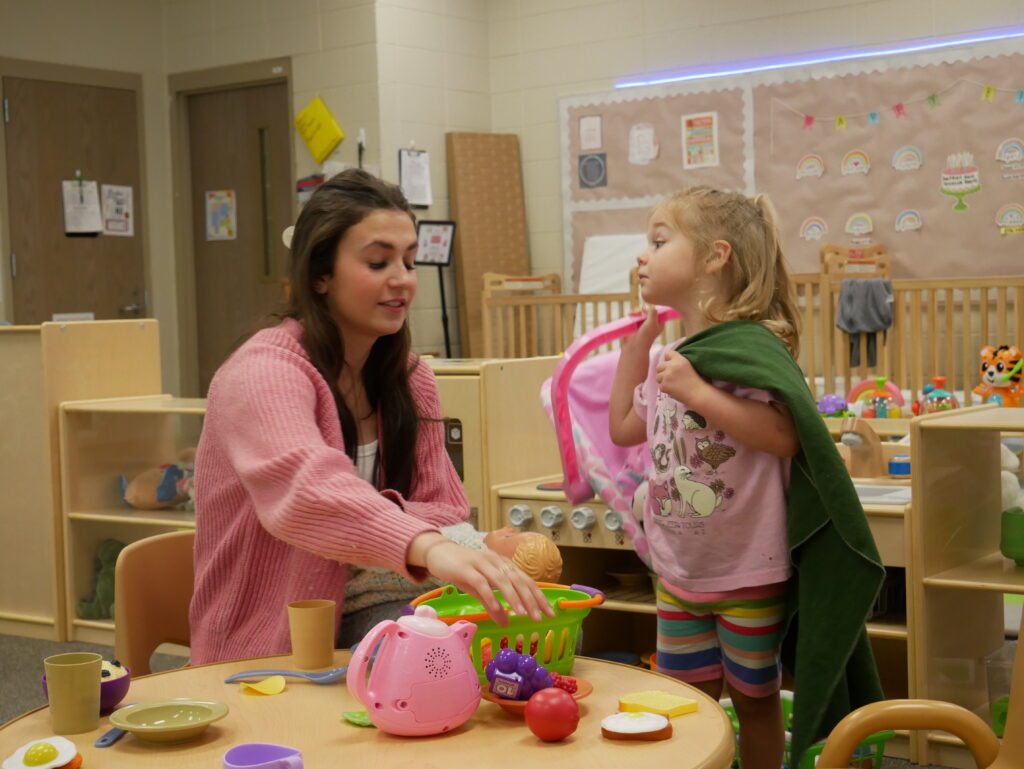
District leaders wanted to find options for teachers that didn’t force them out of the classroom. So, with a grant from Dogwood Health Trust, they opened an option within Scotts Creek Elementary School, providing full-day care for infants and toddlers of district employees and community members.
For the last year and a half, the classroom, which can serve up to 10 children, has been a relief for parents, many of whom are teachers at the beginning of their careers, said Laura Dills, the district’s executive director of federal program and elementary education.
“It’s important for families, it’s important for communities, and it’s important for workforce,” Dills said. “So we’ve got to figure out a way to make it work.”
Districts across the region are playing a bigger role in meeting child care needs, which is mainly provided by private licensed programs and informal providers. Nearby Asheville City Schools operates a similar classroom, and Haywood County Schools will be opening an infant/toddler room in the 2026-27 school year.
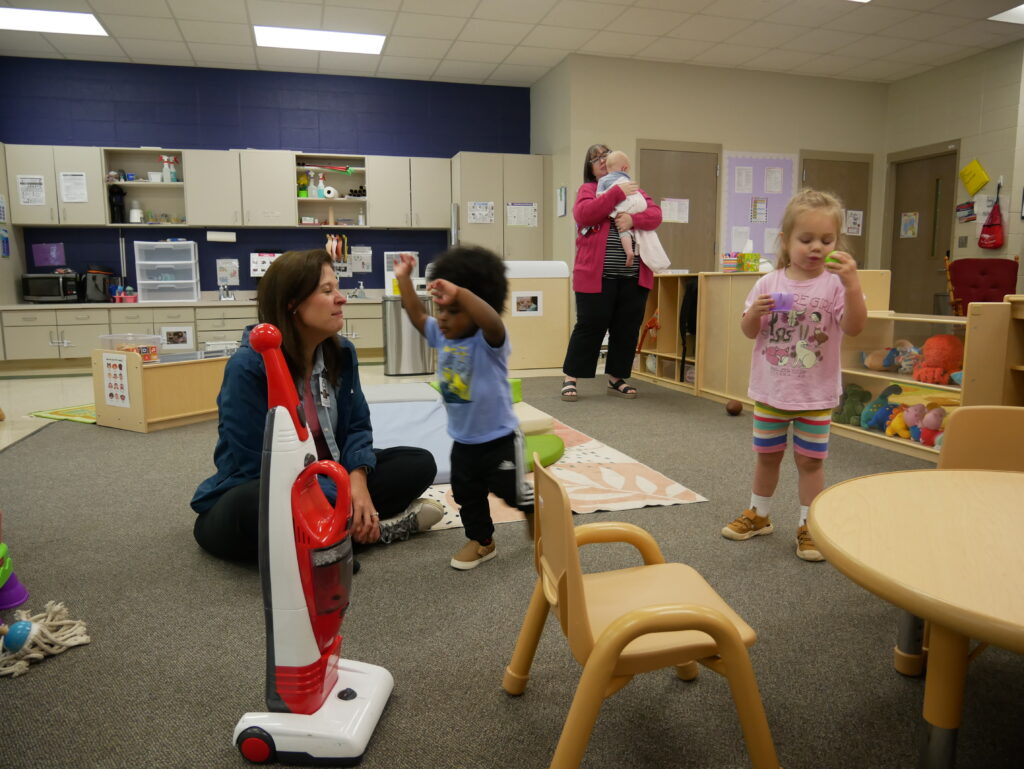
Dills said district leaders considering the model should consider licensing and sanitation requirements, facility and staffing needs, and then identify revenue streams and community partners.
A district allocation, along with parent tuition across the district’s pre-K classrooms, helps pay for the infant/toddler classroom at Scotts Creek. It still does not break even, Dills said.
“A school system is never going to make money off of it, or even break even,” she said. “You have to weigh if it’s a benefit for you to keep the staff that you’re able to serve, rather than have vacancies while they were on leave … There are places in education that you lose money. It naturally happens; it’s for the better good.”
Providing a child care pipeline
When Henry first stepped into her role at the county in 2022, she kept hearing about three community needs prohibiting new industry from coming to the community: housing, broadband access, and child care.
Henry decided to “talk to the experts.” She assembled a core group of local child care leaders, and started learning. She learned about the child care financial model often described as a broken market: Providers are unable to provide high-quality care at a cost that is affordable for most families.
Then, in 2023, Southwestern Child Development Commission announced the closure of 13 child care centers across the region, citing insufficient subsidy reimbursement rates.
“(It went from), ‘This is something that we need to talk about,’ to, ‘This is a disaster,'” Henry said.
Local providers identified open slots and classrooms to absorb displaced students and teachers. And the county decided to purchase one of the centers with the plan of reopening it.
But after hearing about staff turnover and burnout across the landscape, Henry decided to think outside of the box. With a business development background, she imagined a child care incubator that could provide the support new providers need to get started in the field.

Henry said she had two goals with the program: to make it sustainable and to add new child care slots to the county. She knew she couldn’t do that with a traditional center.
“All I’m going to do is take staff from an already struggling center to this building,” she said. “They’re going to close a classroom because we opened up on here, and that’s not going to solve the problem.”
Jeff Andrews, president of Business of Child Care, a national firm consulting with communities on child care solutions, showed Henry the creative child care models he had worked on.
Henry was particularly inspired by the model Yadkin County leaders had begun fundraising to build: a single facility with multiple small providers.
“Then you’re creating some sustainability,” Henry said. “… It’s a pipeline for future child care.”
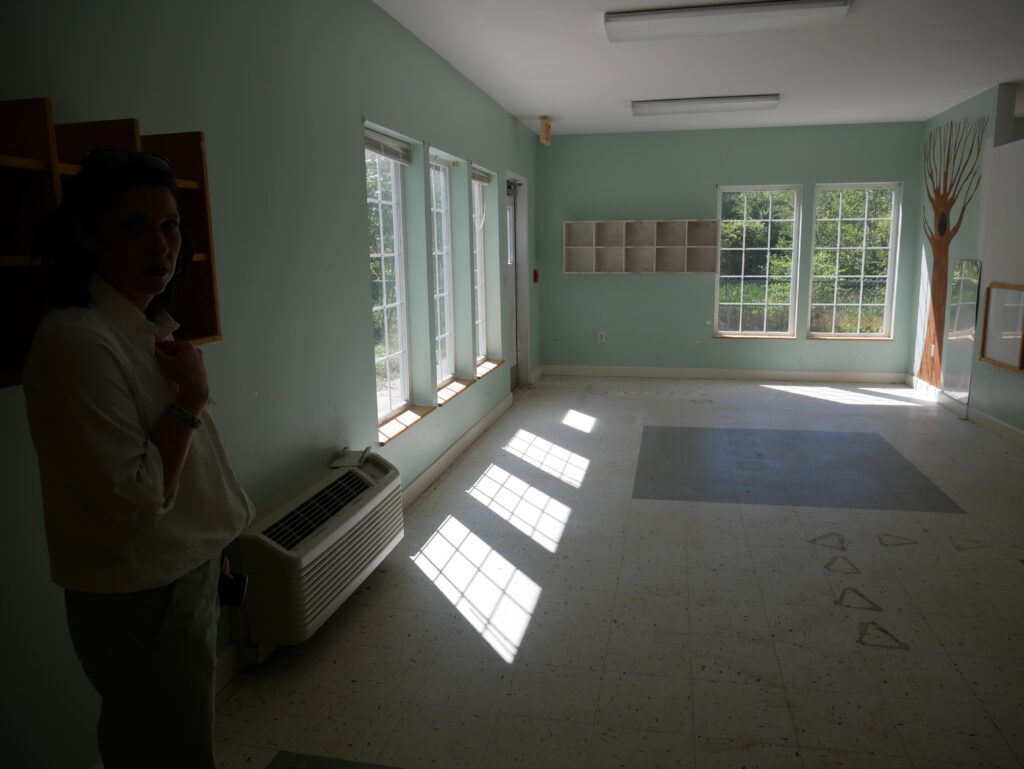
Henry is seeking grant funding to prepare and furnish the building before recruiting providers.
In March, the county closed on Pam’s Child Development Center, the local program threatened with rising rent.
“You can’t solve a child care cliff if you start losing centers left and right, you’re never going to make up any ground,” Henry said.
Providing out-of-school time care
Carmen Waite, director of the Boys & Girls Club chapter serving Jackson and Macon counties, estimates that around 70% of children their service region lack access to out-of-school care.
That leaves families scrambling to adjust their schedules and children without safe, engaging environments outside of the school day and school calendar.
Summer care is a particular crunch, said Mandy Mills, executive director of Southwestern Child Development Commission.
The organization has been offering resources and support to out-of-school providers, from schools to child care centers, to help them sustain and improve their operations. Through OST Pathways, the group provides a 10-month coaching program, including mental health services and technical assistance on educator well-being, operations, and positive discipline.
“The goal is to just strengthen the whole ecosystem in the Dogwood area,” said Jon Williams, SWCDC’s statewide school-age project manager. “The Dogwood area” refers to the western region served by Dogwood Health Trust, the regional philanthropy that funds OST Pathways.
The Boys & Girls Club, which is license-exempt due to its hours of operation, has expanded its services in recent years — and it’s not slowing down.
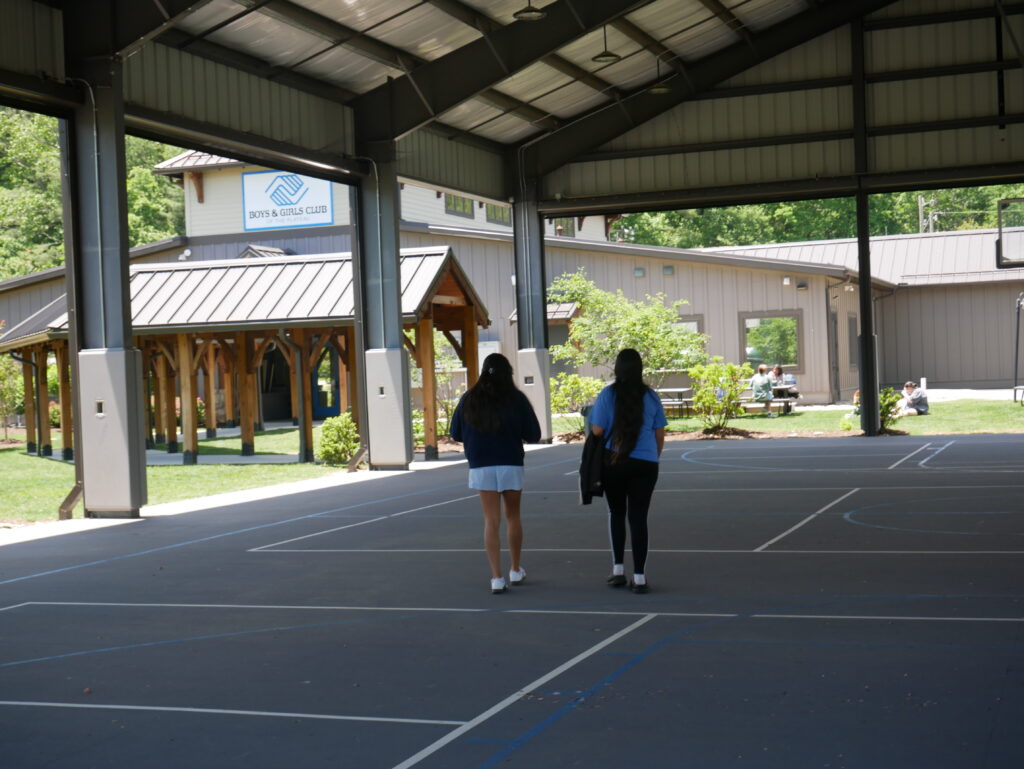
Coming out of the pandemic, Waite said the club’s Cashiers location had a little over 100 members and, with a new facility in 2022 and teen club in 2025, now serves about 543 children. That’s not to mention its satellite campus in Highlands, opened in 2024 with plans to expand to a larger building. The organization is also in discussion with multiple school districts to contract and provide after-school care.
The group provides tutoring and homework help, specific literacy supports, and programming in STEM and performing arts. It also offers free camps for nine weeks of the summer.
“Up here, this is our busy time, where all our parents are really busy and working, so it’s really nice to be able to provide that free of charge,” Waite said.
The club also wants to provide exposure to career pathways for its older members and equip them with the soft skills they’ll need in professional settings. This summer, the organization is partnering with local businesses to link club members with employers and experiences in their fields of interest, including the medical and automotive industries.
Its Cashiers club serving K-6 students is a 21st Century Community Learning Center, a federally funded program for public and private organizations serving children during out-of-school hours with various academic and extracurricular supports.
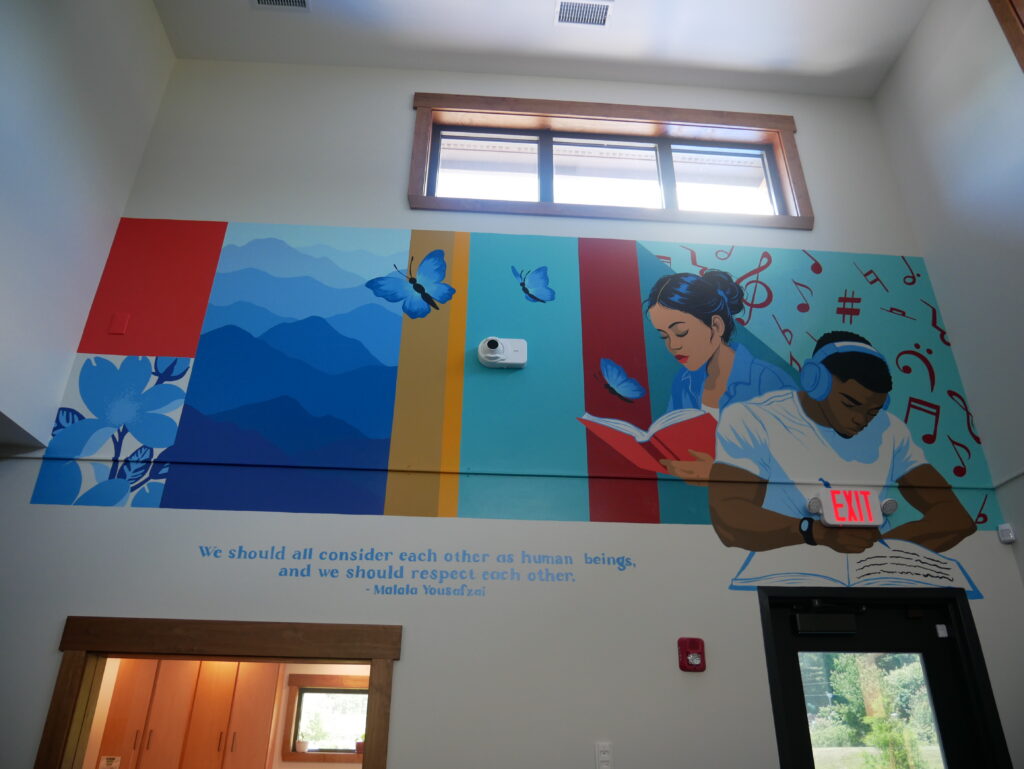
The organization is also launching an apprenticeship program with Southwestern Community College to provide paid, hands-on experience to students studying education-related fields.
Students attending the program are less likely to be chronically absent from school, Waite said.
“If a parent is worried about where child will be after school, that might be a reason the keep them at home,” she said.
The organization is funded with a mix of individual donations, private and public grants, fundraising events, and interest, Waite said.
For programs offering more than four hours of care within the licensed child care framework, revenues come from parent tuition and the state’s child care subsidy program. These programs are offered through private child care centers, community programs, and school districts.
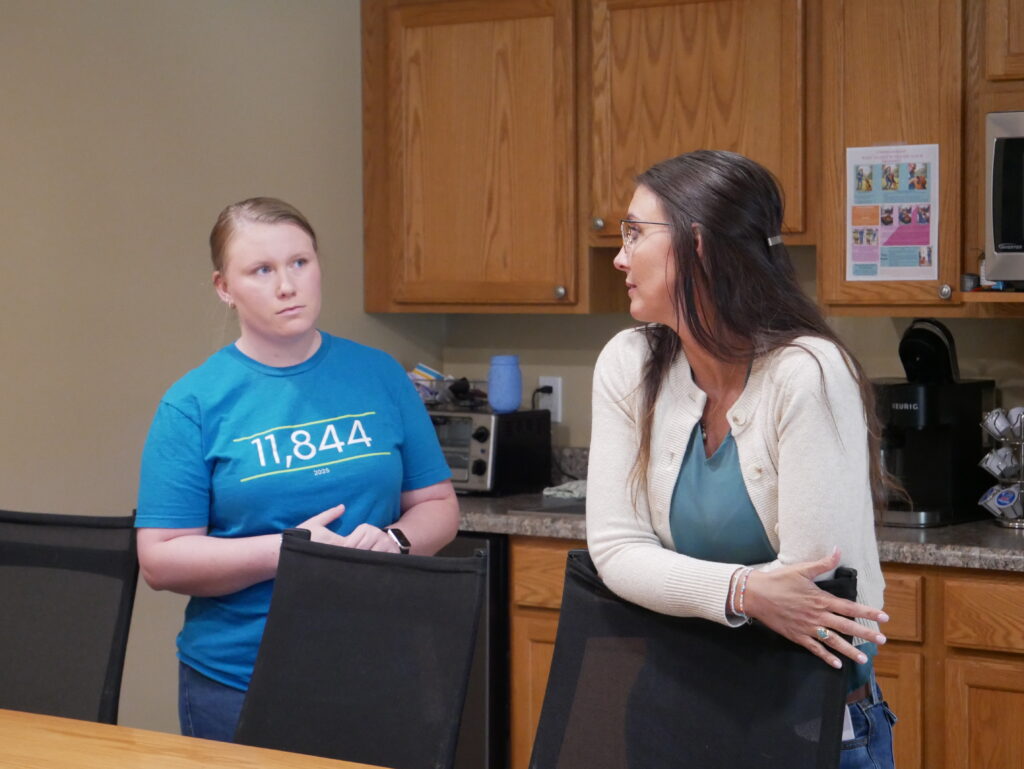
Mills and Williams said providers are struggling with staffing and insufficient revenue.
They said raising the subsidy rates providers receive — which advocates and business leaders asked for this legislative session, and was funded in the state’s new budget — will make a large difference in the region. So would funding for transportation, they said. A subsidy floor will ensure child care programs, including those providing school-age care, receive at least the statewide average rate instead of the largely variable rates of the current model.
“If we had this subsidy floor in our area … we could probably reopen some stuff, and I’d love to do an after-school program,” Mills said in June, before the new budget was released and passed.
Providing hope
Crystal Jones, director of Awake Child Advocacy Center, was in law enforcement and the Air Force before joining and eventually leading the center. Her current job is the hardest one she’s had — by far, she said.
The nonprofit CAC, a nationally accredited model, receives referrals from both law enforcement and the local department of social services. The center’s staff provides wraparound responses, examinations, and long-term support for children who are suspected to be in abusive environments or who have recently experienced a traumatic event.
The professionals needed to provide that specialized, consistent support — from medical providers to licensed therapists — are hard to come by in rural places.
Jones has gotten creative, braiding multiple grants to fund three full-time therapists and a contractor who manages Medicaid and insurance billing (a task that was a particular stress-point for therapists). She also partnered with a nearby CAC to create a separate nonprofit, the Child Medical Collaborative, Inc., to hire medical professionals that could serve children at CACs across the region without juggling other jobs.
Jones is committed to finding problems and trying to fix them. She is also committed to caring for adults, from the providers she has created new structures to support to the staff that work within the center: forensic interviewers and child advocates. They are all encouraged to take the time they need to carry the weighty nature of their day-to-day work.
“Healthy adults equal healthy children,” Jones said.
The CAC acts as a central hub for children in difficult situations and those supporting them. The center provides research-backed, child-friendly environments.
Children are first greeted by a child advocate who walks them through what to expect and, depending on the child and family needs, stays connected with the child through their adolescence.
Children are then interviewed with a protocol called RADAR, which aims to strike “forensic balance: giving equal emphasis in interview design and instruction to preventing both errors of overcalling and undercalling.”
Children then receive a medical head-to-toe exam. Professionals are trained to look for signs of abuse as well as the overall health and well-being of the child.
“The whole purpose of everything that we do is to be less traumatizing and to also put some control back with them, because the control has been taken,” Jones said.
The need is growing, Jones said. Over the last five years, their case load has nearly quadrupled, she said.
“It’s not going away,” she said. “And … the types of abuse that we’re seeing are only getting worse.”
Jones and her staff hypothesize that the center’s increased caseload is a result of families’ financial stress, the region’s trauma from Hurricane Helene in 2024, substance abuse, and increased reporting.
“When we talk about stress in society, the children feel it, and they feel in different ways,” Jones said. “They might just see it or experience it with social media, but some children experience it with their bodies or their minds.”
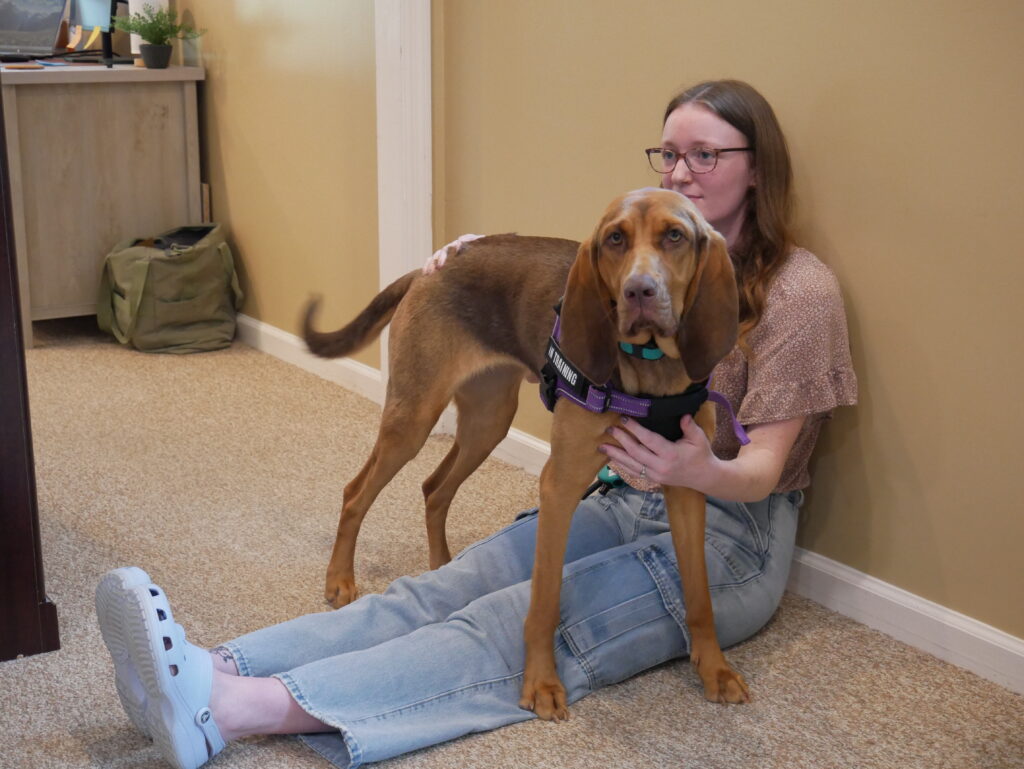
The center is also working with researchers to develop a virtual reality headset for children to experience courtroom environments before trials. They will also soon have a certified therapy dog, Lady Mae, who is currently trained as a facility dog, to provide children with the comfort of an animal’s presence.

In the center’s medical exam room, Jones asked a local artist to paint whatever she wanted on an empty wall. During challenging moments, children now see a view of the Blue Ridge Mountains, foggy and gray, with sunlight barely visible in the distance.
“It’s able to allow children to understand that things might look a little dark now, they might look a little blue right now, but you can see the sun peeking up, and the hope is on the horizon — it’s there,” Jones said. “That’s what we stand for, is trying to help them find that hope.”
Editor’s note: The Dogwood Health Trust supports the work of EdNC.