
How a federal grant brought mental health services into schools across 6 North Carolina school districts

Editor’s note: This article discusses mental health and suicide. If you or someone you know needs help, reach out to the National Suicide and Crisis Lifeline by calling 988.
The North Carolina Department of Public Instruction (DPI) announced on Oct. 5 that the Substance Abuse and Mental Health Services Administration awarded the state $7.5 million to expand Project AWARE, the third round of funding the state has received for the program.
The five-year grant will bring Project AWARE to Ashe County Schools, Carteret County Public Schools, and Person County Schools, according to DPI’s press release.
Teri Putnam has worked in mental health and school-based mental health services for most of her career. With experience as both a licensed clinical mental health counselor and licensed clinical addiction specialist, she knows what it takes to make mental health programs work in schools.
In 2002, Putnam sought licensure to be a mental health worker in schools. Fast forward to 2018, Putnam stepped into the role of Project AWARE director for Cleveland County Schools — one of the three school districts piloting the five-year, multimillion dollar federal grant program designed to improve the way mental health services work in North Carolina’s schools.
Then, in 2021, when North Carolina received a second round of five-year grant funding and the opportunity to pilot Project AWARE in three more districts, Putnam was asked by Heidi Austin at the North Carolina Department of Public Instruction (DPI) to help Austin codirect the grant program at the state level.
With her background in mental health, Putnam said one of her goals has been to help her colleagues consider the role mental illness and environmental stressors play in students’ overall well-being.
While schools primarily exist to educate children, they also impact health as students eat, play, and build social skills. Schools are places where students already receive a variety of services, and therefore are a key entry point for youth mental health services.
In North Carolina, Project AWARE addresses the relationship between education and health by embedding mental health service delivery into schools. According to the program’s website, this strategy replaces “fragmented and reactive approaches” to student well-being.
Administered by state codirectors Austin at DPI and Putnam at the North Carolina Department of Health and Human Services (NC DHHS), North Carolina was one of 23 state grantees during the federal program’s 2018 cycle, and one of 17 states to receive the grant during the 2021 cycle.
Since her first foray into school-based mental health more than 20 years ago, Putnam said Project AWARE has not only improved the depth and breadth of mental health support in the six pilot school districts, but also created momentum around schools’ ability to support students’ mental health.
“I feel like what Project AWARE did is we really brought mental health language into the schools,” said Putnam. “I really do feel that North Carolina is much better off since having Project AWARE.”
 Sign up for the EdWeekly, a Friday roundup of the most important education news of the week.
What is NC Project AWARE?
Project AWARE first came to North Carolina in 2018 after the state state received a $8.8 million Project AWARE (Advancing Wellness and Resiliency in Education) grant from the federal Substance Abuse and Mental Health Services Administration (SAMHSA). While the federal grant is called Project AWARE, the initiative is typically referred to in North Carolina as Project AWARE/ACTIVATE (Advancing Coordinated and Timely Interventions, Awareness, Training, and Education). Three school districts were selected for the first cohort: Beaufort County Schools, Cleveland County Schools, and Rockingham County Schools.
Following the success of the cohort one teams, in 2021, three additional school districts were selected to receive funding in a second cycle of the SAMSHA grant: Jackson County Public Schools, Nash County Public Schools, and Sampson County Schools.
In early July, SAMSHA announced $55.7 million to fund a new cycle of Project AWARE grants. DPI is applying for the current funding opportunity, Austin said. If funded, the state would launch a third cohort of school districts between 2026 and 2031. The state will know if it has been selected as a grantee for a third time by Sept. 1, Austin said.
While North Carolina waits to see if it will receive funding for new pilot sites, EdNC spoke with state and district leaders who have led Project AWARE’s implementation over the last eight years to learn more about their work, the impact the grant has had on students, and what the lessons they learned mean for the future of the state’s school-based mental health services.
How policy changes from Project AWARE’s first cohort created a foundation for statewide school-based mental health services
One of the first grant-funded initiatives in cohort one school districts was creating a job description and pay grade for school districts to hire licensed clinical mental health counselors (LCMHC). Austin explained that while districts had historically been able to employ licensed mental health clinicians, the position wasn’t officially recognized by DPI’s employment structure.
“I know (a LCMHC job description) sounds really minimal, but when districts don’t have it and there wasn’t an easy way to employ those people and pay them competitively, those are a lot of barriers,” said Austin.
Austin further explained that a difference between this new job description and specialized instructional support personnel (SISP) — the state’s school counselors, school psychologists, school social workers, and school nurses — is their scope of work.
In a comprehensive school behavioral health plan, SISP’s training lends itself to preventative support. Licensed clinical mental health counselors, Austin explained, are more focused on providing longer-term clinical mental health care to high-need students.
Project AWARE’s first three pilot districts helped create a job description, pay grade, and classification for licensed clinical mental health counselors that was then approved by the State Board of Education.
Now, any school district in the state — not just those in Project AWARE — has a mechanism to hire individuals they need to support students’ mental health.
Project AWARE’s cohort one districts also played a key role in formalizing the state’s School Mental Health Policy, passed in Senate Bill 476 and adopted by the State Board of Education in November 2020. According to Putnam, teams worked together to develop the criteria necessary to include in the policy, and Cleveland County’s own school mental health plan was submitted as an example for other districts to use after the policy became required statewide.
The passage of this policy, Austin said, was “monumental.”
“Truly what I love about this work is it’s changing systems,” said Austin of the state policy. “(There are) some things that sound really simple, but once they’re in place, it just makes it a lot easier to do the work.”
Policy change is happening within districts, too. In 2022, three new school districts — Jackson, Nash, and Sampson — joined as Project AWARE pilot sites after North Carolina received a second round of five-year SAMHSA grant funding.
Together, the six school districts have created or refined 91 school mental health policies since 2018. These include any policy related to how school behavioral health operates in a school, including crisis protocols, suicidal ideation responses, classroom intervention policies, and memorandums of understandings or agreements with local community partners, according to Austin.
Data from Project AWARE’s cohort one teams suggests that these policies are working. Between 2020 and 2023, the first three school districts reported a collective 88% access rate to mental health services. While not a direct comparison, survey data collected by KFF, a national health policy nonprofit, found that in the 2024-25 school year, 18% of public school students utilized school-based mental health services.
“All this work that we are doing is only possible because we’re standing on the shoulders of giants,” said Meagan Crews, Jackson County’s Project AWARE director, referring to Project AWARE’s cohort one teams.
Building a framework of mental health support in schools
Four goals have guided on-the-ground work at each Project AWARE site:
- Improve behavioral and psychological indices of school engagement and decrease disciplinary events through universal prevention within the Multi-Tiered Student Support (MTSS) framework.
- Reduce dropout rates, suicide attempts, and substance use by increasing access to supplemental and intensive services.
- Improve coordination and sustainability through increased family and community engagement.
- Increase the knowledge and effective practice of school staff in recognizing and responding to student mental health needs.
Project AWARE funds were used to hire, at minimum, a full-time director and part-time data specialist and learning coach in each school district. From there, Austin said, districts had the freedom to choose the specific evidence-based practices and programming they would use to support students within the MTSS framework.
At the broadest level, Tier 1 universal support, Project AWARE sites implemented dozens of different universal prevention strategies.
“It’s character education, bullying prevention, it’s social emotional learning. It’s things that you want all students to have,” said Austin of the types of Tier 1 services schools can provide.
In Sampson and Jackson counties, for example, the Character Strong curriculum has taught students from kindergarten through 12th grade emotional regulation skills.
Universal prevention, Project AWARE directors explained, also looks like training staff and students to be fluent in the language of mental health. Mental health first aid training and teen mental health first aid training, they said, has played a crucial role in normalizing conversations around mental health while equipping both students and staff members with knowledge and language to be able to identify and name mental health needs.
These trainings have had a wide-reaching impact. According to the Rural Health Information Hub, across both cohorts, more than 53,000 school-based and related employees have received mental health training.
Project AWARE sites also implemented programming that goes beyond Tier 1 universal supports.
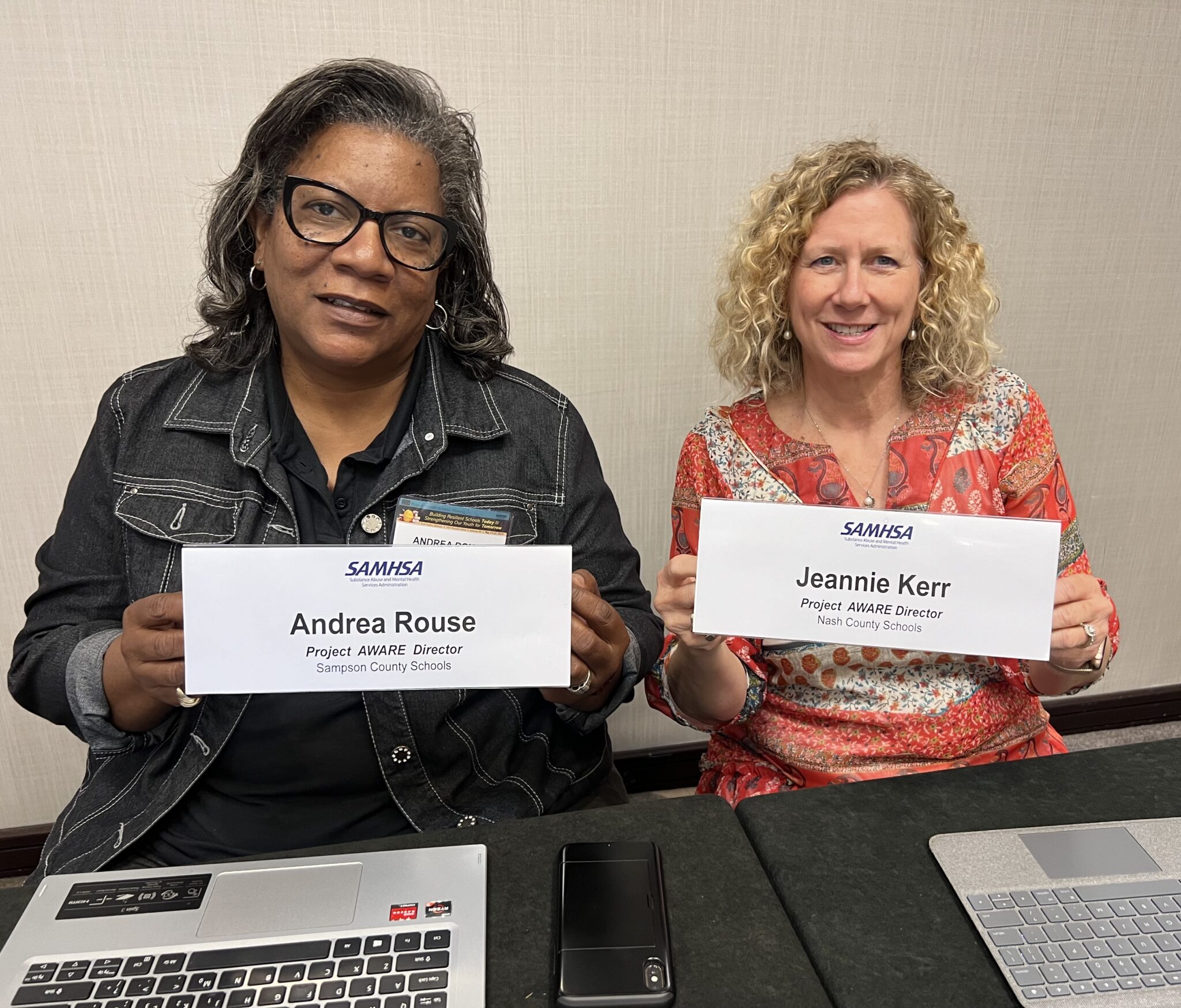
In Nash County, Director Jeannie Kerr said four schools implemented a therapeutic drumming program. Student support teams referred students into the program for a variety of behavioral, attendance, or self-esteem-related reasons, Kerr said. Twice a week before the school day began, trained school staff would lead students through drumming exercises designed to teach students emotional regulation skills and build confidence.
Kerr said the data from last year’s group of drumming program students showed a 37% reduction in office discipline referrals and a 50% reduction in out-of-school suspension. And, for some students, the program has increased their desire to attend school.
“Anecdotally, the kids are on their parents … because on Tuesday and Thursday, they’re wanting to get out the door because they want to be in there drumming,” said Kerr.
In Jackson County, the community’s desire for increased school safety around the time Project AWARE launched informed how Crews and her team implemented the grant. According to Crews, the team focused a lot of their time, energy, and funding to build a robust team of mental health clinicians. This team, she said, would address the barriers of cost, insurance, transportation, and stigma that many people living in Jackson County experience.
According to Crews, six therapists worked together to support student needs across the nine schools in Jackson County. These positions, she said, are paid for through a blend of Project AWARE funds and local dollars approved by county commissioners.
The key lesson in making sure these positions are effective, she said, is clearly defining all of the policies that lead to a student successfully receiving mental health services. Together, Crews and her team drafted policies that laid out the exclusion and inclusion criteria for mental health services, the steps teachers take to refer a student to receive services from the Project AWARE mental health team, an intake protocol, paperwork around parental consent and information release, and a treatment plan. Without Project AWARE, she said, these processes would not have been formalized.
“So now, we have this team of people who are embedded in schools and an integrated part of student support teams,” said Crews.
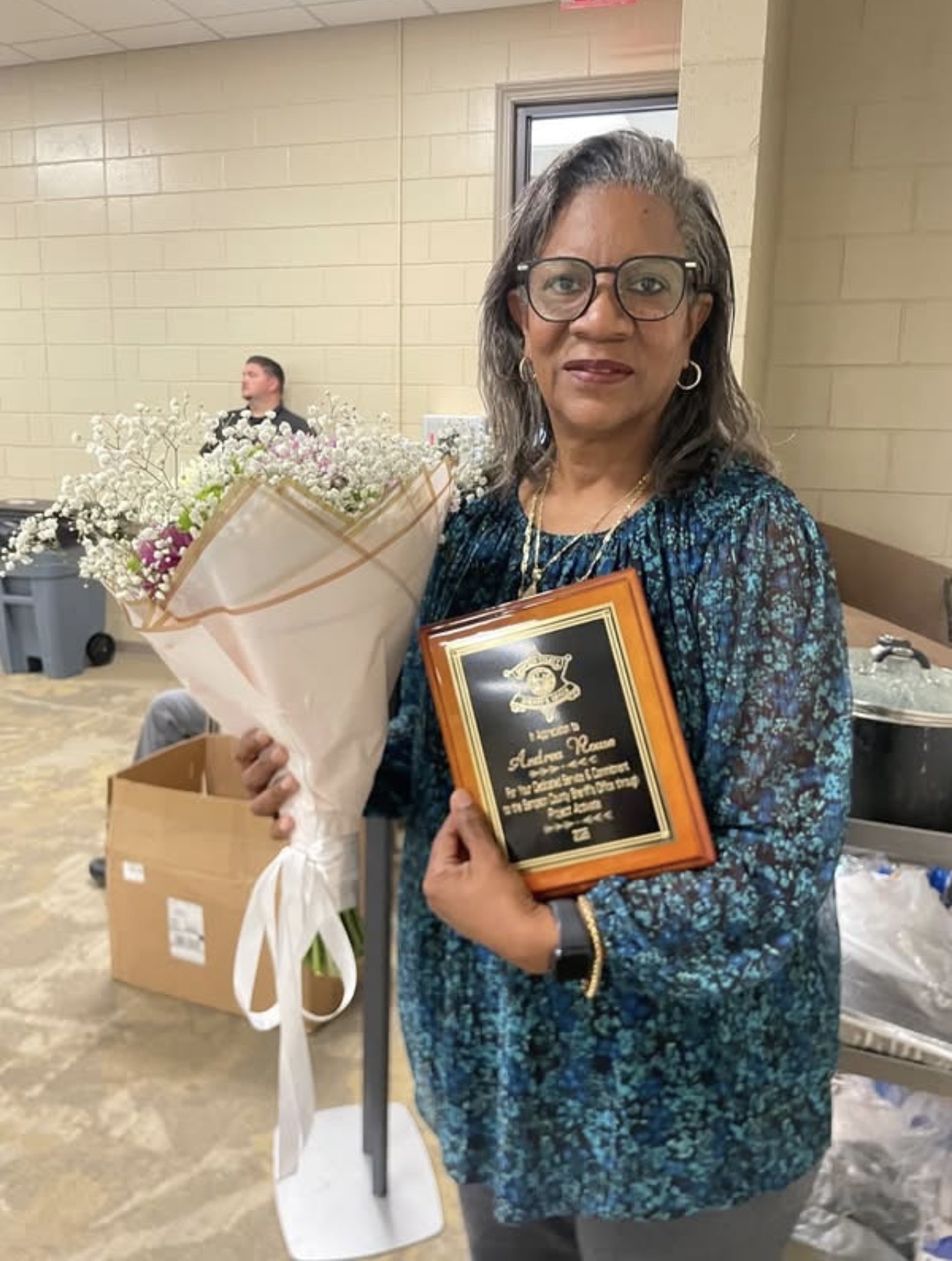
In the eastern part of the state, Andrea Rouse is the Project AWARE director for Sampson County Schools, where 18 schools are spread out across the second largest county by land area in the state. Rouse described needing to build the district’s mental health supports from the ground up.
To do that, Rouse said she “had to figure out how to get to the bottom of what the needs were.” By asking school staff — including educators, school resource officers (SROs), and cafeteria employees — what their schools’ needs were, she has been able to infuse a culture of mental health awareness over the last five years.
“The key for me is the staff,” she said. “I wanted to build something to give them more confidence.”
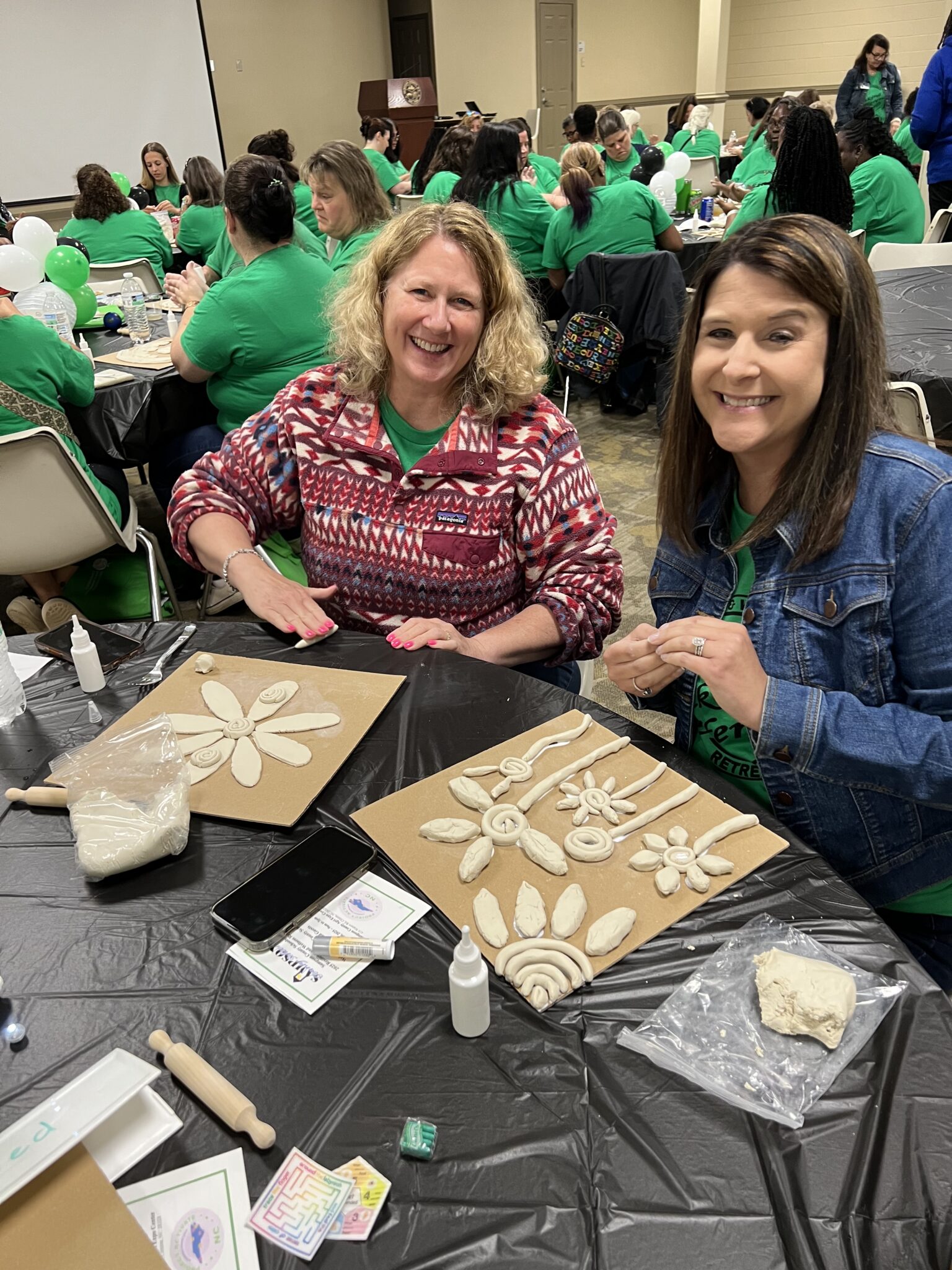
Some of the events Project AWARE made possible include an annual end-of-year wellness and resiliency retreat for Sampson County educators and an SRO Wellness and Resilience Academy that trained schools resource officers in Youth Mental Health First Aid and the Question, Persuade, Refer (QPR) suicide prevention program.
“The way they see things is different now,” Rouse said of the district’s educators. “There’s a more positive outlook on things than there was before … people know the importance now of mental health, and resilience, and wellness.”
Also central to this culture shift is the bilingual mental health clinician that serves the roughly 7,800 students in Sampson County, according to Rouse. By speaking both English and Spanish, Rouse said the clinician has been able to connect with the many Spanish-speaking families that live in the county.
Rouse pointed out that one clinician for the entire county, however, is not enough. She said she has tried to hire a second position, but that “it’s hard to find somebody to come into the school system and be a mental health clinician because of the pay,” she said.
In an effort to strengthen North Carolina’s pipeline of school-based mental health providers, Crews said South Carolina’s Magill School Mental Health Certificate Program is now enrolling graduate social work, counseling, or psychology students at Western Carolina University (WCU).
Through the certificate program, Crews said graduate students receive specialized training in school-based mental health services, complete their internship practicum in a school setting, and eventually graduate with K-12-specific knowledge and skills their curriculum would not have otherwise provided.
WCU began enrolling students in the program last year, and Jackson County Schools was the host site for one of these students, according to Crews.
“We hope that we are planting lots of seeds that then will come to fruition when those folks are graduating from their programs,” she said.
As the second federal grant ends, districts braid funding to keep programming alive
After eight years, North Carolina’s six pilot sites now serve as an example to the rest of the state. The directors at each pilot site, equipped with first-hand knowledge on how to build a comprehensive school behavioral health system, can help other districts improve and refine their own school-based mental health services.
As Nash County’s Kerr put it, the five years of participating in Project AWARE have been a chance to put a “laser beam” focus on improving skills, improving systems, and, now, sharing what they’ve learned with the rest of the state.
In 2023, NC DHHS asked the General Assembly for $2 million per year to sustain Project AWARE in three initial pilot districts. While the General Assembly did not fulfill this ask, Project AWARE districts have made sustainability plans ahead of the grant’s sunset.
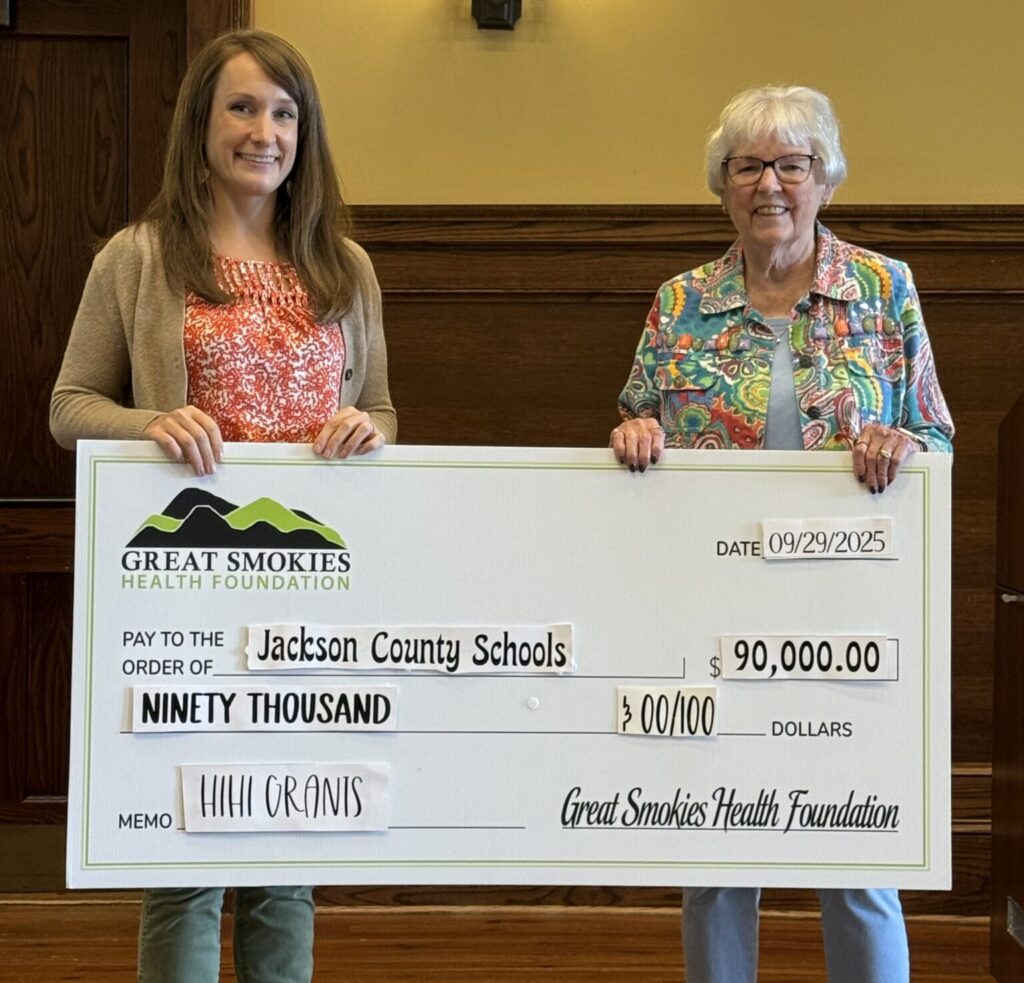
For Jackson County’s neighbors, a privately funded Project AWARE replication is already underway. Several years ago, Crews said, her team connected with the Great Smokies Health Foundation, which serves Jackson, Swain, Macon, and Graham counties, to develop a three-year funding opportunity directly informed by the lessons and best practices surfaced in Jackson County Schools’ Project AWARE program.
In addition to receiving some of this funding to hire an additional mental health clinician, Crews said Jackson County Schools is helping school districts in neighboring counties apply for the grant. This fall, Graham County Schools and Swain County Schools will begin to “integrate with, expand, or initiate school-based mental health services based on specific elements” of North Carolina’s Project AWARE, per the Great Smokies Health Foundation.
In Nash County Schools, Kerr explained that national opioid settlement funds will help sustain two of the mental health clinicians previously funded by the federal grant. The use of this funding, available to North Carolina communities harmed by the opioid overdose epidemic, was approved by Nash County commissioners.
In Sampson County, Rouse said she has similarly been applying for new grants and speaking with county commissioners to secure additional funding.
In the meantime, she said she’s used remaining federal dollars to continue to raise awareness around mental health in Sampson County Schools and its surrounding community in hopes of sustaining the momentum Project AWARE created. This includes bringing mental health training into the community, such as leading QPR suicide prevention trainings with local churches, youth groups, and sororities.
“Anybody that will listen, anybody that wants us, we’re coming,” Rouse said.
Changes to North Carolina’s State Plan Amendment (SPA), the document that details changes the state seeks to make to its Medicaid system, would unlock new funds that can help offset the cost to hire full-time equivalent (FTE) positions.
According to Austin, updated language in the SPA will allow school districts to seek partial Medicaid reimbursement for the school-based services practitioners provide beginning July 1, 2026.
“If you have one FTE who’s a licensed clinical mental health clinician … you’ll get a portion of that FTE via Medicaid cost recovery,” she said.
The process for school districts to access this funding is highly technical. The Medicaid Learning Collaborative (MLC), run by the nonprofit Rural Opportunity Institute, has provided free training to North Carolina district leaders on how to correctly document and bill for this funding source.
Each of the three Project AWARE sites in cohort two participated in the MLC’s most recent training program, and the MLC plans to launch a 2026-2027 cohort.
Crews said that Jackson County has been preparing for this policy change by getting all of the district’s school-based mental health clinicians enrolled as individual providers in NCTracks so that they would be prepared to seek reimbursement through Medicaid for the services they provide. According to NC DHHS, by July 1, 2026, all eligible school-based practitioners must enroll in North Carolina Medicaid.
Using what they learned from the MLC, Crews said her team of clinicians has practiced submitting clinical notes and documents as if they were seeking reimbursement ahead of the July 1 change.
“We’ve been waiting, waiting, waiting, for this to come. So that now, all of our systems are in place and once all of our providers get enrolled, we’ll be ready,” said Crews.
However, even if a school district were to maximize their reimbursement, Crews said school-based Medicaid alone is not enough to cover the entire cost of a mental health program.
Looking to the future, Austin said there’s still much work to be done to support students’ mental health. But, Project AWARE has proven that, by bringing mental health education and services directly into schools, students are more likely to actually receive behavioral health care.
“It just makes sense that this is where we should be investing,” said Austin.