Ask & Answer | A visual guide to high school grading in North Carolina for spring 2020

Haz clic aquí para leer este artículo en español.
We heard from Astrid Emily Francis, an English as a Second Language (ESL) teacher at Concord High School, that students and parents alike are looking for more clarity on how to choose which grading option makes the most sense for them under a temporary grading policy approved by the State Board of Education on April 23.
The grading policy allows high school students in grades nine through 11 and non-graduating seniors to choose between a grade of pass/no credit or a numeric grade for their spring semester courses this year.
According to the policy, students will have the option of receiving a “pass” grade for the semester based on their course grade as of March 13. If they would rather have a numeric grade, they can take the grade they would have had as of March 13 or whatever grade they would have received as their grade improved throughout the rest of the semester via remote learning. Students who were not passing as of March 13 will be able to raise their grade via remote learning or choose a withdraw option that will not appear on their high school record.
While the policy is aimed at leveling out the playing field during remote learning, the decision on which path to take is personal for each student.
Wendi Pillars, an ESL teacher in Chatham County who is also a graphic recorder and facilitator, has been using her artistic skills to visually guide students in remote learning. These hand-drawn visual graphics include a visual note template for ideas, and graphic facilitations of Larry Ferlazzo’s videos at Education Week including parent tips for remote learning and tips for remote teaching.
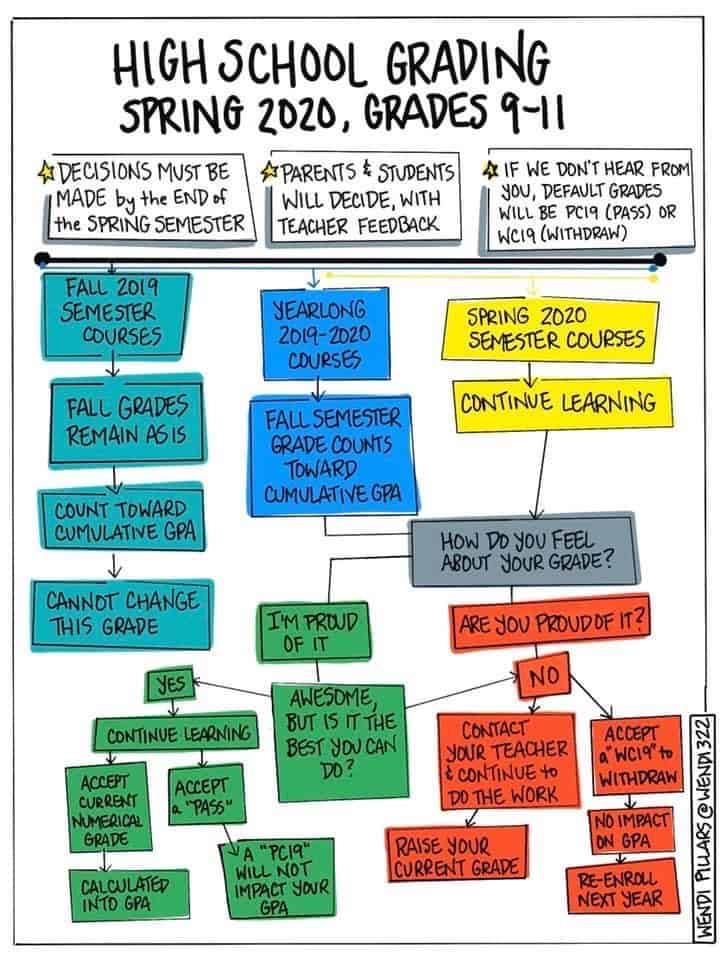
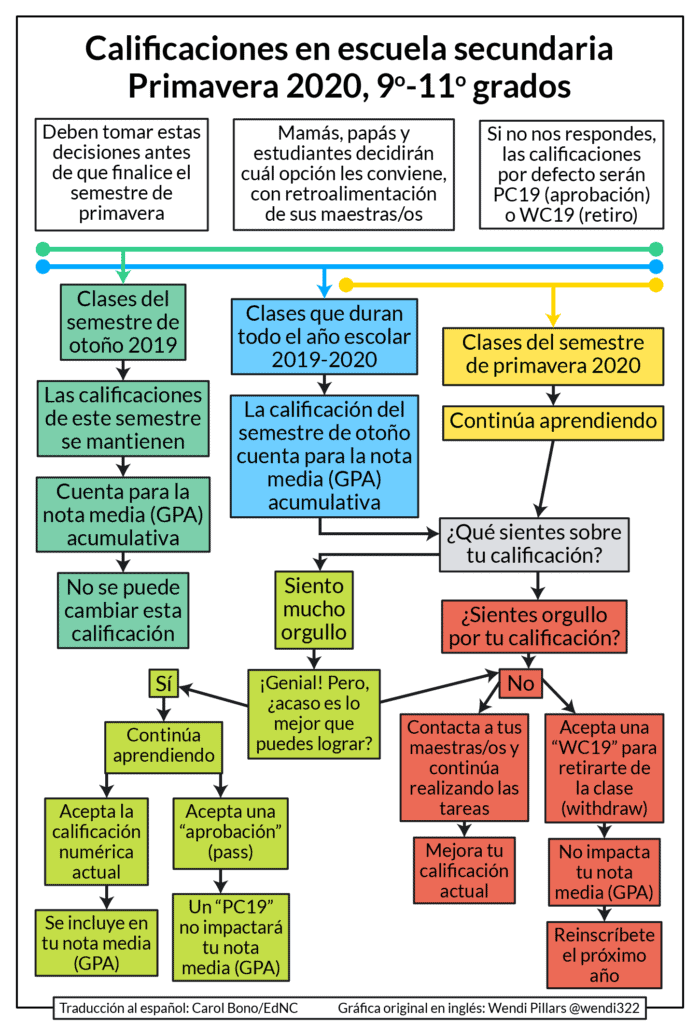
In one of her recent graphic sketches, Pillars provides a map students can use to help with their own grading decision. She specifies at the top that decisions must be made by the end of the school semester, parents and students will decide what option to take with teacher feedback, and if teachers don’t hear from students, default grades will be pass or withdraw. We have translated the graphic into Spanish.