
Hand to hand: Mitchell County craft school convenes makers and materials from across the world
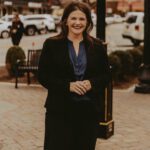
At the paper studio, Lynda Liu is near the finish line of her eight-week spring concentration. She came from Denver, Colorado in March for the full immersion — a single material, one studio, the same instructor, the same small group of students, for the duration. In her seventh week, she began a site-specific installation — paper artwork built for one particular place at the school.
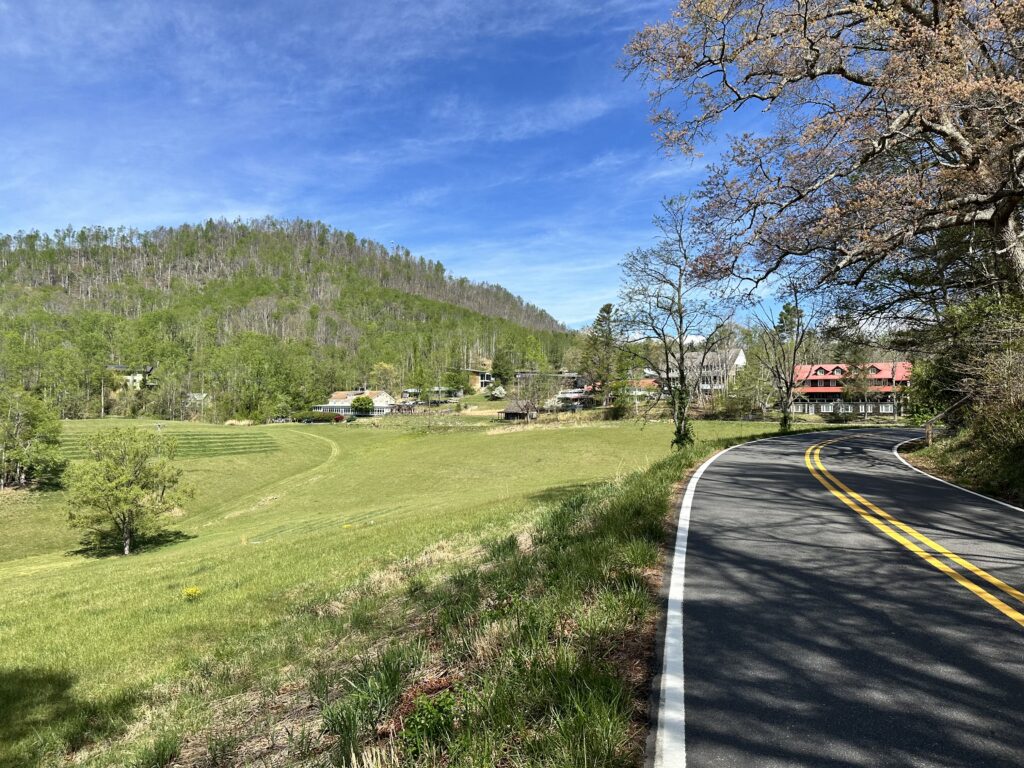
Today she is outside in the sun, drying sheets of paper with the Mitchell County ridgeline in the distance. “I’d heard these are the best facilities in North America,” she said. “It has exceeded my expectations.”
 Sign up for the EdWeekly, a Friday roundup of the most important education news of the week.
This is what Penland School of Craft does. It brings a person from somewhere else to a hilltop in western North Carolina to spend eight weeks working in one material — the way someone 200 years ago might have spent the winter doing the same. The school will mark its centennial in 2029. About 1,500 students pass through each year. Sixty buildings sit on a campus, ranging from a structure built in the 19th century to one finished in 2018.
It began with weaving.
In the 1920s, Lucy Morgan started the Penland Weavers as a cooperative — local women, learning a trade, selling what they made. Microenterprise, a century before the word existed. Morgan brought in an instructor; people from elsewhere heard about it and asked to learn too. By the 1940s, students were arriving from across the country. The Weavers persisted into the ’60s. The school is what remained.
Today, what Morgan started for local women has become an international destination. A map on campus is pinned with home cities from every continent. Japanese metalsmiths and glassblowers cross the Pacific to study and teach at Penland, for example. The school has, for as long as anyone can remember, brought in instructors from other countries. The hilltop is small, but the reach is not.
Director of Operations Ian Henderson came to Penland in 2010 as a participant in one of the school’s two residency programs. He has been here uninterrupted since. The pattern of behavior is older than him. People come for a residency, fall for the place, and put down roots. Mitchell County has more working artists per square mile than its population should suggest — many artists came for a few weeks and never left.
Communications and Marketing Manager Robin Dreyer has been at Penland for 31 years. He is retiring this month.
Asked what makes the school different from a university art program, he is precise: no degrees, no grades, no set curriculum, or standing faculty. Workshops are organized by material — books, clay, glass, iron, paper, photography, metals, textiles, wood — and run one week, two weeks, or eight. Most are open to all skill levels, meaning a beginner and a working artist sometimes sit next to each other.
Penland is not preservationist, Henderson added. Some of what gets taught is centuries old, but it is taught in a contemporary context. The school is not in the business of recreating colonial pots. It is in the business of perpetuating skills and materials — pots that hold water, glass that lets light through, brushes whose handles get carved, and bristles bundled by hand. A person carves the handle. A person bundles the bristles. A person teaches another person how.
“It’s like a language,” Dreyer said of how craft skill gets passed down. “It’s a living thing, and some parts of it can only be passed along in person.”
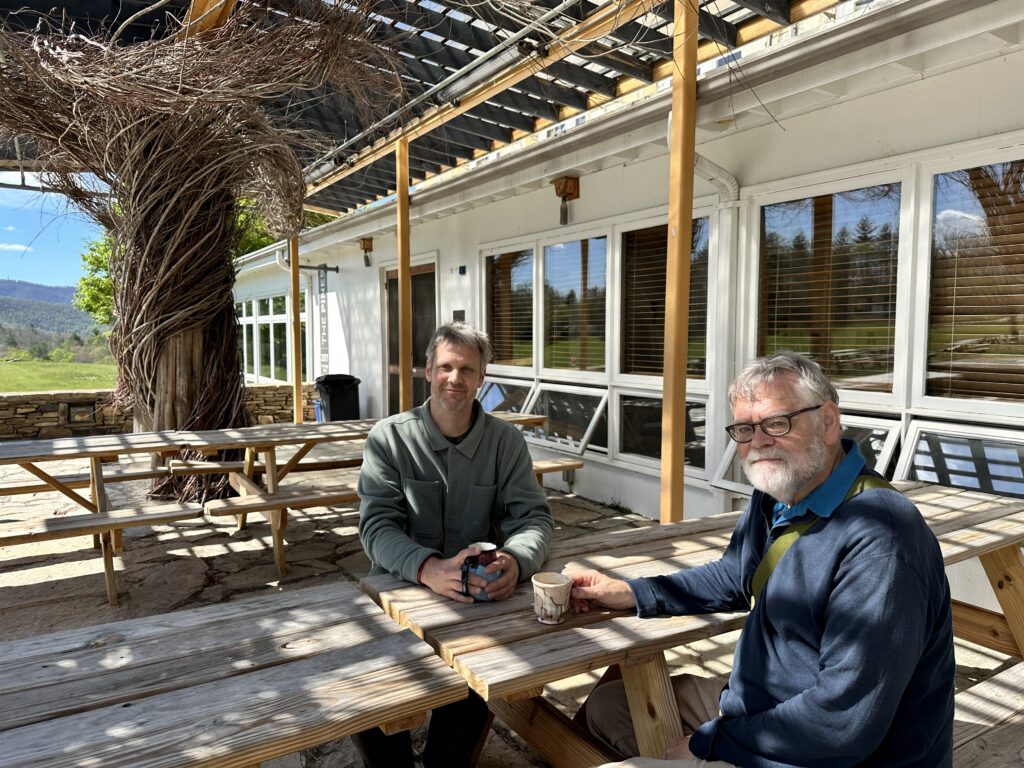
The Mitchell County relationship is older than the school. Penland sits on land once owned by an Episcopal mission — outsiders arriving with resources, as Henderson puts it, “to make life better in this region.”
The school is now one of the county’s significant employers, and about a fifth of its staff are native to the surrounding counties. Penland runs an after-school program at a Spruce Pine housing project, a teaching-artist residency in the high school, and a classroom on campus where elementary students arrive by bus. Each spring, a community open house draws roughly 700 neighbors onto the grounds for an afternoon.
The operating budget is roughly $10 million. About half comes from tuition, room, and board. The rest comes from individual donors, endowment, family foundations, and a small annual general support grant from the North Carolina Arts Council.
When Hurricane Helene hit in September 2024, about 50 people were on campus. Power was out for three weeks. Internet was gone for months. Roads to the airports were impassable for five or six days. Almost every building was damaged. A national tree-service crew of 15, with a crane, spent a week lifting downed trees off rooftops. A core fellowship student carved wooden spoons from the felled trees — labeled by species — and gave them as presents to the people who had been on campus when the storm came through.
Henderson recalled asking someone to call 911 and being told there was no answer. “It shattered the myth of self-sufficiency a little bit,” he said.
The school had a propane-powered backup generator that ran the dining hall building, which became the gathering place and workspace for staff and community in the days after the storm. The pandemic, he said, was actually more disruptive — they had to cancel more, and they had to ask themselves whether the face-to-face thing could be done at all without the face-to-face part.
It could not.
In Raleigh on Wednesday, North Carolina’s arts advocates will gather at the General Assembly to celebrate the arts across North Carolina.
At Penland, someone in the paper studio will be laying sheets out to dry. Someone in the wood studio will be bundling brush bristles. In the clay studio, an atmospheric kiln will be fired. One hundred years ago, Morgan taught a small group of local women to weave, and they sold what they wove. The language has changed shape — clay, glass, paper, metal, wood — but the way it is best passed along at Penland hasn’t.
Liu, the Colorado artist, put it more simply: “It’s just a phenomenal place.”
This is Part 3 of a three-part EdNC series, marking ARTS Day at the North Carolina General Assembly on May 13. Learn more about ARTS Day at artsnc.org.