
‘Folk means people’: 100 years on, the John C. Campbell Folk School is still teaching what neighbors helped build
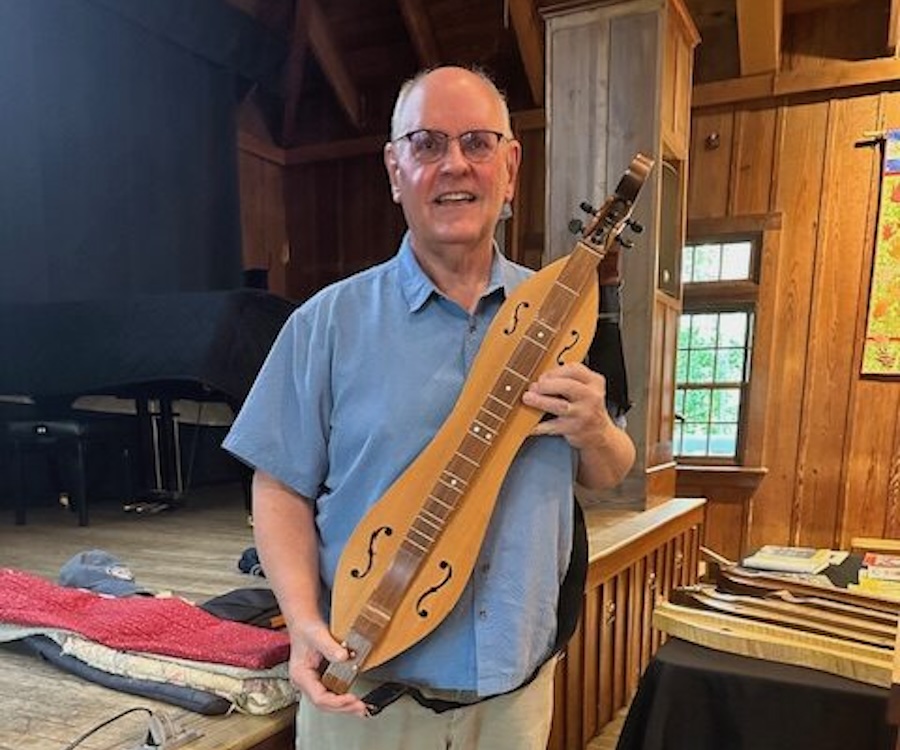
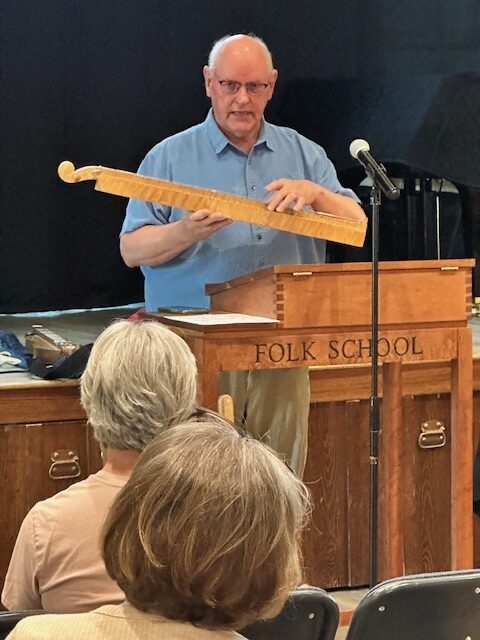
In The Community Room on the John C. Campbell Folk School campus, Jack Smoot is teaching a dulcimer class the history of the dulcimer.
The word, he tells them, comes from the old French phrase for sweet song. The instrument has a diatonic fretboard: like a piano with no black keys. Run your finger up it and you are already playing a scale. The mountain dulcimer that came to be played up and down the Appalachians did not arrive whole, he says. It evolved slowly from a German instrument called the scheitholt, brought over by immigrants who followed the Great Wagon Road south through the valleys between the Blue Ridge and the Alleghenies. A Smithsonian curator once told a researcher who wanted to study these instruments to “follow the wagon roads.”
Smoot built his first dulcimer in a class here in 1991. He has been teaching at the school since the late 1990s. The instrument he made that week, he is still playing.
 Sign up for the EdWeekly, a Friday roundup of the most important education news of the week.
This is the through line of the place. Students return. Some come back to teach. Some end up on the board. Smoot has done all three.
Lillian Gantsoudes took her first class in 2002 after her husband’s death and kept coming back. Janet Davis drove up from Louisiana in 2005 because her husband, a wood carver, kept asking her to. Gantsoudes and Davis met in a weaving class, and bonded. They are now finishing their last term together on the Folk School’s board.
“I almost feel jealous of what’s ahead of them,” Davis said of first-time students. “I miss that magic hook.”
Executive Director Bethany Chaney took her first class here in 2016 — pine needle basketry — while working in community economic development across the state. She had Googled where in North Carolina she could learn the craft and was, she admits now, embarrassed she had not heard of the place before. Within a few years she was running it.
Asked what “folk” means, she does not hesitate.
“Folk means people,” she said. Not a style. Not a period. Not the wall décor at Cracker Barrel or the gift-shop version of a culture sold back to the people who made it.
The history of the John C. Campbell Folk School
The school was founded in 1925 by Olive Dame Campbell and Marguerite Butler. It sits in unincorporated Brasstown, on the Cherokee-Clay county line in far western North Carolina.
The campus runs to 30 buildings across 270-some acres, but it began with pledge cards. A local merchant named Fred O. Scroggs collected more than a hundred pledges from neighbors who believed a folk school belonged here. Some pledged cash. Most pledged what they had: timber, firewood, mules, volunteer labor, rocks scraped from their fields. The Community Room on campus is built from that timber and those rocks. They still call it that, because that is what built it.
A hundred years later, the school enrolled roughly 5,700 students last year and welcomed more than 15,000 visitors. About a quarter of students come from North Carolina, most from west of I-40. The student demographic skews older — retirees with discretionary time — but Chaney says the average age is dropping, and she has a theory: People are tired of screens. They want to make something with their hands.
About 80% of the school’s budget is self-generated through tuition, room and board, and retail. The rest comes from individual donors, family foundations, the Appalachian Regional Commission, and the North Carolina Arts Council.
The hook Davis names is hard to explain to someone who hasn’t been. You make your own bed. Phones stay in pockets. Eight strangers eat at a long table for a week, and by the end of it they are no longer strangers. You work with your hands at something most people don’t work at anymore — a loom, a forge, a lathe, a length of pine root and a needle.
“Everybody is a maker,” Davis said. “You may not think you are, but if you make dinner, you’re a maker. If you grow a tomato plant, you’re a maker.” Most people, she said, are already doing it and don’t know it. She said the next part twice: “Make something every day.”
When Hurricane Helene tore through western North Carolina in September 2024, the Folk School was lucky. Cell service and the internet went down for three days. The school lost roughly $80,000 in canceled enrollments — losses Chaney calls negligible against what neighbors farther north absorbed.
The harder part, she said, was watching it from inside a campus that had been spared. Staff wanted to do something and could not figure out what. They sent small groups north with cases of water. They surveyed area artists who had lost their studios and asked what they needed. The first answers were not about art. People were cleaning out houses, helping neighbors, trying to find footing. But by February, the answers changed.
The Helen-impacted artists were ready to make again. The school opened its studios — equipment, housing, meals in the dining hall — to instructors and former students for weeks at a time, so they could fill the orders that pay their bills. Many, staff said, were grateful simply for a week away from the wreckage at home. A campus built by neighbors was, again, behaving like one.
On May 12 and 13, North Carolina’s arts advocates will gather at the McKimmon Center in Raleigh and visit the General Assembly. In Brasstown, the looms will be running and Jack Smoot may be presenting another dulcimer presentation.
A hundred years ago, neighbors built this place out of what they could put on a pledge card. The pledges have changed shape — tuition, donors, foundations, federal partners, state arts funding — but the school is still standing the same way it has always stood: on what people are willing to put in.
This is Part 2 of a three-part EdNC series running this week, leading into ARTS Day at the North Carolina General Assembly on May 13. Learn more about ARTS Day at artsnc.org.