
Gov. Stein announces STEP-NC, the first health care apprenticeship program in state government

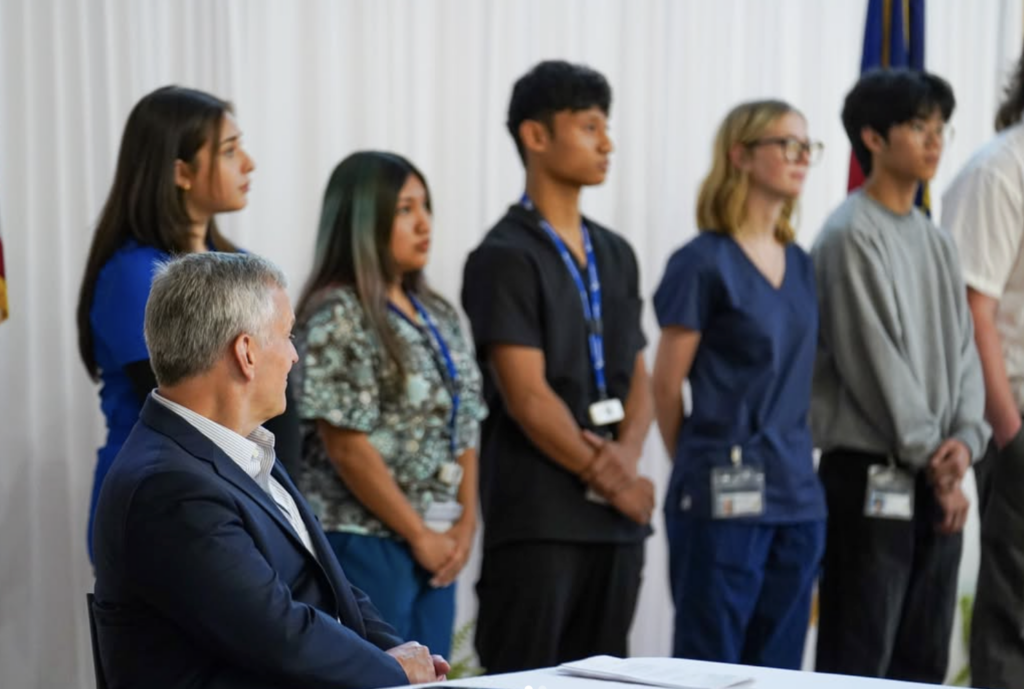
Gov. Josh Stein, alongside the N.C. Department of Health and Human Services (NCDHHS) Secretary Dev Sangvai and leadership at Broughton Hospital, announced the first ever health care apprenticeship program within state government on July 16.
The Division of State Operated Healthcare Facilities Skills, Training and Employment Pathways North Carolina (STEP-NC) is a partnership between NCDHHS, ApprenticeshipNC, and the North Carolina Business Committee for Education (NCBCE), according to NCDHHS’s website.
STEP-NC serves “high school students, adult learners, and new talent,” creating a pipeline for these individuals to enter “vital roles in health care to strengthen the workforce in North Carolina’s health care system, including state health facilities, and meet mental health needs in North Carolina,” said the press release.
“This partnership is one example of the efforts underway to boost the health care workforce in our state,” Sangvai said in the press release. “This initiative creates pipelines for clinical and non-clinical positions that keep our health systems running, supporting careers spanning from maintenance professionals to nurses.”
This summer, six recent high school graduates participated in the first program cohort by working as pre-apprentices at two Morganton-based facilities: Broughton Hospital, a state psychiatric hospital, and J. Iverson Riddle Developmental Center, a state developmental center. These students are being trained in the behavioral health and maintenance technician fields. Upon their completion of this program, the students may apply for a registered apprenticeship in their desired field.
 Sign up for the EdWeekly, a Friday roundup of the most important education news of the week.
Health care shortages in NC
Similar to trends across the country, North Carolina’s health care capacity is projected to decline over the next several years. Currently, the National Center for Health Workforce Analysis rates the state’s physician adequacy at 84%, with that adequacy dropping to 78% by 2033.
Furthermore, research projects that North Carolina will have a shortage of nearly 12,500 registered nurses (RN) and 5,000 licensed practical nurses (LPN) by the year 2033. In 2024, NCDHHS designated 97 of North Carolina’s 100 counties as having a health care professional shortage in the field of mental health.
Apprenticeship programs like STEP-NC help fill those gaps by creating pathways for people looking to enter the field, allowing them to “earn while they learn” and gain hands-on experience under the supervision of experienced mentors.
“We are facing a critical shortage of health care workers in North Carolina, especially in our state-operated facilities. STEP-NC cultivates a sustainable workforce pipeline starting as early as high school,” Stein said in the press release. “Through this program, students can qualify for free tuition, learn new skills, and jump-start their careers — all while helping North Carolina become safer and healthier.”
The program is also in line with Stein’s Executive Order No. 33, which committed the state to strengthening the behavioral health crisis and criminal justice systems. It also “advances the goals of the Governor’s Council on Workforce and Apprenticeships to reduce state vacancy rates and double the number of apprentices statewide,” according to the press release.
Read more about efforts to support health care in NC
What’s in the future for STEP-NC?
According to the press release, NCDHHS aims to expand apprenticeship programs across all state-operated facilities.
Right now, the program is only operating at two facilities through Opt-In, which is a program “open to graduating seniors from Burke County Public Schools sponsored by Industrial Commons.” Opt-In combines community mentorship, professional development, and work experience to “increase post-secondary credential attainment in Burke County.”
“The apprenticeship model responds to critical workforce needs by creating a tailored pathway supporting both employee growth and long-term retention,” CEO of Broughton Hospital Dr. Timothy Miller said in the press release. “This program allows students to find rewarding job opportunities close to home that align with their career interests. Health care facilities like ours offer many different career options, from direct care jobs like nursing to administrative support functions to maintenance.”
Sullivan emphasized the benefit of the program being tuition-free and local, allowing participants to pursue careers in skilled trades and health care in their own communities with no debt. This “means the workforce caring for our neighbors is coming from our neighborhoods,” Sullivan said.
The interest form for STEP-NC is available here.