
18 months after Helene, the Appalachian Disaster Coalition is still building
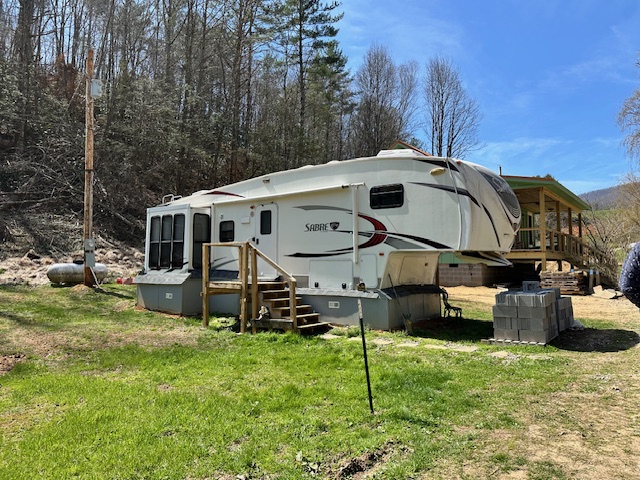
She had made peace with the camper.
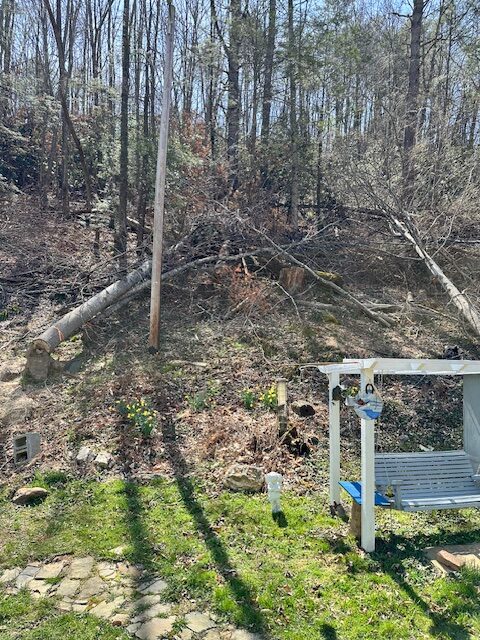
After Hurricane Helene sent a pine tree straight through Laurel Lesesne’s roof — and after her insurance company handed her $22,000 and called it settled — she had arranged a little fire pit near the creek, set out Adirondack chairs, and quietly decided this was her life now. She’s 75. The camper could work. She was fine.
Then the Appalachian Disaster Coalition’s Bradley Honeycutt pulled up.
“She had the place cleaned up. She had it all set for herself to live in that camper forever,” he said. “And I pulled up and I’m like — uh-uh. She needs a house. This is not OK.”
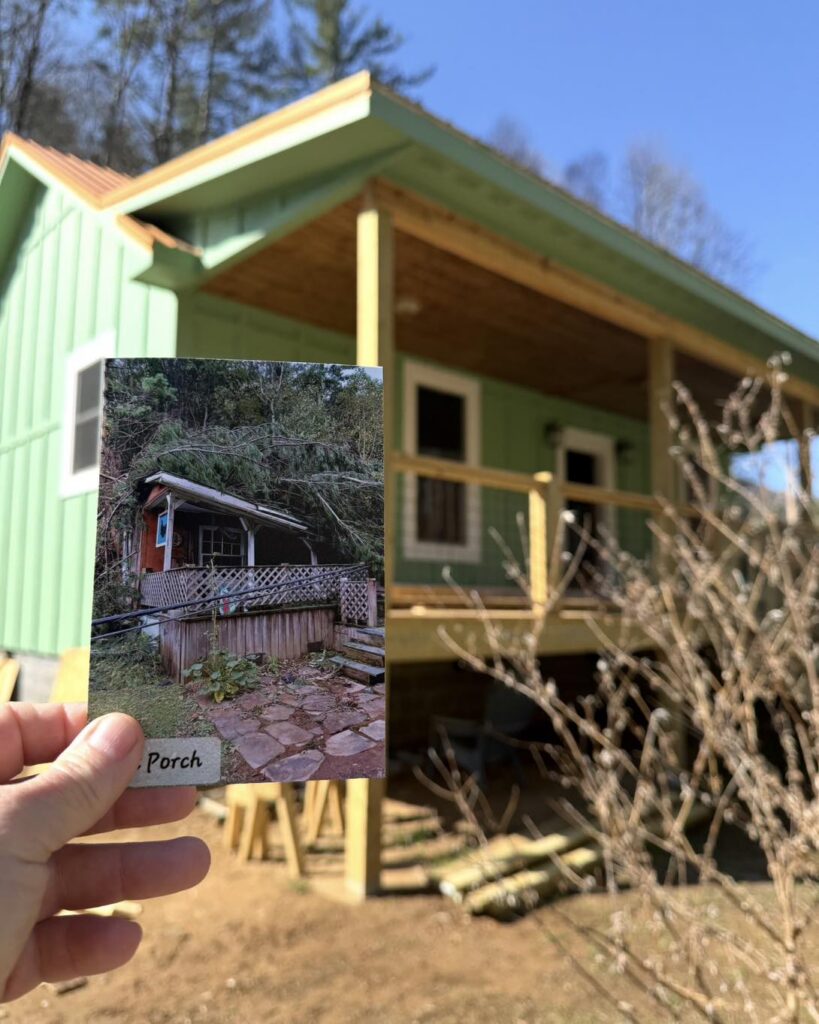
That was last year. And now the concrete is being poured for the foundation of what will soon be Lesesne’s brand-new home — 1,400 square feet, built from a kit the Mennonites assembled under roof in six days. Total cost: around $142,000.
All of it was made possible by the Appalachian Disaster Coalition (ADC), the nonprofit Honeycutt built in Helene’s wake that is now rebuilding homes and navigating a five-year recovery arc across Yancey, Mitchell, Avery, Madison, and McDowell counties.
Honeycutt is from Burnsville. He’d been living in Texas when Helene hit, splitting time between both places. By the Saturday afternoon following the storm, he was back in Yancey County.
He drove every road he knew, stopped at every house he could reach. At each door, he asked the same thing: did they have food and water? He quickly realized something: “We need to get supplies.”
He found Wi-Fi at the Yancey County courthouse. Friends called. Three RVs with Starlink arrived. He secured space in the Roses’ parking lot, and within days, it had become a regional hub with supplies flowing in from Louisiana, Texas, and Pennsylvania and volunteers arriving daily.
By January 2025, he pivoted. Everyone was handling supplies. But one voice kept cutting through: “I don’t need a buddy heater. I need a house.” So ADC shifted to rebuilding them. They’ve now helped 52 families get back under their own roofs through repairs, with four full ground-up builds — including Lesesne’s — currently underway.
 Sign up for the EdWeekly, a Friday roundup of the most important education news of the week.
‘Busy roadmap to recovery’
Lesesne’s story isn’t just about a house. It’s about what happens without someone in your corner.
The Federal Emergency Management Agency (FEMA) came out and denied her. She accepted it. ADC arrived, opened a case file, and made a call to their FEMA representative. The denial was overturned.
“The average person thinks, fill out the application, get the inspector, and that’s enough,” Honeycutt said. “That’s just not how it works. There’s probably so many people in Yancey County that were denied that I’ll never get to.”
Whitney Dailey, ADC’s community outreach coordinator, came from Georgia eight days after the storm intending to volunteer briefly and go home. She hasn’t left. She’s quick to explain what made Helene so hard to navigate: private wells, septic systems, private roads. Systems the county doesn’t maintain. Systems FEMA often doesn’t cover.
Eighteen months out, they’re still receiving five to 10 new referrals every week.
“For a lot of individuals up here, there’s no internet access, no ability to stay eight hours on hold with FEMA,” she said. “So we do all of those things. It is a very busy roadmap to recovery. And individuals who have never been through a disaster don’t know which road to take.”
Andy Buchanan lost his own home, his vehicles, and his business to Helene. He’d been trying to figure out how to rebuild on his own — quietly, stubbornly, the way people tend to do in the mountains — when ADC showed up.
“I was navigating how I was gonna do it myself,” he said. “That was kind of hopeless.”
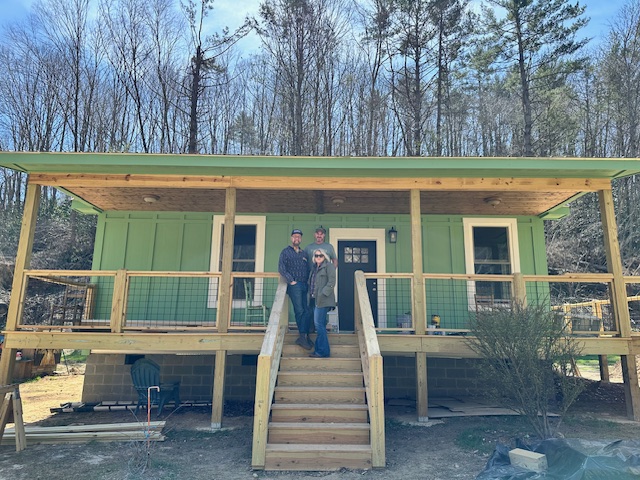
Once he got back into his home, he felt compelled to do for others what had been done for him. He now works as ADC’s project manager, a role funded through NCWorks, and brings his background in HVAC and gas plumbing as well as something harder to replace: the credibility of someone who has lived exactly what these families are living.
“The Appalachian people ain’t much for asking for help,” Buchanan said. “But I lived it, so I just share my story with them. And I think it helps them to know that I’m from here, I got helped, and it can work out.”
His grandfather always said: don’t turn away what someone’s offering because you’ll rob them of a blessing. Buchanan didn’t understand it until Helene.
“I was feeling guilty by all these people showing up and doing all this hard work,” he said. “But then I started seeing the joy on their faces. They were getting a blessing, too.”
For Dailey, who came from Georgia and remains committed to these Appalachian communities, the work has taken on a deeper meaning.
“Homesteaders, farmers, craftsmen, basket makers, iron and knife makers — all of that is still alive here,” she said. “We want to help protect and preserve that Appalachian culture.”
Moving forward
Honeycutt is clear-eyed about what’s at stake if the support slows down. ADC has grants from the WNC Community Foundation, United Way chapters, and the American Red Cross. The DeVito Family Trust, connected after an Epoch Times feature raised $75,000, is funding staff salaries for two full years.
“People think when things stop showing up on the news, everything’s fine,” he said. “But there are community members that didn’t have a lot to begin with that are doing without — even more now. Finding an organization, locking arms, helping in some type of fundraising initiative or bringing a donor to the table — it’s more important now than it’s ever been.”
Back at Lesesne’s place, the fire pit is still near the creek. The Adirondack chairs, too. But now there’s a door behind them — a real one — leading into a home that is hers.
Honeycutt will be back for the certificate of occupancy. He just needs to pick up a toilet first.
To learn more about the Appalachian Disaster Coalition, donate, volunteer, or refer a family in need, visit adc-wnc.org.