
EdNC’s architecture of participation
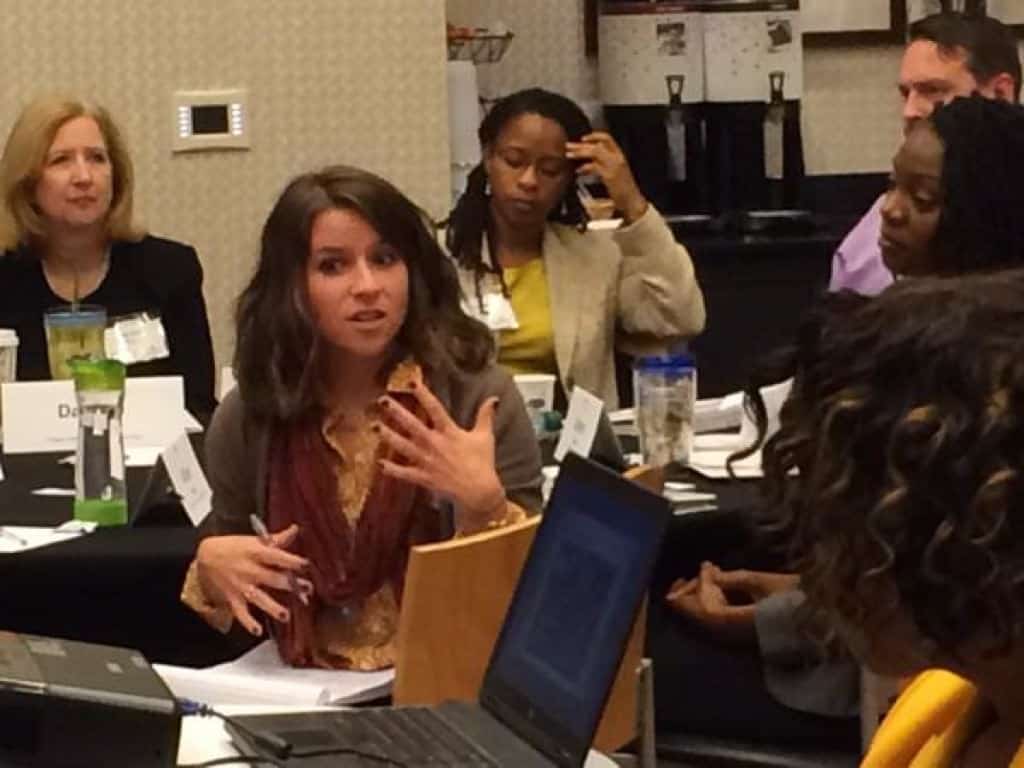
From the beginning, EdNC.org has dedicated ourselves to giving everyone a voice in the conversation around the future of our schools and our state. We believe that we will achieve better policy outcomes with more stakeholders engaged in the process. We believe that giving educators, parents, and even students a voice in the debate will bring more diverse voices to the table and strengthen the process.
Over the summer, we had a meeting with an educator who teared up reflecting on the fact that our platform provides a voice for educators who often feel siloed and alone. Other educators have shared that for the first time in a long time they feel as if an alternative storyline has emerged around our schools — a positive one — because we have shared stories of success in our schools and highlighted the every day heroes in our classrooms.
The term “architecture of participation” is often used to describe strategic approaches designed to both build community, but also to give your community agency to participate in the process.
And so we set out to create the architecture for your participation at EdNC from day one.
The architecture includes the following layers:
- Great content everyday. We made a decision to invest in content creation through the hiring of a staff that all play a role in creating the pieces that we publish on EdNC.org. We also decided that we would be a platform for perspectives from across North Carolina and the country that we believe our audience would benefit from hearing.
- We set aside resources to both launch ourselves on a variety of social media platforms, but also to make sure that we had a marketing budget to push content in a targeted way. We sponsor posts on Facebook and Twitter to a broad audience from left to right, but we also promote content to regions of North Carolina that we believe ought to see them. This has helped us broaden our reach.
- We work to leverage other networks. The Farm Bureau, other education organizations, and school districts themselves are known to share our content that they believe will provide a service to their community.
- We have dedicated ourselves to striking partnerships with legacy media so that newspapers, television networks, and even radio, can share our content.
What does this mean for our work?
We believe in the power of our partners, both the individuals and the organizations, to showcase our content to individuals we may not reach otherwise.
The broad reach that we have dedicated ourselves to building is driven by a focus on our community at the core. Our intention began with a desire to be a new form of a think tank — offering research, analysis, and more — while utilizing all of the communication tools available to us.
The byproduct is a community-driven platform that encourages individuals from across North Carolina to participate.
Allison Rae Stewart is a teacher at Centennial Middle School in Raleigh. She is an unaffiliated voter. She is intellectually curious about how to better connect politics, policy, and practice in the classroom.
Her series for EdNC this summer largely focused on professional development — a topic on which educators should be heard. One key finding for us is that when an educator creates content for us, it tends to be shared and read more often than most content.
Why?
We see a hunger for teacher voices to be heard on the issues.
Over the past couple of weeks, we ran a series called Powered Schools. Earlier in the summer, a group of facility managers, teachers, and sustainability experts approached us regarding the possibility of doing a few articles around a better style of facility construction and management. They were inspired by examples that they had seen around North Carolina of what was being done well, disappointed by examples where we were falling short, and hoping to challenge others to consider what could be done. We are humbled by your great insights and hard work.
Since our launch, we have published 172 voices in 709 articles. Many more of you have posted comments, shared our work, and engaged in a variety of other ways.
Thank you for participating in the conversation.