
More than just play: How Richmond County kindergarten teachers are building strong readers

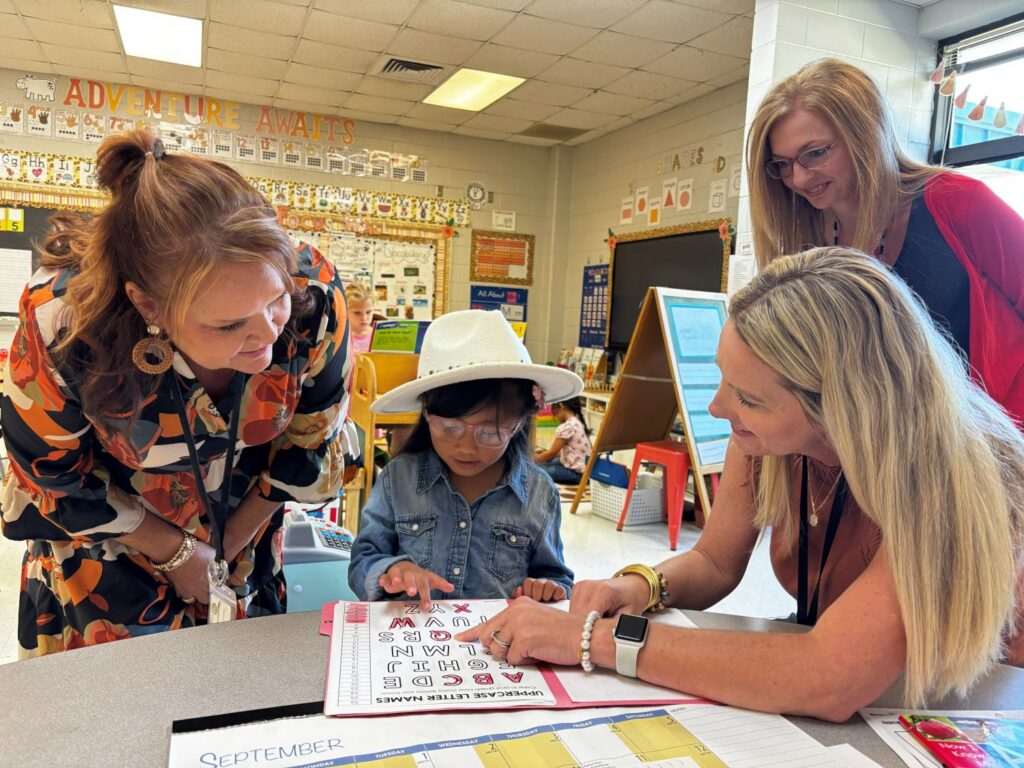
When you enter a kindergarten classroom at Mineral Springs Elementary in Richmond County Schools, it is obvious that children are having fun while they learn.
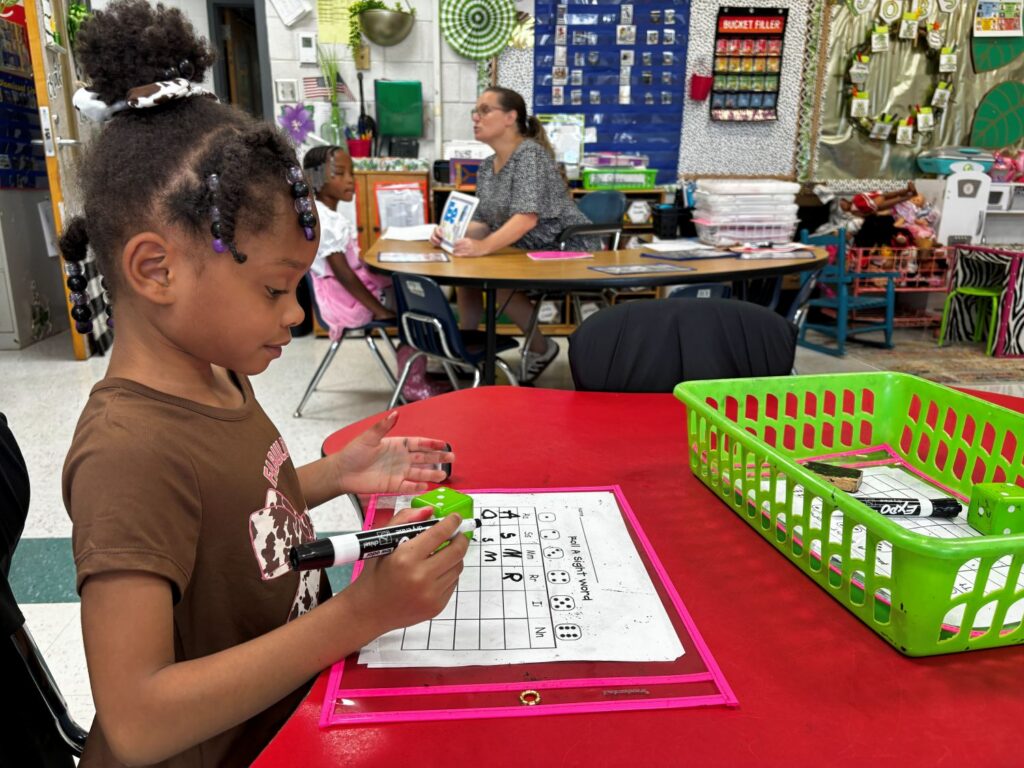
Children are rolling dice and writing letters, hammering pieces together to build letters, using Play-Doh to create upper and lowercase letters — all while sharing their new knowledge with anyone who will listen.
They are engaged and build their communication skills as they work with sounds and words. Children become cashiers at the grocery store station, mechanics at the auto shop station, and even enjoy caring for a baby while carrying on a conversation with a classmate. And all of it is intentional.
 Sign up for Early Bird, our newsletter on all things early childhood.
The kindergarten teachers have found ways to combine strong literacy instruction with authentic joy, something equally important for every child.
“We turn everything into a game,” Kelly King, kindergarten teacher explained.
That philosophy shows up throughout the day, from phonological awareness and writing literacy stations to oral communication skills in dramatic play. Throughout these classrooms, children are actively involved in their learning, often without realizing just how much they are learning along the way.
Learning through movement, talk, and play
Small-group instruction and literacy stations are central to the teachers’ approach. Heggerty phonemic awareness lessons, for example, become highly interactive experiences as children use movement and their bodies to work with rhyme, syllables, beginning and ending sounds, and other foundational skills. The teachers describe the lessons as quick, hands-on, and engaging for young children.
That emphasis on phonological awareness appears to be paying off. Nicole Pait, district director of K-5 ELA and social studies, noted that recent data at Mineral Springs Elementary showed particular strength in this area and pointed to the alignment beginning in pre-K, where students have already been receiving phonological awareness instruction.
But perhaps even more striking is the amount of language woven throughout the classrooms. Turn-and-talk begins early in the year, sometimes with questions as simple as a child’s favorite food, toy, or activity.
The goal initially isn’t a perfect academic response. It is teaching children how to have a conversation: listen, respond, take turns, and communicate an idea. That foundation matters for every child and can be especially valuable for multilingual learners who may enter kindergarten with limited English.
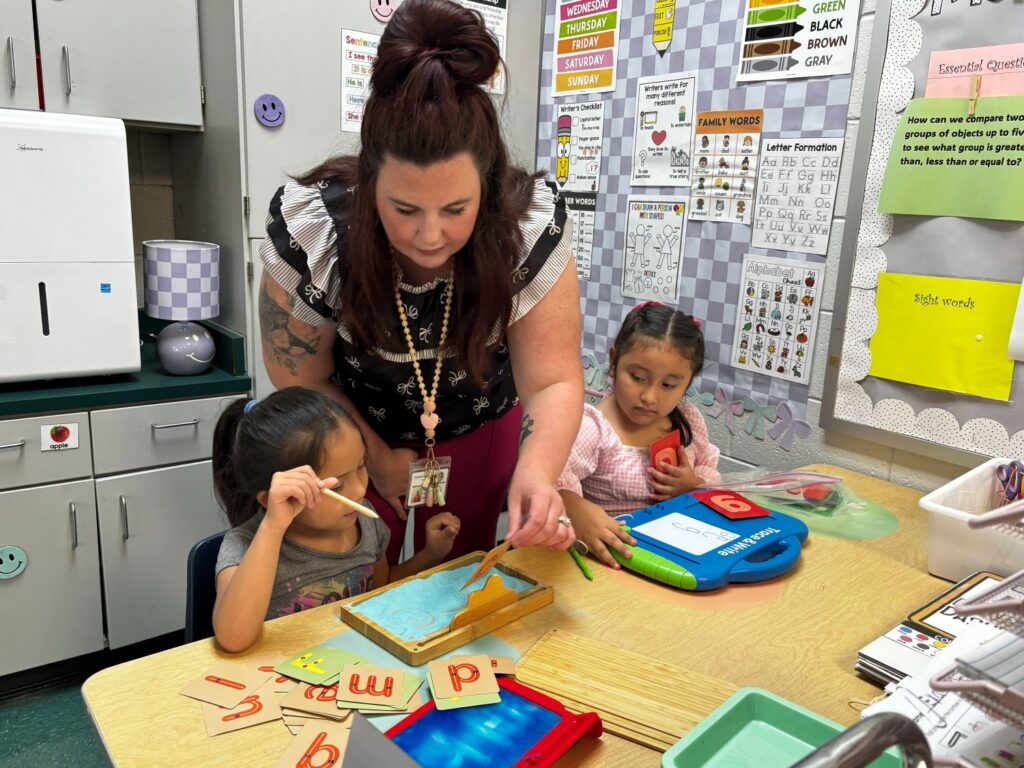
Teachers use sentence frames and other supports to help children learn how language works while also giving them confidence to participate. Those oral language experiences are intentional and eventually support reading and writing as children become more comfortable forming sentences and expressing increasingly complex ideas.
The approach reflects something educators sometimes overlook in the push toward academic standards — oral language is foundational to literacy.
Purposeful play is serious learning
The same philosophy carries into play-based learning. A classroom flower shop gives children opportunities to exchange money and interact with customers. A grocery store becomes a place to talk about food, families, cooking, and numbers. At a pretend mechanic shop, children use checklists and read words about tires, tools, and repairs.
One student is particularly drawn to the toy stethoscope. You will find him wearing it around his neck as he makes daily rounds to check on his teacher and instructional assistant.
While some may look at these stations and see children simply playing, there is so much more taking place. Each station and activity is intentionally designed to build language development, strengthen background knowledge, and help children make connections to real-world experiences.
At the same time, children are learning to solve problems, work with others, develop social-emotional and executive functioning skills, and engage in meaningful conversations. These experiences also give children opportunities to talk about, process, and make sense of things they have encountered outside of school, helping them connect what they already know to what they are learning in the classroom.
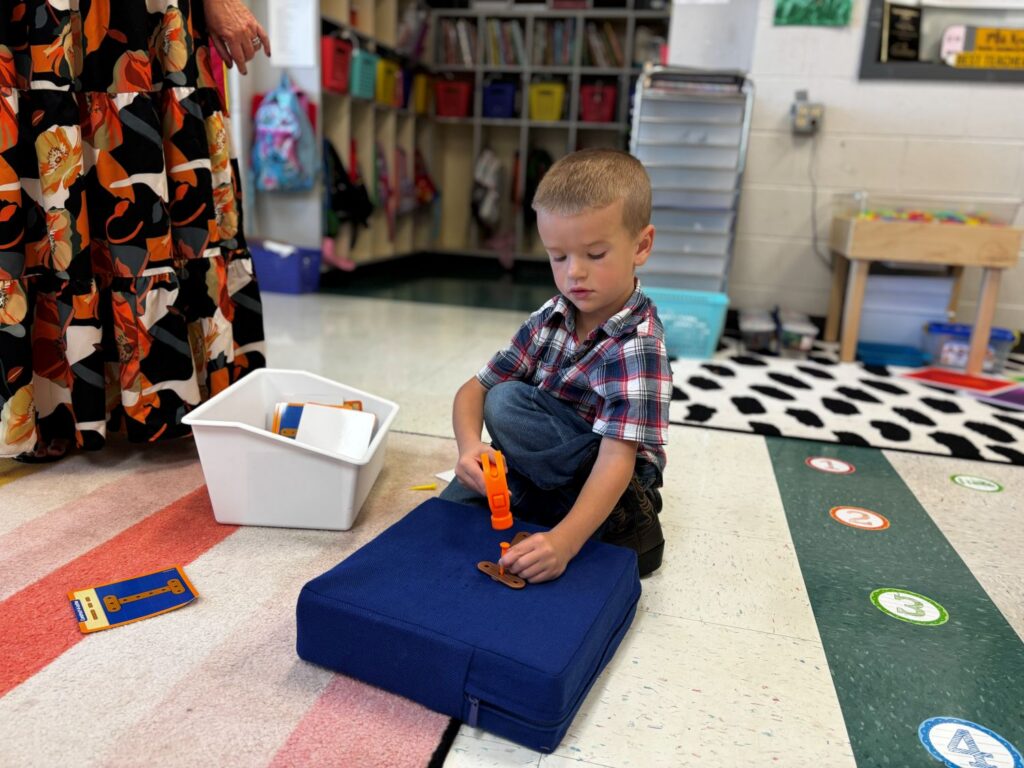
Teachers are deliberate about creating these experiences because they know some children may not encounter them elsewhere. For these teachers, play isn’t a break from learning. It is one of the ways they intentionally build the knowledge, language, and skills children need. The teachers have maintained a strong balance of aligning instruction with standards while keeping learning playful, engaging, and developmentally appropriate for a 5 year old.
These experiences are not separate from literacy development. The language children use, the vocabulary they acquire, and the background knowledge they build through these interactions become part of the foundation they will draw upon as they learn to read and make meaning from text.
Giving 5 year olds ownership of their learning
Another thing that stands out in these classrooms is just how much responsibility the teachers give their 5 year olds. Children track their own progress, set goals, learn classroom routines, and take responsibility for materials.
Students practice learning processes to independently retrieve and put away their own iPads, writing binders, boxes, and supplies. They learn to use staplers, hole punches, markers, colored pencils, and other classroom tools.
“This is my third year, and I have learned to let go and trust the process, rather than do it for them,” Kenisha Brigman, a kindergarten teacher, shared. “They can really do it once you show them and they practice.”
During literacy stations, teachers may give students choices about which activity they want to complete. Worksheets are rarely used, but when they are, there is clear intentional planning about why it’s the best work product for the activity.
Once routines have been modeled and practiced, students know how to move through those choices independently while the teacher works with a small group. Students take photos of their work to share with the teacher once it’s complete and move on to the next activity. The teachers intentionally resist doing for children what they can learn to do for themselves.
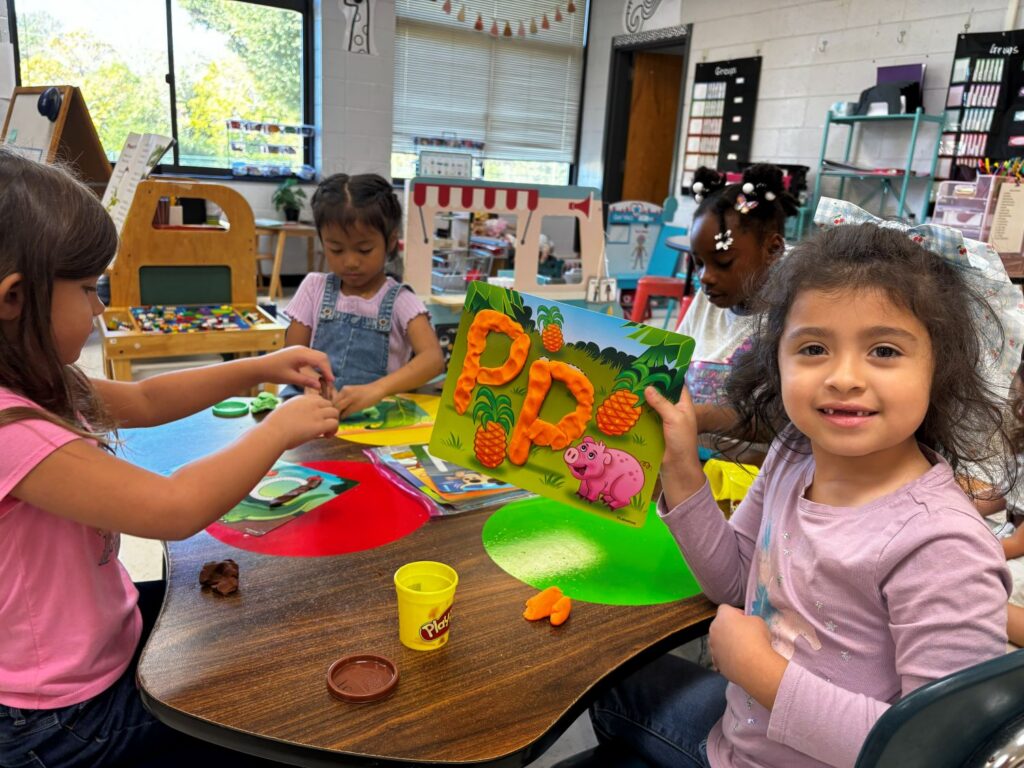
Kelly King uses a “monster data book” that allows kindergarteners to track skills such as the letters they know and the number of words they can read. Students color in their progress and set a goal for what they hope to accomplish next. Those books eventually become part of parent conferences, where children can help explain their own learning. At 5 years old, they are beginning to understand an important lesson: I have a role in my own learning.
Looking for a fuller picture of beginning readers
That same desire to better understand what children know is part of the reason the district is participating in the Finch early literacy assessment pilot.
District leaders were interested in whether the assessment could provide a fuller picture of incoming kindergarten students, particularly in the beginning of year statewide Dynamic Indicators of Basic Early Literacy Skills (DIBELS) assessment where results might consist largely of zeros. This is a significant concern in a district or school where many children enter kindergarten without some of the experiences and foundational skills schools traditionally expect.
This year, Pait noted that only 14% of incoming kindergarten students met the beginning-of-year benchmark, compared with 33% statewide. While those results provide important information about students’ foundational literacy skills, they do not necessarily capture everything a child knows or can do.
District leaders hope Finch will provide additional insight into children’s emerging skills and help teachers identify more precise starting points for instruction.
Finch goes beyond some of the skills traditionally assessed at the beginning of kindergarten, including rhyme, phonological awareness, phonological memory, letter names and sounds, and opportunities for children to identify familiar objects. For educators, this additional information can help uncover strengths and identify needs that might otherwise go unnoticed. The assessment experience itself also looks different.
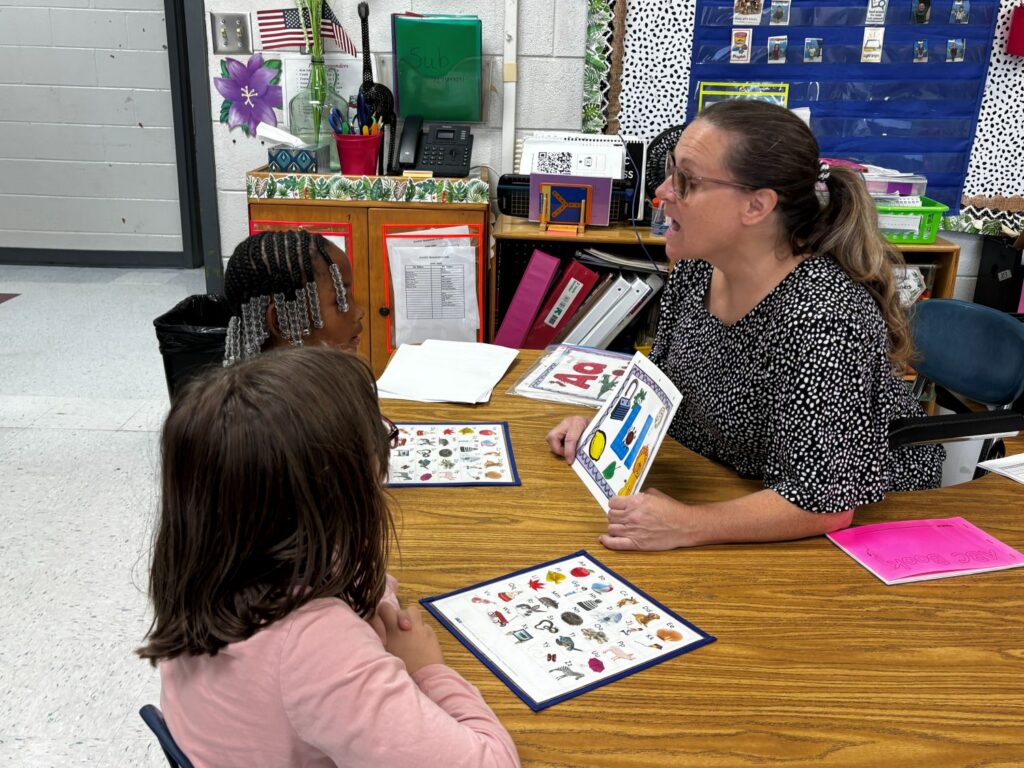
Rather than feeling like a traditional assessment, Finch incorporates game-like features, words of encouragement, and a visual path that leads children toward opening a treasure chest. Teachers sit alongside children throughout the assessment, providing support and encouragement rather than simply placing them in front of a device to work independently.
The activities are designed to present smaller amounts of information at a time, helping children feel less overwhelmed or discouraged as they work through the assessment.
Kindergarten teachers at Mineral Springs reported that some children who were extremely quiet during the opening weeks of school were willing to interact with the assessment. For young children still becoming comfortable with school, and sometimes with a new language, that matters.
An assessment is only useful if it changes instruction
These educators are also clear that technology cannot replace the teacher. Teachers know that collecting more information is only helpful if they can use it to make better instructional decisions for children. Teachers are still learning Finch and candid about that.
Because the pilot is new, much of their initial attention has been on administration that includes learning the platform, figuring out logistics, troubleshooting audio issues, and determining how best to fit the assessment naturally into the kindergarten day. Like with any new program, it takes time to become fluent in application. With each day, teachers are becoming more comfortable with the technology and finding ways to incorporate the assessment into their daily routines.
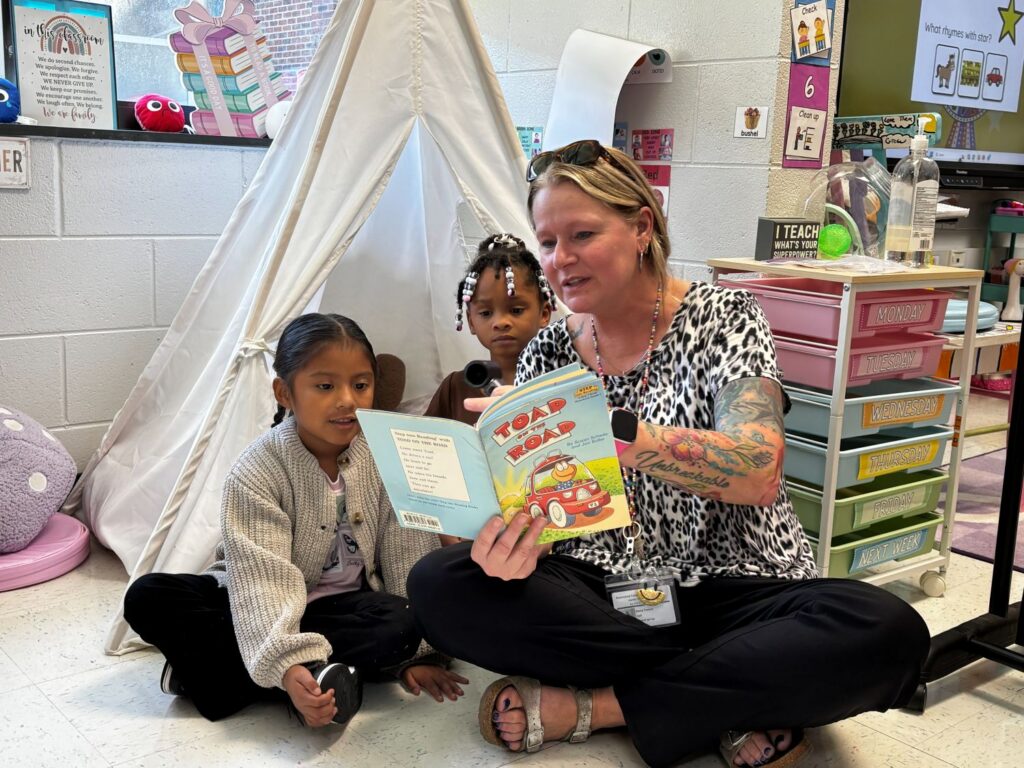
Their next step is understanding the data deeply enough to use it confidently for instruction. That learning curve is essential.
One perk is that the assessment actually records the children’s voice as they speak, allowing teachers access to review and revisit student data, beyond having to recall what occurred in a timed assessment session.
The kindergarten team already knows other assessment systems well enough to look at results and quickly determine what a child needs next. Their goal is to develop that same fluency with this new information. And because this is a pilot, the successes as well as the logistical challenges are part of the learning.
Keeping the child at the center
Technology, assessments, standards, literacy curricula, and data all have an important place in kindergarten classrooms. But spend time with these educators, and the larger lesson becomes clear.
Children learn when they are engaged. They learn when they talk, move, explore, and play. They learn when adults set high expectations while creating an environment where they feel safe enough to try, struggle, and try again. And they learn when they begin to see themselves as capable.
The kindergarten classrooms at Mineral Springs Elementary demonstrate that rigor and joy do not have to compete with one another. Teachers are intentional about what children need to learn, but equally intentional about how they create opportunities for that learning to happen.
Purposeful play does not have to disappear as academic expectations increase, and data does not have to reduce children to numbers. Strong teaching brings these pieces together, recognizing that children need both intentional instruction and meaningful opportunities to explore, practice, and apply what they are learning.
For Christie Chavis, one of the greatest rewards is seeing that growth over time.
“My favorite thing is to see how their writing improves from the beginning of the year to the end of the year,” she said.
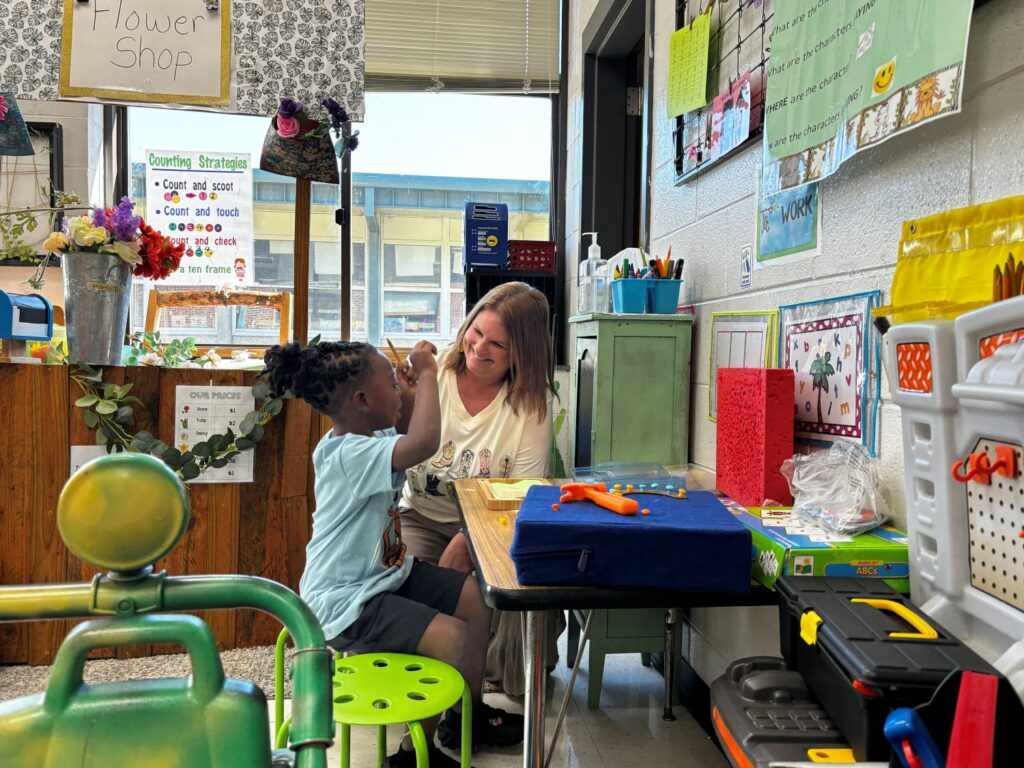
Throughout these classrooms, children are learning letters and sounds, building oral language, writing, setting goals, solving problems, and developing independence. And sometimes, they are running a grocery store, working in an auto shop, or checking on their teacher with a toy stethoscope along the way.
For these educators, that isn’t learning happening around the play. That is the learning.