
Perspective | The decrease of play-based learning in early childhood education

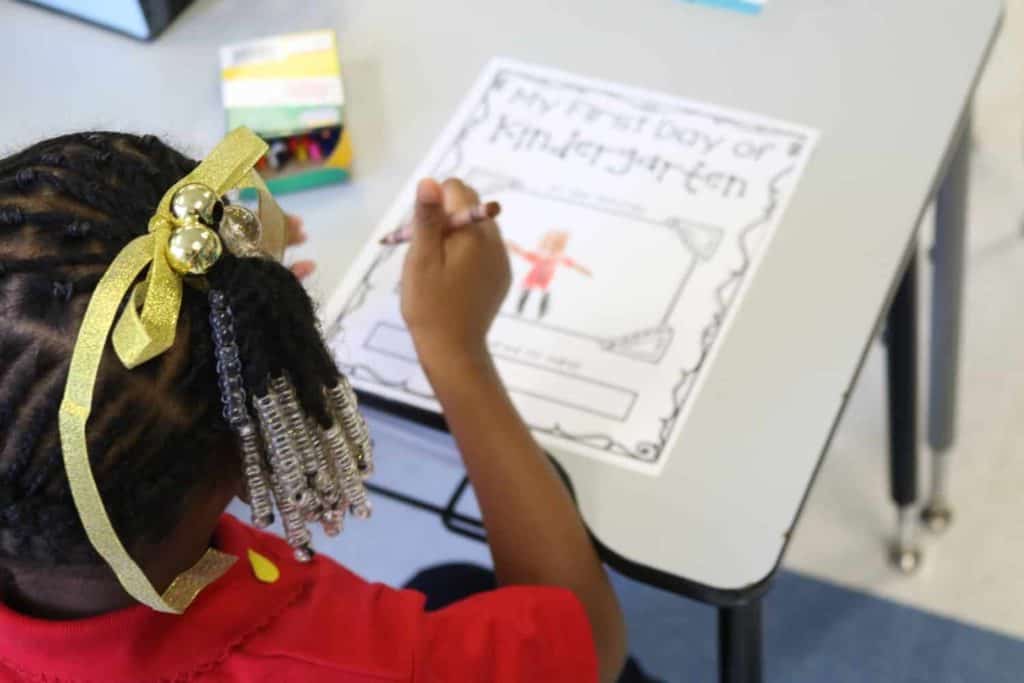
Kindergarten classrooms across the nation are changing — and not for the better. Kindergarten is no longer a grade dedicated to discovery, creativity, and developing the foundational social-emotional skills of beginning students. Higher academic standards, increased seatwork, and more time dedicated to academics have completely changed the foundation of kindergarten.
Play-based learning (PBL) is no longer at the forefront, nor is the development of emotional and social skills. Instead, it has been replaced with workbooks, increased testing, and pressure on the students and teachers. Kindergarten teachers and their students have felt this shift, and it has not yielded the desired outcomes.
PBL is an essential part of early childhood education.
Without play-based learning, students are put under intense pressure to learn how to read, memorize sight words, and understand complex mathematical concepts earlier than developmentally appropriate. I believe that PBL should be mandatory in all early childhood classrooms to foster the development of beginning learners.
Explore more on early childhood education
What is play-based learning and what are the benefits?
Play-based learning is “an engaging educational approach that places play at the heart of the learning experience. It acknowledges that children learn most effectively through active participation and exploration within contexts that are both meaningful and enjoyable.”
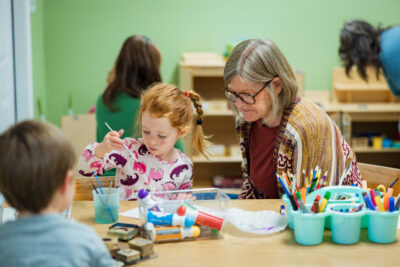
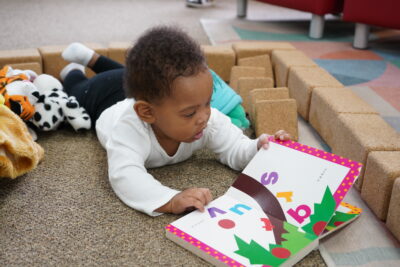
PBL is typically conducted through centers in the classrooms. These centers can include dramatic play, blocks, art, science, math, library, listening, and reading. PBL can be shown in two ways: guided play and free play. In an academic setting with guided play, PBL can be demonstrated through using letter-sound correspondence to write a menu in dramatic play, using blocks to build towers, then counting and writing the number of blocks you used, or painting a key detail from the read-aloud of the week.
Free play can be shown through letting children choose which play center they would like to go to and child-led experiences. PBL experiences provide a positive impact on students’ well-being and learning. One of the most beneficial aspects of PBL is the increase in student engagement.
According to an Early Education Journal article by Jan Fitzsimmons, “(PBL) emphasizes the interconnectedness between play and academic work for young children. Play allows children to actively construct and expand their own understandings by making connections to prior experiences.”
PBL also assists with students by enhancing their social skills, cognitive development, emotional growth, physical development, and creativity. The benefits of PBL are ongoing. For those who worry that PBL will take away from standards-based learning, PBL is not just free play but guided experiences facilitated by the teacher.
Teachers can incorporate the learning standards into play centers. By introducing the learning objectives to students and then planning play experiences that will give students opportunities to practice the standards engagingly. Students involved with PBL will be more engaged in the objectives and be able to use it in a real-life setting rather than just completing a worksheet.
My kindergarten experience
I have been teaching kindergarten for four years. In my experience as a kindergarten teacher, there has been little to no time dedicated to PBL. Our schedules are created by the administration with some input from teachers.
Despite the teacher’s input, there are still district requirements on how much time is allotted for literacy, reading, math, science, and social studies. The schedules created are filled with academics from the time students enter the classroom until they are dismissed. Bell-to-bell learning is what they call it. The only breaks students are provided are a thirty-minute lunch and a twenty-minute recess.
Despite having a strict schedule, our district is one of the only ones that has dramatic play furniture available in all kindergarten classrooms. At one point, it was part of the kindergarten curriculum. Even though the furniture is provided, if district officials or administration enter our classrooms and observe students playing, we are sometimes questioned on how it meets our academic standards.
 Sign up for Early Bird, our newsletter on all things early childhood.
A coworker of mine was using PBL during our intervention time to allow student choice, autonomy, and creativity while pulling small groups. She felt that her students were making connections between academic concepts, as if they were building blocks, and acting in dramatic play.
Despite the benefits it had in her classroom, she received negative feedback about allowing students to “play” rather than attend to an academic task. The negative feedback, the academic-focused schedule, and the high academic standards have resulted in my kindergarten team getting rid of the dramatic play furniture in our classrooms.
We felt this decision would allow us to have more classroom space for academic areas that support the learning standards, rather than have space filled with items we are not allowed to use.
With the push for increased academic focus, more and more kindergarten classrooms are changing to a teacher-focused model. Beginning learners are not able to reap the benefits of play-based learning as they have in the past. Creativity and child-led activities are no longer as important. I hope more school districts will see the benefit of play-based learning and integrate it back into the classroom.