
Amid enrollment declines, how should districts handle school closures?

Public school enrollment in districts across North Carolina is declining, and is projected to continue dropping in the coming years, as it is nationwide.
The Opportunity Scholarship, North Carolina’s private school voucher program, is one culprit, according to a 2025 Carolina Demography study. So is the fact that this moment is “perhaps the most demographically uncertain time” North Carolina has seen in a long while, said Nathan Dollar, director of Carolina Demography. That uncertainty, he said, is due to declining birth rates, migration toward urban centers and out of rural areas, and migration to North Carolina from other states.
State funding to school districts in North Carolina is allocated on the basis of average daily membership (ADM) — the measure of students in schools over a period of time. Fewer students in schools means lower ADM, reduced funding, and, likely, fewer schools.
“It has profound implications for these school districts, because their operations costs don’t drop dramatically when they lose ADM, but their funding from the state does,” Dollar said. “They’re having to make really tough decisions.”
Districts across the state have recently closed schools or are weighing closures, including Chapel Hill-Carrboro City Schools, Elizabeth City-Pasquotank Public Schools, Granville County Public Schools, New Hanover County Schools, Person County Schools, Surry County Schools, Warren County Schools, Wilson County Schools, Winston-Salem/Forsyth County Schools, and more.
Closing a school is almost always a difficult decision. Public schools are the nuclei of communities, around which revolve children, parents, and — especially in rural areas, where a school can be one of the only public buildings — all neighbors. Schools are second homes, bustling cafeterias, town squares, and social halls. They are economic engines; in many counties, the school district is the largest employer. And, of course, schools are the physical embodiment of the most fundamental human experience: learning.
Districts and the public are understandably reluctant to close schools, which have strong community ties. But in some places, declining ADM and the resulting loss of state funding all but dictate closure.
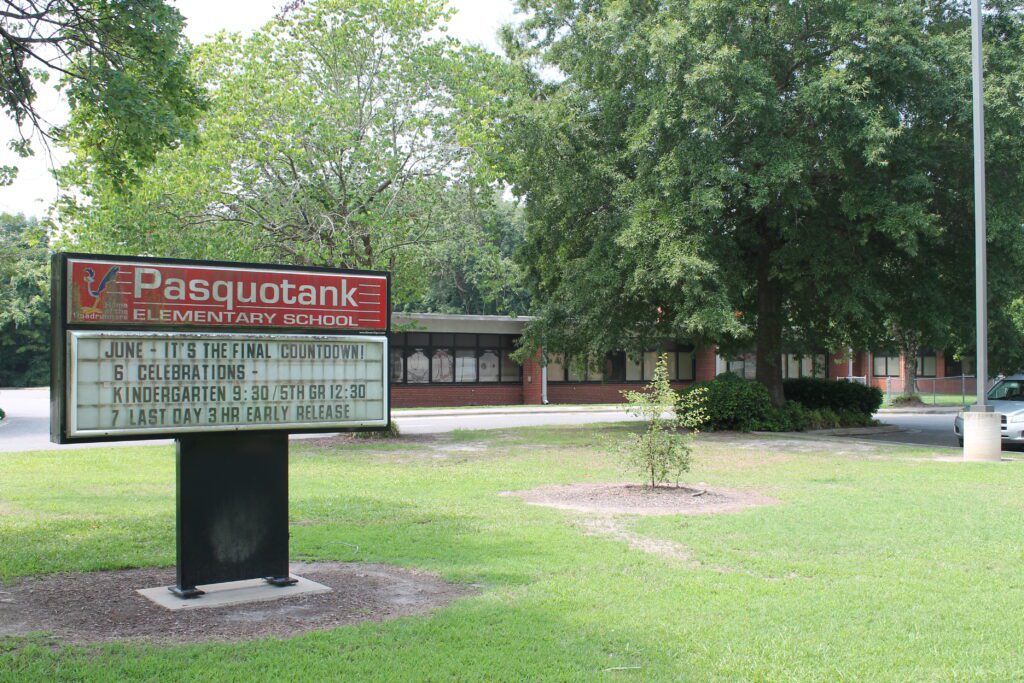
“You know, if you drop from 6,000 students to 4,800, as we have, over a decade, and you still have the same number of schools, you have a financial crisis,” said Keith Parker, superintendent of Elizabeth City-Pasquotank Public Schools (ECPPS). Parker’s district closed Pasquotank Elementary School in 2024.
Other factors — outdated facilities, high maintenance costs, and years or decades of deferred maintenance — may compel districts to shutter schools, especially when viewed against the backdrop of local, state, and federal funding uncertainties.
Read about pressures on public schools

As enrollment continues to decline and facilities age, here’s a look at what districts consider when weighing school closure, how districts decide which school to close, and how they manage the impacts of closure on communities.
The school closure process
Where should districts start when weighing the closing of a school?
The Department of Public Instruction’s (DPI) website formerly hosted a 2019 document titled “School Closing Procedure” that was “intended to identify the various kinds of information to be considered, as well as the processes to be undertaken by the local board of education prior to closing a school.” Now, the website just instructs districts to consult with attorneys and perform facility evaluations when considering closing a school.
North Carolina state law mandates certain actions be taken when considering a school closure, such as holding a public hearing and performing a study to examine “geographic conditions, anticipated increase or decrease in school enrollment, the inconvenience or hardship that might result to the pupils to be affected by such closing or consolidation, the cost of providing additional school facilities in the event of such closing or consolidation, and such other factors as the board shall consider germane.”
But on the whole, North Carolina districts are largely left to their own devices when it comes to determining whether schools should be closed, choosing which school(s) to close, and consulting with the community. Weighing those potential impacts listed in state law, plus others such as transportation, public sentiment, and program offerings, can be a tall order for districts without planning staff on hand — which is the vast majority.
That’s where SchoolCAMP comes in. Seated within NC State University’s Institute for Transportation Research and Education is a small team of researchers that run SchoolCAMP — the name refers to “school and community-aligned master planning.” SchoolCAMP consults with school districts and other community stakeholders on planning decisions like bus routes, academic program and workforce alignment, food sourcing, district boundaries, and the construction or closure of schools.
Mathew Palmer, SchoolCAMP’s project director, is passionate about planning. Maximizing the efficiency of school facilities is important, he said, because it allows as many resources as possible to go to academics.
“Just this academic year, we’ve worked from Elizabeth City to Asheville,” Palmer said. “At any given clip, we’re working with between 12 to 25 school systems.”
 Sign up for the EdWeekly, a Friday roundup of the most important education news of the week.
Starting with district utilization
“Utilization” is the magic word of school planning.
In a conversation with EdNC, Palmer described two main factors in making school closure decisions: enrollment and program capacity. The intersection of those factors is what’s called the utilization in a district — the proportion of students to seats in classrooms.
Palmer said the sweet spot for utilization is about 85%, which leaves “breathing room” for expected year-to-year enrollment fluctuations, and for potentially unexpected enrollment changes caused by new housing developments near a school or rapid demographic shifts. Ninety-five percent, Palmer said, is the “absolute upper bound.”
Enrollment decline brings utilization down; school closures can bring it up, as students from closed schools are redistributed across the district. Thus, districts may consider closing a school when utilization is at such a low rate that space is being used inefficiently and resources are spent maintaining empty classrooms.
School closure isn’t the only option to increase utilization. Amid systemwide enrollment decline and a drop in utilization, Palmer worked for Durham Public Schools (DPS) on an initiative that filled empty classrooms with pre-kindergartners, adding new services that brought state funding. That, paired with a redistricting of school zone boundaries, allowed DPS to avoid closing a single school.
“We were able to bring universal pre-K to every elementary school,” Palmer said. “So we brought the academic program into the facilities, which reduced the overall number of (empty) seats, which increased the utilization.”
But at some point, budgets are trimmed down, alternatives run out, and the buck stops at school closure.
The five-year timeline
Palmer recommends districts study their utilization, facility and program capacity, and enrollment projections for the next decade about every five years. That timeline aligns with state law which instructs districts to report long-range plans and facility needs to the State Board of Education every five years.
However, districts can face barriers to making fully-informed plans every five years. One is superintendent turnover, which can interrupt long-term planning, weaken institutional knowledge, and force new leaders to make big decisions quickly.
The same goes for local school board members, who are elected every four years in North Carolina, and whose elections are becoming increasingly partisan. Voting to close a school could be unpopular no matter the enrollment and fiscal pressures at play.
Additionally, many districts don’t have the resources to employ dedicated planners, or don’t wish to when only planning every five years. A few larger districts employ planning staff, but the vast majority do not, Palmer said. And planning is “almost impossible” to do in-house with regular administrative staff because, he said, “they’re busy every day just running the school system and getting kids to school and home safely.”
That’s where the SchoolCAMP team, as a public planning practice staffed by state employees, can be an asset for districts, Palmer said.
“We have that longevity and tenure to say: We’re going to be here to see this through. We’re here to help,” he said.
Enrollment declines, facility costs, and deciding which schools to close
Once the decision is made to close a school, the selection process starts. The instinctual option — perhaps the school in the district with the lowest utilization — may not be the best one; considerations such as where certain academic programs are located, facility needs, transportation needs, historic value, and the community fabric are commonly taken into account.
The choice of which school to close reflects future priorities — such as ensuring short travel times for as many students as possible and meeting the needs of communities — but it can also amplify structural problems. For example, a district might unwittingly create traffic problems by closing an urban school and shifting students to a new construction on the edge of town.
A district might also close a school that has been historically underfunded precisely because it has been underfunded.
“It comes time to say, ‘Well, if we’re going to have to close a school, we should look at the age and condition of the building,’” Palmer said. “And it’s like, you haven’t invested in it in 50 years. Of course it’s not in good shape.”
Enrollment and historical considerations
The shadow of segregation is present in school facilities that have been operational since the middle of the 20th century and that still serve predominantly Black neighborhoods. The prospect of closing such a school adds gravity to a difficult community decision.
The 2024 closure of Pasquotank Elementary School was such a case. Pasquotank Elementary, formerly named the Pasquotank County Negro Consolidated Elementary School, was closed primarily due to declining enrollment. Parker, the ECPPS superintendent, said school choice and shifts in where people are living in the district forced the decision to close a school.
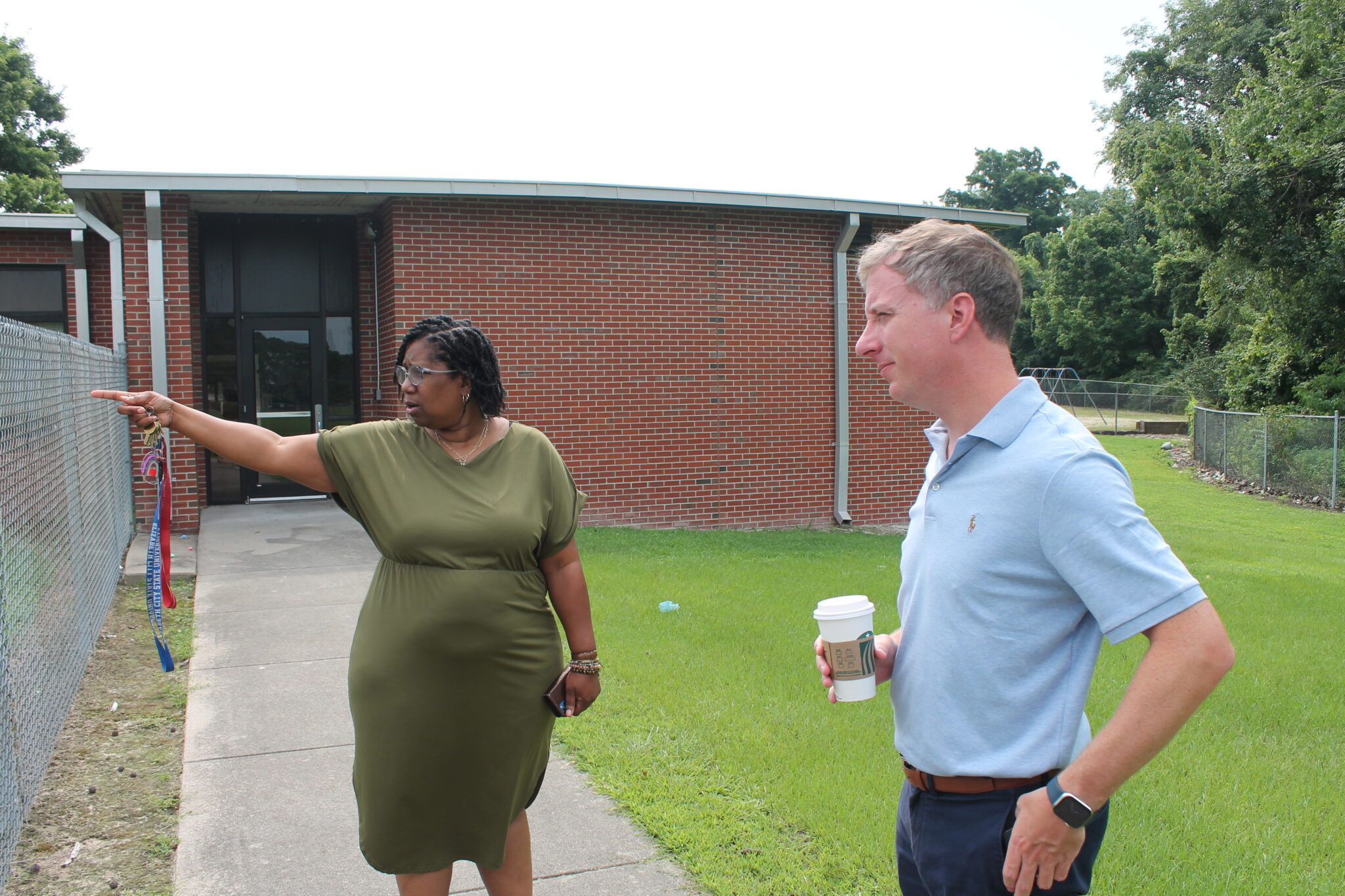
Pasquotank Elementary’s facility needs and its proximity to another school, P.W. Moore Elementary School, resulted in it being chosen for closure. Parker said that other districts will face the same kind of decisions moving forward.
“You add the cost of renovating, maintaining older facilities, you add that with the declining enrollment, you’ve got a formula for a disaster there,” he said. “And districts are having to grapple with those two things, and that presents profound challenges. It means oftentimes the only choice is to either close the school or repurpose it.”
ECPPS chose to repurpose the school building, converting it into a multiuse space for pre-K, administrative offices, a community resource center, and a professional development center. Using Pasquotank Elementary for those things has allowed renovations to happen progressively, as needed, and has increased the district’s utilization.
“Pasquotank Elementary has a lot of value to our community, and a lot of memories, and a lot of history, and so I really think preserving and honoring and learning as much as you can as a leader about the value that schools have is just such an important criteria, particularly when there’s a conversation around the possibility of closing the school,” Parker said.
EdNC’s reporting on Pasquotank Elementary
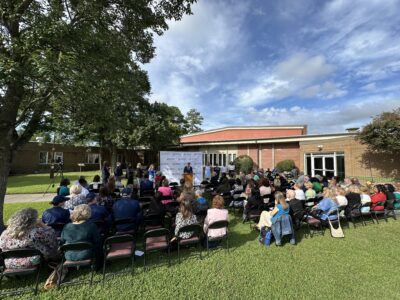
Parker and the ECPPS board of education studied the closure of Pasquotank Elementary internally. Now, they are working with Palmer and SchoolCAMP on future enrollment forecasting “for the next decade and beyond,” Parker said.
That future is uncertain, for ECPPS and for North Carolina.
“There are challenges, and I think the moment that we find ourselves in within our state — also nationally, but particularly in North Carolina, with the aggressive policy choices about school choice — that is causing a lot of areas to have to confront the extremely difficult decisions of consolidating or closing schools,” Parker said.
Capital costs, bond measures, and state funding
North Elementary School in Person County was consolidated with North End Elementary School in 2024, not due to enrollment decreases — enrollment is holding steady, said Person County Schools Superintendent Rodney Peterson — but because of facility needs. The school needed an elevator and accessible ramps installed, and the estimated costs were more than the district could afford.
Other schools in the district underwent, or are expected to undergo, tens of millions of dollars in fixes to become Americans with Disabilities Act (ADA) compliant. Now, there will be a referendum on the ballot in November asking the public to approve a bond to fund the construction of a new middle school. That new middle school would allow the district to move students out of some of its older buildings.
“So what would happen with that if we build a new middle school?” Peterson said. “The two middle schools would consolidate, and then we would have a retrofit of the two middle schools into elementary schools, with the idea that we start decommissioning what I call the Eisenhower buildings — the buildings that were designed in the ‘40s and built in the early ‘50s.”
In North Carolina, school capital funding comes mainly from local governments, with additional contributions from state grant programs like the Needs-Based Public School Capital Fund (NBPSCF) and Public School Building Capital Fund (PSBCF), which are funded by the North Carolina Education Lottery.
The high cost of school building maintenance and construction is a major factor in school closure decisions. Aging schools with statewide maintenance and replacement costs likely exceeding the $13 billion reported in 2020, when the most recent survey was completed, will require huge local investments to address. (The K-12 Facility Needs Survey is performed every five years; an updated report is expected to be published this fall.)
The cost to meet that need is roughly $9,500 per student currently enrolled in non-charter K-12 public schools — an exceptional number, even for the counties that spend the most on their students. The Public School Forum of North Carolina’s 2026 Local School Finance Study found that the top 10 highest-spending counties spend an average of $4,391 per year on their students, while the bottom 10 spend just $1,031.
At a time when property taxes — counties’ main source of local revenue — will potentially be restricted by state policy changes, funding school improvements could become even more difficult than it already is, and maintenance needs could increase long-term. That could lead to more schools being forced to close in the future.
“We have a lot of old, small schools that aren’t in very good shape,” Palmer said.
And bond measures to fund school construction, while historically likely to pass — according to a 2020 DPI report documenting local bond issues, roughly $14 billion in bonds were approved between 1995 and 2020 — aren’t necessarily a silver bullet. Palmer said a $300 million bond passed in Orange County in 2024 was a “generational investment,” yet the money went fast.
“What we’re finding out is that $300 million doesn’t get you that far. That’s a couple schools,” he said. “I think the point that I’m making is that the needs are dwarfing local capacity to meet the need.”
There is also no guarantee that local governments will bring bond measures to a vote in the first place. A combination of political will, or lack thereof, and potential difficulty in securing good credit rates, puts bonds out of reach for many municipalities. According to a 2023 North Carolina School Boards Association (NCSBA) fact sheet, “No Tier I counties, the poorest counties in the State, have passed a school bond in the last decade.”
Community impact in Chapel Hill-Carrboro City Schools
SchoolCAMP’s process for consulting with a district starts with a board and community values assessment. The team hears from the local board of education, the superintendent, parents, the local chamber of commerce, the county planning and transportation departments, and the wider community — “a whole vision of the school-community nexus,” as Palmer called it.
A large part of that assessment looks at past and future enrollment trends in the district. When SchoolCAMP started working with Chapel Hill-Carrboro City Schools (CHCCS), it looked like low enrollment might necessitate the closing of multiple schools — the district superintendent, Rodney Trice, estimated an enrollment decline of about 1,500 elementary school students since the pandemic.
“Our contribution on that project was saying, in effect, closing two schools could put you in a very dangerous circumstance where you actually go from having too many seats to not having enough seats,” Palmer said.
The district has prioritized communication in the course of its decision to close a school, including by spending much more time discussing it in public meetings than is required by state law. CHCCS has also demonstrated the necessity of the move through other cuts — a reduction in central office staff that Trice said would save $3 million annually, and a reevaluation of the district staff allocation formula.
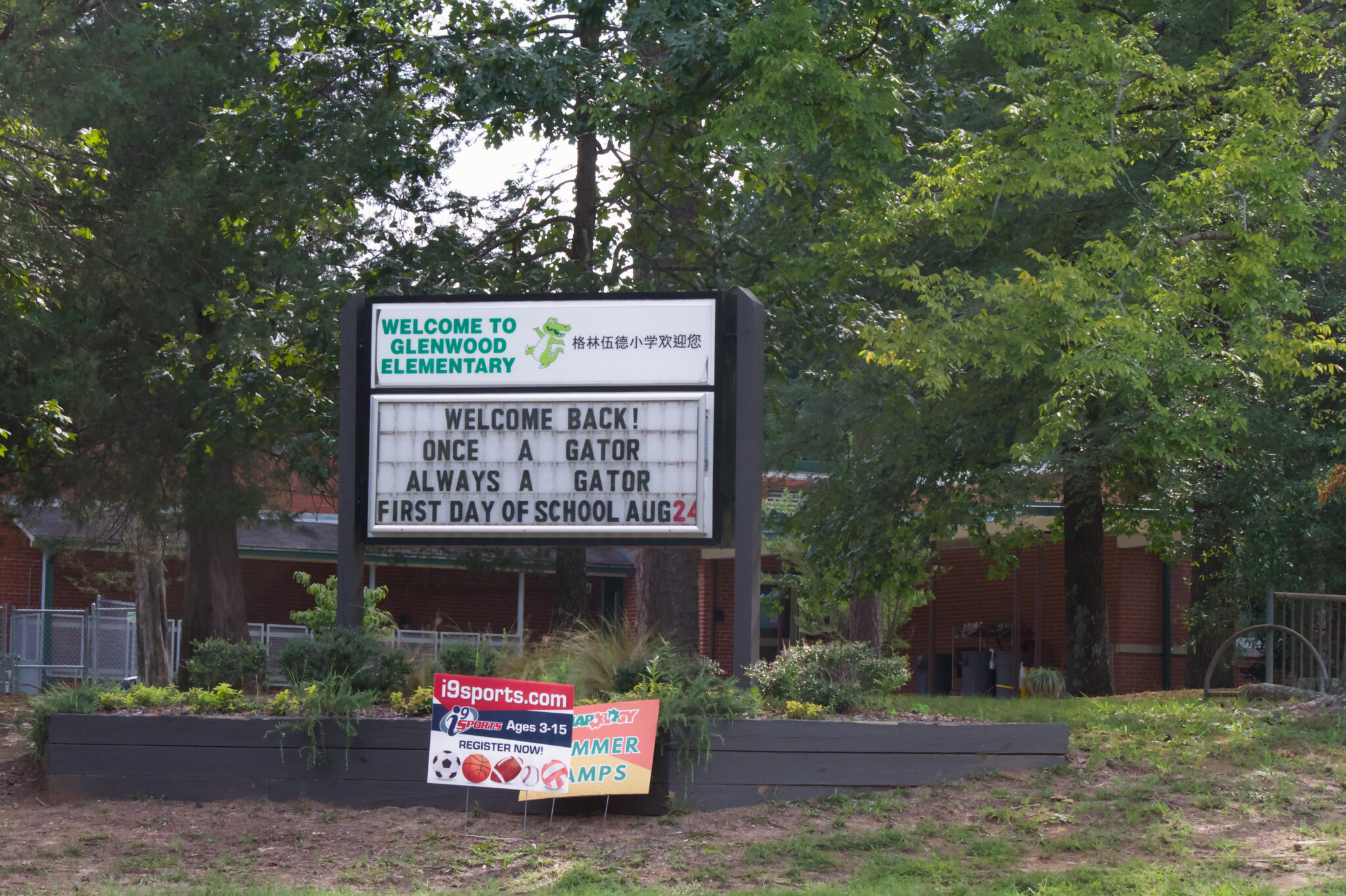
In June, the CHCCS board of education voted to select Glenwood Elementary School to be closed starting with the 2027-28 school year. Closing Glenwood will save about $2 million per year, Trice said.
Trice said CHCCS held over a dozen community engagement sessions surrounding the school closure, and that public meetings are ongoing. Even now, after Glenwood was chosen for closure, there are decisions to be made about where students will be reassigned, and whether the popular Mandarin Dual Language and World Language programs will be split up or moved as a whole.
“We’re not closing a school because it’s not working. Our students get amazing results,” Trice said. “It’s purely a fiscal decision that is part of a much broader decision around which levers we can pull to secure the financial future of our school district. It really is that critical.”
The public sentiment around Glenwood’s closure is mixed; the knowledge that Glenwood is closing for purely financial reasons doesn’t preclude grief from losing a cherished school. And parents want to know, if a school must close, that the process will be robust and effective.
“Community engagement and transparency are always going to be the key factors that determine how people feel about something that is negative — your school being closed. How do you transition that into a positive?” said Rachel Rossi, president of the Glenwood Parent Teacher Association and mother of two Glenwood students.
Rossi cited a Stanford University study that questions whether school closures save money in the long run at all. The study says school closures in California “left districts’ funding deficits and probability of achieving a balanced budget unchanged.”
“If there is not a very intentional and organized process after that closure, it ends up not saving the school district money because of attrition of students, and inefficiencies that are created,” Rossi said.
Other research finds that school closures can have negative impacts on teachers and broader communities, such as increased teacher stress, professional instability, and “disruptions to community cohesion, civic engagement, economic stability, and even gentrification.”
“It’s really important that our community has buy-in, and (feels) secure in what they’re getting, that we have a really clear understanding of (the district’s) vision and their plan,” Rossi said.
Ending on a high note
Districts and schools across North Carolina continue to face financial pressure, and as that pressure mounts, action will have to be taken.
But despite having recently closed a school in his district, Parker remains optimistic.
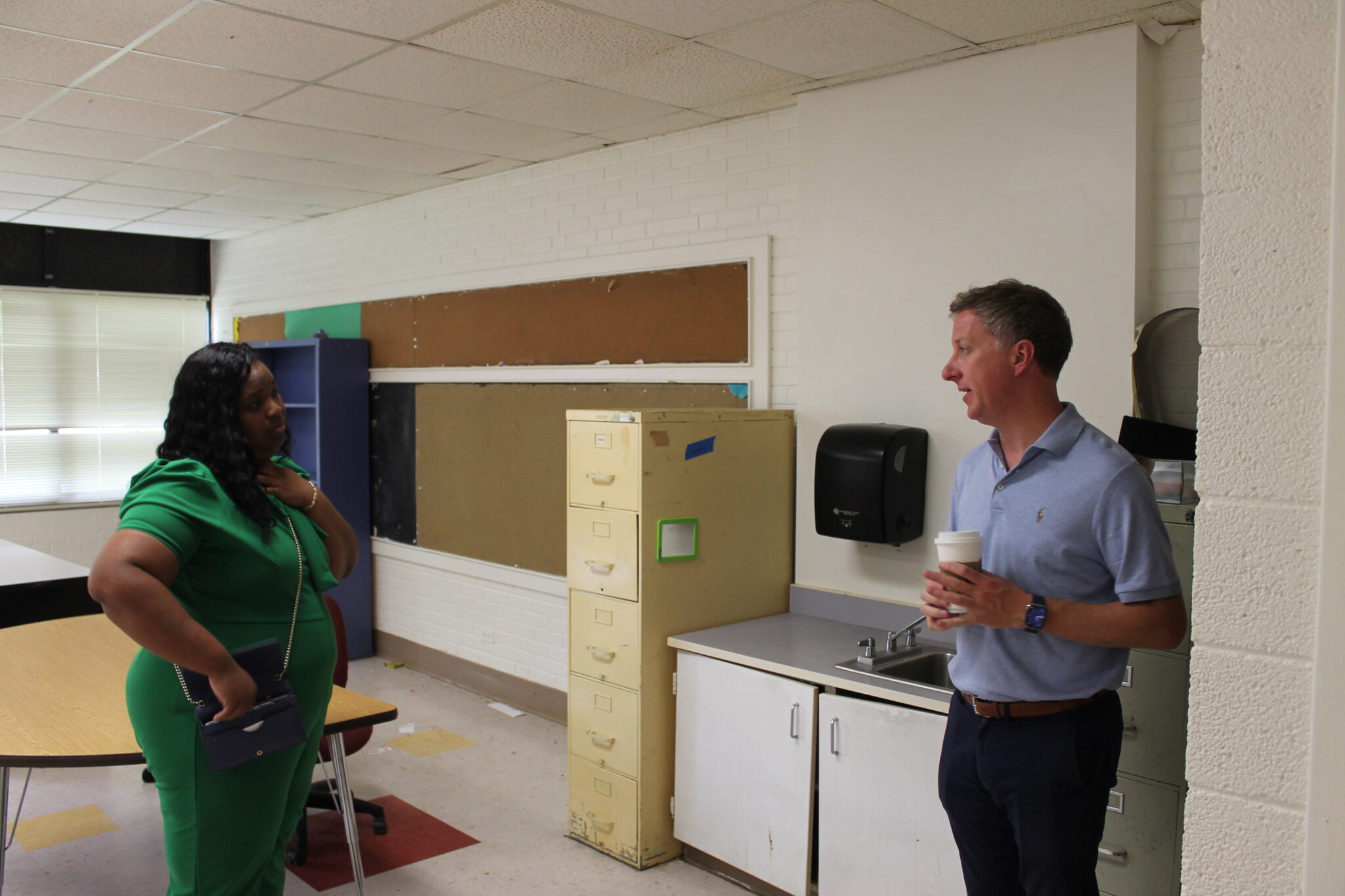
“We’ve really got to work together as school leaders across the state, to continue to tell the story of public education and how valuable it is,” he said.
Parker said there are silver linings to potential school closures, like opening up opportunities to turn schools into multiuse spaces, partner with community organizations, and provide childcare and healthcare.
There are challenges coming from aging buildings and declining enrollment, Parker said, but “we’re just going to have to make a commitment as school leaders that we will turn those challenges into opportunities, and that we will fight against the narrative that closing and consolidating schools means that public education is not as good.”
Editor’s note: Keith Parker serves on EdNC’s Board of Directors.