
Perspective | Fireworks around the seminar table

My family hits all the classics over the Fourth of July — hot dogs, music, fireworks on the beach. All marvelous!
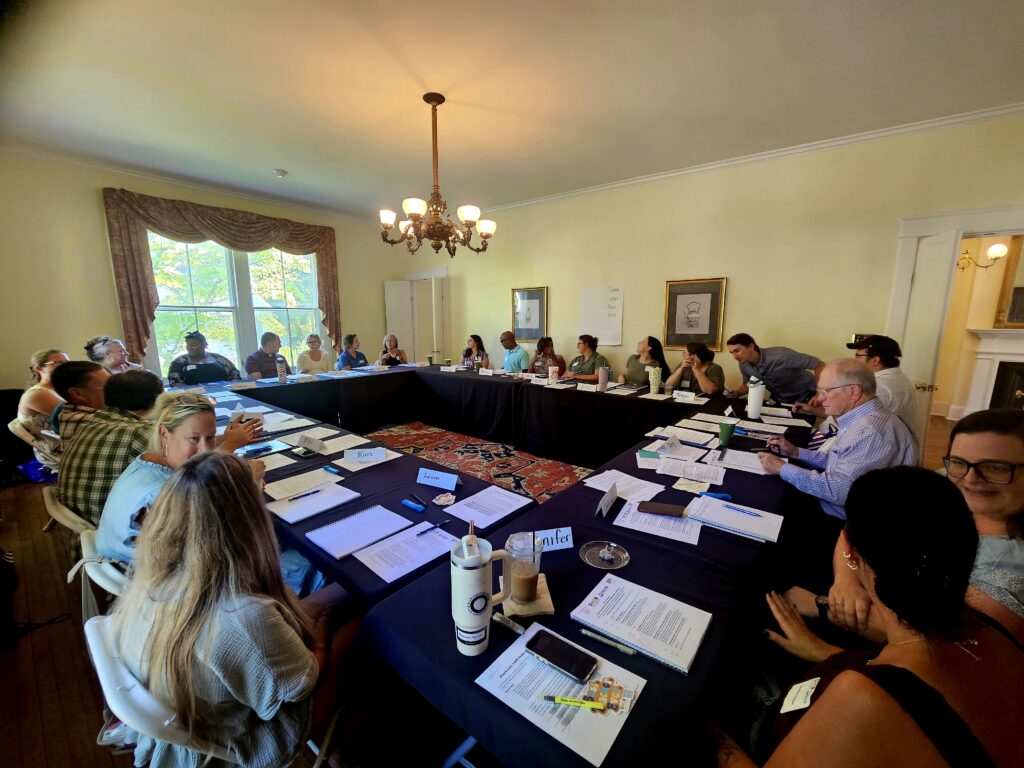
But for star-spangled, patriotic glory, none of it rivals the scene I witnessed a week later at Tryon Palace in New Bern. On a sweltering summer Friday, two dozen teachers from across eastern North Carolina gathered around a seminar table, looking intently at copies of the 1776 North Carolina Declaration of Rights.
“Which one of these rights do you think is the most fundamental?” asked Terry Roberts, sitting at the head of the table and looking around at the men and women responsible for teaching democracy to the next generation of Americans. “And remember: one does not win a seminar. The idea is that we’re thinking together and teaching each other.”
There are 25 rights listed in the Declaration, many of them prefiguring the federal Bill of Rights that would come more than a decade later. A middle school science teacher spoke up for political power vested in the people, a high school English teacher cast a vote for the rule of law, and several educators prized the freedom to worship according to one’s conscience.
The different views around the table were sincere and interesting. People leaned in and listened as their fellow Americans wrestled with the country’s founding ideals. If there’s a polar opposite to the feeling of scrolling social media, this was it.
“The free and open exchange of ideas is what gives us the chance to understand one another,” said Roberts, radiating the calm curiosity that makes for a good classroom discussion. “E Pluribus Unum depends on these skills.”
Roberts has decades of experience getting people of all ages to share their views and listen with respect. He’s the former head of the National Paideia Center, which champions seminar-style discussions centered around a shared text. It’s an old-school approach to education — and wonderfully effective at getting students to read, venture an opinion, and listen closely enough to change their own minds.
Read more reflections on democracy by educators
“These are democracy skills,” Roberts said. “The fact that we don’t always teach them in a formal way is a problem.”
College and university leaders increasingly recognize the lack of civic experience as a problem for higher education. North Carolina’s public universities have taken major steps in the last few years to reinforce civic formation as vital to a sound education. Our public universities now have a requirement that all students grapple with the Foundations of American Democracy, taking a class that covers the Declaration of Independence, the Constitution, Letter from a Birmingham Jail, and other core texts that illuminate the nation’s founding ideals and the long struggle to live up to them.
Through a new Common Ground Collaborative, the UNC System is also investing in faculty training and course redesign to bring more discussion and dialogue into the classroom. Faculty across the state already do excellent work practicing the core civic skills that we should expect of college graduates, and there’s an earnest desire to do more. A comprehensive report by the System’s Faculty Assembly called out the growing impact of technology that surveils and distracts students, which has so clearly made it harder to create the kind of open-minded discussion I saw in New Bern.
That event was sponsored by the N.C. Department of Natural and Cultural Resources, part of an ongoing initiative to bring more North Carolina history into K12 classrooms.
“Listening is a profound learning skill,” Roberts told the group. “As human beings, we don’t really like complexity. We don’t really like ambiguity. You have to get students comfortable with the notion that there’s not one right answer to many of these big questions.”
 Sign up for the EdWeekly, a Friday roundup of the most important education news of the week.
Roberts is right that deep reading and patient discussion are core disciplines for citizenship, and they have become increasingly countercultural. The founders gave us a series of beautiful and challenging ideas that don’t lend themselves easily to TikTok attention spans.
There is ample evidence that today’s students are more reluctant to share their views on important topics, largely thanks to pervasive social media and the fear of peer backlash. Young people are also more pessimistic about the direction of American public life. There is growing agreement across the political spectrum that schools and colleges need to meet these challenges by reaffirming their civic mission.
A national survey this spring by the Institute for Citizens and Scholars found that helping students become better thinkers and informed citizens was the most important contribution people expect of higher education, right up there with “protect freedom of speech, equal rights, and other American values.” Americans want a college education to lead to a good job, certainly. They also want universities to prepare the next generation for the worthy work of being free people.
It was genuinely stirring, sitting there in New Bern and parsing through the Declaration of Rights for the first time since I was in high school. Hearing educators talk about the radical ideals that built this country, I was most struck by the 21st right that our early representatives scrawled onto parchment: “That a frequent recurrence to fundamental principles is absolutely necessary to preserve the blessings of liberty.”
American democracy is not a passive inheritance. Every generation has to learn it; every generation must teach it.