
Reckoning and remembering: Educators explore democracy through local history
What do you picture when you hear the word democracy?
The term brings to mind many images for Americans. Perhaps you imagine men in powdered wigs, quill pens in hand, convening in Philadelphia. Maybe you picture a passionate Martin Luther King Jr. orating to a crowd from the steps of the Lincoln Memorial.
Carolina K-12 Director Cori Greer-Banks offers a different vision of democracy.
“Democracy is not just something written by founders, protected by courts, or led by famous names,” she says. “Democracy is shaped by neighbors, teachers, students, artists, archivists, storytellers, voters, organizers, public servants, and all people who decide that their place is worth fighting for.”
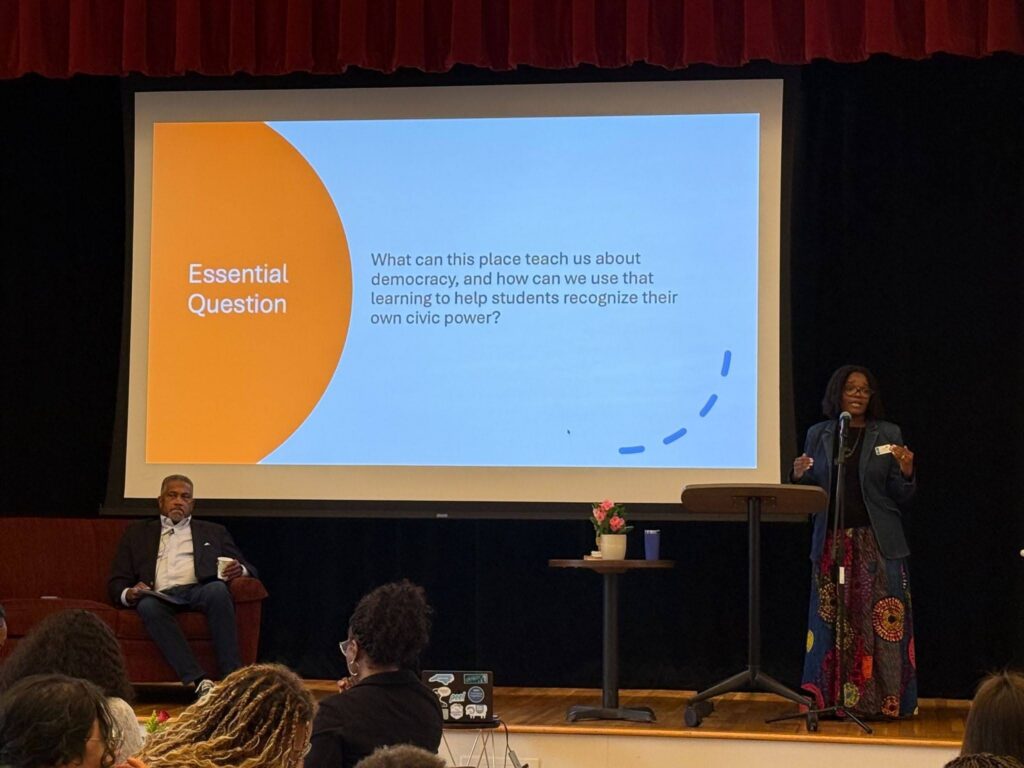
In this vision, explains Greer-Banks, the concept for “Democracy in Place” was born.
Democracy in Place is the newest initiative from Carolina K-12, a branch of Carolina Public Humanities that offers innovative professional development and planning materials to educators across the state. Over the course of the next three years, educators across North Carolina will have the opportunity to investigate for themselves what democracy looks like in their communities.
These retreats are supported by an American History and Civics grant from the United States Department of Education. This grant is awarded to institutions that “promote innovative teaching, learning, and professional development activities in American History, government, civics, and geography.” The grant also specifies that the programs should benefit low-income students and underserved populations.
The retreats, taking place annually in Asheville and Wilmington, are an invitation for educators to learn more about democracy and local history using place-based learning. Democracy in Place encourages educators to think about democracy as a living, breathing concept — one that is in practice in their classrooms and affects every aspect of their students’ lives.
“Democracy is not a fixed idea,” says Greer-Banks. “It is very fluid, and as we can see, it is unfinished.”
As our nation commemorates 250 years of American independence, many Americans are thinking critically about how to best acknowledge this moment. Democracy in Place aims to give educators a chance to examine the meaning of democracy and independence through the lens of multiple perspectives and disciplines, from poring over primary sources in the archives to learning about art as a form of democracy.
 Sign up for the EdWeekly, a Friday roundup of the most important education news of the week.
Examining local history in Asheville
Educators began the Mountains of Democracy retreat learning about the history of Black Asheville from Dr. Darin Waters, deputy secretary of the Office of Archives and History in the N.C. Department of Natural & Cultural Resources.
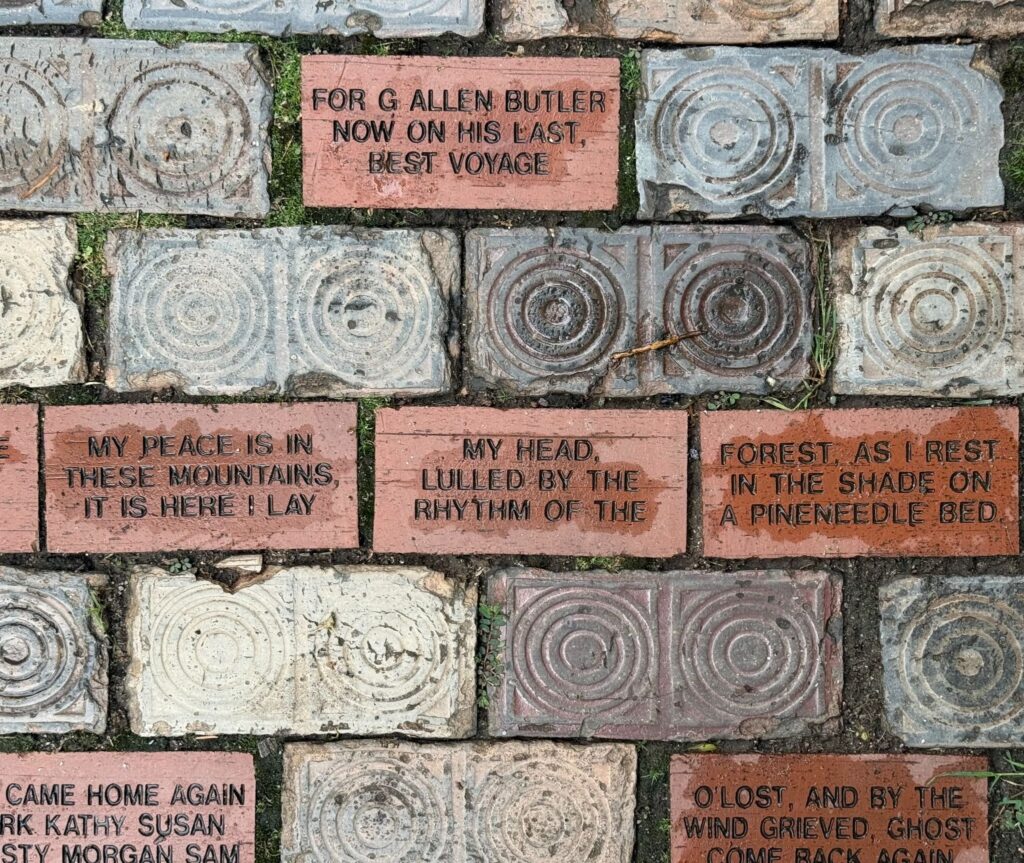
Waters offered three ideas to consider when interpreting complicated history: remembering versus forgetting, remembering versus revering, and reckoning versus forgiveness. Waters ended with the sentiment that before we can begin to achieve forgiveness for wrongs of our past, we must first reckon with the past — all parts of it.
“Embrace complexity,” smiled Waters. “It’s what makes life interesting.”
A visit to the Western Regional Archives gave educators the chance to explore primary source documents related to UNC Asheville’s rail and incarcerated labor (RAIL) project, which tells the stories of Black prisoners who built many of the railways in western North Carolina.
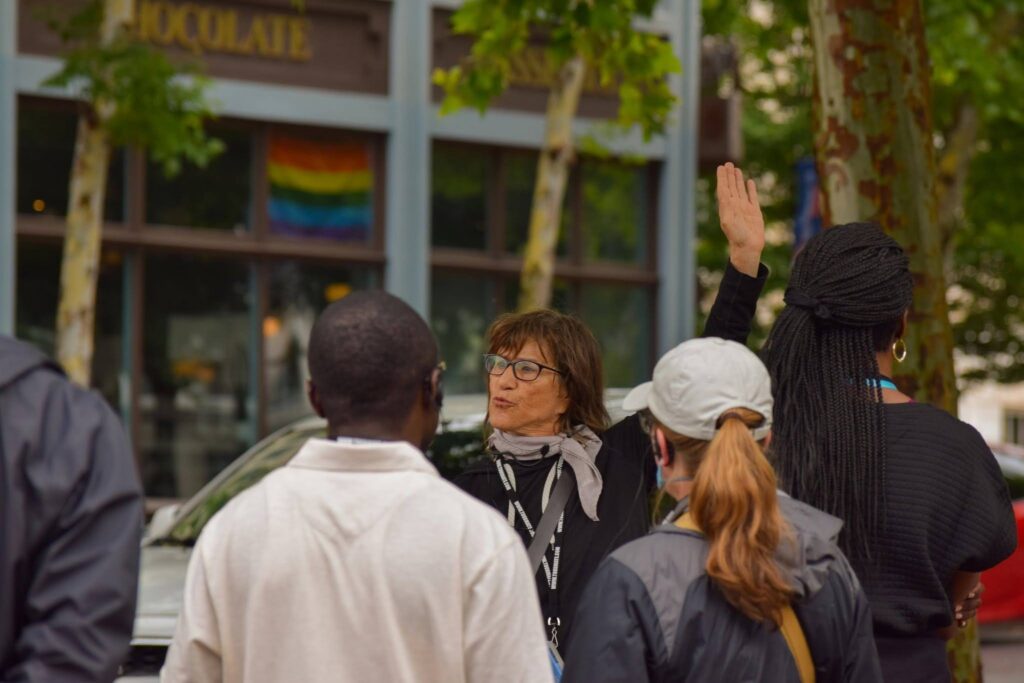
Educators also had the opportunity to explore Asheville on foot, participating in walking tours of the city centered on architecture, accessibility, tourism, and Black history.
Art as a form of democracy
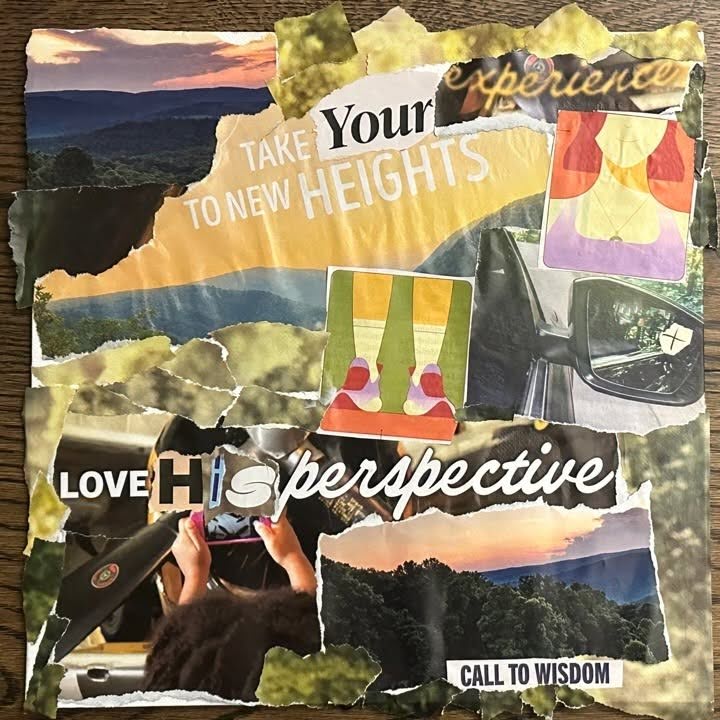
Educators were given the opportunity to learn about collage as a democratic art form from alexandria monque ravenel, the director of cultural programming at the YMI Cultural Center. The YMI Cultural Center is one of the oldest Black cultural centers in the country, tracing its origins back to 1892. ravenel encouraged the educators to continue collecting materials throughout the week to add to their collage.
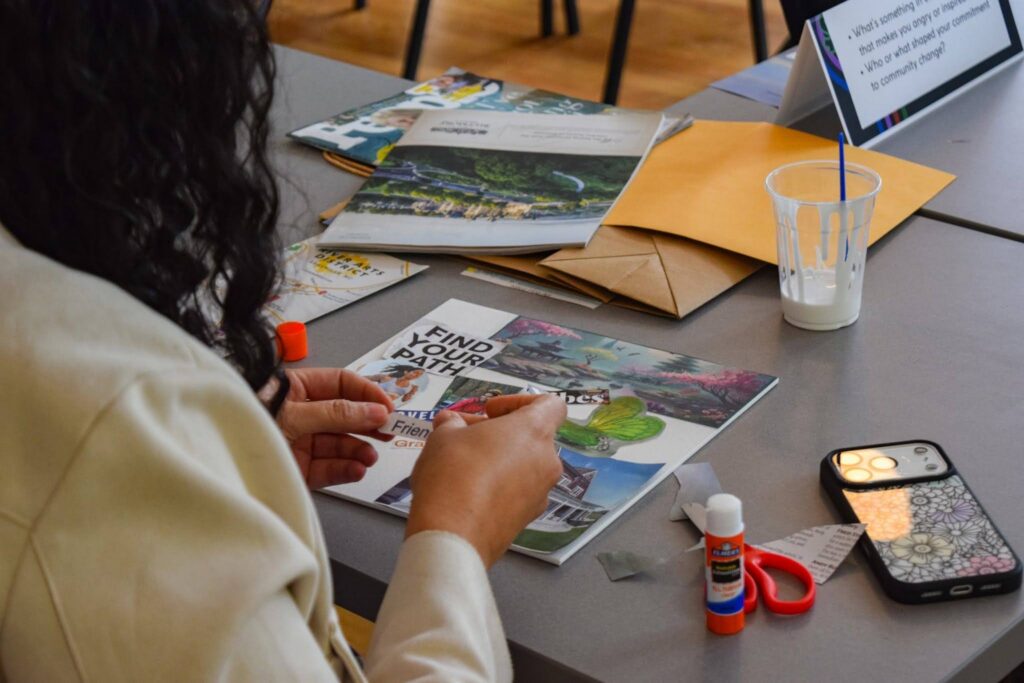
Robin Casey, instructional coach in Wayne County, found this to be one of the most impactful moments of the retreat.
“As I was finishing my collage this week, it was as if all the things that I had been learning and pondering over came together,” she said.
In relation to democracy, Casey found a direct connection between creating a collage and sustaining a democracy:
It takes the big, the little, the tearing, the ripping, the gathering, and sometimes the throwing away to create the beautiful piece we are making. You share, I share, we reposition… yes it is messy, and it takes time, but in the end we did the work necessary to create our own collage of life.
Getting comfortable with the uncomfortable
Another main theme from the week was sitting with feelings of uncomfortability, and using them as an opportunity to learn and grow.
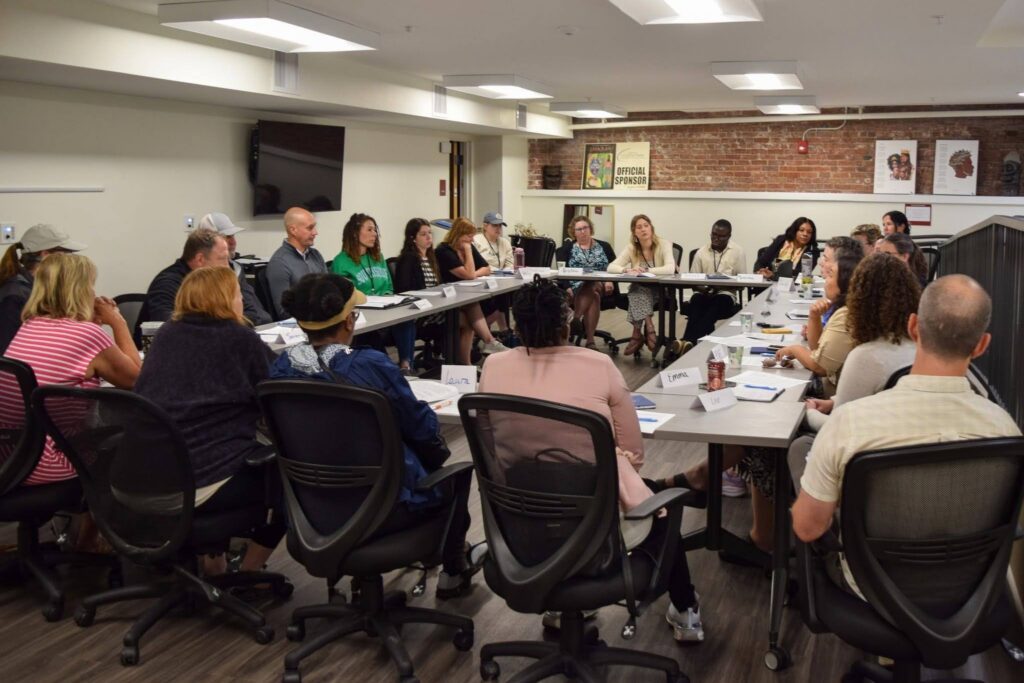
Educators participated in a round-table Paideia seminar, annotating a primary source and then using it as the framework for their discussion. Participants and facilitators alike reflected on the challenges and benefits of having students participate in open-ended classroom discussions, and what we can do as educators to make them feel empowered to share their point of view.
The discussion centered around the landmark U.S. Supreme Court case Brown v. Board of Education, with guidance from leading scholars from the National Paideia Center in Asheville.
On the second day of the retreat, educators wrestled with complex history at former Gov. Zebulon Vance’s birthplace, where they learned about the history of enslavement in western North Carolina, and worked to unlearn the myth that there was no slavery in southern Appalachia.
The Vance Memorial Birthplace historic site focuses primarily on the lives of the enslaved men and women at the Vance plantation, and how their legacy has been preserved through the years. This marks a shift in the site’s narrative from one focused on Zebulon Vance and his family to a broader interpretation of the Vance plantation.
Democracy and the Eastern Band of Cherokee Indians
During the retreat, educators took a road trip to the Qualla Boundary, where they learned about the history and culture of the Cherokee people through museum exhibits, discussions with the first Eastern Band of Cherokee Indians published novelist Annette Saunooke Clapsaddle, and a performance of Unto These Hills.
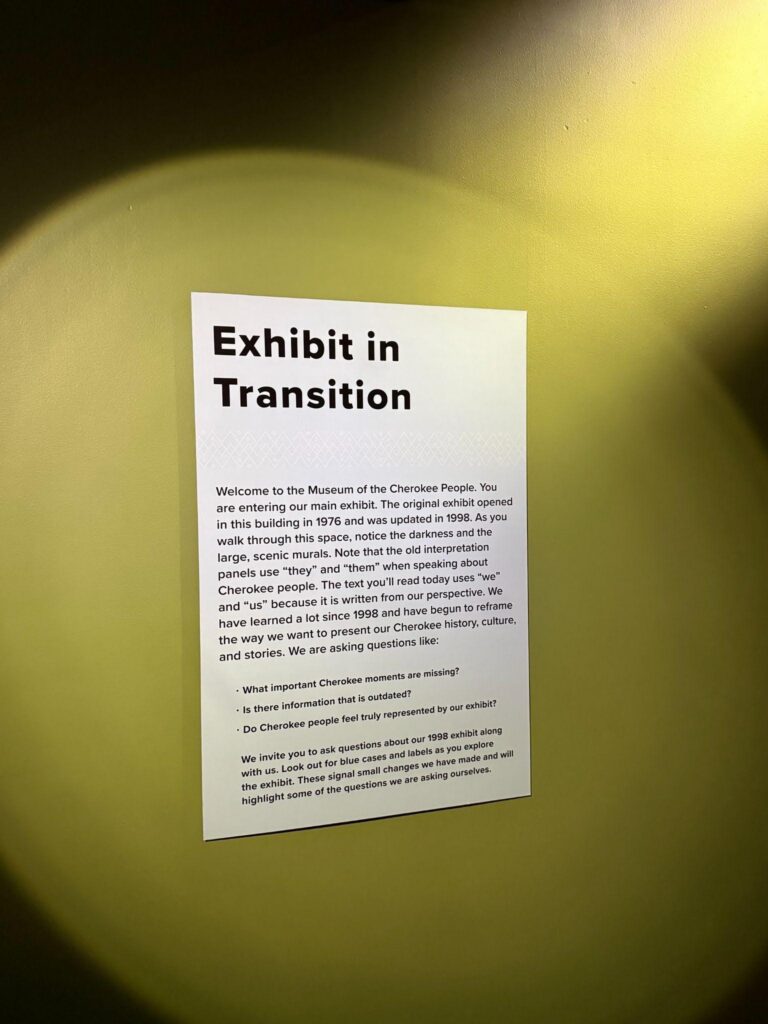
At the Museum of the Cherokee People, educators witnessed a space in transition. The museum is currently undergoing a transformation and a change to first-voice perspective, allowing members of the Eastern Band of Cherokee Indians to write exhibitions in their museum from their point of view, and to display art and artifacts that more accurately tell their story.
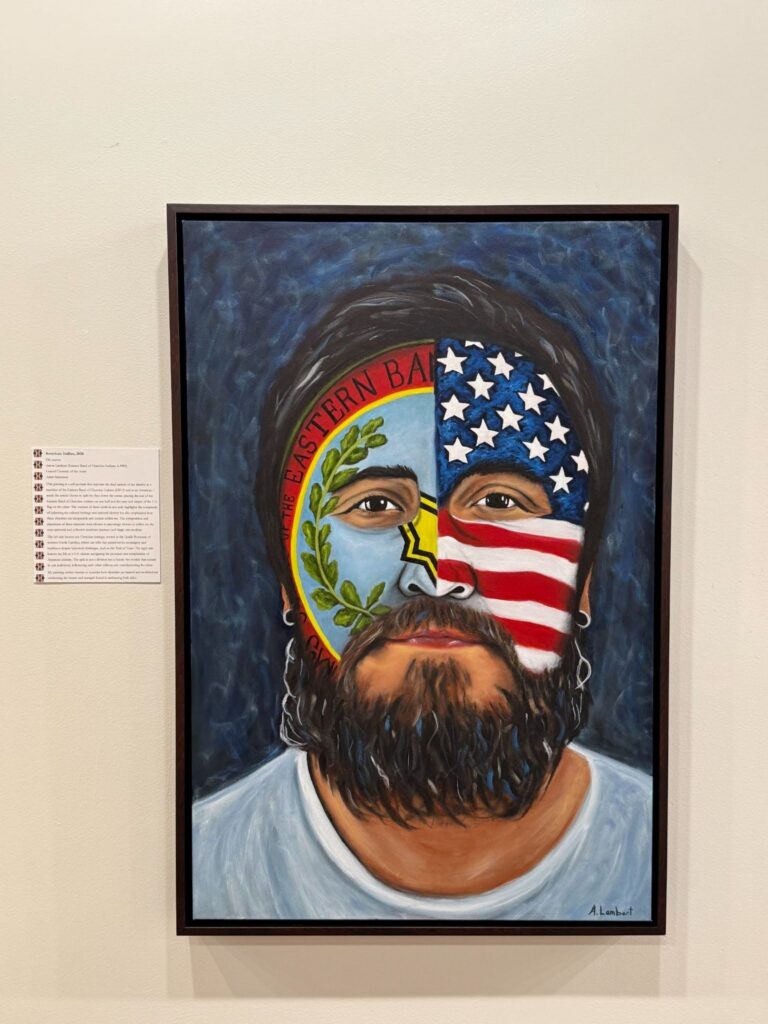
Their newest exhibit, titled “Unrelenting,” honors the Cherokee perspective on the American Revolution. The main focus of the exhibit is art from currently enrolled members of the Eastern Band of Cherokee Indians and the Cherokee Nation.
Museum director Dr. Shana Bushyhead Condill discussed the museum’s decision to use contemporary art to explain a historical event:
We get a lot of questions about why we use contemporary art in an exhibition about the eighteenth century. For us, what is really important is that Cherokee people have not been given that chance to talk about what the American Revolution meant to them, so we are correcting that now.
She continues to mention contemporary art as a form of resistance: “They also want to put us in the past… but contemporary art makes that impossible. You know you are looking at the work of a living artist, sharing their work directly with you.”
Where do we go from here?
Although the week of learning and thinking deeply about democracy is over, the work that educators will do surrounding this topic is not.
Many educators reflected on the importance of this retreat as a space for them to learn from other colleagues across a span of grade levels. There were educators in attendance from every corner of the state and representing nearly every grade in K-12.
When asked how educators planned to bring ideas of democracy back to their classrooms, Demetria McCreary, a special education teacher in Wayne County, discussed the importance of democracy as a shared experience.
“I will take to my students the understanding of the thread of humanity that connects us all,” she said. “I hope it will help them begin to approach how to treat our fellow human beings, and help them think about how willing they are to hear another’s voice, how willing they are to see another’s perspective.”
In July, another 50 educators will travel to the eastern shores of the state for Harbors of Democracy. This retreat will also focus on democracy through the lens of local history, with an emphasis on environmental stewardship, local government, and the events of the 1898 Wilmington Coup.
Educators who are interested in learning more about upcoming events and retreats offered by Carolina K-12 can sign up for their monthly newsletter.