
Perspective | The unfinished promise: Civic education and the future of American democracy

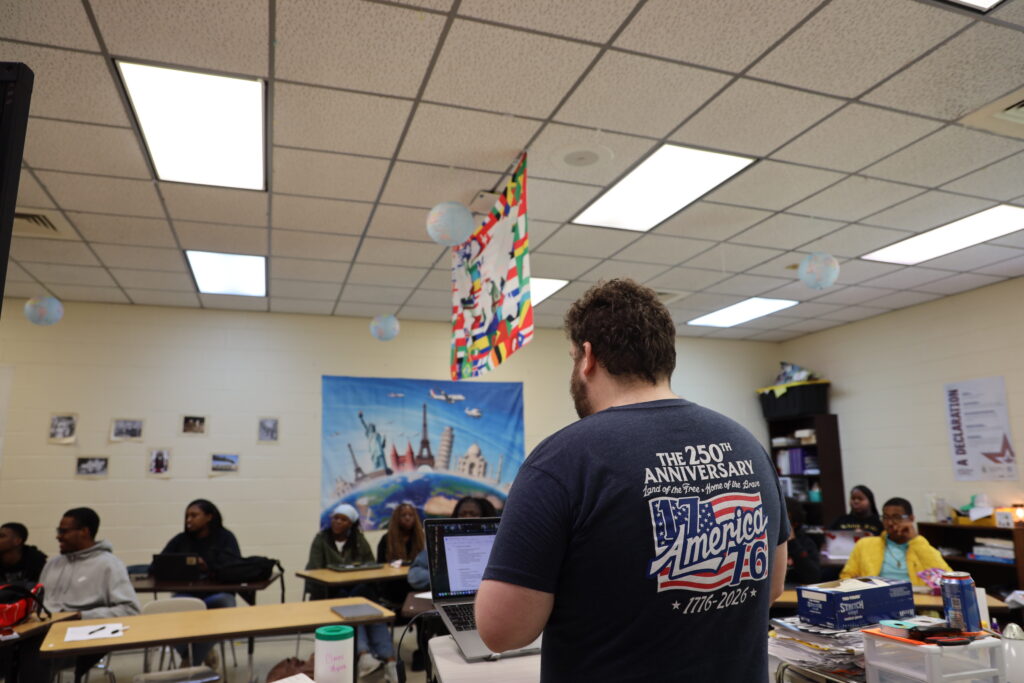
Today, the United States celebrates the 250th anniversary of the Declaration of Independence, a milestone likely to be celebrated with fireworks, parades, and national events. The anniversary also offers an important opportunity for the country to reflect on how well it has upheld the ideals expressed in that document.
In my classroom that reflection is especially meaningful because many of my students come from historically under-resourced communities, and civic education gives them the opportunity to examine and question the promises made at the nation’s founding.
When my students read the Declaration of Independence for the first time, they often pause at its most familiar line: “that all men are created equal, that they are endowed by their Creator with certain unalienable Rights, that among these are Life, Liberty and the pursuit of Happiness.” Some students feel inspired by the powerful promise of equality. Others quickly notice that American history has not always reflected those ideals. Instead of treating the document as a distant artifact from the past, students begin asking what those words have meant in the lives of real people.
Their questions quickly reach the heart of American history. If the nation was founded on equality, why were women, African Americans, and other groups denied those rights for generations? Conversations like these move students beyond memorizing historical facts. They begin examining the gap between the nation’s ideals and its reality. Through these conversations, students begin to see democracy develop through debate, persistence, and the willingness to challenge injustice.
 Sign up for the EdWeekly, a Friday roundup of the most important education news of the week.
Research shows that civic education helps prepare young people to participate in a democracy. It allows them to better understand how government works and why their voices matter. The Center for Information and Research on Civic Learning and Engagement reports that students who experience civic learning opportunities are significantly more likely to vote and take part in their communities as adults.
Experiences such as learning about democratic institutions, discussing public issues, and exploring ways citizens can influence their communities help students recognize that civic participation has real meaning in their lives. Strong civic education plays an important role in developing informed and engaged citizens who remain active in democratic life.
These findings reflect what I see in my classroom. Many of my students come from communities that have historically had limited political representation. At the beginning of the course, some students feel that politics and government exist far away from their everyday lives. Civic education helps reduce that distance by introducing them to individuals who worked to expand rights and opportunities throughout American history.
When students learn about figures such as Frederick Douglass, Ida B. Wells, and the young activists of the Civil Rights Movement, they begin to recognize the power of civic action. These stories show that many of the most important changes in American history began with ordinary people who pushed for the nation to live up to its ideals.
In one lesson, I asked students to closely examine the language of the Declaration of Independence and connect it to later moments in history. They explored how the 14th Amendment expanded the meaning of equality and how Martin Luther King Jr. described the Declaration of Independence as a “promissory note” that the nation had not yet fully honored. Students began to see the document not as a finished monument, but as a set of promises each generation must work to fulfill.
Civic education also helps students connect history to the issues they notice in their own communities. During classroom discussion, students raise questions about representation in government, access to voting, and opportunities in their neighborhoods. One project asked students to research how their communities are represented in local government by examining voter participation, identifying local leaders, and exploring issues that affect their neighborhoods. For many students, the experience was eye-opening. They began to see how civic participation can influence decisions that shape everyday life.
As the United States celebrates its 250th anniversary, civic education remains essential because it empowers students to claim the nation’s ideals as their own. Teaching civics allows young people to connect historical principles to their present lives and encourages them to shape the next chapter of American democracy.
The future of the nation depends not only on government leaders, but also on the engaged citizens sitting in classrooms today.