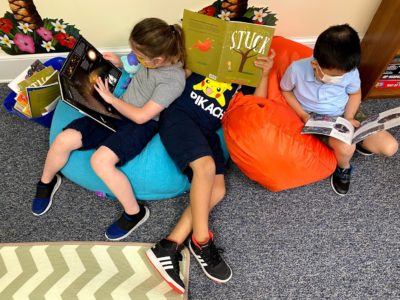
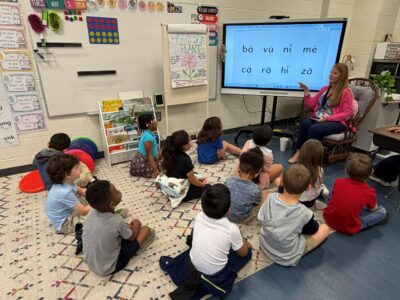
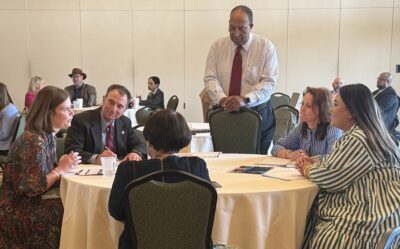
At Norwood Elementary School, conversations about reading happen everywhere — in classrooms, professional learning community (PLC) meetings, parent conferences, hallway celebrations, and even the grocery store.
“I had a teacher stop me in the grocery store to ask if I had seen her data because she was so excited,” said Lynn Plummer, chief academic officer for Stanly County Schools.
That excitement reflects a broader shift taking place at the school, a move from isolated instructional practices to a deeply collaborative, data-informed literacy culture centered on student growth and long-term success. Teachers, instructional assistants, coaches, and district leaders all describe the same transformation — one built on intentional systems, aligned literacy instruction, and a belief that adult practices must continuously evolve to meet student needs.
“They are hungry to do better,” Plummer said. “They have experienced success and want to continue.”
 Sign up for the EdWeekly, a Friday roundup of the most important education news of the week.
From ‘teacher talk’ to student ownership
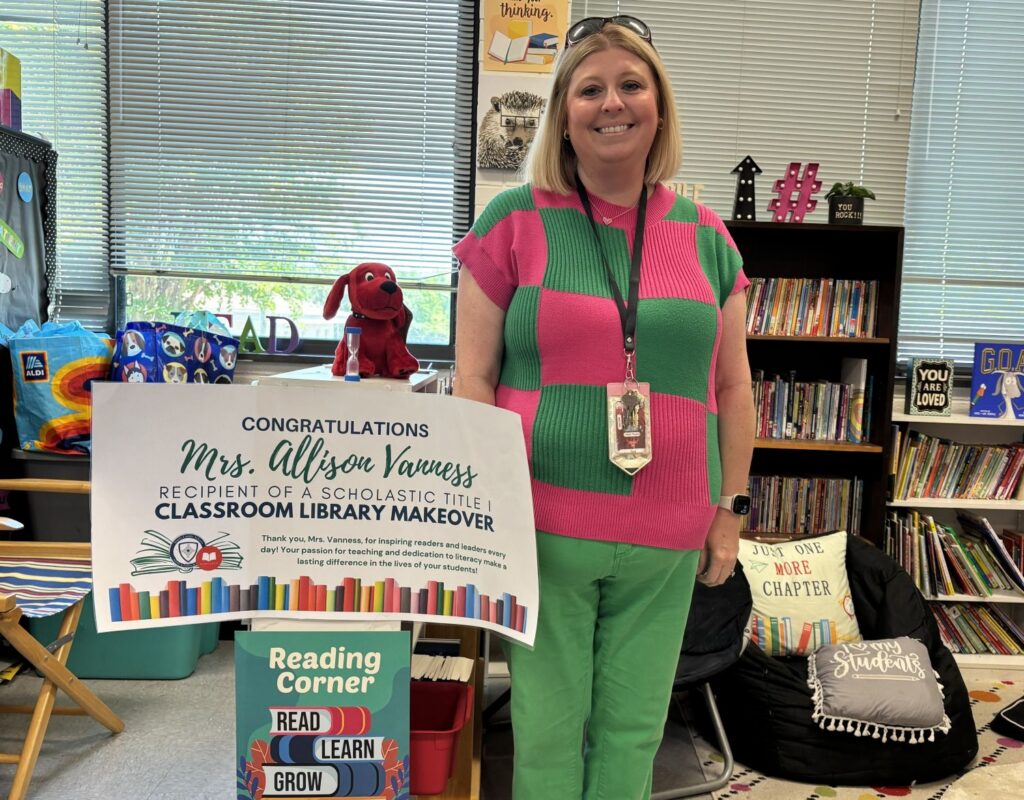
Third grade teacher Allison Vanness remembers when data conversations were far less common.
“When I came five years ago, I don’t think there was as much focus on data as there is now,” she said. “We have really jumped on that.”
Today, students at Norwood track progress on standards, discuss growth trends, and participate in student-led data conferences with families.
“They know what standard RL.3.2 is and speak ‘teacher talk’ with you,” Vanness said. “We graph our trend data so we can see what we need to go back over later.”
This work extends beyond simply reviewing scores. Teachers regularly engage in PLC data dives to identify specific strengths and instructional gaps. Teams analyze which interventions are working, which students need additional support, and how instructional adjustments can improve outcomes.
“We go beyond the composite scores and percentages to identify specific areas of progress and gaps to determine next steps for each student,” Vanness said.
This shared ownership has become part of the school’s culture. Teams operate with the philosophy, “If it can happen in her classroom, it can happen in mine.”
Small groups with purpose
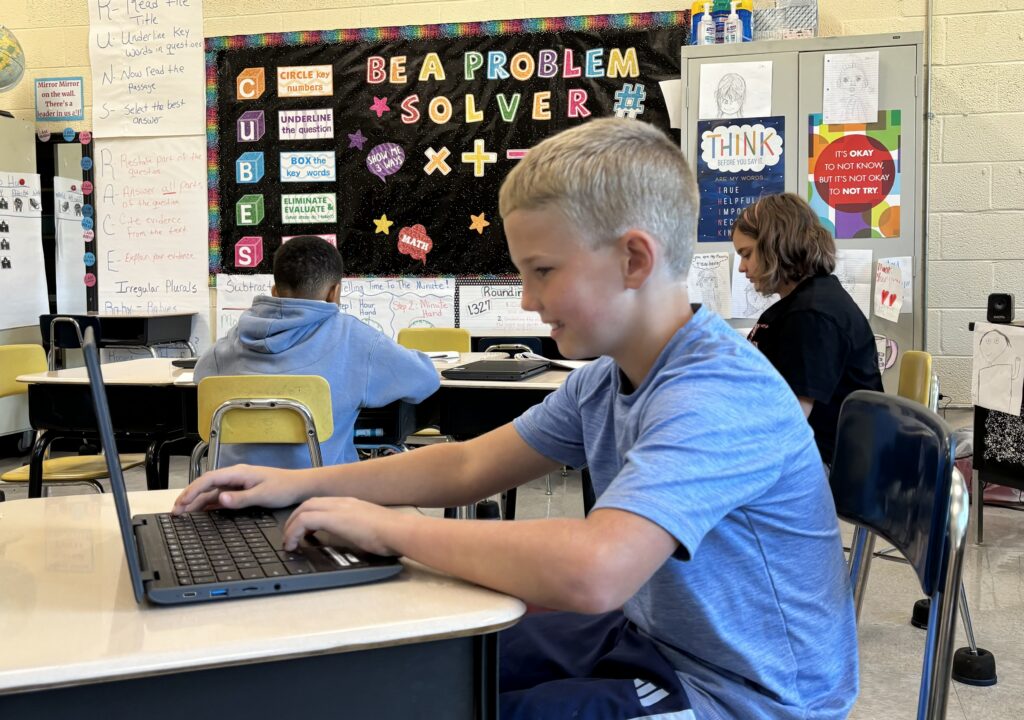
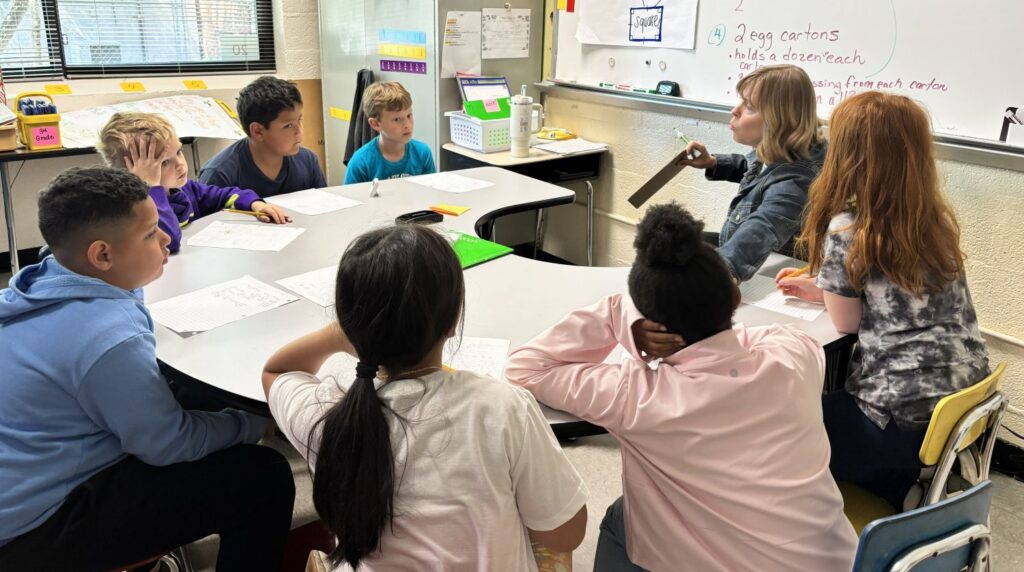
Across classrooms, targeted small-group instruction has become a central strategy for supporting literacy growth.
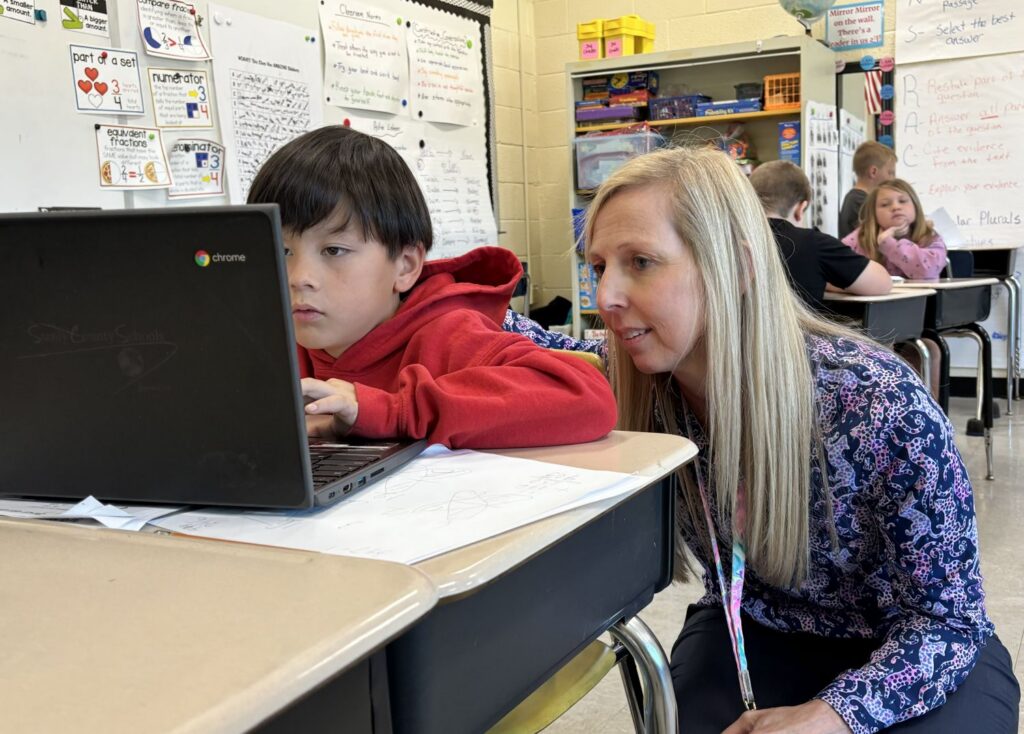
“There are a lot of small groups going on now,” said fourth grade teacher Kristie Hinson. “Our instructional assistants serve each grade level to help support the targeted needs of students aligned to data.”
Hinson said the groups have increased engagement and strengthened classroom collaboration. “The small groups have really been beneficial for the students’ success, and the kids are more actively engaged,” she said.
Furthermore, instruction is more closely aligned to specific student skill gaps, with school leadership protecting intervention time and ensuring instructional assistants can remain focused on student support. Instructional assistant Lorena Salazar described how her work has evolved with the literacy shift.
“The role of the instructional assistant has changed from primarily clerical work to actually supporting instruction,” she said. “I feel much more prepared and able to reach kids.”
Equipped with LETRS
Norwood’s work is closely connected to broader literacy efforts underway across Stanly County Schools. District leaders say the Literacy Intervention Plan (LIP) has established nonnegotiables around curriculum alignment, scheduling expectations, and tiered literacy supports.
Plummer said the district’s goal is not to remove teacher autonomy, but to ensure that instruction is aligned to research-based practices rather than disconnected materials or inconsistent approaches. Leaders said Language Essentials for Teachers of Reading and Spelling (LETRS) has played a major role in that alignment.
“LETRS supported the change that has taken place with instructional practices,” said curriculum coach Bev Russell. “Now that we have had LETRS training, everyone’s more aligned and equipped with the same information — a more solid foundation and understanding.”
Teachers say the professional development became meaningful because it was paired with classroom application and ongoing support.
“LETRS was not just professional development,” Hinson said. “We are constantly looking for classroom application and how to make it real life.”
Related reads

Norwood Principal Mandy Hall said the school has strengthened foundational literacy instruction in grades K-2 through consistent implementation of literacy programs UFLI and Heggerty, aligned decodable texts, and more intentional independent station work.
Early literacy specialist Jolene Graham shared, “Norwood always jumps on board to learn ways they can improve for students. They are open, listen, and willing to change.”
School leaders are transparent with staff regarding why decisions are made and walk them through clearly defined next steps. Additionally, follow-up support is always part of the deployment plan, differentiated for staff based on need.
Learning from one another
Teachers and leaders at Norwood repeatedly described collaboration as one of the school’s greatest strengths. Hall said instructional learning walks have created opportunities for teachers to observe peers, learn new strategies, and identify areas where additional support may be needed. One example emerged around writing instruction.
“The tendency to skip the writing portion of the lesson became visible during classroom observations,” Hall said, prompting the school to provide targeted professional development and support in that area.
Cross-grade collaboration has also increased. Vanness described conversations between second and third grade teachers around the transition from decoding to deeper comprehension work.
“Second grade has been more intentional about implementing more comprehension strategies, which has helped third grade success,” she said.
Assistant Principal Carolyn King said the school’s mindset has evolved over time. “I’ve watched the teams become more cohesive with a mindset to shift the entire grade level over ‘my’ classroom,” she said.
Bringing families into the process
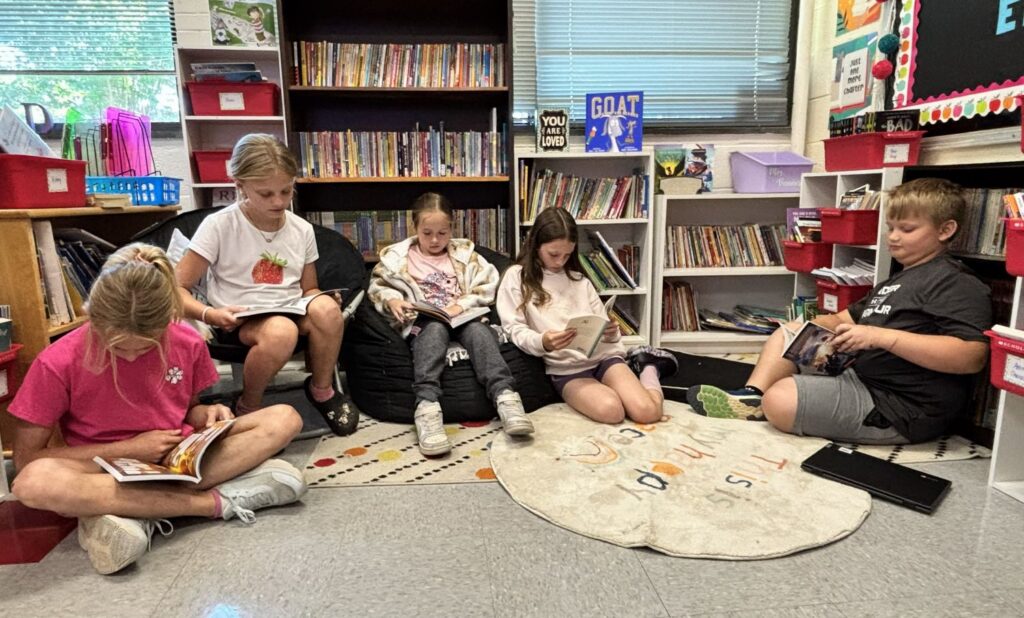
Norwood leaders say literacy growth depends not only on school processes and systems, but also on meaningful parent engagement. The school hosts student-led conferences and data days where students explain their own progress and goals to families.
“I am especially impressed with the inclusion of Norwood parents,” Plummer said. “While it’s easy to send the Amplify mCLASS report home and expect parents to know what that ‘little running man’ means, Norwood is intentional about helping parents really understand what it means.”
Parents regularly attend celebrations of growth and classroom events during the school day, often because students themselves are eager to share their accomplishments. This happens because kids understand their data and want to share it with their parents. Parents come because the kids are excited and proud. Norwood goes above and beyond the routine conferences to partner with parents.

Shared commitment to a districtwide literacy continuum
Despite experiencing significant principal turnover, staff members say the school has maintained momentum because of a shared commitment to students.
“The staff want what’s best for kids, even when no one is looking,” Russell said.
Plummer said the school’s biggest shift has been moving from trying to change students to changing adult practices.
“The staff deserve recognition for committing to change on behalf of their students,” he said. “They understand that teaching reading looks different now, and their practices must continue to evolve as they strive to improve. Ultimately, they believe that kids can learn to read, so what can we, as adults, do to make that happen?”
That mindset continues to drive the school’s next steps as Norwood works to strengthen interventions, balance word recognition and language comprehension, and prepare for implementation of North Carolina’s new literacy standards. For educators at Norwood, the work is ongoing, but so is the belief that growth will continue.
As Stanly County Schools continue planning for the future, district leaders are already building support systems around North Carolina’s 2027-28 English Language Arts Standards and how those standards align with the curriculum structures already in place.
Using tools from The Reading League, the district is working to identify content gaps and proactively strengthen supports for teachers and students alike. But the work is not confined to elementary schools.
District leaders have intentionally expanded LETRS-based research and professional learning into middle and high schools, recognizing that literacy development does not end when students leave elementary grades.
To support long-term continuity, the district has developed train-the-trainer professional development sessions for school leaders and instructional coaches, breaking literacy instruction into manageable topics such as writing, text complexity, speaking and listening, comprehension, and integrating literacy across content areas. The goal is not simply stronger reading scores, but a sustained, systemwide commitment to helping every student become a confident, capable reader.

Recommended reading