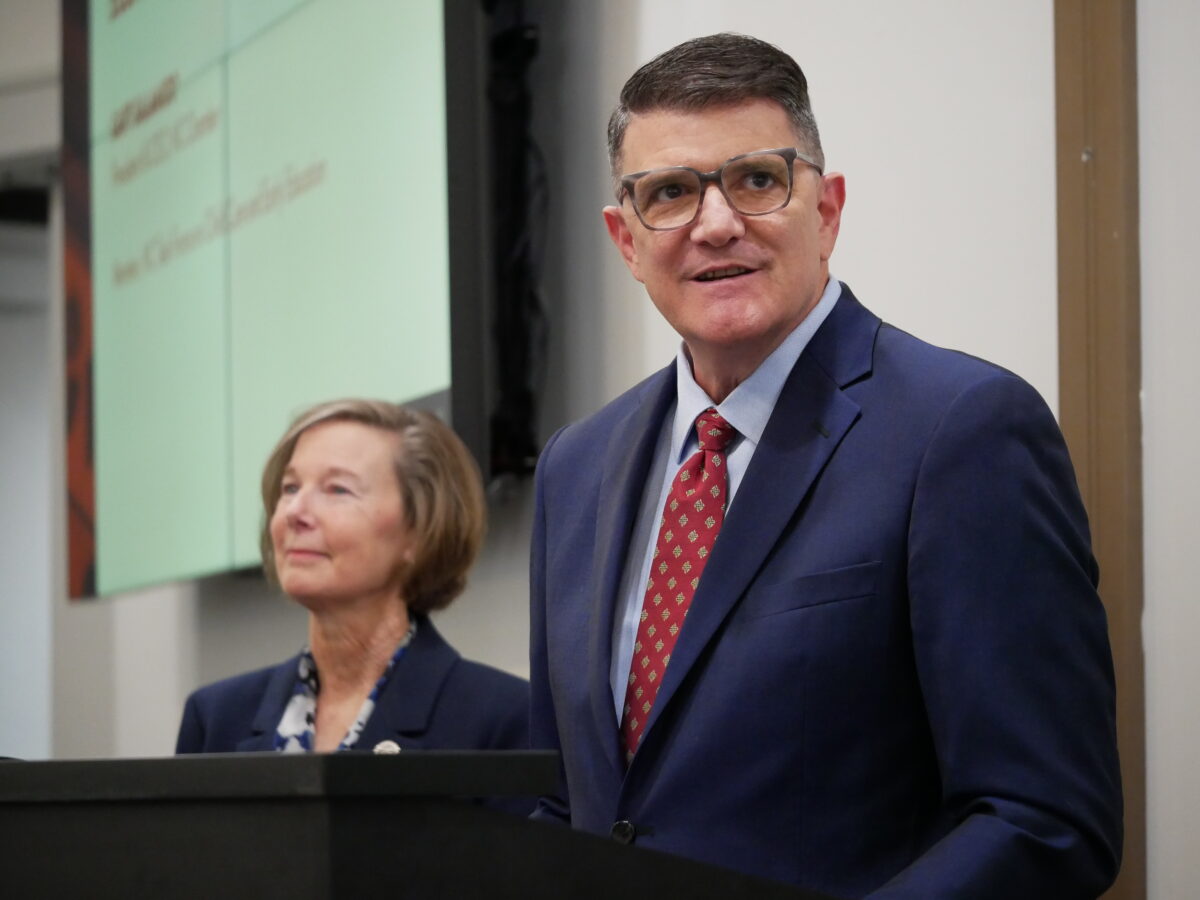
Business leaders and owners advocated on Thursday for legislative funding this session for the child care subsidy program, which helps low-income working and student parents afford care.
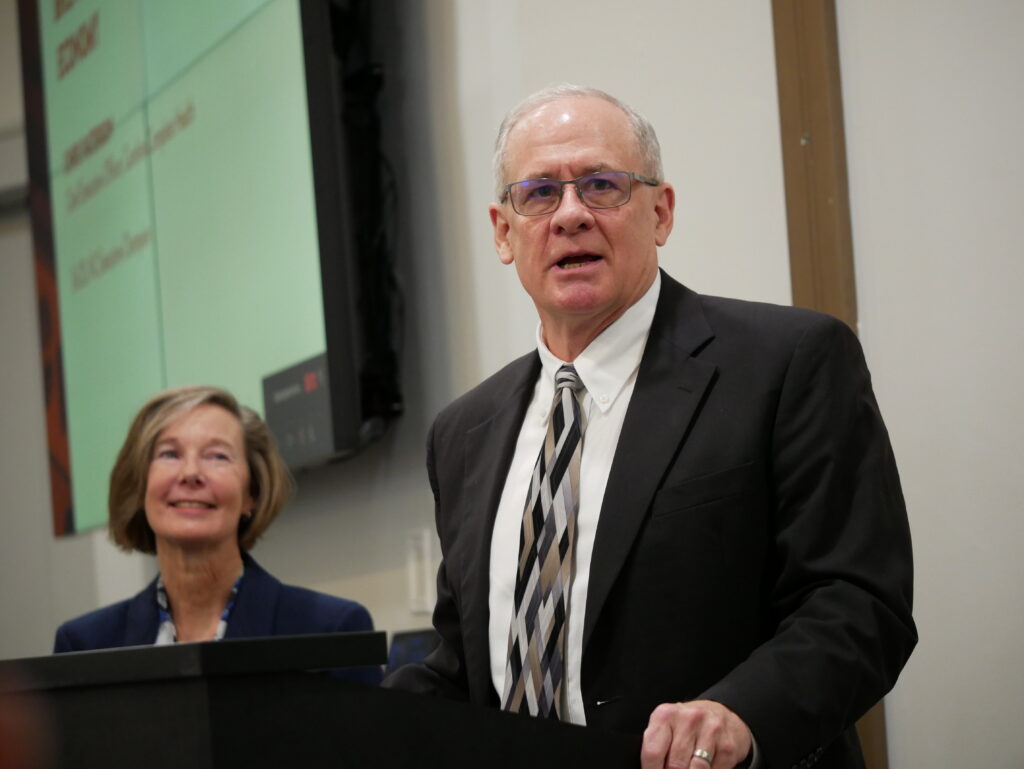
“Without enough affordable, high-quality child care, employers across the state are missing out on what they need; that’s talent and people,” said Gary Salamido, president and CEO of the NC Chamber of Commerce, during a meeting of the North Carolina Task Force on Child Care and Early Education.
The state needs to invest in child care to maintain its CNBC ranking as No. 1 in business, Salamido said.
 Sign up for Early Bird, our newsletter on all things early childhood.
The group asked the legislature for funds to establish a subsidy floor rate, which would set the minimum amount of per-child funding participating child care facilities receive at the state average, based on quality and age. Right now, the rates vary widely from county to county, making it hard for some programs to operate.
“When the reimbursement rate is $500 less for one of those counties … to me, that’s saying that they don’t have as much, so they don’t need as much, but they could actually need more,” said Rhonda Rivers, chair of the state Child Care Commission and regional director of education at LeafSpring School, a child care program in the Charlotte area.
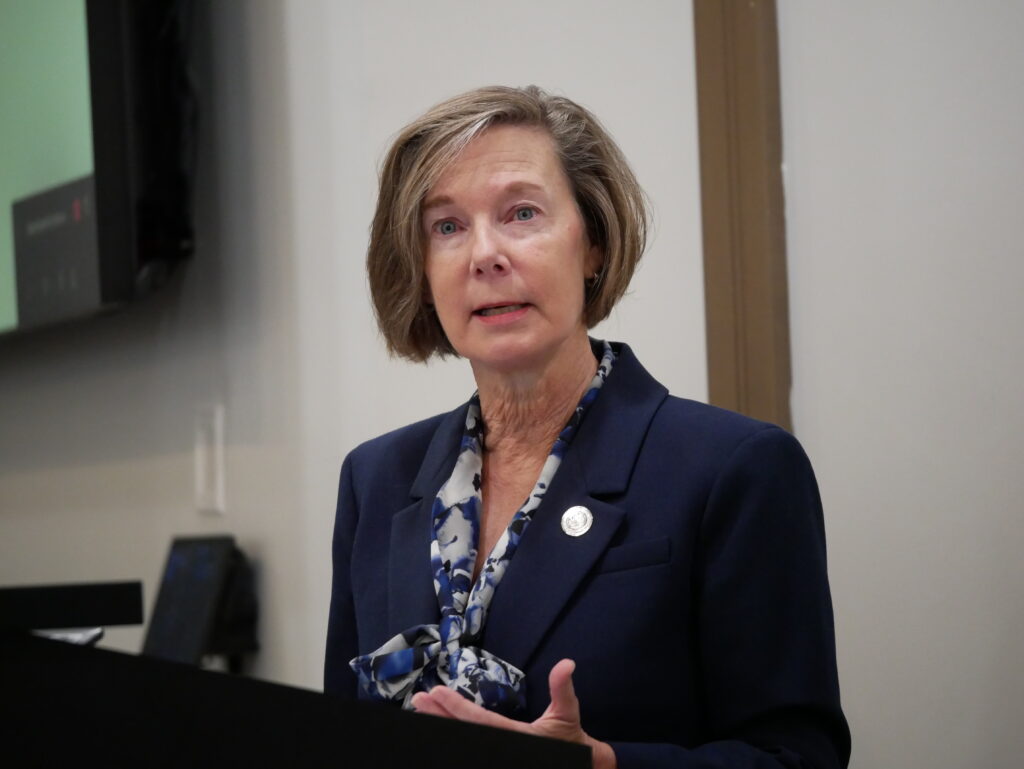
The subsidy floor is the main recommendation from the North Carolina Task Force on Child Care and Early Education, which has been studying potential solutions to child care challenges since Gov. Josh Stein established the group in March 2025.
The task force is chaired by Sen. Jim Burgin, R-Harnett, and Lt. Gov. Rachel Hunt, a Democrat.
Related reads

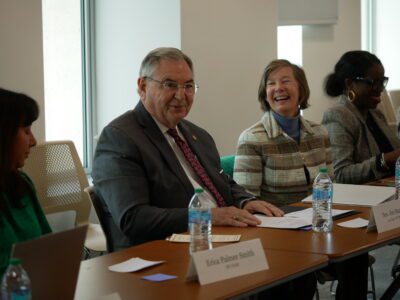
“If we are serious about supporting families and strengthening our workforce, public investment must be part of the solution,” Hunt said at Thursday’s event.
Burgin filed Senate Bill 1042 the same day, which includes $75 million in subsidy funding.
Stein’s budget proposal, released in April, includes $80 million in recurring funds to establish a floor rate. The House and Senate budget proposals last year included similar allocations, though they were never passed in full due to a budget stalemate.
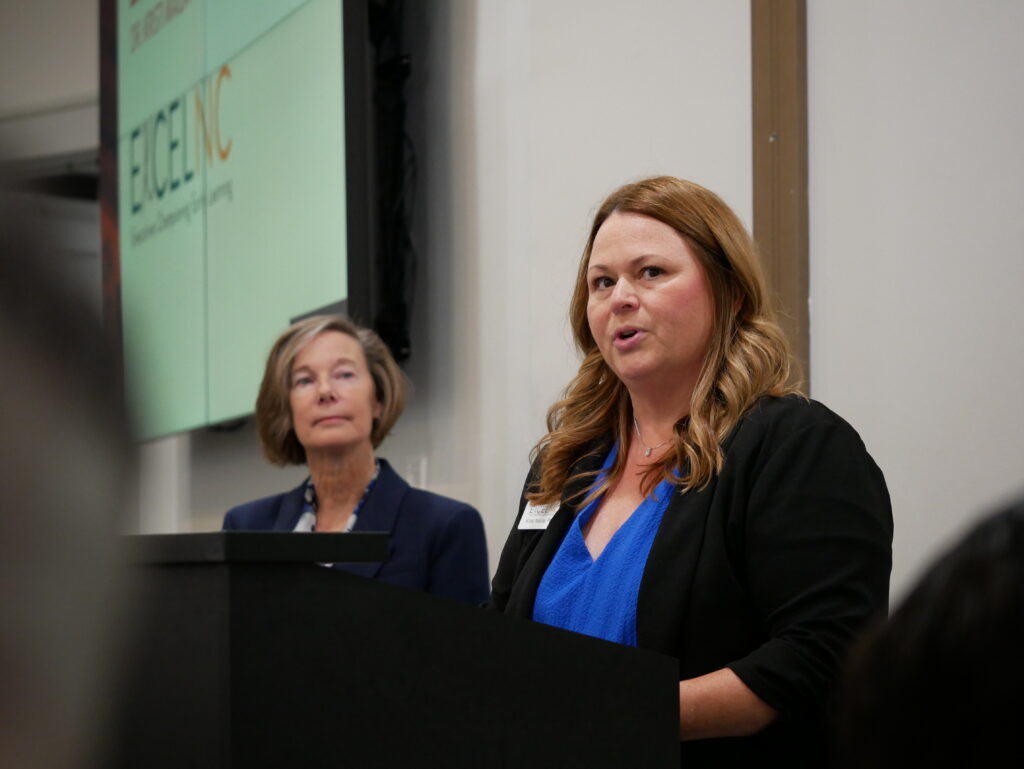
Other business leaders, including members of ExCEL NC (Executives Championing Early Learning), spoke on Thursday about how the state’s lack of child care and high costs impact their employees and talent pools.
“We have single parents who earn good salaries, who still see child care consume a third of their gross wages, which is just untenable,” said Chris Paterson, CEO of Carolina Complete Health.

ExCEL NC is an initiative funded by the Leon Levine Foundation, which has held regional gatherings across the state to discuss child care’s impact on local economies.
“Stabilizing child care is essential to stabilizing our economy,” said Kristi Maida, director of ExCEL NC. “When parents can work, businesses can grow and when businesses can grow, North Carolina grows too.”
Carol Steen, vice president of human resources, information technology, and security at Biltmore Farms, recalled her own experience placing her children on a waitlist for child care when she found out she was pregnant with twins. It took 10 months before slots opened. She said she sees her employees have similar experiences often, forcing some parents out of the workforce.
“The moment of starting a family or growing a family, then turns into a professional crisis, and that happens across our state each and every day,” Steen said.
Higher subsidy rates, advocates say, would help programs struggling to cover the cost of providing care, including recruiting and retaining teachers with competitive wages. In 2024, the average wage for child care teachers in the state was $14.20 in 2024, according to the Bureau of Labor Statistics.
“A reimbursement rate floor will stabilize what most providers will need, particularly the providers at most risk, the ones that are serving the families with the least alternatives,” Steen said.
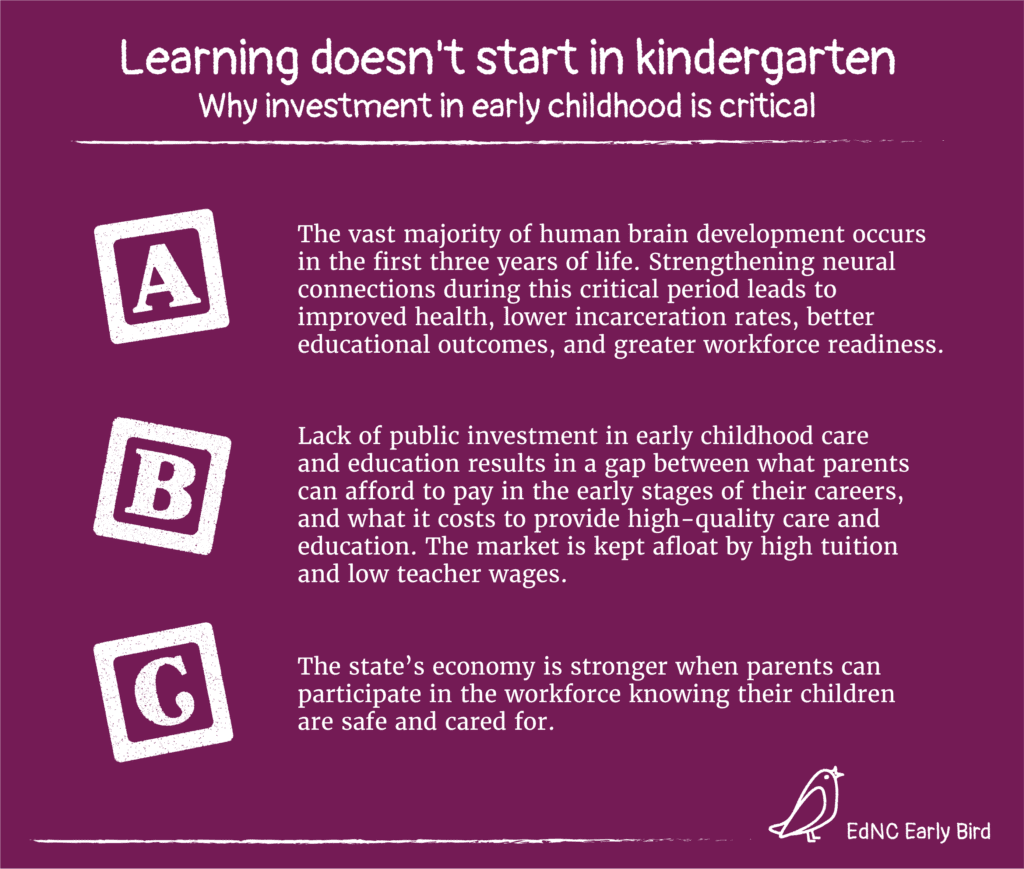
Low subsidy rates have been cited as a reason for program closures. The state lost 17.6% of its licensed child care from March 2018 to March 2026, according to the Division of Child Development and Early Education’s online dashboard.
Providers have particularly struggled to make ends meet since pandemic-era funding ran out in 2025. Most programs used that funding to increase teacher compensation and have had to find other ways, including tuition increases, to fill the gap.
For multiple legislative sessions, early childhood advocates have pointed toward a subsidy floor as a way to keep the system afloat.
Business leaders have become more vocal about the need for child care solutions for workforce participation. The NC Chamber Foundation released multiple reports in 2025, estimating that insufficient child care costs the state $5.65 billion each year and looking to other states for potential solutions.
State leaders have considered public-private partnership models to fund the system, like Tri-Share, a cost-sharing pilot that splits the cost of child care between employees, employers, and the state government. Some individual businesses have built on-site care or provided subsidies to their employees.

But the business leaders Thursday said private entities can only do so much to solve a systemic problem.
“As a private employer, you look at all the different solutions that might be possible to try to solve or alleviate the issues that your own employees are experiencing, but I think it takes leaders in the community to recognize this is more of a community issue,” Steen said. “While we might be able to put investment in our own employees, it doesn’t solve it for everyone.”
ExCEL NC is estimating that a subsidy floor would add 7,800 additional child care enrollments within the next year. Rural communities would especially benefit, seeing a $27 million increase in reimbursements.
“Private industry frankly just cannot do this alone,” said Gene McLaurin, president and CEO of Quality Oil Company, which has offices in Lumberton, Laurenburg, Waynesboro, and Rockingham. “We need both public and private sector investment to address this challenge.”

Recommended reading