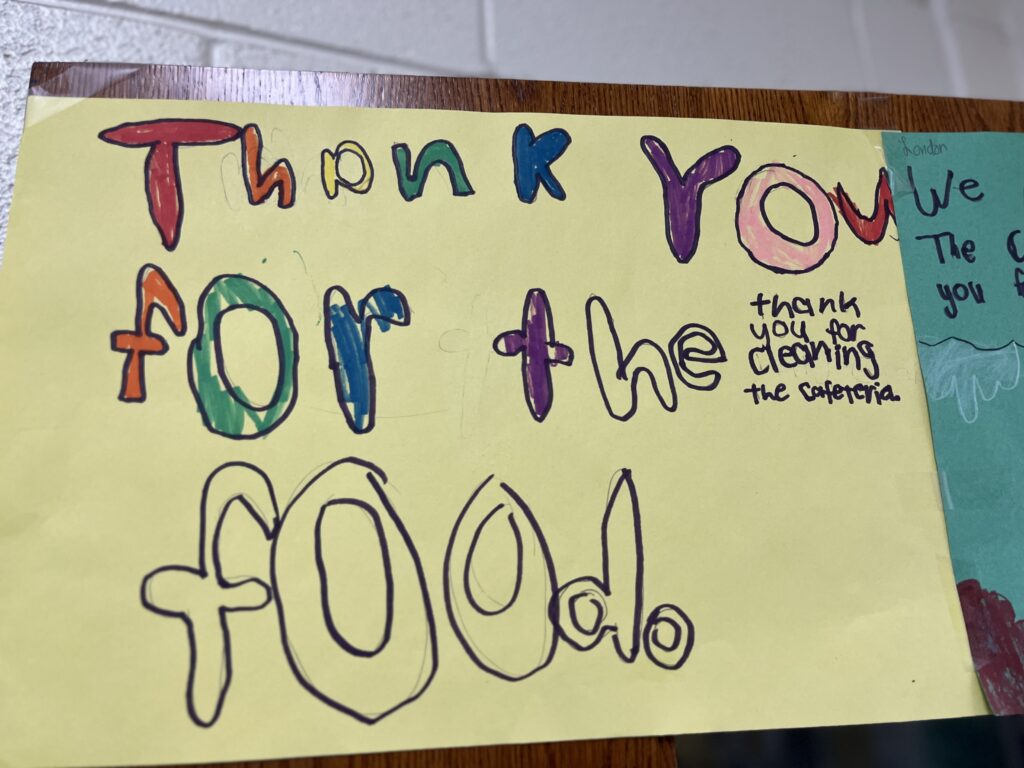
Celebrating North Carolina’s school lunch professionals on National School Lunch Hero Day

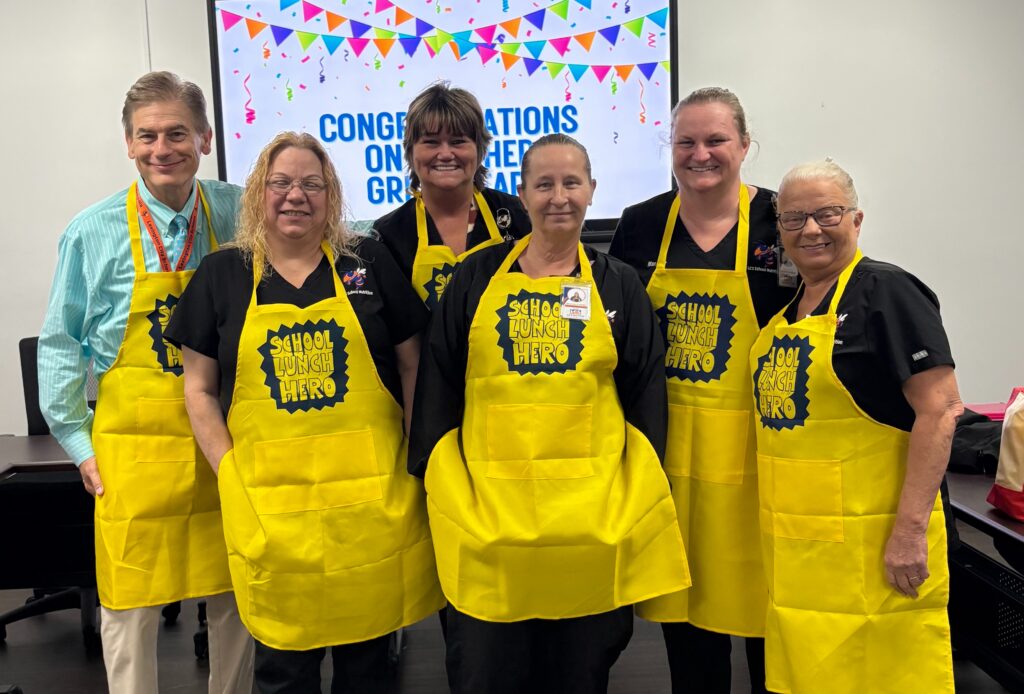
Friday, May 1 marks National School Lunch Hero Day — an annual celebration of the hardworking school cafeteria professionals who work day in and day out to prepare and serve nutritious meals to students across the country. These are the stories of school lunch heroes in North Carolina.
Becky Roper, Jackson County Public Schools
When Becky Roper’s daughter was in elementary school, there was an opening at her school cafeteria. Taking that role was the first step in what would become a more than 40-year career in food service.
This initial experience working in a school cafeteria — where Roper recalls making hamburger buns from scratch — inspired her to pursue culinary training at Southwestern Community College and later at a private culinary school in Vermont.
“One interest inspired another interest inspired another interest,” she said. “I’m not a book person — I need to do.”

After returning to North Carolina, Roper took roles with the Grove Park Inn, a historic resort hotel in Asheville, and then with a private retirement community.
In 2015, Roper returned to her school nutrition roots when she became the cafeteria manager at Cullowhee Valley School, a rural pre-K-8 school in Jackson County. She’s held that role ever since and intends to retire in it.
Roper arrives around 6 a.m. each school day, turning on cafeteria equipment and starting to prepare breakfast. After breakfast is served, the rest of the cafeteria staff arrive to help prepare lunch, with responsibilities spread across preparing the salad bar, meat, vegetables and fruit, and bread.
“We have fun — I believe that fun should be incorporated with the work,” Roper said.
From baking new a la carte desserts to creating lunch items from scratch, such as taco meat and chili, Roper looks for any opportunity to cook. And although she knows it may be hard to believe, Roper said she actually enjoys all of the paperwork involved with running a cafeteria — she even prioritizes placing her food orders early.
Beyond preparing food, Roper works intentionally to build relationships with the school’s students and teaches them life skills by setting expectations in the cafeteria. For example, if a student takes a snack item without paying for it, Roper turns that into teaching opportunity to reinforce the importance of integrity.
“As I see the kids grow up, and they’re now in the eighth grade … we develop a bond,” Roper said. “I can go up to them and say: ‘Hey Eric, how are you doing today?’ Or, ‘Hey Susie, how’s life treating you?’ And then they open up and they talk to you.”
Read more on school meals



Lynetta Rogers, Public Schools of Robeson County

When Lynetta Rogers found out the grocery store in Lumberton where she worked was closing, she decided to search for a new career. As a then 30-year-old with a child entering kindergarten, she wanted a career that would offer retirement benefits.
That search led her to Public Schools of Robeson County, where she’s worked in the cafeteria at Tanglewood Elementary for the last 25 years.
As cafeteria manager, Rogers is one of the first people at the school each morning. She opens the cafeteria doors, turns on equipment, and starts preparing breakfast. Tanglewood serves breakfast through a grab-and-go model in the hallways before class begins, so meals are wrapped individually and coolers with milk and juice are packed to go down each hallway.
After breakfast, Rogers and her team take a brief break before turning to lunch, using production sheets to estimate the right amount of food to prepare. After lunch, the cafeteria team washes dishes, cleans, sanitizes, and even takes out their own trash.
While the days can be long, Rogers said her favorite part of her work is spending time with her cafeteria team and with the students.
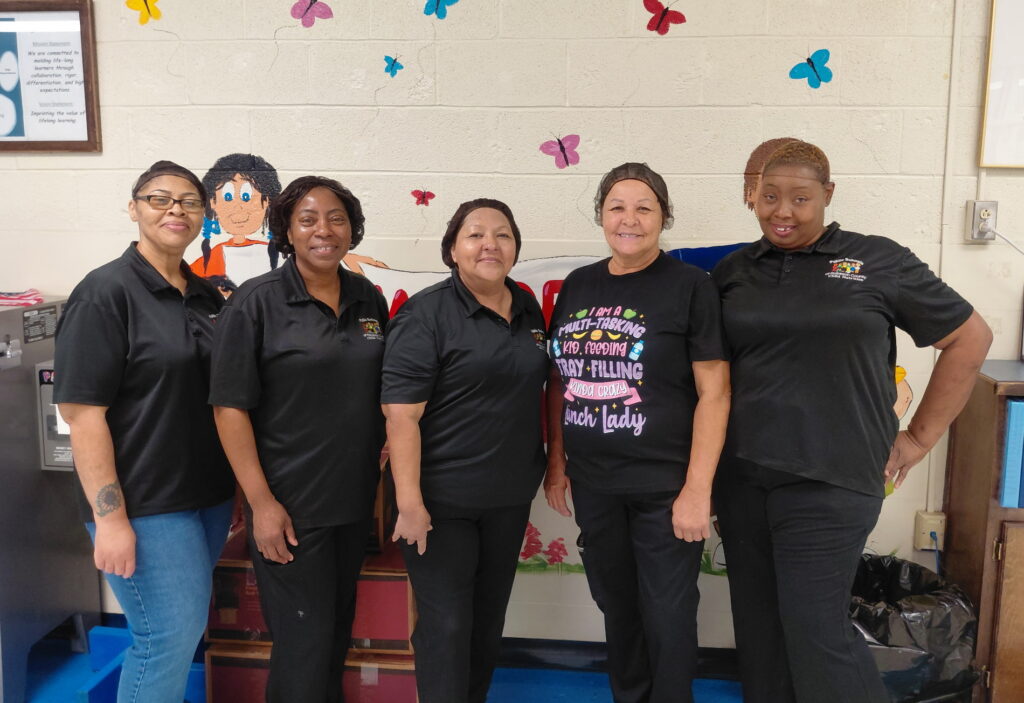
“We are a team, and we have to come in with a positive attitude and greet those kids, because those are our customers,” she said. “We enjoy the children and their smiles and their hugs, and we know them by name, and they know us.”
Over the years, Rogers has seen the importance of school nutrition, particularly for students who may come to school without having breakfast, or who may not have had a meal the night before.
“My job is to be sure that we’re here for the kids, to feed the kids,” she said. “We just don’t know what their situation is. So we’re here … and we’re going to take care of your children, and we’re going to treat them as best as we can.”
Public Schools of Robeson County created a series, titled “Behind the Serving Lines,” to showcase school nutrition professionals. You can view the full series on the district’s Facebook page.
Lexington City Schools
At the South Lexington Pre-K and Kindergarten School and Developmental Center, Alma Byrd, school nutrition manager, and Yolanda Stiller, school nutrition assistant manager, never imagined that school nutrition would become a long-term career. Both were initially drawn to the profession out of a desire to align their work with their children’s school schedules.
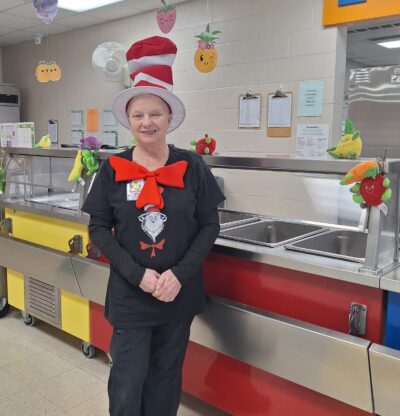
Byrd, Stiller, and the rest of the cafeteria team prepare three different menus each day — one for the school’s pre-K students, one for the school’s kindergarten students, and one to meet the unique dietary needs of students that require specialized meals.
The work that goes into that behind the scenes is significant — including cooking, ordering and stocking food, prepping materials for the next day, and cleaning.
“People think cafeteria work is easy — but it’s not easy; it’s hard work,” said Stiller. “We put thought into the meals, serving it, making it look appealing for the children — it’s a lot.”
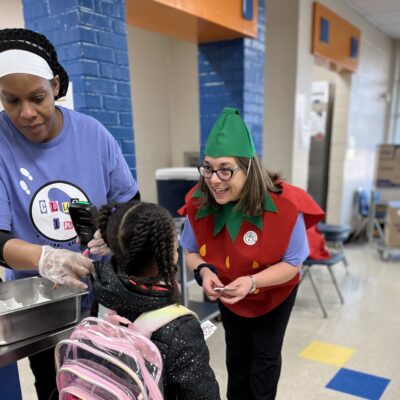
Amid the hard work of serving school meals, the thing that keeps Byrd and Stiller motivated is interacting with students, or as Stiller put it, “the babies.”
“It’s just the silly little things they do — and the dress up days. I love to dress up with them, I love to decorate my kitchen,” said Byrd, adding that she will miss that the most when she retires after 28 years in May.
Angie Hayes started her career in school nutrition at one of the district’s elementary schools. Now, as a school nutrition assistant manager at Lexington Senior High School, Hayes said the students are her favorite part of the job — particularly reconnecting with those she served when they were in elementary school.
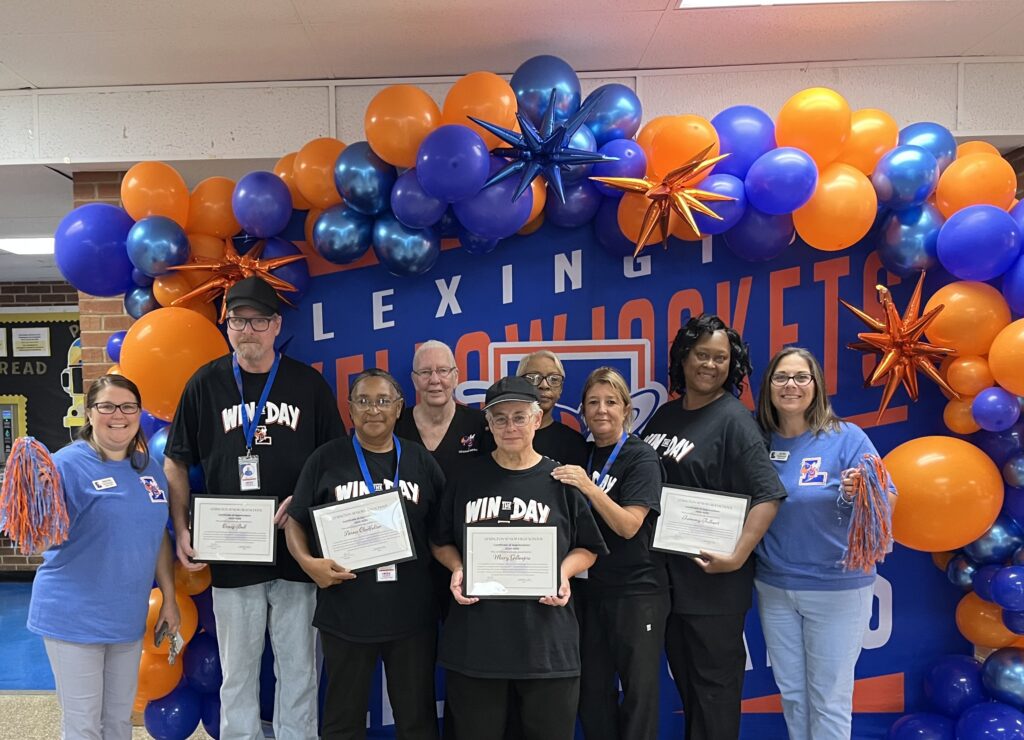
Through the federal Community Eligibility Provision, Lexington City Schools provides all students with free breakfast and lunch, removing the need for paperwork or school lunch payments. Hayes has seen how these free meals benefit both parents and students, removing the stigma of school meals and ensuring everyone can eat.
“It is very important that these kids get a healthy breakfast and lunch, because you cannot learn on an empty stomach, and they really need food,” she said.
After 21 years in school nutrition, Hayes plans to retire this May. Growing up, Hayes recalls her grandma telling her that to get to someone’s heart, you have to go through their stomach — and that has held true in her experience of school nutrition.
“We feed these kids and feed these kids, and some of them say ‘Thank you so much, I love what you cooked yesterday,'” she said. “You’ve got to go through the stomach to get to the heart — and we’ve got to some of these hearts.”