
A Hickory partnership that strengthens early literacy and the teacher pipeline

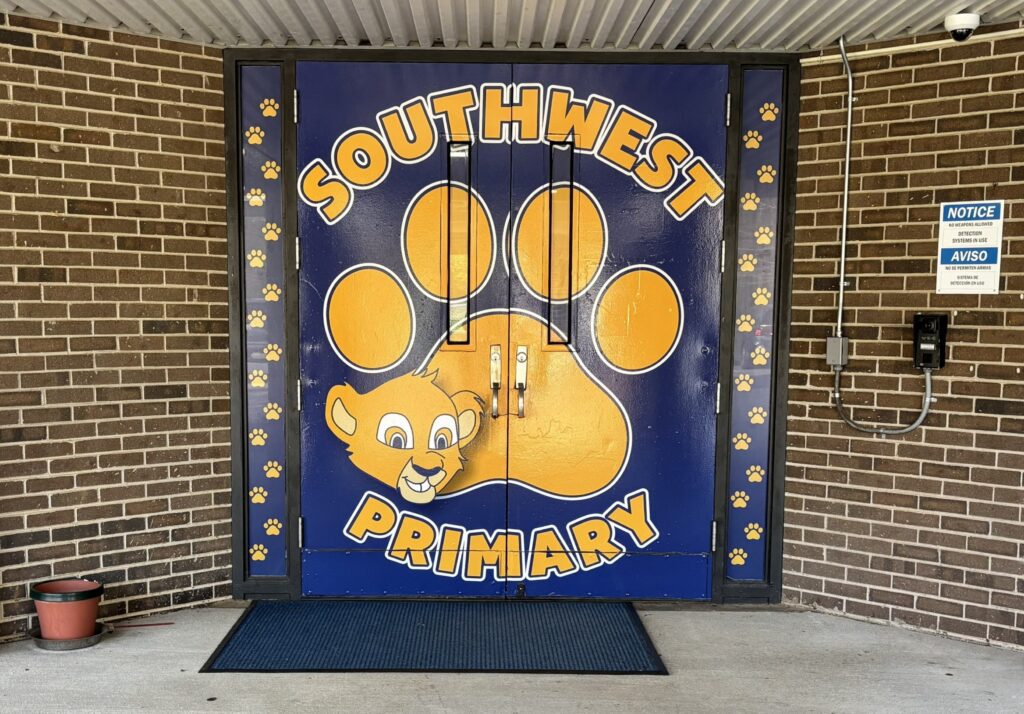
At Lenoir-Rhyne University, preparation doesn’t stay on campus. It comes to life inside classrooms like those at Southwest Primary School, where future teachers and young learners grow side by side.
“Southwest Primary is a K-2 school, which is really unique and special,” said Erin Roberts, teacher leadership specialist. “Our goal is to focus deeply on early literacy skills so that when our students leave us, they have a strong foundation.”
 Sign up for Early Bird, our newsletter on all things early childhood.
Unfortunately, many students arrive with significant gaps. “In kindergarten, students typically start around 7% proficient,” Roberts said. “There are a lot of holes we must fill.”
To support that need, Southwest reimagined its literacy block this year, creating a structured, data-driven approach referred to as a parallel block.
Using assessment data from Dynamic Indicators of Basic Early Literacy Skills (DIBELS) and Language Essentials for Teachers of Reading and Spelling (LETRS) phonics screeners, students are grouped by skill gaps. During a 90-minute block, they rotate through targeted instruction designed to meet their specific needs.
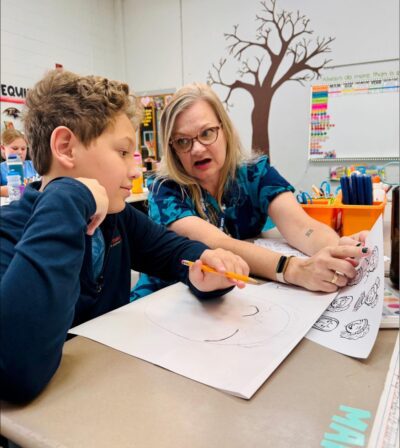
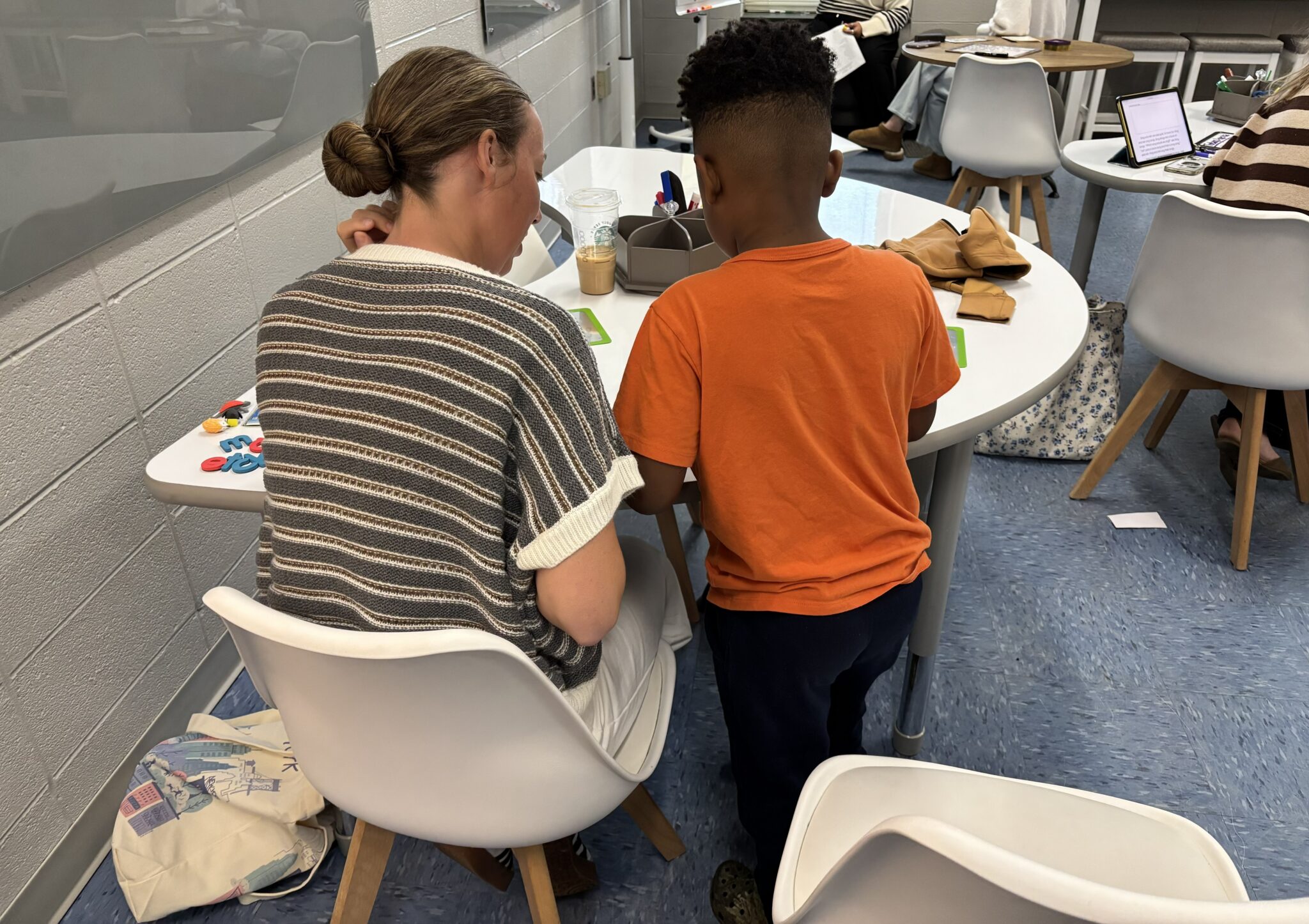
Some students work in small groups with classroom teachers. Others move to the learning lab, where they engage in hands-on literacy activities like word work, manipulatives, and word chaining. And then there’s a third layer, one that makes this model especially powerful: Lenoir-Rhyne students.
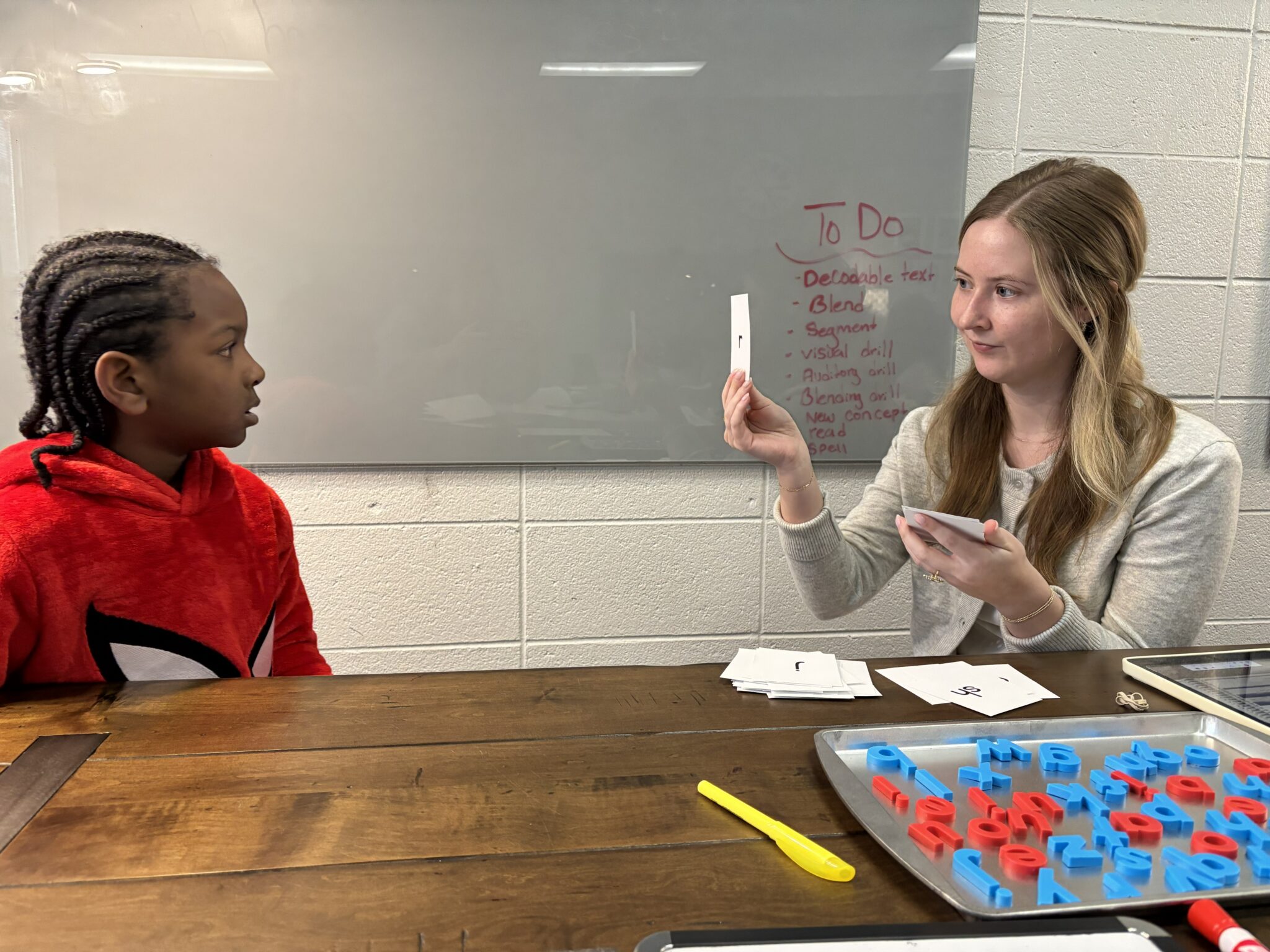
“They’re pulling from our learning lab groups and making the teacher-student ratios even smaller,” Roberts explained. “In some cases, that becomes one-on-one instruction, something we would not be able to attempt without this partnership.”
The additional trained adults provide each teacher an opportunity for uninterrupted, targeted instructional support aligned to a specific skill gap based on student data and need.
When support becomes transformation
That intentional structure leads to something deeper than academic growth; it also creates a connection.
One first grade student, Roberts shared, came in with significant challenges. But through consistent one-on-one support, something began to shift.
“For him, having someone focused just on him made all the difference,” she said. “That relationship spilled over into his academics.”
With support from teachers and Lenoir-Rhyne tutors, he began mastering the specific skills he once struggled with.
“He’s one of the students who has moved up a group and is just rocking it out,” Roberts said.
Moments like that are happening across the school and students feel it. At the same time, moving out of an intervention group can be bittersweet.
“We’ve had students disappointed because they moved up,” Roberts said. “That tells you everything.”
Southwest works to balance these times by focusing on the celebration of the student’s success and often have them return to share their future successes with the Lenoir-Rhyne tutor they had built such a strong bond with early on in their learning journey.
Learning in real time
While elementary students are building foundational literacy skills, Lenoir-Rhyne students are gaining something just as valuable: real classroom experience.
“It’s preparing me for the classroom more than sitting in any college class ever could,” said Bryson Clendenning, who works with first grade students like Eli. “We only come two days a week, but you can see the growth every time,” she said. “He improves each time I’m here.”
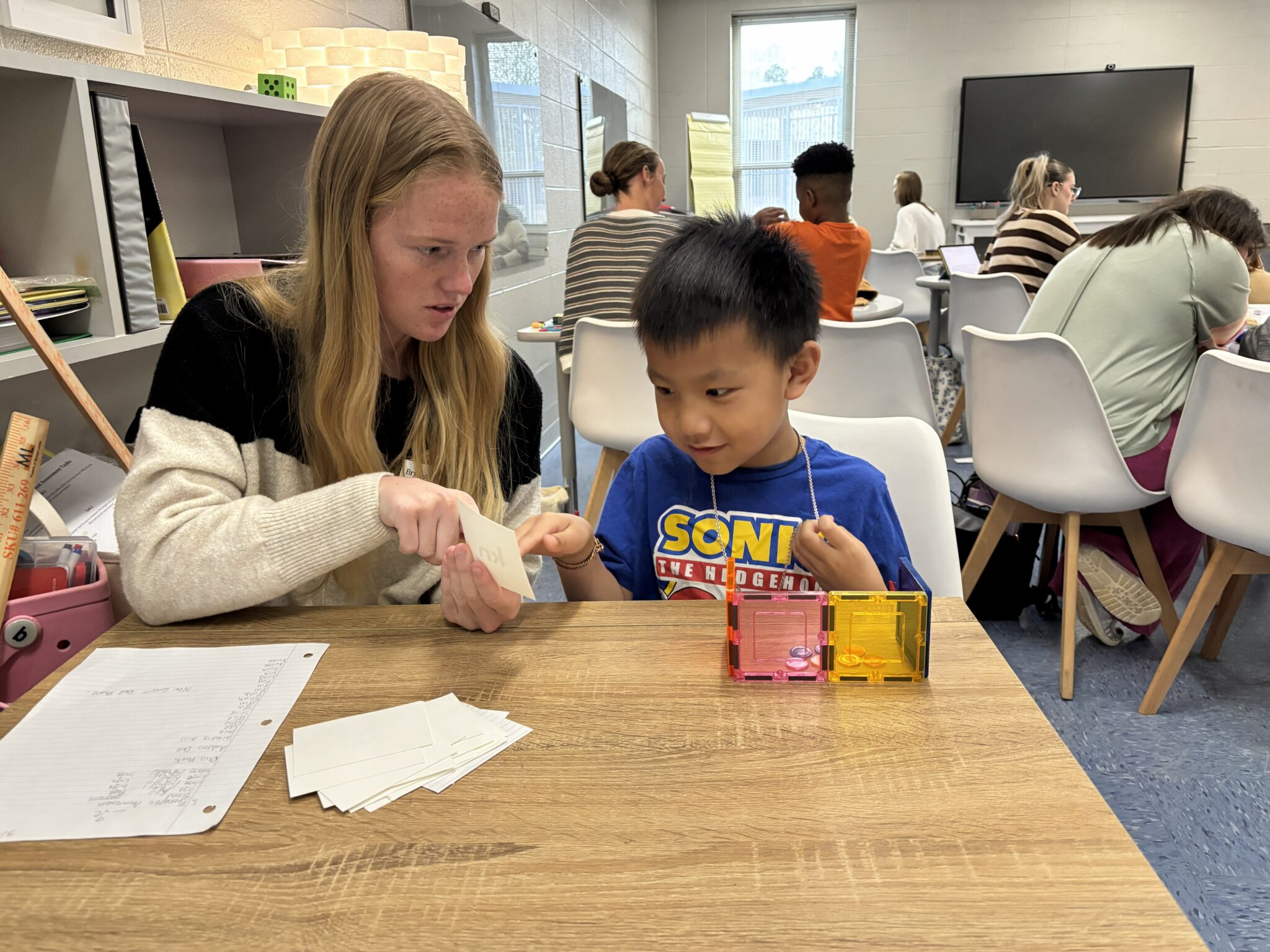
For tutor Raelynn Diete, the experience has reshaped how she approaches teaching.
“You learn that every child is different,” she said. “Some need more time, some need a different strategy, and that doesn’t mean you’re doing anything wrong.”
She has also discovered the importance of joy in learning. “You can make learning fun through games and connections. When kids light up because they’re proud of themselves, that’s the best part!”
A win for students, teachers, and the future
For teachers at Southwest, the partnership is more than support, it’s transformation.
First grade teacher Brianna Sexton — also Hickory City Schools 2025-26 Teacher of the Year — sees the impact from every angle.
“They’re seeing what teaching really looks like; the transitions, the challenges, the day-to-day reality,” she said. “That gives them an edge.”
This in turn strengthens the school community. “We have more adults here to provide support,” Sexton said. “It’s a win-win-win for the Lenoir-Rhyne students, for our students, and for our teachers.”
The full-circle impact is especially meaningful for educators who once participated in the program themselves.
A Southwest teacher and Lenoir-Rhyne graduate now applies hands-on methods like Elkonin boxes and “Say It, Tap It, Map It” in her classroom after tutoring and student teaching through the partnership.
“It gave me real strategies I still use today,” she said. “And it made the transition into teaching so much smoother because I already knew the school and the people.”
Intentional, aligned, and growing
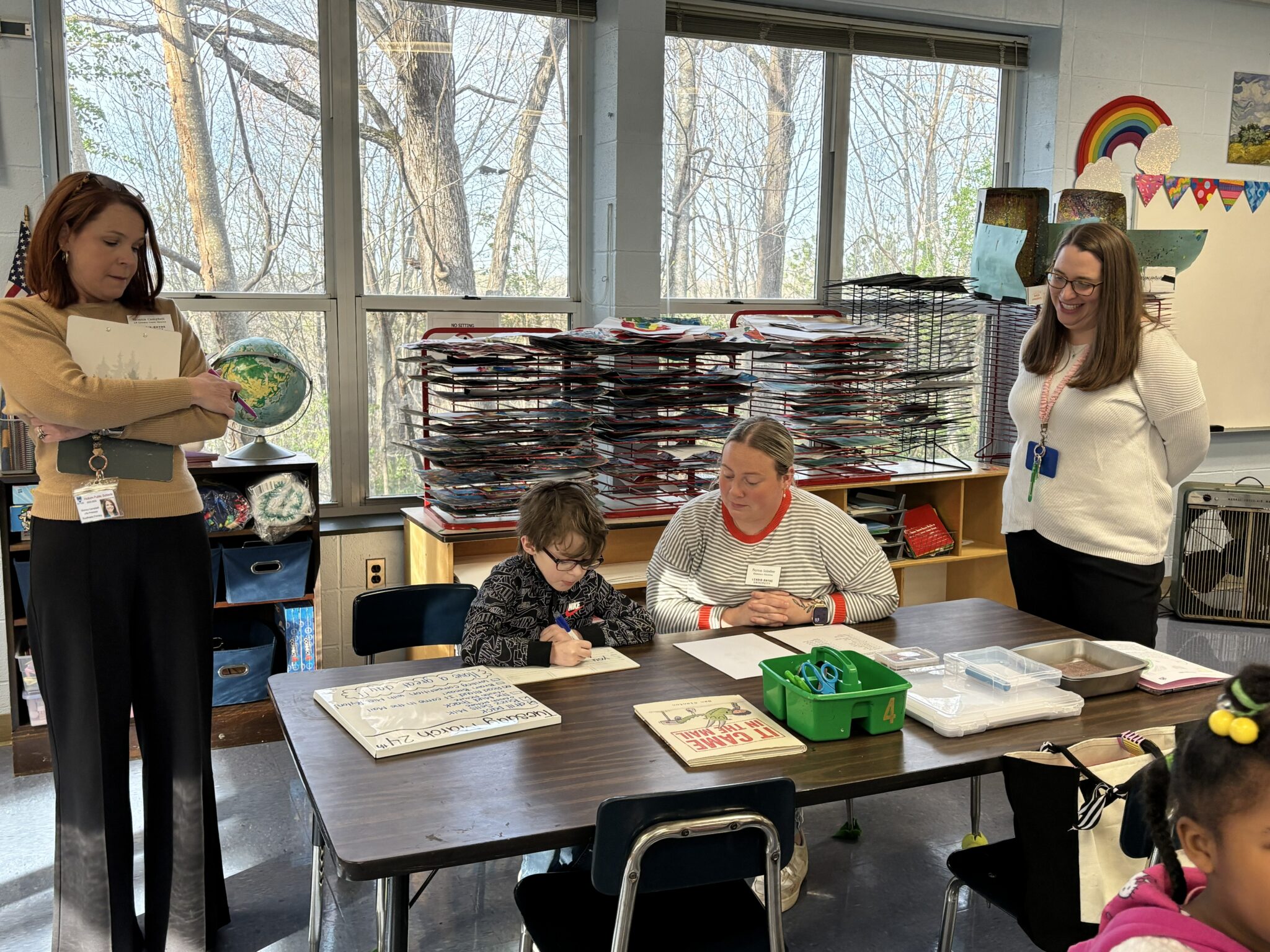
Behind the scenes, the partnership is carefully designed and thoroughly planned out. Each summer Roberts collaborates with Dr. Monica Campbell, the university’s professor of education and coordinator of its Elementary Education Program, to review data, align schedules, and refine the program.
Additionally, Lenoir-Rhyne students are also required to demonstrate readiness before working with children. They must pass a phonemes assessment before they can officially begin tutoring at Southwest to ensure instruction is aligned with what is being implemented in the classroom, and that sounds are articulated precisely and correctly to eliminate confusion for the novel readers.
It’s that intentional alignment, between preparation and practice, that makes the partnership work, because learning doesn’t happen in isolation. And for both students and future teachers, that connection is what makes all the difference.
A model with statewide momentum
Across North Carolina, districts continue to grapple with two urgent and interconnected challenges: early literacy outcomes and teacher pipeline shortages. What’s happening through the Southwest Primary and Lenoir-Rhyne University partnership suggests those challenges don’t have to be solved separately. They can be addressed together.
At Southwest, a school where all students qualify for free and reduced lunch, the need for strong, early literacy instruction is especially critical. The data makes that clear. But so does the response: a system that intentionally aligns K-12 instruction with educator preparation programs, creating more support for students while strengthening the future workforce.
It’s a model that reflects a growing shift in how schools and universities think about preparation, not as something that happens before teaching begins, but as something that develops alongside it. For district leaders, that shift matters.
Partnerships like this expand instructional capacity without lowering quality. They bring additional, trained adults into classrooms. They allow for smaller group sizes, more targeted instruction, and more individualized attention, especially in foundational years when it matters most. At the same time, they create a more sustainable pathway into the profession.
Teacher candidates aren’t entering classrooms for the first time on day one of their careers, they’re already there, building relationships, practicing strategies, and understanding the full rhythm of a school day. That kind of preparation can influence not only effectiveness, but retention. Educators who feel ready are more likely to stay.
Related reads


Bridging policy and practice
North Carolina has made significant investments in the science of reading and structured literacy, with initiatives like LETRS training shaping how reading is taught across the state.
What Southwest demonstrates is how those investments can be extended and strengthened through partnerships.
In this case, Lenoir-Rhyne students are expected to pass specific assessments before tutoring elementary students, ensuring alignment with the instructional practices happening in the classroom. That consistency matters. It means students aren’t experiencing competing strategies, but receiving cohesive, research-based instruction from every adult they work with.
It also means future teachers are being trained in the same practices they’ll be expected to use once they enter the workforce. That kind of alignment between policy, preparation, and practice is often difficult to achieve. But when it works, the impact is amplified.
A replicable approach
While every district looks different, the core elements of this model are replicable:
- Shared goals between K-12 schools and higher education institutions,
- Data-driven instruction that informs grouping and support,
- Structured time within the school day for targeted intervention,
- Intentional preparation of teacher candidates before they enter classrooms, and
- Ongoing collaboration to refine and improve the work.
None of these elements exist in isolation at Southwest, they function as a system. And that system is what makes the difference.
Looking ahead
Each summer, school and university leaders come back to the table reviewing data, aligning schedules, and asking a critical question: How can we do this better next year?
That continuous improvement mindset is what allows the partnership to grow, adapt, and respond to student needs. It’s also what makes it more than a one-time success story.
For North Carolina, the implications are clear. When schools and universities move beyond partnership as a concept and into partnership as a daily practice, the results extend far beyond a single campus.
The results show up in stronger readers, more confident teachers, and a system that is better connected, more responsive, and more prepared for what comes next. Because when preparation and practice are no longer separate, education becomes something more powerful: a shared responsibility and a shared opportunity.