
State Board of Education discusses legislative priorities, school accountability, and Golden LEAF initiative

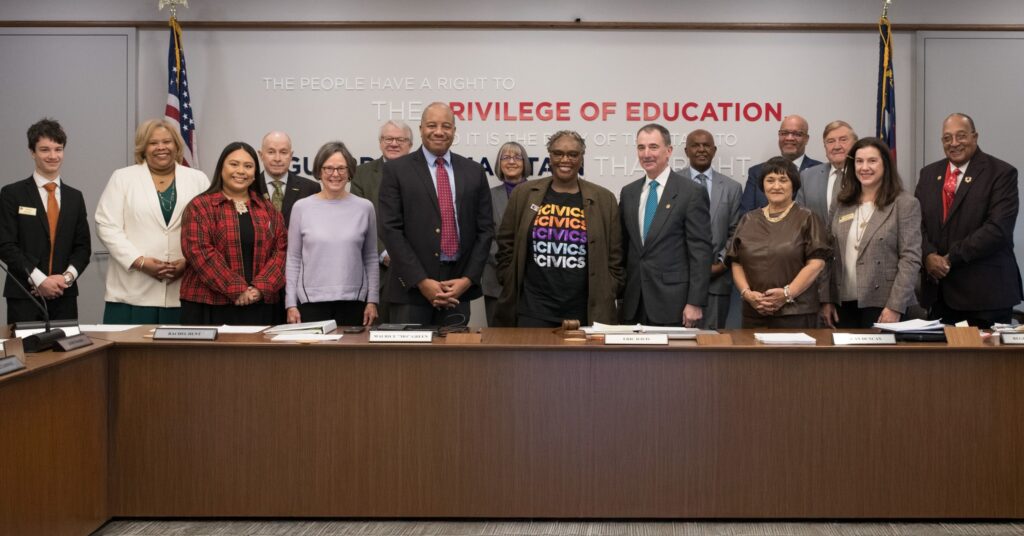
The State Board of Education met last week to discuss its legislative priorities and the Golden LEAF Schools Initiative during its December meeting, among other issues.
Geoff Coltrane, the Department of Public Instruction’s (DPI) senior director of Government Affairs and Strategy, said the latest “mini-budget” passed in October includes several education-relevant provisions. Those include a technical fix guaranteeing virtual cooperative innovative high schools receive $200,000 annually, as well as $25 million in recurring funds for the Pay Plan Reserve to cover teacher salary step increases in FY 2025-26.
 Sign up for the EdDaily to start each weekday with the top education news.
He also highlighted five other bills — two DEI-related bills, the Educational Choice for Children Act (ECCA), the 2025 Appropriations Act, and Continuing Budget Operations Part III — that remain technically active but will not receive votes this year. Gov. Josh Stein previously vetoed the DEI and ECCA bills, and the General Assembly has not overridden those vetoes.
Coltrane said that DPI’s leadership and staff have begun to develop the agency’s 2026 short session budget and legislative requests. He said DPI anticipates those requests will be due to the Office of State Budget and Management by mid-February, and they will be brought to the Board for discussion in February and approval in March.
“We anticipate very limited revenue for this fiscal year, and I think it’s still an open question if we actually will get a budget for the ‘27 fiscal year,” Coltrane said during his presentation. “So our plan is when possible to really prioritize our budget legislative request based on the new strategic plan, and those sort of critical must-have items that we know are important.”
Read more
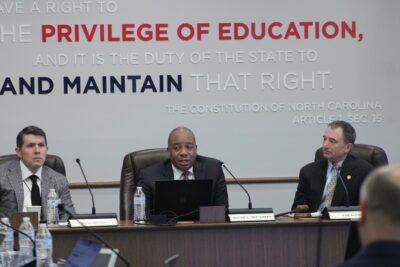
Board members expressed special interest in addressing the shortage of school health personnel and improving one-to-one device access — a step to get high-quality instructional materials in more classrooms.
Another theme of discussion was teacher and staff compensation. Board members said that low pay is driving shortages, turnover, and even multiple-job workloads for teachers and classified staff.
“I have multiple teachers that work multiple jobs — Walmart, Costco, Old Navy, gas stations,” said Jason Johnson, the 2025 Wells Fargo Principal of the Year and advisor to the Board. “Teacher pay has to be a focus.”
Members also warned that educator take-home pay will effectively decrease in January due to rising state health insurance premiums, amplifying the urgency of salary raises.
Board members also surfaced infrastructure and capital needs as another priority. Rachel Candaso, 2025 Burroughs Wellcome Fund NC Teacher of the Year and advisor to the Board, said her district’s schools have buildings from the 1970s. Vice Chair Alan Duncan said that despite existing lottery funds and repair grants, the current system leaves many districts with facilities far below modern standards.
On Wednesday, Board Chair Eric Davis kicked off the meeting with a statement opposing recent federal policy changes, including the dismantling of the Department of Education and the increase in immigration enforcement activities across the state.
“Despite these challenges, what we continue to see across North Carolina gives us great confidence,” Davis said. “Our districts, our educators, our families, our students are showing resilience, compassion, and determination.”
You can listen to Davis’ full remarks on DPI’s YouTube page starting at the 7:43 minute mark.
Accountability task force
The State Board’s new school-level accountability task force also met for the first time on Friday. The group of education system stakeholders discussed the scope of its work as it sets out on a two-year-long process to reform the state’s accountability system in line with DPI and the Board’s joint strategic plan.
In North Carolina, under state law, school grades are based on each school’s achievement score (including standardized test grades), weighted 80%, and on students’ academic growth, weighted 20%. Education leaders have long said that formula does not capture the full picture of the work happening in the state’s public schools.
The creation of a task force this fall reflects another attempt by DPI and the Board to reform school performance grades over the last few years. You can view all of EdNC’s reporting on school performance grades here.
According to a draft timeline presented during the meeting, the task force will begin drafting an initial report and recommendations in December 2026, with plans to present its model to the State Board in May 2027, to hopefully be voted on in June 2027. At that point, if the model is approved, the Board would present the proposed system to the General Assembly, as any proposal adopted by DPI and the Board would need legislative approval to be implemented.
If the General Assembly passes legislation regarding the proposal, the task force’s timeline says statewide implementation of the new accountability model would begin in October 2027.
“Over the next two years, you will help North Carolina rethink what we value, what we measure, and ultimately how we communicate the story of our students,” said Rupen Fofaria, director of State Board operations and policy. “The Board has charged you not simply to revise a formula, but to help create a system that reflects our values, drives continuous improvement, and builds public trust.”
Report from North Carolina Virtual Public School
Board members heard an annual update on the North Carolina Virtual Public School (NCVPS) from Dr. Mia Murphy, the school’s executive director. Murphy said the school has served over 872,000 student enrollments since its opening in 2007, including 30,000 students in the last school year. According to its website, NCVPS is “a supplemental program for each high school and middle school in the state.”
“NCVPS continues to deliver on our mission — preparing students for their next phase in life, supporting educators and districts, elevating public education, and ensuring every single student, regardless of their ZIP code, has equitable access to high-quality learning opportunities,” Murphy said.
The school’s annual report said it had expanded its partnership with the Wake County Public School System for “single-subject acceleration” for academically advanced K–8 students. The school also hosted the NC Science & Engineering Fair, which saw a 200% increase in participation, the report said.
The report also said NCVPS leads the nation in online course quality, with 100 courses certified by Quality Matters, a leading online course quality assurance organization — more than any other K–12 program in the U.S.
Update from Whole Child NC
The Board also received an update from the Whole Child NC Advisory Committee, designed to study nonacademic barriers — from mental health challenges to homelessness — that affect students’ education.
The committee presented a recommendation requiring all school social workers to hold a master’s degree in social work. The policy would be contingent on state funding and with a five-year window for current bachelor’s-level staff to transition.
Committee Chair Kella Hatcher and Vice Chair Dr. Patrick Greene explained that student needs have grown increasingly complex. One in five children lives in food-insecure households, rates of anxiety and depression have doubled, and more than half of students report difficulty accessing mental health care, according to the committee’s report.
“When our children do not have their basic needs met — the Maslow Hierarchy of Needs — they cannot bloom. They cannot learn, they cannot focus, they cannot grow,” Greene said. “And so we have to address these issues, this serious health crisis that is facing each and every one of our schools today.”
MSW-level social workers are trained to conduct psychosocial assessments, provide crisis intervention, and deliver short-term counseling, they said. These are services that social workers with bachelor’s degrees cannot fully provide.
The committee further emphasized that over 60% of states already require an MSW for school social work and that districts could generate additional Medicaid reimbursement revenue when employing master’s-prepared social workers.
The committee’s report estimates costs would range from $4.3 million to pay all current MSW social workers on the master’s salary scale. That cost would grow to $10.9 million once all school social workers hold the required credentials. Board members expressed strong support for the committee’s work and highlighted the urgency of addressing student mental health needs, especially in underserved and rural districts.
Related reads
Homebuilding programs
In 2023, the General Assembly set aside $200,000 in recurring funds to support CTE programs focused on homebuilding. DPI gave first consideration to districts that previously received low-wealth supplemental funding and those serving large numbers of at-risk or disabled students.
Ten districts received grants from DPI of up to $20,000 for these programs, according to a report to the General Assembly presented to the Board on Wednesday.
The report said districts used the grants to upgrade equipment for students, support homebuilding projects, increase enrollment and attainment in skilled trades pathways, increase work-based learning opportunities, and provide affordable housing solutions — including discounted teacher homes in some districts.
“The grants also finance modernizing tools and equipments for labs, safety gear, building materials, and infrastructure upgrades that improve classroom efficiency and safety while supporting credential in attainment,” said Board member Jill Camnitz. “For the amount of money that sounds like a pretty great investment to me.”
Golden LEAF Schools
The Office of Golden LEAF Schools also presented an interim update on the initiative’s participating schools and their early work on the initiative’s implementation. That initiative sprung from a five-year $25 million investment from the Golden LEAF Foundation and aims to improve rural middle schools’ performance with a focus on mathematics and career development.
The participating schools are divided into two groups. The Transformative Schools (TS) Cohort consists of 10 low-performing schools that will adopt the Marzano High Reliability Schools model and the Open Up problem-based math curriculum. The personalized, competency-based education (PCBE) cohort includes five stronger-performing schools and is designed to help them begin transitioning toward competency-based learning, where students advance by showing mastery.
“We’re really focused on ensuring that these 15, and then eventually 20, schools become models of innovation and catalysts for community transformation in our rural areas,” said Rachel Wright Junio, director of the Office of Golden LEAF Schools.
The office’s report found that TS schools have struggled with unstable staffing in recent years, as staff’s mobility has grown from 4.5% in 2022 to 8.7% in 2024. This creates “greater pressure on implementation capacity, coaching uptake, and student experience,” the presentation says.
However, leadership across schools has been stable: two-thirds of schools have had the same principal for at least three years, the report says. Staffing in math instruction at TS schools has also been consistent, with no vacancies at the time they applied for the initiative and 90% certification rates among instructors.
The report also said that teachers view the Open Up math curriculum positively, while those who view it more neutrally do so due to uncertainty and uneven implementation
“It really just indicated a lot of issues with adoption, kind of just anxiety around adopting a new curriculum as well. But this led us to create more contextual and targeted support,” said Cole Smith, mixed methods research analyst at the Office of Golden LEAF Schools.
Golden LEAF will produce a biannual report with a full needs analysis and early outcomes by Jan. 15, according to the presentation. Staff will present key updates from the report to the Board in February.
Meal incentive program and English learners
Board members also received a report to the General Assembly on a new Community Eligibility Provision (CEP) Meal Incentive Program to help more schools offer free breakfast and lunch to all students. The program, which DPI was required to establish under the 2023 state budget, supports schools that qualify for CEP but did not participate in 2023-24.
For 2024-25, 157 schools were approved, according to the report, extending access to free meals for 48,550 additional students. The schools will receive nearly $40 million in federal reimbursements plus $3.9 million in state funds, the report said.
The Board also reviewed a report on English learners in North Carolina.
As of Nov. 1, North Carolina’s enrollment of students identified and assessed as English learners was 163,175, according to the report to the General Assembly. This reflects a decrease of 15,513 students compared to last year’s count.
Tuition assistance to teachers
The Board also heard a presentation about the Teacher Assistant Tuition Reimbursement Grant Program, which supports employed teacher assistants by covering tuition costs as they pursue degrees that lead to teacher certification. The General Assembly set aside $575,000 in 2023 to provide grants of up to $4,600 per assistant to help cover tuition and fees at approved educator preparation programs for up to four academic years.
For the 2024-25 school year, 1,062 assistants from 72 districts applied for reimbursement, according to the presentation. However, this high demand prompted DPI to reduce the maximum reimbursement from $4,600 to $2,846. That allowed DPI to fund all 202 applicants who had participated in the program’s pilot — the department’s highest priority group.
NC Blue Ribbon Schools
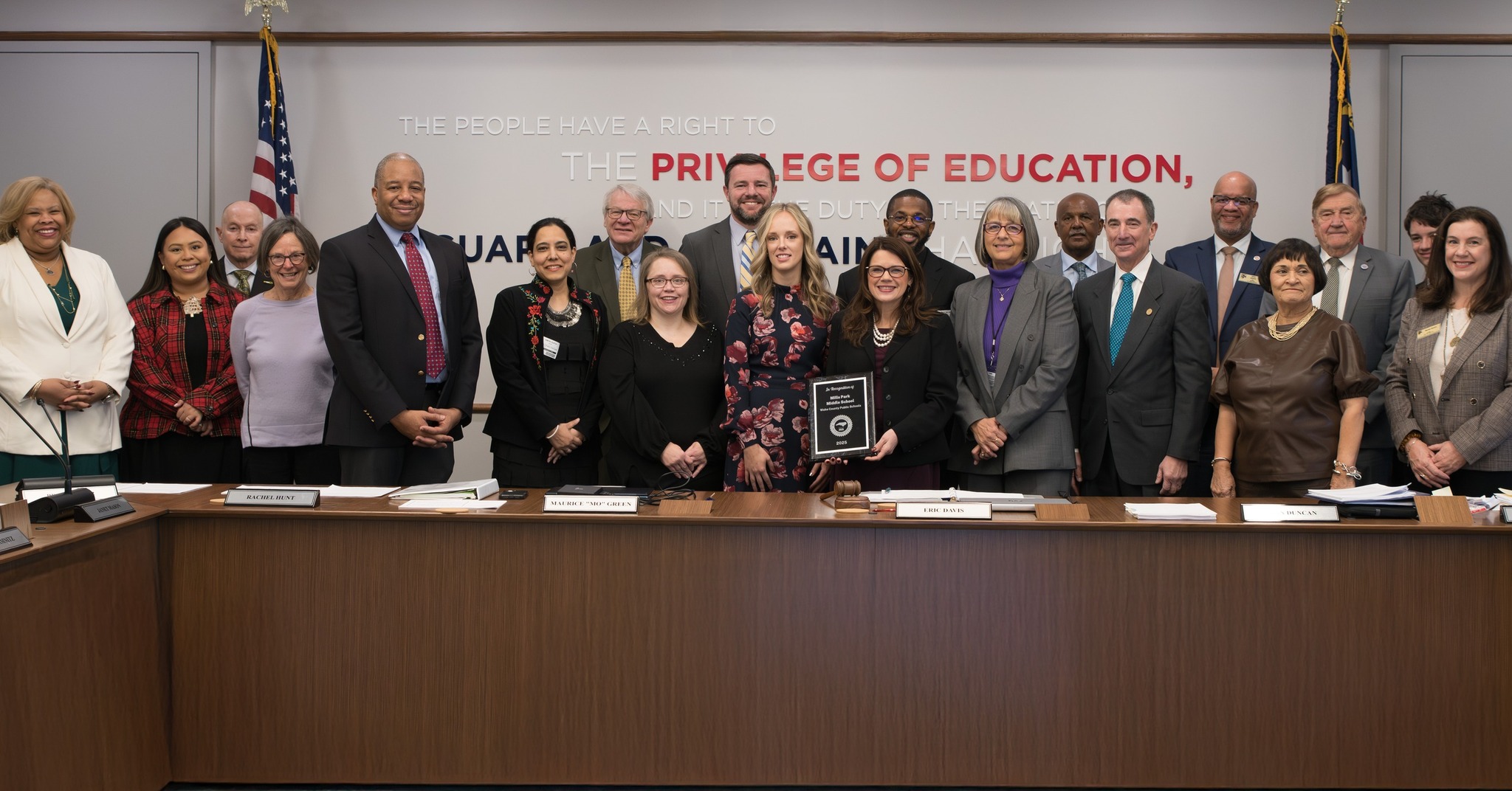
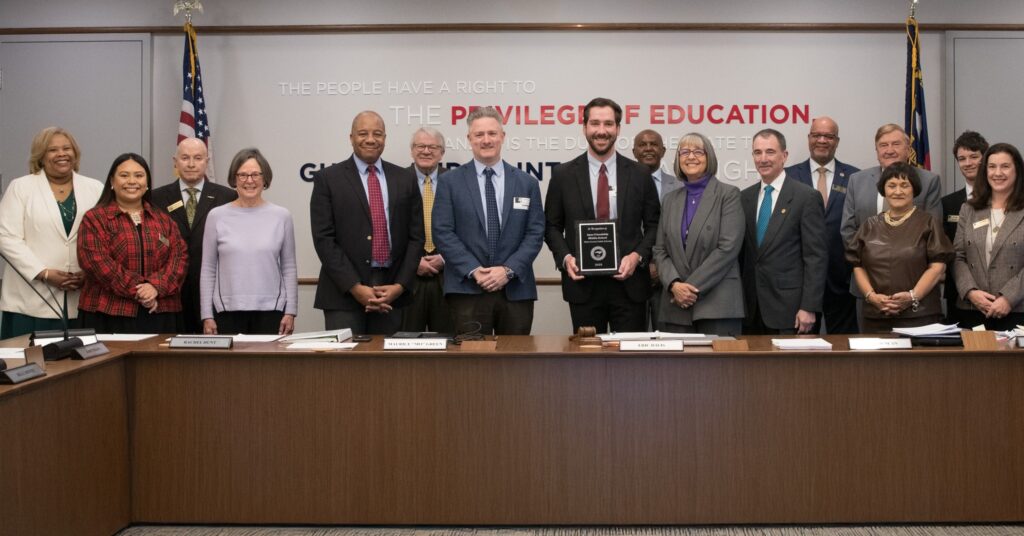
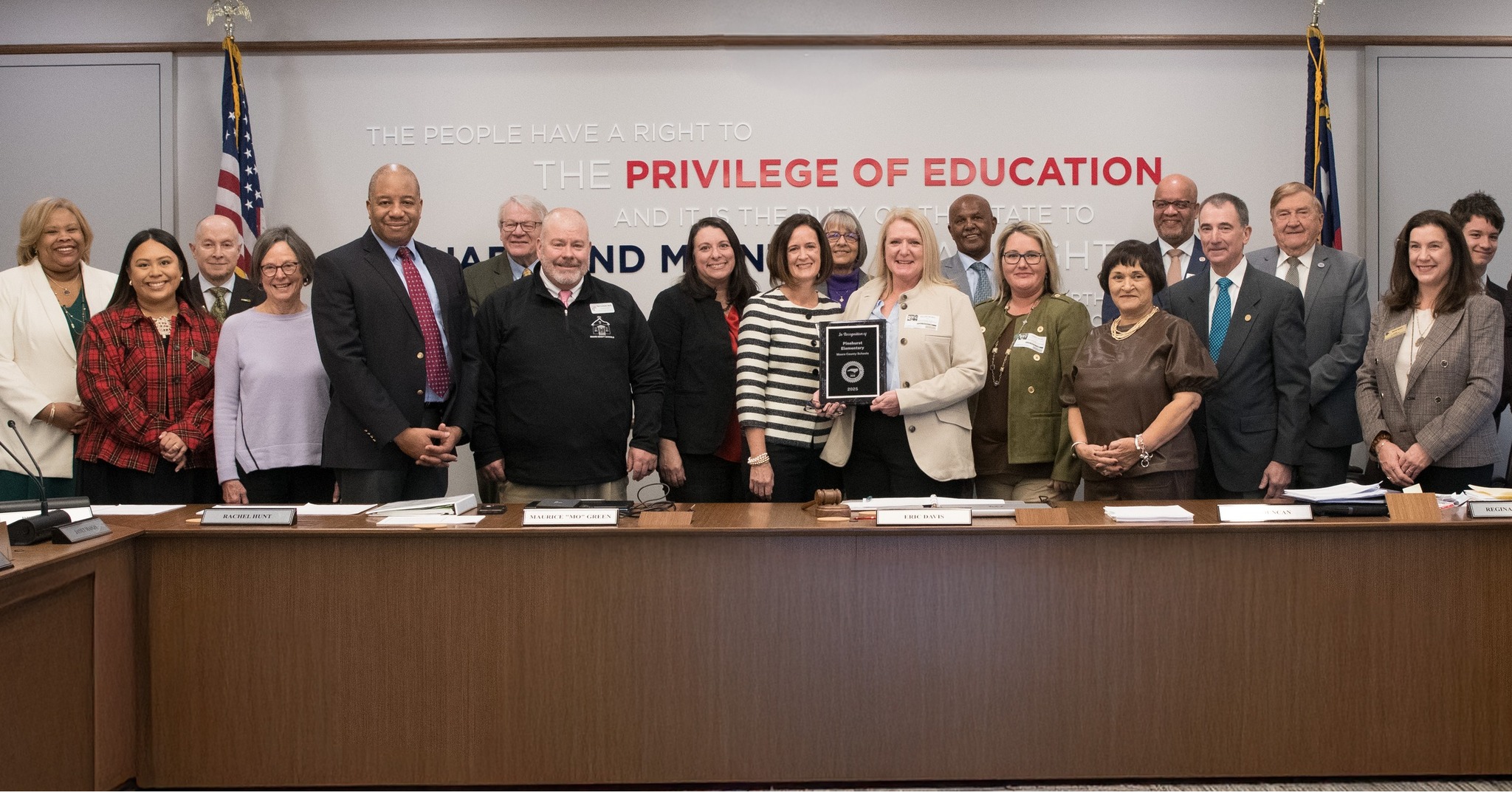
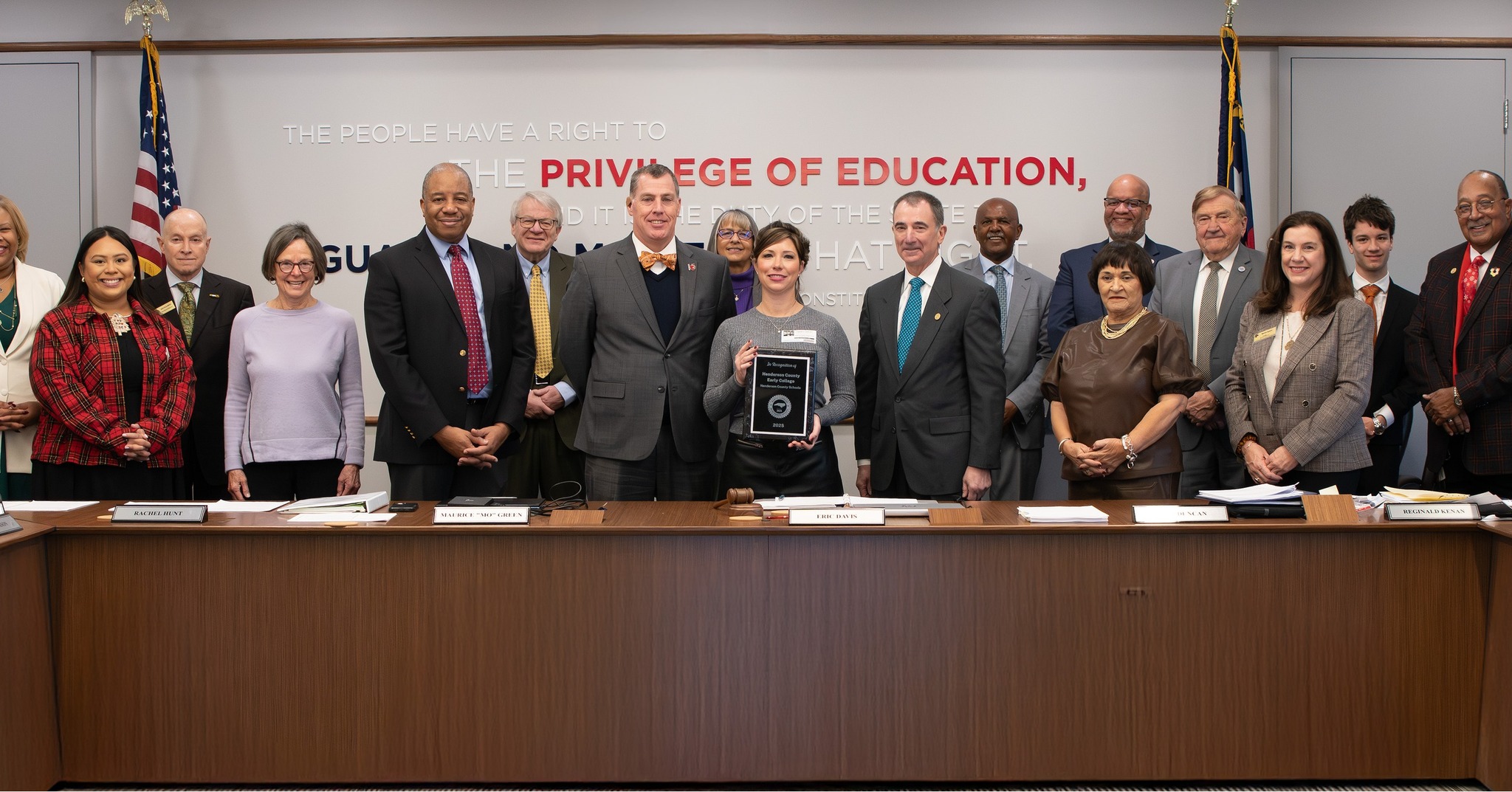
The Board also recognized four schools as the inaugural recipients of the North Carolina Blue Ribbon Schools Program award, the state’s version of the National Blue Ribbon Schools Program, which was discontinued in September by the U.S. Department of Education.
Nominations were based on 2023-2024 accountability results, and awardees could be recognized as “Exemplary High Performing” and “Exemplary Achievement Gap Closing.”
Apex Friendship Middle School and Mills Park Middle School in Wake County Public Schools, and Pinehurst Elementary in Moore County Schools won in both categories. Henderson County Early College in Henderson County Public Schools won in the Exemplary High Performing category.
“This recognition reflects the hard work of educators, students, families and communities working together to ensure every child has access to high-quality learning,” State Superintendent Maurice “Mo” Green said in a November press release. “We celebrate these schools for their growth, achievement, and commitment to student success as North Carolina’s inaugural Blue Ribbon Schools award recipients.”
The full Board meets next Jan. 7-8.