
‘An incredible investment in NC’: Superintendent Green discusses Golden LEAF Schools initiative


Superintendent Maurice “Mo” Green highlighted the new Golden LEAF Schools initiative’s potential to improve school performance in an interview with Golden LEAF Foundation President Scott Hamilton published last week.
In the interview, Green said Golden LEAF Schools held their kickoff conference with all 15 participating rural middle schools this summer. Hamilton and Green both attended the conference.
“I’ll just say from that, the enthusiasm, the electricity, the participation, the determination of those attendees was just phenomenal,” he said.
That conference marked the beginning of a five-year $25 million initiative that aims to improve these schools’ performance with a focus on mathematics and career development.





Green first announced the initiative in January, saying it was “an important step toward achieving my vision: ensuring every child in North Carolina’s public schools achieves educational excellence.” At the time, he said it had been in the works for 18 months.
 Sign up for the EdDaily to start each weekday with the top education news.
The initiative is aimed at “improving school performance through innovative education strategies,” according to a press release from the N.C. Department of Public Instruction (DPI).
“There’ll be a significant focus actually on the educators and the professional development that they will receive that will then in turn allow them to support our students,” Green said in the interview. “There will be a lot of focus on career exploration, giving them opportunities to see what can happen, what they can do, and then help them see and make those connections to what they’re learning in the classroom.”
Green said DPI collaborated with Golden LEAF to develop clear criteria for eligible schools along with a profile outlining what participation and success in the initiative would require. Among other things, selected schools had to be in a rural county with persistent Tier 1 or Tier 2 status. You can see the Golden LEAF Schools Eligibility and Selection Criteria document for full details.
Schools underwent a thorough application and review process, which included interviews with key stakeholders such as the district superintendent, the principal, and curriculum and instruction leaders from the district office.
The initiative’s success measures will include end-of-grade and end-of-course exam results, as well as enrollment in advanced coursework. Green noted the program will evolve over time, with adjustments made as lessons are learned.
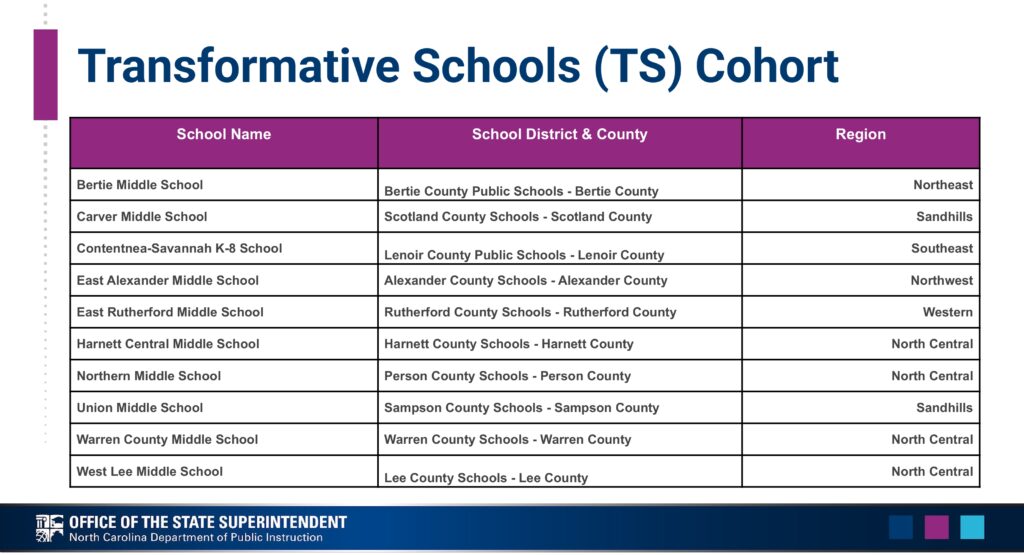
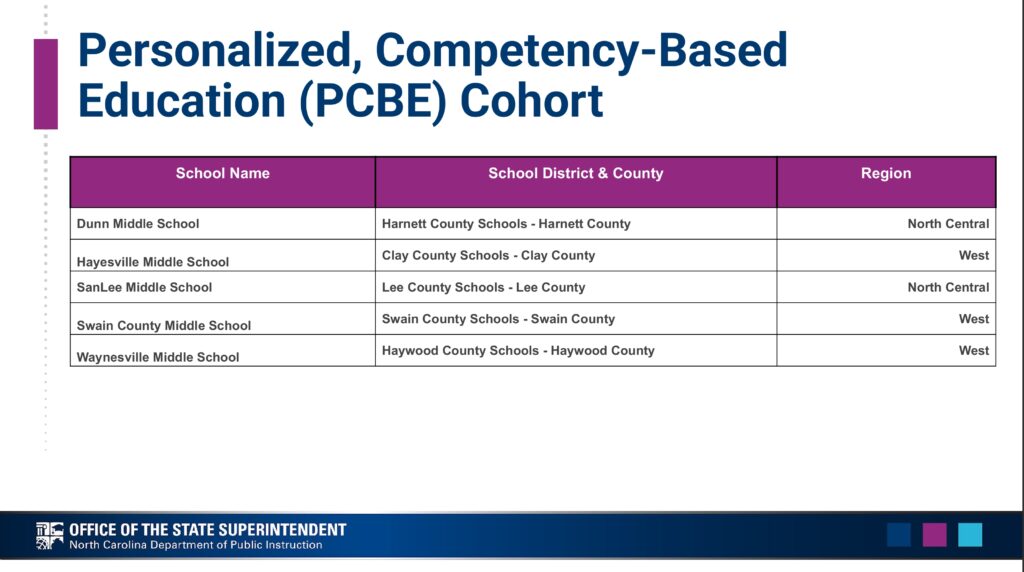
The selected schools are split into two cohorts. The Transformative Schools Cohort features 10 low-performing schools that will be implementing the Marzano High Reliability Schools framework and the Open Up Resources Problem-Based Math Curriculum. The personalized, competency-based education cohort includes five high-performing schools and is meant to help schools prepare to begin a shift toward competency-based education, which focuses on students demonstrating their mastery of a subject.
The following two slides list the 15 schools selected for the initiative:
In the interview, Green said he hopes the effort will become a blueprint for schools across the state, starting with rural middle schools and following students through high school to monitor career readiness and postsecondary choices.
This is “an incredible investment in North Carolina’s public schools,” Green said. “We look forward to being a great partner with Golden LEAF as go through the next five years of this initiative.”
You can listen to the full interview, which includes Green sharing information about his new strategic plan, below. You can learn more about the strategic plan, “Achieving Educational Excellence,” on DPI’s website.