
Perspective | Spotlighting a child care subsidy in plain sight

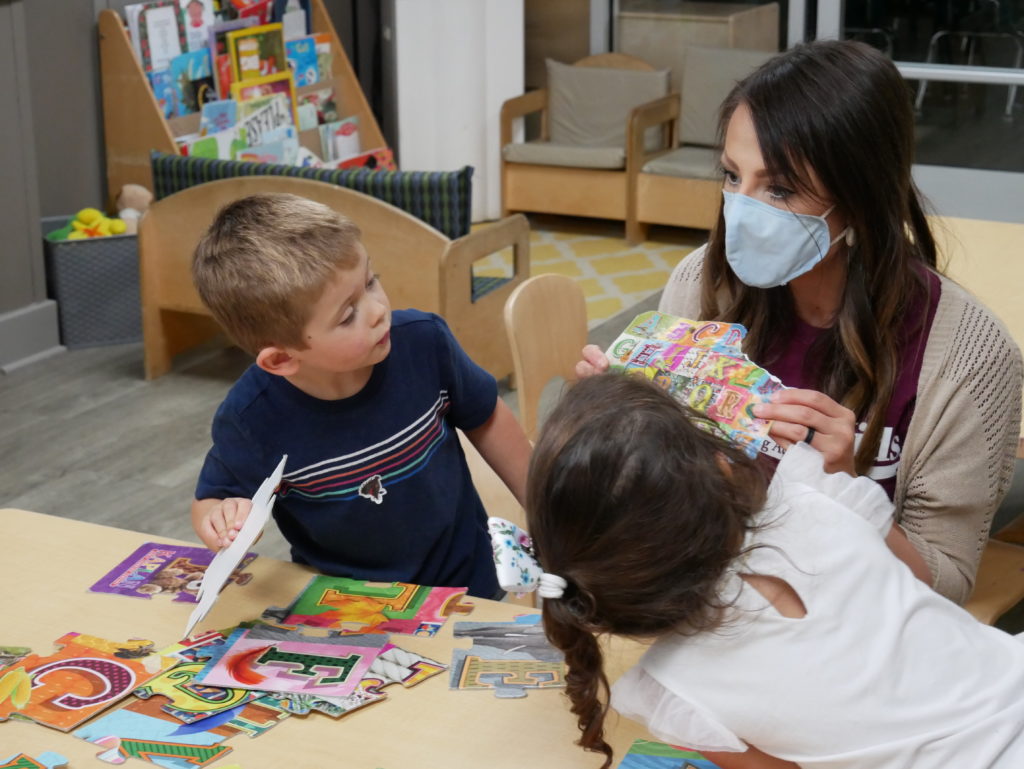
Without the extra emphasis of boldface or italics, a new child care workforce study flips the conventional notion of “subsidy.” In North Carolina, as elsewhere, the network of early childhood care and education not only receives public funding but also is in effect “subsidized” by its poorly paid staffs.
The extensive study comes from the Child Care Services Association (CCSA), based in Chapel Hill and Durham, which has tracked the workforce in early childhood over the past two decades. The CCSA report presents pre-pandemic 2019 data, but its analysis points to persistent issues that should rank high on the state’s post-election agenda.
Its findings demonstrate, says CCSA, “why everyone concerned about young children and their families must continue to advocate for a strong, robust early childhood system that is not subsidized by the low wages and poor working conditions of many child care educators.”
It’s a complicated challenge to develop solutions to shortcomings in a system, which handles more than 175,000 children up to five years of age, that is multi-layered, consisting of licensed centers operated by for-profit entities, not-for-profit organizations, and public schools. Family child care homes are operated by individuals.
In an effort to promote quality, the state has a star-rating system. About six out of ten children are in for-profit centers, and slightly more than half are in the top five-star centers. As the CCSA report points out, North Carolina has ranked high among states with such initiatives as Smart Start and NC Pre-K. And yet, in this multi-layered system, there remains a shortage of slots for children in need and too-low pay for educators.
The study reports that average wages in centers statewide ranged from $10.50 per hour for starting teachers up to the highest salary of $15 per hour. Assistant teachers’ salaries ranged from $10 to $12 per hour. Nearly four in 10 teachers and assistant teachers, as well as 16% of family child care providers, have received Medicaid, food stamps, or other public assistance, says the study.
“Many people working in the early childhood field face severe economic challenges that affect their families and them personally,” says the CCSA. “The coronavirus pandemic will only make these challenges more difficult.”
The study also pointed out that half of center directors and 40% of teaching staff hold at least an associate’s degree in the early childhood field — an indicator of the development of a professional workforce.
Wages are substantially higher, ranging from $20 to $36 an hour, for early childhood teachers in public schools. This finding suggests a potential goal — raising the pay of teachers in NC Pre-K classrooms to the level of comparable public school teachers.
Both the recent order by Judge W. David Lee and Governor Roy Cooper’s Leandro commission envision major measures to upgrade the “early educator pipeline” in schools and centers along the birth-to-third grade continuum.
While recognizing the “landscape of child care is unsettled” in the ongoing pandemic, the CCSA says that “we have already learned from this period … that early care and education is an essential service for communities across the nation; indeed the very lynchpin for a healthy, growing national economy providing parents the support vital to returning to work.”
What’s more, early care and education propel children toward the state’s goal of reading to achieve by the end of third grade. Reading with proficiency, of course, isn’t only a third grade task but rather is an accumulation of the nurturing, stimulus, and learning that takes place along the child care and education route up to third grade. And the CCSA findings on meager pay offer a compelling counter-argument to the contention that hitting reading achievement targets won’t require more public money.
Whether you call it subsidy or investment, some combination of federal and state support is essential to expanding high-quality child care and keeping it affordable for parents. The “subsidy” provided by low-wage child care educators, as the CCSA report suggests, is both inequitable to them and insufficient to meet the needs of the North Carolina economy, as well as its young people and their families.